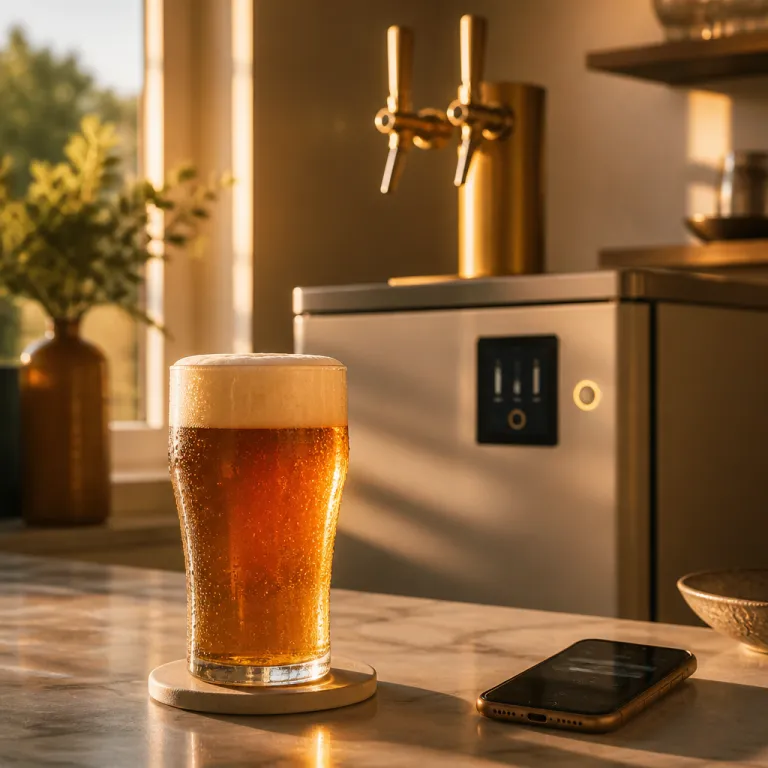
Why a smart kegerator changes how your beer tastes
How smart tech changes what you taste in the glass
A smart kegerator does more than keep beer cold ; it actively protects flavor from the keg to your glass. By tracking temperature, pressure and pour data in real time, it keeps your draft beer closer to what the brewer intended, pint after pint.
Temperature swings are one of the fastest ways to dull hop aroma, flatten malt character and create foamy, inconsistent pours. A connected kegerator monitors these changes and adjusts automatically, instead of relying on a basic thermostat you set once and forget. That means your crisp pilsner stays snappy, your hazy IPA keeps its juicy profile and your stout pours smooth instead of gassy.
Freshness, carbonation and waste control
Carbonation is just as important as temperature. Too much CO₂ and you get harsh bite and thick foam ; too little and the beer tastes flat and lifeless. Smart systems track pressure and, in some models, estimate remaining beer volume, so you can dial in the right balance for each style and avoid over-carbonating a half-empty keg.
For home users who like to take beer on the go, pairing a smart kegerator with a pressurized growler tap system helps keep that carefully tuned carbonation and flavor intact when you are away from the main unit.
From casual pours to pro-level consistency
Over time, usage data and alerts help you spot patterns : which beers foam more, when lines need cleaning and how different serving temperatures affect your favorite styles. That same data will guide your choices about temperature control options, tap layout and even where you place the unit, so the whole system is built around better-tasting beer, not just cold beer.
Smart temperature control and why it matters for every keg
Why precision cooling is the real “smart” feature
In a smart kegerator, temperature control is not just a dial with a few vague settings. You get digital thermostats, calibrated sensors and often multiple probes that track the actual beer temperature, not only the air inside the cabinet. That precision is what keeps a crisp pilsner bright and snappy while letting a stout stay smooth and creamy.
Different styles shine at different serving temperatures. A smart system lets you set exact targets and hold them steady, instead of drifting several degrees every time the door opens. That stability means better head retention, more consistent carbonation and fewer off flavors from beer being served too warm or too cold.
Single zone vs multi zone : matching beer styles to temperatures
Most home units are single zone, which is fine if you usually pour one style at a time. If you plan to run multiple taps with very different beers, a dual zone or multi zone setup becomes a real upgrade. You can keep lagers colder on one side while ales sit a bit warmer on the other, all managed through the smart controller.
When you are comparing models, look at how narrow the temperature range can be held and how clearly the display reports it. Some smart kegerators also log temperature history, which helps you troubleshoot foaming issues alongside the layout and placement choices you will make elsewhere in your system.
Smart controls, alerts and DIY upgrades
Wi‑Fi or app control lets you tweak temperatures without opening the door, which reduces swings and saves energy. High temperature alerts are especially useful if you are building or upgrading a keezer style system ; guides such as how to build a keezer on a weekend budget show how external controllers and sensors can turn a basic freezer into a smart, stable draft setup.
Taps, kegs and beer lines : how your system layout shapes your pour
Why your draft layout is more than just hardware
In a smart kegerator, the way taps, kegs and beer lines connect is as important as the electronics. Your layout controls how stable the temperature stays from keg to faucet, how much foam you fight, and how consistent each pour feels from the first pint to the last.
Matching line length and diameter to your beer style
Beer lines act like a pressure brake between the keg and the glass. If they are too short or too wide, beer rushes out and foams. Too long or too narrow, and pours crawl and go flat. For most home and small bar setups :
- Standard ales and lagers often work well with 3/16" ID lines
- Higher carbonation styles (wheat beers, some Belgian ales) usually need longer lines
- Nitro or stout systems rely on different gas blends and can use shorter lines
Smart pressure monitoring only pays off if the physical resistance of your lines is tuned to the beer you serve.
Keeping beer lines cold and clean
Even with precise keg temperature control, warm or dirty lines will ruin your pour. Insulated towers, fan-assisted air circulation, or glycol-cooled trunk lines help keep the entire path from keg to tap within a tight temperature band, supporting the work done by your smart temperature controls.
Regular cleaning is non-negotiable. Residue in lines and faucets affects foam stability and flavor. Many serious homebrewers pair their draft system with accurate measurement tools such as a triple scale hydrometer for home brewing to ensure the beer going into the keg is consistent, then rely on a strict cleaning schedule to keep it tasting that way at the tap.
Indoor vs outdoor kegerators : where you place the unit changes what you buy
How location changes performance and lifespan
Where you place a smart kegerator quietly decides how well it pours, how long it lasts, and how much energy it burns. Indoors, the unit lives in a relatively stable climate. Outdoors, it fights heat, cold, humidity, and dust every single day.
Indoor models can focus on precision and quiet operation. They usually have lighter insulation, smaller compressors, and sleeker finishes that match kitchens or home bars. Outdoor units need tougher armor : thicker walls, stronger gaskets, weather‑resistant coatings, and more powerful compressors to hold temperature when the sun is beating down.
Key differences between indoor and outdoor builds
- Insulation and seals : outdoor kegerators use heavier insulation and upgraded door seals to reduce temperature swings and condensation.
- Compressor and ventilation : expect higher‑capacity compressors and more aggressive airflow on outdoor models, often with side or front venting for built‑in use.
- Cabinet and hardware : stainless or powder‑coated exteriors, rust‑resistant hinges, and weather‑sealed control panels protect electronics from rain and UV.
- Smart sensors : outdoor placement makes ambient‑temperature and door‑open sensors far more important, so the system can adjust cooling curves automatically.
Matching the kegerator to your space
Start by mapping how you actually serve beer. A kitchen or basement bar benefits from a quieter, more efficient indoor unit that emphasizes precise temperature control and integration with your existing smart home setup. A patio, garage, or beer garden needs an outdoor‑rated cabinet that can hold pressure and temperature even during heat waves.
Also think about how your tap layout and line lengths from earlier planning will route through walls, counters, or towers. The more extreme the environment, the more you should prioritize robust construction and smart monitoring over cosmetic features.
Smart features checklist and buying tips from real bar and home use
Key smart functions you actually need
Start with the features that genuinely change your day‑to‑day pouring, not just the flashy tech. At minimum, a solid smart kegerator should offer :
- Precise digital temperature control with clear readout
- Stable pressure management and easy regulator access
- Flow or pour tracking so you know how much beer is left
- Alerts for temperature swings, low keg levels or door left open
- Simple cleaning reminders based on time or volume poured
App, Wi‑Fi and Bluetooth : what is worth paying for
Connectivity is useful when it helps you protect beer quality. Remote temperature monitoring, quick pressure checks and keg‑level notifications are genuinely helpful, especially if your unit lives in a garage or back room. Voice control and fancy graphics are nice to have, but they should not come before a strong compressor, good insulation and quality faucets.
Hardware quality checks before you buy
Smart features cannot fix poor hardware. Look closely at :
- Compressor and insulation for tight temperature stability
- Shanks, faucets and couplers in stainless steel rather than soft metals
- Beer lines that match the lengths and diameters you need for your usual styles
- Drip tray and tower that are easy to clean and do not wobble
Real‑world buying tips from bars and home setups
People running busy taps tend to agree on a few rules :
- Choose reliability and serviceability over the newest app features
- Match the number of taps to how many styles you truly keep fresh
- Plan for where the unit will live ; indoor or outdoor placement changes the cooling power you need
- Budget for gas, cleaning gear and spare lines from day one
If a feature does not help you pour colder, cleaner, more consistent beer, it is probably not worth the extra cost.