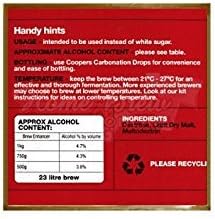
Ingredients

Ranking of the 5 best additives & Enhancers (June 2026)

Learn how brewers use the best additives and enhancers to improve beer flavor, foam, stability and fermentation, without turning it into a chemistry set. Clear, fact based guide with examples from real brewing practice.

17 June 2026 7 min read
Discover our ranking of the 5 best additives & Enhancers based on our tests.

Why “additives and enhancers” scare beer fans, and what they actually mean

Why the word “additive” sounds worse than it is

Many beer lovers hear “additives and enhancers” and instantly think of cheap, industrial lager loaded with chemicals. The reality is more nuanced. In brewing, an additive is simply anything added beyond the basic four ingredients : water, malt, hops and yeast. That can range from harmless clarifying agents to carefully chosen flavor additions.

Part of the fear comes from food scandals in other industries, where mysterious E-numbers and unpronounceable names hide on labels. Beer gets lumped into that anxiety, even though most reputable breweries use a short, tightly controlled list of brewing aids. These products are tested, regulated and used in tiny amounts compared with the main ingredients.

Tradition, purity laws and modern brewing reality

Beer culture still carries the weight of old purity laws, which celebrated a simple ingredient list. Those rules shaped how drinkers think about “real” beer. Yet even traditional breweries quietly rely on modern tools : a clarifier to help beer drop bright, a nutrient to keep yeast healthy, or a foam stabilizer to maintain a creamy head.

Instead of asking “Does this beer contain any additive ?”, a better question is “Why is this product used, and does it change the character of the beer ?”. In later sections, you will see how foam and stability aids, fermentation nutrients and clarifiers fit into that picture.

What labels do not tell you

Beer labels rarely list every brewing aid, which feeds suspicion. Regulations in many countries only require the main ingredients. If you want to judge a beer more fairly, focus on the brewery’s transparency and quality track record, and learn the basics of how storage temperature affects beer stability. That context matters far more than a scary-sounding word like “additive”.

Ranking

#1 🏆 Best choice

Youngs

Youngs Brew Home Brewing Super Wine Yeast Compound For High Alcohol 60g

⭐ Très bien noté 🔥 Populaire
  • Ferments fast and handles high alcohol without stalling
  • 60 g pack lasts for several batches, good value per liter
  • Compound mix means you often don’t need extra yeast nutrient
Youngs Brew Home Brewing Super Wine Yeast Compound is basically a workhorse yeast for people who want strong, cheap, and fast homebrew. It ferments quickly, handles high sugar without whining, and gets you to a solid alcohol level without stalling. The taste is perfectly acceptable for what it is: strong homemade wine that’s better chilled, maybe mixed, and not taken too seriously. Give it a few weeks to rest and it becomes a lot more drinkable.It’s not perfect. The instructions could be clearer, and if you’re chasing high-end wine quality, there are more specialized yeasts out there that will give you cleaner, more nuanced results, especially if you’re working with good grapes or expensive juice. But for casual brewing with supermarket juice and sugar, this stuff is pretty solid and cheap per batch. The 60 g pack lasts for several brews, stores well, and you don’t need separate nutrients for basic recipes.I’d say this is for: beginners who want a strong, forgiving yeast; people making turbo-style wines or party booze; anyone who values strength and speed over fine taste. It’s not for: wine snobs, long-term aging projects, or those who obsess over subtle aromas. If you’re honest about what you’re making and just want something that gets the job done, this yeast is a sensible choice.
8.7 /10
★★★★★ ★★★★★
🌟 Excellent See full review →
See offer Amazon
#2
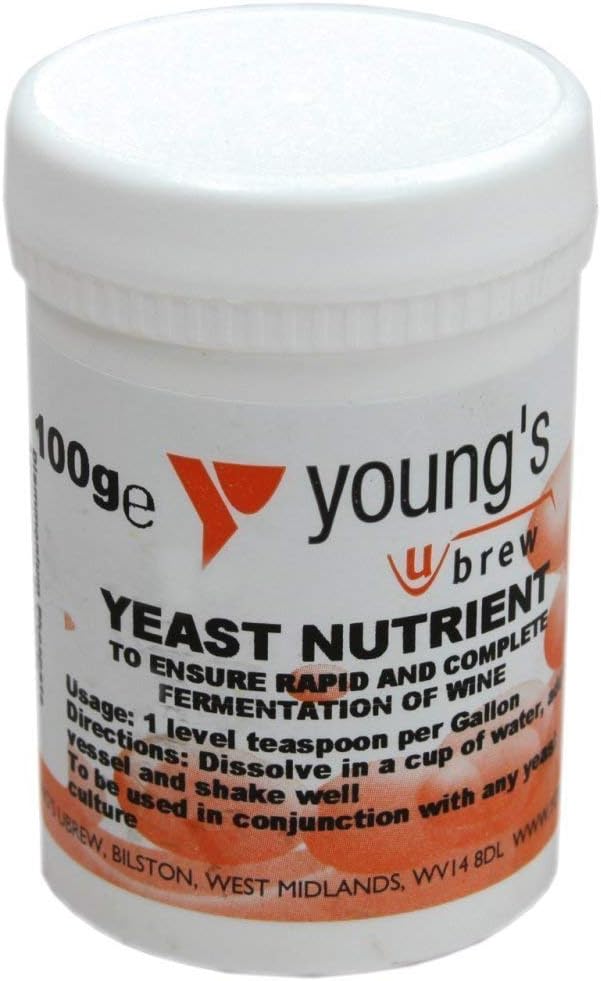
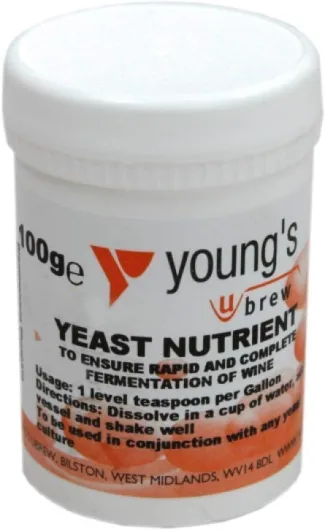
Young's Brewing Set of 3 - 100g yeast nutrient & Multi Purpose Dried Active Yeast & Nutrients Pectolase

Young's Inc

Young's Brewing Set of 3 - 100g yeast nutrient & Multi Purpose Dried Active Yeast & Nutrients Pectolase

  • Reliable yeast that starts quickly and can revive stuck fermentations
  • Good overall value compared to buying yeast, nutrient and pectolase separately
  • Pectolase actually helps with fruit juice yield and clarity in wine
Overall, the Young's Brewing Set of 3 is a practical, no-frills bundle for home brewers who just want their ferments to start reliably and finish cleanly. The yeast wakes up fast, the nutrient keeps it going, and the pectolase helps with fruit wines both in terms of juice yield and clarity. I used it on a stuck elderberry wine, a fresh apple wine and a simple beer kit, and in all three cases it did exactly what I expected without causing any weird flavours or issues.It’s not perfect. The packaging is basic, the instructions are a bit light for complete beginners, and the 100 g sizes can be overkill if you only brew once in a blue moon. You also don’t get the kind of detailed strain information or style-specific guidance you’d see on more specialised yeasts. But if you’re already comfortable with the basics of home brewing and just want a reliable stock of yeast, nutrient and pectolase at a decent price, this set is a sensible choice.I’d recommend it to casual and regular home wine makers who run multiple demijohns and like having ingredients on hand, especially for fruit wines that benefit from pectolase. If you’re a total beginner doing your very first kit, you might prefer a smaller, more guided pack with clearer instructions. And if you’re chasing very specific beer styles or high-end wines, you’ll probably move on to more specialised yeasts later. But for everyday brewing, this bundle gets the job done and offers solid value.
8.6 /10
★★★★★ ★★★★★
🌟 Excellent See full review →
See offer Amazon
#3
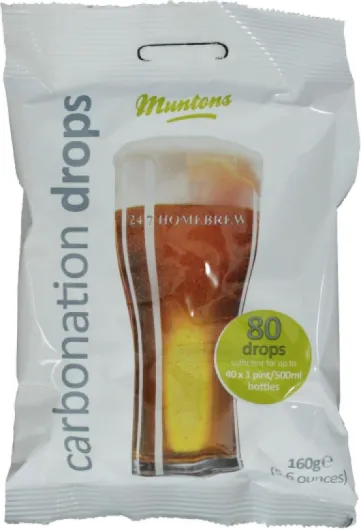
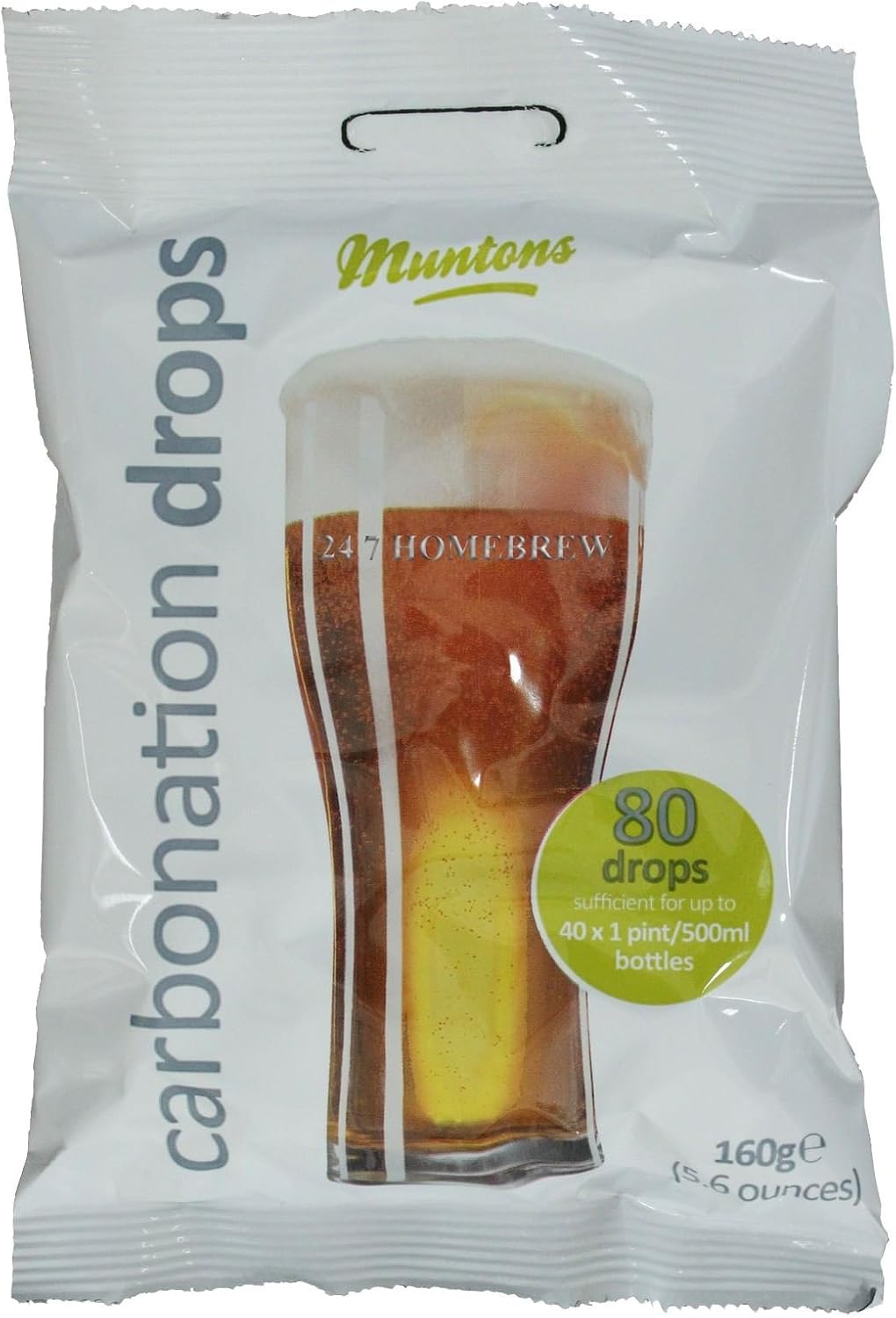
Muntons Carbonation Drops 80 160g Sugar Tablets for Priming Beer & Cider Bottles

Muntons

Muntons Carbonation Drops 80 160g Sugar Tablets for Priming Beer & Cider Bottles

  • Very easy to use: clear dosing (2 drops per 500 ml) with no weighing or calculations
  • Consistent, reliable carbonation with clean flavour and no extra sediment
  • Saves time and reduces hassle on bottling day, especially for small or occasional batches
Muntons Carbonation Drops are basically the “easy mode” for bottle priming. They’re just sugar and glucose pressed into tablets, and they do what they claim: drop them into your bottles and you get consistent, reliable carbonation for beer and cider. In my tests, both the pale ale and cider turned out well-carbonated, with no flat bottles, no gushers, and no strange flavours. The drops dissolve cleanly, don’t add extra sediment, and take a chunk of hassle out of bottling day.They’re not perfect, though. You pay noticeably more per batch compared to using loose sugar, and you lose some control over fine-tuning carbonation levels. The packaging is also basic, with no resealable closure, so you’ll want your own container if you don’t use the whole bag at once. For heavy brewers or people who like to dial in carbonation by style, standard priming methods still make more sense.I’d say these drops are best for casual homebrewers, beginners, or anyone who hates the priming step and is happy to pay a bit extra for simplicity. If you mostly brew kits and just want fizzy beer without thinking too hard, they’re a pretty solid option. If you’re brewing often, on a budget, or chasing precise carbonation for different styles, you’ll probably see them as a handy backup rather than your main solution.
8.5 /10
★★★★★ ★★★★★
🌟 Excellent See full review →
See offer Amazon
#4 💰 Best price

Bigger Jugs

Bentonite - 100g Heavy Duty Resealable Pouch with Tamper Proof Seal - Fining Agent for Home Brew Beers & Wines

  • Clears cloudy wines and beers reliably if given enough time
  • 100 g pouch lasts for many batches, making it cheap per use
  • Heavy-duty resealable pouch keeps the powder dry and is easy to store
After using the Bigger Jugs Bentonite on a few different homebrew batches, my view is pretty straightforward: it’s a basic, no-nonsense fining that does its job for a low price. It clears haze reliably if you follow the instructions, mix it thoroughly, and give it enough time to settle. The pouch is tough, the resealable strip actually works, and 100 g is enough for quite a few brews. It’s not flashy and it’s not trying to be anything more than bentonite powder in a decent bag.On the downside, it’s a bit gritty, so you have to stir it well to avoid clumps, and it’s slower and less “polishing” than some of the more expensive fining systems. If you’re expecting crystal-clear wine in a couple of days, you’ll probably be underwhelmed. Also, the instructions on the pack are pretty minimal, so beginners will likely end up checking online for more detailed guidance. But in my experience, it doesn’t mess with the taste, it doesn’t add off flavours, and it’s cost-effective if you brew regularly.I’d say this is ideal for homebrewers who want a cheap, simple way to help their wines and beers clear without overthinking it. If you’re patient and happy with “clear enough” rather than showpiece clarity, it’s a solid choice. If you’re chasing competition-level shine, need very fast results, or only brew rarely and want something more plug-and-play, you might want to look at higher-end fining kits instead.
8.4 /10
★★★★★ ★★★★★
🌟 Excellent See full review →
See offer Amazon
#5
Coopers DIY Brew Enhancer 2 Home Brewing Additive

Coopers

Coopers DIY Brew Enhancer 2 Home Brewing Additive

  • Noticeably better body and head retention compared to using plain sugar
  • Very easy to use for beginners: just replace the sugar in any standard kit
  • Helps reduce that thin, slightly cidery taste common in cheap kit brews
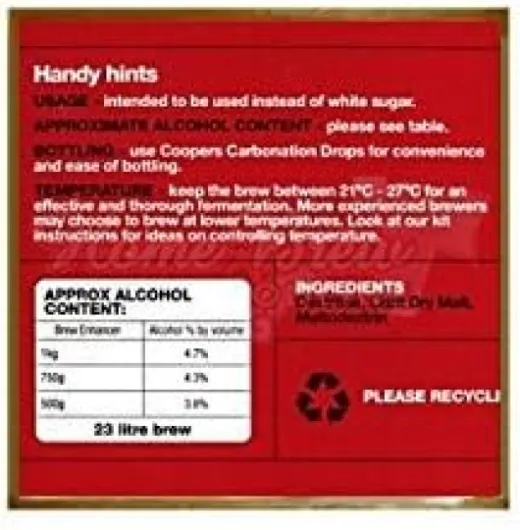
Coopers DIY Brew Enhancer 2 is basically a simple upgrade for kit brewers still using plain sugar. It gives you better body, nicer head retention, and a slightly cleaner, more malt-forward taste. It doesn’t turn a budget kit into craft beer, but it does make those first few batches more drinkable and less obviously “homebrew.” Fermentation is straightforward, the yeast loves it, and you don’t need to change your brewing routine at all – you just swap sugar for this bag.Who is it for? Mainly beginners and casual brewers who want an easy way to make their kit beer taste a bit closer to what they’d buy in a shop, without learning about malt ratios or buying multiple ingredients. If you’re already into all-malt kits, partial mash, or full-grain brewing, this will feel like a half-measure and not great value. In that case, a full kilo of light dry malt or a two-can all-malt kit is a better move. But if you’re still at the stage of “tin of goo + one bag of something,” this is a decent step up from sugar with minimal effort.In short: pretty solid, convenient, and honest about what it does. It improves kit beer enough to notice, but it’s not magic powder. Good if you want better results with zero extra thinking; less convincing if you’re ready to take your brewing a bit more seriously or squeeze maximum value from each batch.
8.3 /10
★★★★★ ★★★★★
🌟 Excellent See full review →
See offer Amazon

Comparison table : Additives & Enhancers

Overall score Taste Value for money Performance Presentation Effectiveness Packaging Ingredients
#1 Youngs
Youngs Brew Home Brewing Super Wine Yeas...
See offer Amazon
8.7/10 ★★★★★ ★★★★★ ★★★★★ ★★★★★ ★★★★★ ★★★★★ ★★★★★ ★★★★★ ★★★★★ ★★★★★ - -
Young's Brewing Set of 3 - 100g yeast nutrient & Multi Purpose Dried Active Yeast & Nutrients Pectolase
#2 Young's Inc
Young's Brewing Set of 3 - 100g yeast nu...
See offer Amazon
8.6/10 - ★★★★★ ★★★★★ ★★★★★ ★★★★★ ★★★★★ ★★★★★ ★★★★★ ★★★★★ ★★★★★ ★★★★★ ★★★★★ ★★★★★
Muntons Carbonation Drops 80 160g Sugar Tablets for Priming Beer & Cider Bottles
#3 Muntons
Muntons Carbonation Drops 80 160g Sugar...
See offer Amazon
8.5/10 - ★★★★★ ★★★★★ ★★★★★ ★★★★★ ★★★★★ ★★★★★ ★★★★★ ★★★★★ ★★★★★ ★★★★★ ★★★★★ ★★★★★
#4 Bigger Jugs
Bentonite - 100g Heavy Duty Resealable P...
See offer Amazon
8.4/10 - ★★★★★ ★★★★★ ★★★★★ ★★★★★ ★★★★★ ★★★★★ ★★★★★ ★★★★★ ★★★★★ ★★★★★ -
Coopers DIY Brew Enhancer 2 Home Brewing Additive
#5 Coopers
Coopers DIY Brew Enhancer 2 Home Brewing...
See offer Amazon
8.3/10 ★★★★★ ★★★★★ ★★★★★ ★★★★★ ★★★★★ ★★★★★ ★★★★★ ★★★★★ ★★★★★ ★★★★★ ★★★★★ ★★★★★ ★★★★★ ★★★★★

Foam, mouthfeel and stability boosters brewers really rely on

How foam actually works in your glass

Foam is not just decoration ; it is a key part of how you experience aroma and texture. Proteins from malt, hop compounds and carbonation all interact to build that creamy head. Brewers use specific ingredients to make this structure more reliable, especially for beers that travel far or sit on shelves for a while.

Common tools include malt-derived proteins, wheat or oats for extra body, and carefully chosen carbonation levels. None of these are “fake” ; they are simply ways to keep the beer tasting and looking as the brewer intended.

Ingredients that boost body and smoothness

When people talk about “mouthfeel enhancers”, they often imagine something artificial. In reality, most breweries lean on very familiar ingredients :

  • Oats and wheat for silkier texture and a stable haze in modern pale ales.
  • Dextrin malts to add body without making the beer cloyingly sweet.
  • Gums and natural polysaccharides in tiny amounts to keep foam and body consistent from keg to keg.

These additions are usually present in low levels and are chosen because they behave predictably in the brewhouse.

Stability from brewery to bar

Stability is where modern brewing science really shows. Temperature swings, transport and storage can all knock the life out of a beer. To fight this, brewers may use small doses of foam-positive extracts or proteins that resist breakdown over time.

Hop products also play a role. Concentrated hop extracts can support bitterness and foam while giving brewers more control than raw hops alone. If you are curious how different hop forms affect flavor and stability, guides on hop varieties decoded help explain what each variety and format brings to the glass.

Yeast nutrients, fermentation aids and what brewers learned from the lab

How nutrients keep yeast happy and hard at work

When brewers talk about “yeast nutrients”, they are not sneaking in mystery chemicals. They are simply giving yeast the vitamins, minerals and nitrogen it needs to ferment cleanly and consistently. Malt provides a lot of this, but not always enough, especially in high‑gravity beers, very pale lagers or recipes with lots of sugar.

Most nutrient blends include things like diammonium phosphate (a nitrogen source), zinc, magnesium and B‑vitamins. These help yeast reproduce, stay healthy and finish the job instead of stalling halfway through. The result is fewer off‑flavours, more predictable attenuation and a beer that tastes the way the recipe intended.

From wild guesswork to measured fermentation

Modern brewing labs changed how we think about fermentation. Instead of hoping a packet of yeast “just works”, brewers now measure cell counts, oxygen levels and nutrient content. They know exactly how much nutrient to add, and when, to avoid stressing the yeast.

This lab‑driven approach is not only for big breweries. Many serious homebrewers use simple tools like hydrometers, temperature control and carefully timed nutrient additions to get professional‑level results. If you are curious how your own batches compare, trying a home brew beer test can highlight where fermentation might be holding your beer back.

Why this matters for flavour and consistency

Healthy yeast produces fewer fusel alcohols, fewer solvent‑like notes and less sulphur. It also helps your beer attenuate properly, which ties directly into the body, sweetness and balance you read about in other parts of this guide. In short, yeast nutrients and fermentation aids are quiet helpers : they do not add flavour themselves, but they allow the yeast to express the recipe’s true character, batch after batch.

Clarifiers, stabilizers and the line between tradition and modern products

From kettle finings to modern filtration

Long before lab-designed products, brewers used simple tools to make beer bright. Irish moss and carrageenan, added late in the boil, help proteins clump together so they drop out of suspension. This makes wort clearer before fermentation even starts. Many traditional breweries still rely on these “kettle finings” because they are effective, inexpensive and derived from seaweed.

After fermentation, other clarifiers come into play. Isinglass (from fish collagen) and gelatin are classic finings that attract yeast and haze-forming particles, pulling them to the bottom of the tank. Some breweries avoid animal-derived products for ethical or dietary reasons, and instead use silica gel or plant-based finings. These alternatives work on the same principle : binding haze-active compounds so they can be removed more easily.

Cold conditioning, stability and shelf life

Clarifiers are only part of the story. Cold conditioning, or “lagering”, naturally drops out proteins and yeast over time. Many modern breweries combine this with filtration or centrifugation to achieve brilliant clarity and longer shelf life. Stabilizers such as PVPP (polyvinylpolypyrrolidone) target polyphenols that would otherwise cause chill haze or premature staling, helping the beer stay attractive and fresh on the shelf.

This is where some drinkers start to worry about a line being crossed. Yet, just as foam enhancers or yeast nutrients are tools to hit a consistent target, clarifiers and stabilizers are about predictability. A brewery shipping beer across a country needs that stability more than a local taproom serving ultra-fresh pints.

Clarity versus character

Not every beer needs to be crystal clear. Hazy IPAs, some wheat beers and farmhouse ales embrace turbidity as part of their identity. In those cases, brewers may skip aggressive fining or filtration, focusing instead on flavor balance and stability. The key is intention : using modern products to support the style, not to strip away its soul.

Flavor additions, legal limits and how to read labels without panic

How brewers add flavor without breaking the rules

When people hear about “flavorings” in beer, they often imagine artificial shortcuts. In reality, most breweries work within very strict regulations that define what can be added, when, and in what quantity. These rules differ by country, but they all aim to protect drinkers from unsafe or misleading products.

Flavor additions fall into a few broad groups :

  • Traditional ingredients like hops, malt, and yeast by-products (esters, phenols) that naturally shape aroma and taste.
  • Natural adjuncts such as fruit, spices, coffee, cacao, or herbs, often added during fermentation or conditioning.
  • Extracts and concentrates, which can be natural or nature-identical, used for consistency in large-scale production.

Regulators set maximum levels for certain flavor compounds and require that potential allergens (for example, lactose or some fruits) appear clearly on the label. In many markets, if a beer uses anything beyond the classic malt–hops–yeast–water combo, the producer must indicate it in the ingredients list or style description.

Reading labels without unnecessary fear

Instead of panicking at any unfamiliar term, focus on a few key points :

  • Ingredients list – The closer it is to basic brewing ingredients plus recognizable foods (orange peel, coriander, raspberry), the more “kitchen-like” the recipe.
  • Allergen statements – Helpful if you are sensitive to lactose, gluten, or specific fruits and spices.
  • Style cues – Pastry stouts, fruited sours, and hazy IPAs often rely on more intense flavor additions, but that does not automatically mean low quality.

Ultimately, flavor additives are tools. Just as foam enhancers or clarifiers can be used responsibly, flavor additions can either respect the beer’s balance or overwhelm it. Let your palate, not scary wording, be the final judge.

Frequently asked questions

According to our tests, the best additives & Enhancers is the Youngs Brew Home Brewing Super Wine Yeast Compound For High Alcohol 60g with a score of 8.7/10.

The cheapest additives & Enhancers in our comparison is the Bentonite - 100g Heavy Duty Resealable Pouch with Tamper Proof Seal - Fining Agent for Home Brew Beers & Wines.

The most popular additives & Enhancers is the Youngs Brew Home Brewing Super Wine Yeast Compound For High Alcohol 60g with 1 136 customer reviews.

To choose a additives & Enhancers, we recommend comparing performance, build quality, value for money and user reviews. Our comparison table above helps you make the right choice.

We have tested 5 Additives & Enhancers to establish this ranking.
#1 Youngs Brew Home Brewing Super Wine Yeast Compound For High Alcohol 60g
8.7/10 Best choice
See offer Amazon