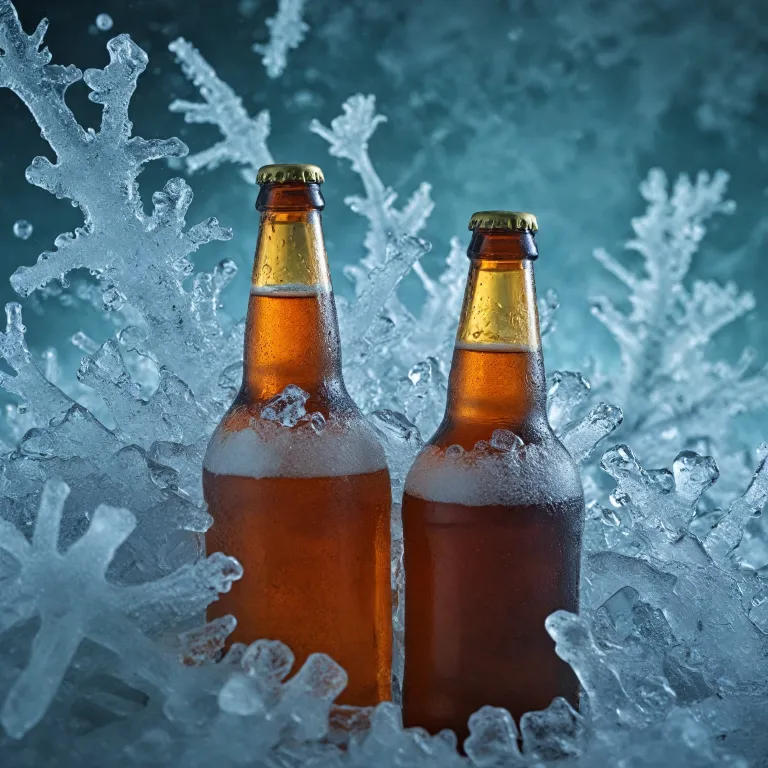

What really happens to beer at its freezing point
What “freezing” really means for beer
Beer does not freeze at exactly the same temperature as pure water. Because it contains alcohol, sugars, and dissolved minerals, its freezing point is slightly lower. Most typical beers start forming ice crystals a little below 0 °C / 32 °F, and the exact point depends on alcohol by volume (ABV) and composition.
As the temperature drops, water in the beer begins to solidify first. Alcohol and many flavor compounds stay in the liquid portion, which becomes more concentrated. This separation is why partially frozen beer can taste oddly strong and unbalanced once it thaws.
What happens inside the bottle or can
When beer reaches its freezing point, ice crystals grow and push the remaining liquid into smaller spaces. In a sealed container, this creates internal pressure that can eventually force caps to leak or cans to bulge. Leave it longer, and you risk a messy burst that will be explained in more detail when looking at why beer sometimes “explodes” in the freezer.
Freezing also affects the delicate balance of malt sweetness, hop bitterness, and fermentation by-products. Some aromatic compounds can be damaged or driven off, so even if the container survives, the beer may taste dull or slightly oxidized after thawing.
Ingredients and freezing behavior
Different beer styles freeze differently. Higher-ABV beers generally freeze at lower temperatures, while lighter lagers freeze closer to water’s freezing point. The type and amount of sugars, proteins, and even hop compounds all play a role. If you are curious about how specific ingredients behave, including how hops contribute to beer’s composition, ingredient-focused guides can give useful context for understanding what happens when your beer gets too cold.
Why beer explodes in the freezer and what water expands really means
Why a frozen beer can suddenly burst
When beer freezes, the water in it starts turning into ice crystals. Water expands as it freezes, but alcohol and dissolved sugars do not expand in the same way. Inside a sealed bottle or can, this uneven expansion creates intense pressure against the glass or metal walls.
At first, you might only notice slush forming. As more water becomes ice, the remaining liquid beer is squeezed into a smaller space. If the container cannot flex enough to absorb that pressure, it will crack, pop its cap, or split at a seam. That is why a beer can look fine one minute and then suddenly leak or explode the next.
What “water expands when it freezes” really means for beer
The phrase sounds simple, but in beer it has a few specific consequences :
- Ice takes more room – Frozen water molecules arrange in a crystal structure that occupies more volume than liquid water.
- Alcohol gets pushed aside – As ice forms, alcohol and flavor compounds are forced into the remaining liquid, making it more concentrated and lowering its freezing point further.
- Pressure builds unevenly – Ice often forms from the outside in, so the center stays liquid while the outer layer becomes a rigid shell, trapping pressure inside.
Why some beers crack and others only get slushy
Not every frozen beer explodes. Factors like alcohol content, container strength, and how quickly the temperature drops all play a role. A strong ale in a thick glass bottle might only form a soft slush, while a light lager in a thin can can rupture dramatically. Even non-alcoholic options, such as traditional root beer styles, can suffer from the same expansion issues ; handcrafted sodas like those described in this guide to flavorful root beer brewing face similar risks when left in the freezer too long.
How different temperatures change the taste of cold beer
Why colder is not always better
Many people assume the colder the beer, the better it tastes. In reality, dropping close to the freezing point can mute aromas and flatten flavors. Ice-cold beer numbs your taste buds, which is handy for hiding flaws in bland lagers, but it is a waste for characterful styles like IPAs, stouts, or Belgian ales.
As beer warms slightly in the glass, carbonation releases more aroma compounds. That is when you start to notice malt sweetness, hop fruitiness, or subtle yeast notes. If your beer has been stored just above its freezing point, it may need a few minutes at room temperature before it shows its full personality.
Ideal serving ranges by style
- Light lagers and pilsners : 38–42 °F (3–6 °C) for a crisp, refreshing snap.
- Pale ales and IPAs : 42–48 °F (6–9 °C) to let hop aroma shine without feeling warm.
- Ambers, bocks, and porters : 45–52 °F (7–11 °C) to balance malt richness and drinkability.
- Strong ales and imperial stouts : 50–55 °F (10–13 °C) so complex flavors can open up.
These ranges sit safely above freezing, but still feel pleasantly cool in the glass.
Keeping beer at the right chill
To hit these temperature windows consistently, you need more control than a random fridge shelf or a risky freezer stint. A dedicated draft setup, such as a pony kegerator for your home bar, lets you dial in serving temperatures precisely. That way, you avoid accidental freezing while keeping each style in its ideal flavor zone.
Practical tips so your beer will not freeze and still stays refreshing
Simple rules to keep beer cold but unfrozen
The easiest way to avoid frozen bottles or cans is to control both time and temperature. Most household freezers sit around -18 °C (0 °F), which is far below beer’s freezing range. That means you should treat the freezer as a quick-chill tool, not a storage space.
As a rule of thumb, a room-temperature bottle usually needs about 20 to 30 minutes in the freezer to reach a crisp serving temperature. Set a timer on your phone ; once it rings, move the beer to the fridge or an ice bucket. Leaving it “just a bit longer” is how you end up with slush or a cracked bottle.
Smarter chilling methods at home
If you want fast, safe chilling, use an ice-and-water bath instead of the freezer. Water fills the gaps between ice cubes and transfers cold more efficiently than air. Add a handful of salt to drop the temperature of the bath even further without risking solid ice inside the bottle.
- Fill a bucket or sink with half ice, half water
- Add 2 to 3 tablespoons of salt
- Submerge bottles or cans and gently rotate them every few minutes
In about 15 minutes, your beer will be cold, but still safely liquid.
Storing beer safely in the fridge
For longer-term storage, keep beer in the refrigerator, not the freezer. Aim for 3 to 7 °C (37 to 45 °F) for most styles. This range keeps the beer refreshing without muting all the aromas you read about when learning how freezing affects flavor and carbonation. Avoid placing bottles right against the back wall of older fridges, where cold spots can dip closer to freezing and create unwanted ice crystals over time.
Comparing beer, vodka and other drinks at low temperatures
How beer compares to spirits and wine in the cold
Beer, vodka, and other drinks all freeze at different temperatures because of their alcohol content. Beer usually sits around 4–7 % ABV, so its freezing point is only slightly below water ; roughly between -2 °C and -3 °C (28–27 °F) for most lagers and ales. That is why a household freezer can easily turn a forgotten bottle into a slushy block.
Vodka and other strong spirits are a different story. Standard vodka at 40 % ABV does not freeze solid until around -24 °C (-11 °F) or even colder, depending on the exact proof. Your kitchen freezer cannot reach that, so vodka simply gets thicker and more syrupy, but never forms the hard ice crystals you see in beer. Whiskies, rums, and gins behave similarly ; the higher the alcohol, the lower the freezing point.
Wine sits somewhere in between. With 11–14 % ABV, most wines freeze around -5 °C to -9 °C (23–16 °F). They are still more vulnerable than spirits, but slightly more resistant than beer. However, just like with beer, partial freezing can separate water and alcohol, dull aromas, and damage the texture.
Why this matters for storage and serving
Because beer freezes so much more easily than spirits, it demands more precise temperature control. A few degrees too cold can ruin the carbonation and mouthfeel you carefully protect when chilling bottles or kegs. Spirits are far more forgiving ; you can keep vodka in the freezer for an ultra-cold shot without worrying about explosions or broken glass.
In short, treat beer like a fresh food product, wine with moderate caution, and spirits as the hardy survivors of your drinks cabinet when temperatures drop.