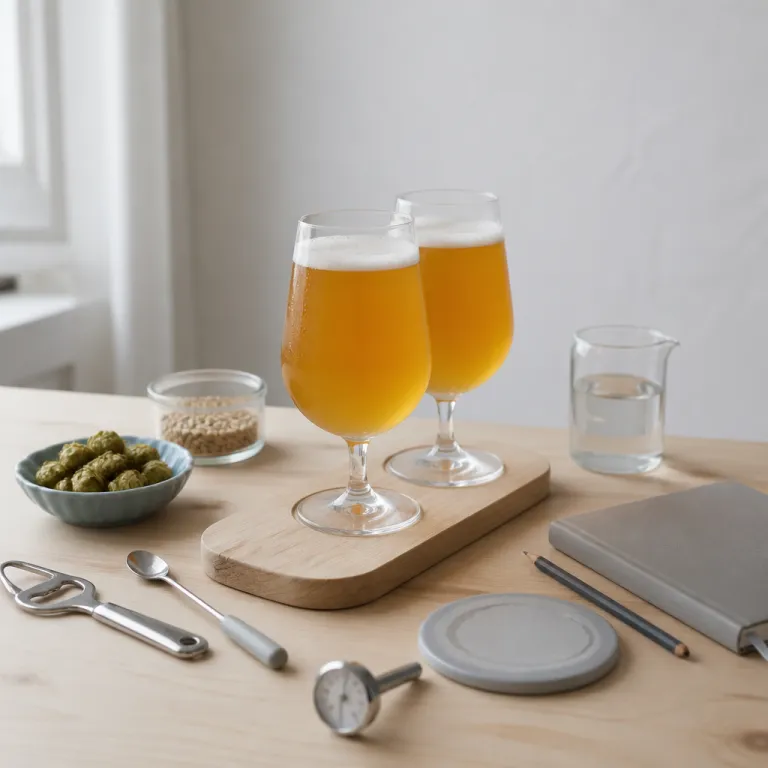
Why revisiting favorite beers can make you a better taster
Why going back to the same beer sharpens your palate
Most people think progress comes from chasing new labels. In reality, your palate improves faster when you return to the same beer and pay closer attention each time. Familiarity removes the noise. You are not distracted by flashy artwork or expectations. You already know the basics, so your brain is free to notice the details you missed before.
On the first tasting, you might only register that a pale ale is “hoppy” and “bitter”. The second time, you start to separate citrus from pine. Later, you notice how the bitterness lingers, how the malt sweetness balances it, and how the aroma changes as the beer warms. Repetition turns vague impressions into precise sensations.
This is exactly how professionals train. Brewers and judges rely on reference beers they taste again and again. These beers become benchmarks for certain styles, flavors, and flaws. When you revisit your own favorites with intention, you are building the same kind of internal reference library.
There is also a practical advantage. When you know a beer well, any small change stands out. A fresher batch, a slightly different serving temperature, or a new food pairing suddenly becomes obvious. That sensitivity will help you in more structured tastings with several familiar beers, and later when you start pairing them with food.
To make this habit even more useful, keep the rest of the experience simple and consistent. Use the same glassware, similar serving temperature, and a neutral snack between sips. High quality, mild foods such as organic extra virgin olive oil with plain bread can help reset your palate without overwhelming the beer.
How to run a simple beer tasting with three familiar beers
Choosing three familiar beers
Start by picking three beers you already know well. Aim for contrast, not complexity. For example :
- One crisp lager or pilsner
- One hop-forward pale ale or IPA
- One maltier option, like a brown ale or stout
Keep them all from breweries you trust and have tasted before. The goal is to compare, not to chase rare bottles.
Setting up your simple tasting
Use identical glasses if you can, and pour small servings. Line the beers up from lightest in flavor to strongest. Take a quiet moment before you start, just as you would when you return to a favorite beer to check how your palate has changed.
Have neutral snacks on hand, like plain crackers, and a glass of water. If you want a salty accent, a small bowl of quality olives and pickled goods can highlight how bitterness, salt, and acidity interact.
What to look for in each glass
For every beer, walk through three quick steps :
- Appearance : color, clarity, foam
- Aroma : what you smell first, then what appears after a swirl
- Taste and feel : sweetness, bitterness, acidity, body, finish
Jot down a few words, even if they feel clumsy. Over time, this habit will support the more focused attention you bring to your regular drinking.
Comparing and talking it through
Move back and forth between the glasses. Ask yourself which beer feels drier, which seems more bitter, which has the softer texture. If you taste with friends, keep it light and fun ; the point is to train your senses, not to turn every pint into an exam.
Pairing favorite beers with food to enjoy more flavor
Why pairing familiar beers with food changes the flavor
When you already know how a beer tastes on its own, adding food turns the glass into a kind of flavor microscope. Because you are not busy decoding the beer itself, you can focus on how it reacts to salt, fat, sweetness, and acidity. This is where all the careful tasting you do with your regular beers suddenly becomes very practical.
A simple way to start is to pour one of your go-to beers and try it with three small bites : something salty, something rich, and something sweet. For example :
- Salty : crisps, salted nuts, or a slice of hard cheese
- Rich : charcuterie, fried chicken, or a creamy cheese
- Sweet : dark chocolate, caramel dessert, or fruit tart
Take a sip of beer, then a bite of food, then another sip. Notice what changes. Does the bitterness soften ? Does the malt taste more like bread, biscuit, or caramel ? Does the hop aroma jump out or fade into the background ? These are the same skills you use when comparing familiar beers side by side, now applied to the plate.
If you want a ready-made framework, you can look at a themed beer and food menu such as this Independence Day beer and food pairing guide. Use it as inspiration, then plug in your own favorite lagers, pale ales, or stouts. Because you already know how those beers taste, you will quickly sense when a pairing works or clashes.
Over time, you will build a mental map : which of your regular beers loves grilled food, which one flatters spicy dishes, and which one shines with dessert. That map makes every future tasting easier and more enjoyable.
From casual beer to careful tasting : paying attention without losing the fun
Shifting from autopilot to mindful sipping
Most of us drink our go-to beers on autopilot. To turn casual drinking into real tasting, start by slowing down the first few sips. Look at the beer for a moment : note the color, clarity, and foam. Then take a short sniff before you drink. Ask yourself what you smell – bread, citrus, caramel, herbs ? You do not need fancy vocabulary, just honest impressions.
On the first sip, focus on three things :
- Texture – light and crisp, or round and creamy ?
- Sweetness vs. bitterness – which one leads, and how long does it last ?
- Finish – does the flavor fade quickly, or linger on your tongue ?
Turning habits into simple tasting rituals
You do not have to turn every beer into a formal tasting like the one with three familiar beers. Instead, build tiny rituals into your normal drinking. For example, make a habit of smelling the beer before the first sip, then pausing after the third sip to notice what has changed as it warms slightly.
When you revisit a favorite, compare it in your mind to the last time you had it. Is it more bitter, less fruity, cleaner, or fuller ? This gentle comparison trains your palate without feeling like homework.
Keeping it fun, social, and relaxed
Careful tasting should add pleasure, not pressure. Share impressions with friends, but avoid turning it into a competition over who has the best tasting notes. A simple “this feels more bitter than usual” or “I am getting more orange peel today” is enough.
By keeping the mood light while paying a bit more attention, you will naturally bridge the gap between casual beer drinking and thoughtful tasting – and your favorite beers will stay fun, not fussy.
How brewers and beer drinkers use familiar beers as reference points
Why familiar beers matter to brewers
For many brewers, a well-known beer is more than something to drink at the end of a shift. It is a benchmark. They taste it regularly to check their own work against a stable reference. If their pale ale feels too bitter compared to that benchmark, they know where to adjust hops. If their stout seems thin next to a classic example, they may tweak the mash or grain bill.
These reference beers help brewers train their palates over time. By returning to the same flavors again and again, they build a mental library of what “right” tastes like for different styles. That same habit is what you build when you drink the same beer twice with attention.
How drinkers use reference beers in everyday tasting
Beer drinkers do something similar, even if they do not call it that. When you say “this IPA reminds me of my usual one, but fruitier”, you are using your go-to beer as a reference point. The more often you revisit it, the clearer that reference becomes.
- Your house lager can be the yardstick for crispness and balance.
- A favorite stout can anchor your sense of roast, sweetness, and body.
- A regular saison can define your expectations for yeast character and dryness.
That habit supports everything else you do with beer. It makes side-by-side tastings easier to interpret, because you already know one of the beers very well. It sharpens your food pairing instincts, because you remember how that familiar beer behaved with different dishes. And it keeps the fun in focus : instead of chasing every new release, you can enjoy the comfort of a known beer while still learning something new each time you pour it.