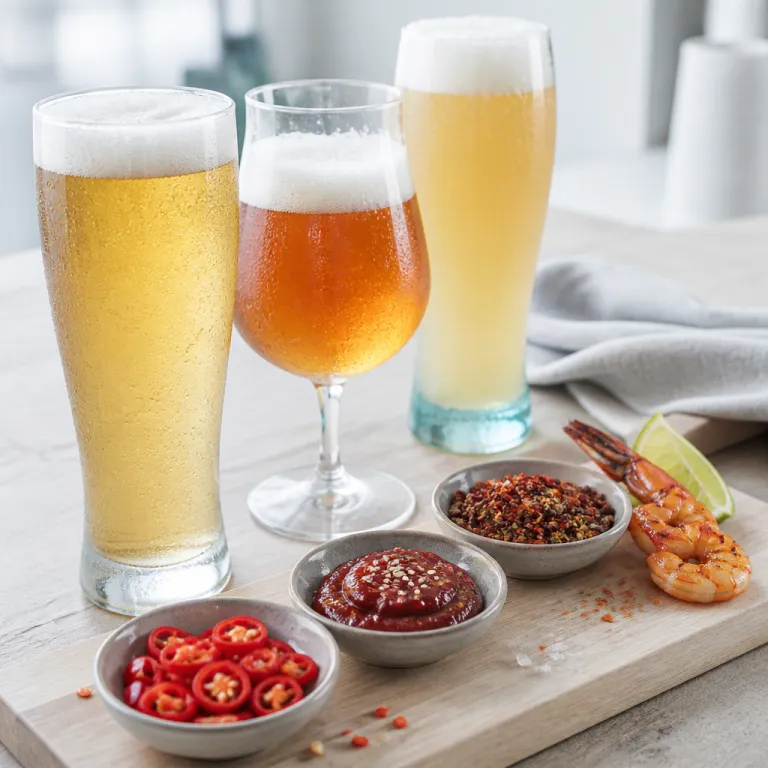
Why beer spicy food pairing hits different than wine
Why beer plays so well with chili heat
When you are eating spicy food, beer behaves very differently from wine. Capsaicin, the compound that makes chilies burn, is fat soluble, not water soluble. That means a cold sip of water or a light white wine often just moves the heat around your mouth instead of calming it. Beer, on the other hand, brings carbonation, malt sweetness and, in many styles, a gentle grainy richness that can soften the burn and reset your palate between bites.
Alcohol level matters too. High alcohol wines can actually intensify the perception of heat, making a hot curry or fiery taco feel even more aggressive. Many beers sit at a more moderate strength, so they tend to feel refreshing rather than punishing alongside chili heat. Even when you move into stronger styles, you can choose carefully to balance spice instead of amplifying it.
Texture is another key difference. The bubbles in beer scrub your tongue, lifting away chili oils and food residue. That light scrubbing effect makes each mouthful of food feel brighter and more defined. Wine, being still, does not offer that same cleansing sensation, so the heat can build and linger.
Finally, beer simply offers a wider playground of flavors for spicy dishes. From crisp lagers to fruity wheat beers and resinous IPAs, you can match, contrast or amplify flavors in ways that are harder to achieve with wine. This is where tasting tools, like a dedicated beer flight tasting set, become useful as you experiment with different styles and spice levels, setting the stage for the more detailed pairing ideas that follow in the rest of the guide.
How heat, flavors and beer styles work together
Understanding chili heat on your palate
Spicy food feels hot because of capsaicin, the compound in chilies that binds to pain receptors in your mouth. It is fat-soluble, not water-soluble, which is why water does not help much. Beer, however, brings alcohol, carbonation, and residual sweetness that can either calm or intensify that burn.
Alcohol above moderate levels can boost the perception of heat, making strong beers feel sharper with very spicy dishes. Carbonation scrubs your tongue, briefly lifting flavors but sometimes spreading the chili burn around your mouth. A touch of sweetness, on the other hand, softens the impact of capsaicin and gives your palate a short reset between bites.
How flavor intensity and malt balance the fire
Spicy dishes are rarely just “hot” ; they also have sweetness, acidity, umami, and sometimes smoke. Matching the intensity of these flavors with the right beer style is key. Light, crisp beers suit bright, fresh heat, while richer, malt-forward styles work better with deep, slow-building spice.
Malt sweetness is your main ally. Beers with a gentle caramel or bready profile cushion chili heat and keep flavors from feeling harsh. Dry, highly attenuated beers can make a fiery dish feel even more aggressive, especially if the alcohol is high.
Bitterness, hops and aroma in the heat game
Hop bitterness can clash with intense chili, stacking bitterness on top of burn. Yet hop aroma – citrus, tropical fruit, or floral notes – can beautifully echo spices in the dish. The trick is balancing bitterness, alcohol, and sweetness so the beer refreshes instead of punishes.
When you start testing these interactions at home, a small beer tasting flight set makes it easy to compare how different styles react to the same spicy plate.
Best beer matches for popular spicy dishes
Fiery tacos, burritos and Mexican street food
Mexican dishes bring chili heat, citrus, and sometimes smoky notes. For classic street tacos with salsa roja or al pastor, reach for a crisp Mexican lager or a clean pilsner. The high carbonation and light malt profile rinse away chili oils while lime and cilantro stay bright. For richer burritos smothered in spicy sauce, an amber lager or Vienna lager adds gentle caramel sweetness that softens the burn.
Indian curries and Southeast Asian heat
Spicy curries layer chili, ginger, garlic, and warm spices. A slightly sweet, low-bitterness beer works best. Try a Belgian-style witbier with coconut curries ; the orange peel and coriander echo the aromatics while wheat smooths the texture. For vindaloo or Thai red curry, a malty helles or a light bock offers enough body to cushion the heat without turning heavy. When the dish leans herbal (Thai basil, lemongrass), a gently hopped pale lager keeps those fresh notes alive.
Hot fried chicken, wings and American bar food
With Nashville hot chicken or extra-hot wings, you are fighting both spice and fat. Highly carbonated beers are your friend. A kölsch or American blonde ale scrubs the palate between bites, while subtle fruitiness plays nicely with tangy sauces. For smoky chipotle wings or jalapeño poppers, a brown ale or porter adds roasted, nutty depth that matches charred flavors without amplifying heat.
Chili, stews and hearty comfort dishes
Beef chili, spicy gumbo, or chili con carne call for beers with more malt backbone. A robust porter or dry stout highlights roasted peppers and grilled meats, and the roasted barley can mimic the char from the pot. If you want more pairing ideas across cuisines, this guide to top beer recipes and food pairings can help you build full menus that balance heat, richness, and refreshment.
How IPA, pale ales and other beers behave with chili heat
Why hops can make chili feel hotter
IPAs and many pale ales are built on hops, and hops bring bitterness. Bitterness and chili heat often amplify each other. When you sip a very bitter IPA with a fiery curry or hot wings, the hop bite can scrub away sweetness and fat, stripping your mouth’s natural “cooling” layer. The result : the next bite may feel even hotter.
On top of that, many modern IPAs are quite dry. Less residual sweetness means less balance for the burn. If your dish is already high on Scoville units and low on creaminess, a sharp, bitter IPA can turn each mouthful into a challenge rather than a pleasure.
When IPA and pale ale pairings actually work
That does not mean you must avoid hops with spicy food. The key is choosing the right style and intensity. Juicy or hazy IPAs, with softer bitterness and lots of fruit character (mango, pineapple, citrus), can echo the flavors in Thai, Caribbean, or Mexican dishes while keeping the heat playful rather than punishing.
American pale ales, which are usually less bitter than big IPAs, can be great with medium-spicy dishes : think chili con carne, buffalo wings, or peppery grilled sausages. Their citrusy, piney notes brighten the food, while a touch of malt sweetness keeps the capsaicin in check.
Practical tips for hop-forward beers and heat
- Dial down bitterness as the chili level rises ; the hotter the dish, the softer you want the hops.
- Look for IPAs with juicy, fruity hop profiles rather than ultra-dry, resinous ones.
- Use malt sweetness and moderate alcohol to cushion the burn, especially with dry rubs and hot sauces.
- If a pairing feels too intense, switch to a maltier or lower-IBU beer instead of forcing it.
Simple rules to pair beer and spicy dishes at home
Start with what you already like
Begin with the beers you enjoy most and build from there. If you are a pilsner fan, try it first with your go-to curry or tacos, then note whether the heat feels sharper or softer. Lager lovers will often find that crisp, clean profiles calm moderate spice, while maltier beers can make sweetness in sauces pop.
Match intensity, then adjust
Think about how bold both the dish and the beer are. Light, delicate beers tend to vanish next to fiery Sichuan or vindaloo, while a hefty stout can crush a mild green curry. Aim for similar intensity, then tweak : if the heat is overwhelming, move to a slightly sweeter or fuller beer ; if the dish feels flat, try something hoppier or more bitter.
Use three simple pairing moves
- Cool it down : choose lower bitterness, moderate alcohol and a touch of sweetness (wheat beers, helles lagers) to soften chili burn.
- Turn up the volume : pick hoppy pale ales or IPAs when you want the spice to feel brighter and more electric.
- Play contrast : roasty stouts or dark lagers can add chocolate, coffee or caramel notes that frame smoky or grilled chiles.
Pay attention to temperature and glass
Serve spicy-food beers a little colder than you would for sipping alone. The chill reins in both alcohol warmth and hop bite, which can otherwise amplify heat. Use simple, straight-sided glasses for lagers and pale ales, and slightly tulip-shaped glasses for aromatic styles to keep those fruity, cooling aromas focused.
Keep notes and repeat what works
When a pairing really sings, jot down the beer style, the dish and what you liked about the combo. Over a few meals, patterns emerge : you will quickly see which beers tame heat, which ones boost it and which are your personal spicy-food champions.