
Summary
Editor's rating
Is the bundle actually good value for home brewers?
Bags, labels and storage practicality
What’s actually in these powders and how you use them
Fermentation speed, reliability and final result
What you actually get in the pack
Does it actually get your brew fermenting?
Pros
- Reliable yeast that starts quickly and can revive stuck fermentations
- Good overall value compared to buying yeast, nutrient and pectolase separately
- Pectolase actually helps with fruit juice yield and clarity in wine
Cons
- Basic packaging with limited instructions, not ideal for total beginners
- Large 100 g packs can be overkill for very occasional brewers

Specifications
View full product page →| Brand | Young's Inc |
A cheap way to get a basic brewing setup in one go
I picked up the Young's Brewing Set of 3 because I was tired of buying yeast, nutrient and pectolase separately and paying extra postage every time. I brew small batches of wine and the odd beer kit at home, nothing fancy, just demijohns in the spare room. This pack looked like an easy way to top up the basics in one hit without overthinking brands and types. No fancy packaging, no big promises, just three bags that are supposed to get fermentation going and help clear fruit wines.
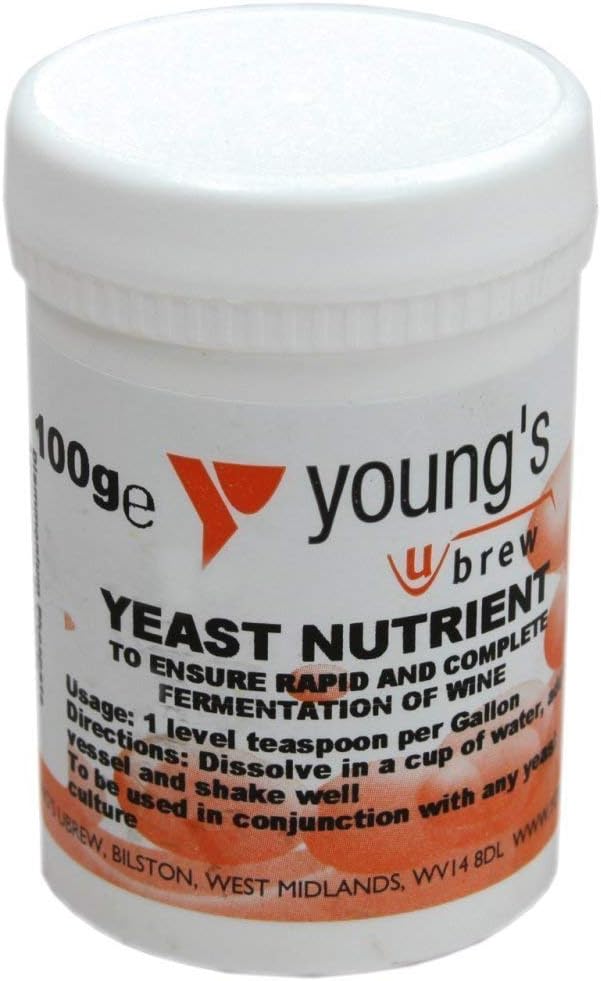
In the box you get 100 g of dried active yeast, 100 g of yeast nutrient and 32 g of pectolase. On paper, that’s enough to cover quite a few 4.5–5 litre batches of wine, plus some beer. I mainly wanted it for a couple of stuck fruit wines and to have yeast handy so I don’t have to run to Wilko or a local shop every time I decide to start a new demijohn. The rating on Amazon (4.6/5) also convinced me it wasn’t total junk.
I’ve used it now on a stuck elderberry wine, a fresh apple wine and a basic pale ale kit, so I’ve had a bit of time to see how it behaves in real life. I’m not a pro brewer and I don’t care about hitting competition-level results; I just want the stuff to ferment properly and not taste off. With that mindset, this set is more about practicality than chasing the perfect yeast strain.
Overall, my first impression is that it’s a pretty solid, no-nonsense bundle. It’s not going to magically fix bad brewing habits, but if you already know the basics, it does what you expect: it wakes up quickly, it chews through sugar without drama, and the pectolase helps with hazy fruit wines. There are a few downsides around information and precision, but for casual home brewing it’s decent value.
Is the bundle actually good value for home brewers?
In terms of value for money, this set makes sense if you’re brewing fairly regularly and you use all three products. Buying 100 g of yeast, 100 g of nutrient and 32 g of pectolase separately, plus shipping, usually works out more expensive than grabbing this combined set, especially if you’re ordering online. You also save yourself a bit of hassle by getting everything in one go instead of chasing three different listings.
From a usage point of view, 100 g of yeast is a lot for casual brewing. At roughly 4–5 g per gallon, you’re looking at around 20–25 batches per pack if you’re only doing wine. Same for the nutrient. The 32 g of pectolase will last less long if you use it on every fruit wine, but you still get several demijohns out of it. So if you brew maybe once a month or more, you’ll probably use it all before it gets too old. If you only do a batch or two a year, this might actually be more than you need, and some of it might end up out of date.
Compared to grabbing tiny 5–10 g sachets of yeast from high street shops, this works out cheaper per batch. The trade-off is you have to store it properly and pay a bit more upfront. For me, that’s worth it, because I hate running out of yeast or nutrient on a weekend when shops are closed. One Amazon reviewer mentioned it was cheaper to buy all three together, and that matches my experience when I did the maths.
So on value, I’d say it’s good but not mind-blowing. If you’re an occasional brewer who just wants a single sachet for a one-off kit, this is overkill. But if you’ve already got a few demijohns on the go and you plan to keep brewing, the bundle is a cost-effective, practical stock-up. You’re basically paying for convenience and bulk, not fancy branding or extra features.
Bags, labels and storage practicality
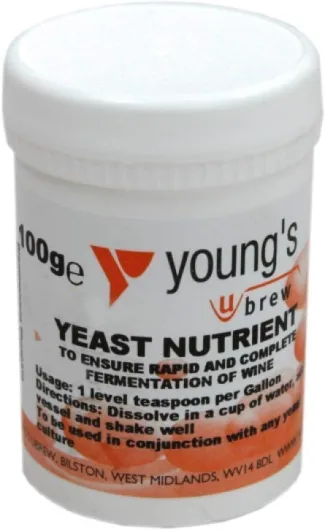
The packaging is very straightforward: three resealable-ish plastic bags (mine were heat-sealed with a tear notch; I transferred them to jars after opening). Each bag has a printed label with the product name, weight, brand (Young’s), and best-before date. No scoops, no inner foil pouches, no fancy branding. If you’re used to more polished homebrew brands, this feels a bit barebones, but functionally it’s fine.
Once opened, I’d strongly recommend doing what I did: pour each product into its own airtight jar or container, label it, and keep it somewhere cool and dry. Dried yeast and pectolase both hate moisture, and the original bags aren’t ideal for constant opening and closing in a steamy kitchen. The 100 g size for yeast and nutrient is quite generous, so you’ll be dipping into these several times. A proper container makes that less messy and keeps everything fresher.
The only minor annoyance is that there’s no built-in measuring spoon or clear dosing chart on the front of the packs. For experienced brewers that’s not a big deal, but if you’re new, you’ll probably be Googling “teaspoons of yeast per gallon” like I did the first time years ago. A simple table on the back would have been handy. Also, the design is very plain, which doesn’t affect performance at all, but it does make it easier to mix up bags if you’re not paying attention, since from a distance they look quite similar.
On the plus side, the packs arrived unbroken, no powder leaks, and the labels were easy to read. For something that lives in a cupboard and gets used by the teaspoon, I don’t need more than that. It’s functional packaging that keeps costs down, but you do have to take a bit of responsibility for storing and labelling things properly once you open them.
What’s actually in these powders and how you use them
The set is basically three different products: dried active yeast, yeast nutrient, and pectolase. The yeast is a standard dried brewing yeast, not some fancy named strain on the packet. It looks and behaves like typical granulated dried yeast: small beige grains that rehydrate quickly in lukewarm water. There’s no strong smell beyond the usual yeasty scent. I used roughly 1 level teaspoon (about 4–5 g) per 4.5–5 litres (1 gallon), which is the usual homebrew rule of thumb.
The yeast nutrient is a fine white powder. Young's doesn’t list a detailed breakdown on the packet I got, but based on typical homebrew nutrient, it’s likely a mix of diammonium phosphate and other minerals that help the yeast grow and stay active. I add about 1 teaspoon per gallon at the start of fermentation for wines, and for the stuck elderberry batch I split the dose: a bit at re-pitching, then a bit more after 24 hours. It dissolves easily when stirred in. There’s no obvious flavour from it in the final drink; its job is purely to keep the yeast fed.
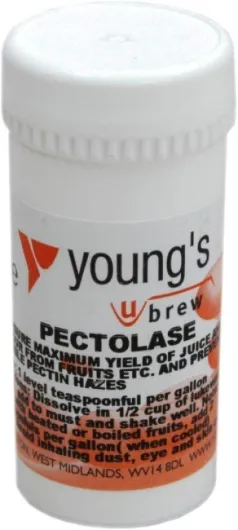
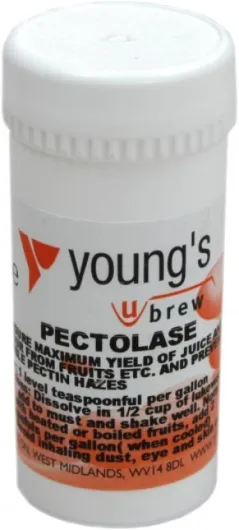
The pectolase (pectic enzyme) is the one that makes the most visual difference for fruit wines. It’s a fine off-white powder you add to crushed fruit or juice to break down pectin. I used 1 teaspoon per gallon on the apple wine pulp, left it overnight, then pressed and fermented. The juice yield seemed higher and the must looked less cloudy from the start. Over time, the wine cleared better than some of my older batches where I skipped pectolase. It doesn’t add any noticeable taste; it just helps with juice extraction and clarity.
If you’re picky about exact ingredient lists and E-numbers, you might find the lack of detailed composition a bit annoying. There’s enough basic info to use it safely for home brewing, but not a full breakdown like you’d see on some more technical products. Personally, for casual use, I’m fine with that. I care more that it works and doesn’t throw off weird flavours, and on that front, the ingredients seem standard and effective.
Fermentation speed, reliability and final result
Performance-wise, I looked at three things: how fast fermentation starts, how stable it is, and what the finished drink is like. On my elderberry and apple wines, the yeast usually showed visible signs (foam and airlock activity) in under 12 hours at around 20°C. That’s about what I expect from a decent dried yeast. It’s not lightning fast, but it’s not sluggish either. Compared to a cheap no-name sachet I once grabbed from a discount shop, this definitely behaved more reliably, especially on the stuck batch.
In terms of stability, I didn’t get any sudden stalls once things were going. The elderberry wine, which had originally stalled halfway, finished fermenting down to around 0.996 on the hydrometer after re-pitching with this yeast and adding nutrient. That took about another 5–6 days of steady bubbling. The apple wine ran from start to dry in about 7–8 days. For home brewing, that timing is perfectly fine. It’s not turbo yeast pace, but it’s also not dragging on for weeks without reason.
On the final result, the yeast seems fairly neutral. It doesn’t add any obvious strong flavour of its own that I could pick up. The elderberry wine tasted like elderberry wine should: fruity, a bit tannic, nothing strange. The apple wine was clean, maybe a bit sharp at first, but that’s more to do with the recipe than the yeast. For the beer kit, it produced a straightforward, drinkable ale. If you’re into very specific styles and characterful yeast, you’ll probably want more specialised strains, but for general wine and basic beer, this is fine.
The only limitation I noticed is that you don’t get much guidance on alcohol tolerance or ideal temperature ranges on the pack. I assumed it’s in the normal 12–14% range for wine yeast and aimed for room temperature, and it handled that without drama. If you’re trying to push very high ABV dessert wines or very cold ferments, you might want something more tailored. But for standard 11–13% fruit or kit wines, the performance is reliable and predictable, which is what most casual home brewers want.
What you actually get in the pack
In practice, the Young's Brewing Set of 3 is just three separate sachets tossed into a simple outer pack: one 100 g bag of dried active yeast, one 100 g bag of yeast nutrient, and one 32 g bag of pectolase. No fancy box, no glossy booklet. Mine arrived in a basic cardboard parcel with the three bags inside, each clearly labelled with product name, weight and best-before date. It’s functional, not pretty, which is fine for something that’s going straight into a cupboard.
The main thing I checked right away was the expiry dates. On my set, the yeast had about 14 months left, the nutrient around 16 months, and the pectolase similar. That matches what one of the Amazon reviewers said (roughly 13–15 months). So you’re not getting short-dated leftovers, at least in my case. For someone who brews every couple of months, that’s enough time to use it all without stressing.
The only real issue with the presentation is the lack of detailed instructions. You get some basic info on the bags, but nothing very precise like “X grams per litre” in a big, clear font for beginners. If you’ve brewed before, you’ll probably know the rough dosages or you’ll just look them up online. But if this is your first time ever, you might be guessing a bit. I ended up checking standard dosing: about 1 level teaspoon of yeast per gallon, similar for nutrient, and 1–2 teaspoons of pectolase for fruit wines.
So, presentation-wise: it’s minimal but clear enough if you already know what you’re doing. If you like detailed guides and hand-holding, you won’t find that here. It feels like a product made for people who already have at least one or two brews under their belt, not total beginners reading every line on the packet.
Does it actually get your brew fermenting?
This is where the set matters: does the yeast wake up fast, and does the nutrient and pectolase actually help? In my case, yes, it does the job. I tested the yeast first on a stuck elderberry wine that had been sitting half-fermented for about a week. I rehydrated a teaspoon of the yeast in lukewarm water with a pinch of sugar for 15 minutes. Within about 5–10 minutes, I could see a light foam forming. After pitching it into the demijohn, I added about a teaspoon of the yeast nutrient. By the next morning, the airlock was bubbling steadily again. So for reviving a stuck fermentation, it worked well.
On a fresh apple wine batch, I used the full combo properly: pectolase on the pulp overnight, then yeast and nutrient the next day. The pectolase seemed to help a fair bit. The must looked less gloopy and more juicy, and fermentation kicked off in under 12 hours at around 20–21°C. Compared to some generic supermarket wine yeast I’ve used before, this Young's yeast starts at least as fast, maybe slightly faster, and it keeps a steady pace for several days without stalling, as long as the temperature is reasonable.
I also tried the yeast on a basic beer kit just to see if there was anything weird in the flavour. The beer fermented cleanly in about a week. I didn’t notice any odd off-flavours that I could blame on the yeast. It’s clearly not some fancy strain designed for specific beer styles, but for simple ales and general-purpose use, it’s fine. The yeast nutrient seems pretty standard: I use around 1 teaspoon per gallon for wines, and it keeps the yeast happy, especially on fruit wines that don’t have as many nutrients as grape juice.
Overall, in terms of effectiveness, I’d say it’s nothing special but solid. It gets stuck ferments moving again, it handles new batches without fuss, and the pectolase genuinely helps with fruit extraction and haze. It’s not going to fix badly sanitised equipment or very low temperatures, but if your process is decent, the set does what it’s supposed to do: it gets fermentation going and keeps it going.
Pros
- Reliable yeast that starts quickly and can revive stuck fermentations
- Good overall value compared to buying yeast, nutrient and pectolase separately
- Pectolase actually helps with fruit juice yield and clarity in wine
Cons
- Basic packaging with limited instructions, not ideal for total beginners
- Large 100 g packs can be overkill for very occasional brewers
Conclusion
Editor's rating
Overall, the Young's Brewing Set of 3 is a practical, no-frills bundle for home brewers who just want their ferments to start reliably and finish cleanly. The yeast wakes up fast, the nutrient keeps it going, and the pectolase helps with fruit wines both in terms of juice yield and clarity. I used it on a stuck elderberry wine, a fresh apple wine and a simple beer kit, and in all three cases it did exactly what I expected without causing any weird flavours or issues.
It’s not perfect. The packaging is basic, the instructions are a bit light for complete beginners, and the 100 g sizes can be overkill if you only brew once in a blue moon. You also don’t get the kind of detailed strain information or style-specific guidance you’d see on more specialised yeasts. But if you’re already comfortable with the basics of home brewing and just want a reliable stock of yeast, nutrient and pectolase at a decent price, this set is a sensible choice.
I’d recommend it to casual and regular home wine makers who run multiple demijohns and like having ingredients on hand, especially for fruit wines that benefit from pectolase. If you’re a total beginner doing your very first kit, you might prefer a smaller, more guided pack with clearer instructions. And if you’re chasing very specific beer styles or high-end wines, you’ll probably move on to more specialised yeasts later. But for everyday brewing, this bundle gets the job done and offers solid value.