
Summary
Editor's rating
Taste: Decent Beer, Not Craft-Bar Level
Value: Cheap Beer Factory or Overpriced Starter Toy?
Design: Simple, Plastic, and Mostly Foolproof
Materials: Plastic Everywhere, but It Holds Up
Durability: How It Holds Up After Several Batches
What You Actually Get in the Box
Effectiveness: Does It Actually Make 6 Gallons of Beer Easily?
Pros
- Very beginner-friendly: clear process, built-in tap, and bottling wand make brewing and bottling simple
- Brews a full 6 gallons per batch, keeping cost per beer low compared to store-bought
- Plastic fermenter and PET bottles are lightweight, shatterproof, and easy to handle and clean
Cons
- Beer quality is decent but not on par with good craft or advanced homebrew setups
- Mostly plastic construction and PET bottles may scratch and need replacing over time
- No sanitizer included, so you must buy extra essentials before your first brew

Specifications
View full product page →| Brand | Coopers |
A 6-Gallon Shortcut Into Homebrewing
I’ve been messing around with homebrew on and off for a while, and the Coopers DIY Beer 6 Gallon Kit is one of those sets I’d recommend to friends who “want to brew” but secretly don’t want to deal with all the gear and steps. It’s basically a big plastic fermenter, a pile of PET bottles, and a pre-hopped extract that lets you get beer in the fridge without learning half a chemistry degree. If you’re dreaming of building a fancy all-grain setup with pumps and stainless everywhere, this is not that. This is the shortcut version.
In my case, I used it for a few batches over a couple of months, mostly lagers and a pale-style refill. I wasn’t trying to win competitions, just wanted something drinkable and cheaper than buying cases at the store. The promise is simple: 6 gallons of beer with minimal fuss, using mostly just tap water, sugar, and their extract cans. And honestly, that’s more or less what you get. Not magic, but it works.
What struck me first is how beginner‑friendly the whole thing is. The fermenter is basically idiot-proof, the instructions are clear enough, and you don’t need to buy much else to get started. You’re not juggling glass carboys, siphons, and a dozen extra tools. It’s very plug‑and‑play by homebrew standards. That’s a big deal if you’ve never brewed before and just want something that doesn’t feel like a science project.
Of course, it’s not perfect. The beer is decent but not bar‑level craft, and the plastic gear has limits. But if your goal is cheap, reliable, drinkable beer at home, and you don’t want to go deep into the hobby (yet), this kit is a pretty solid entry point. I’d say it’s aimed at people who want to test the waters of homebrewing without spending a fortune or filling their kitchen with gear.
Taste: Decent Beer, Not Craft-Bar Level
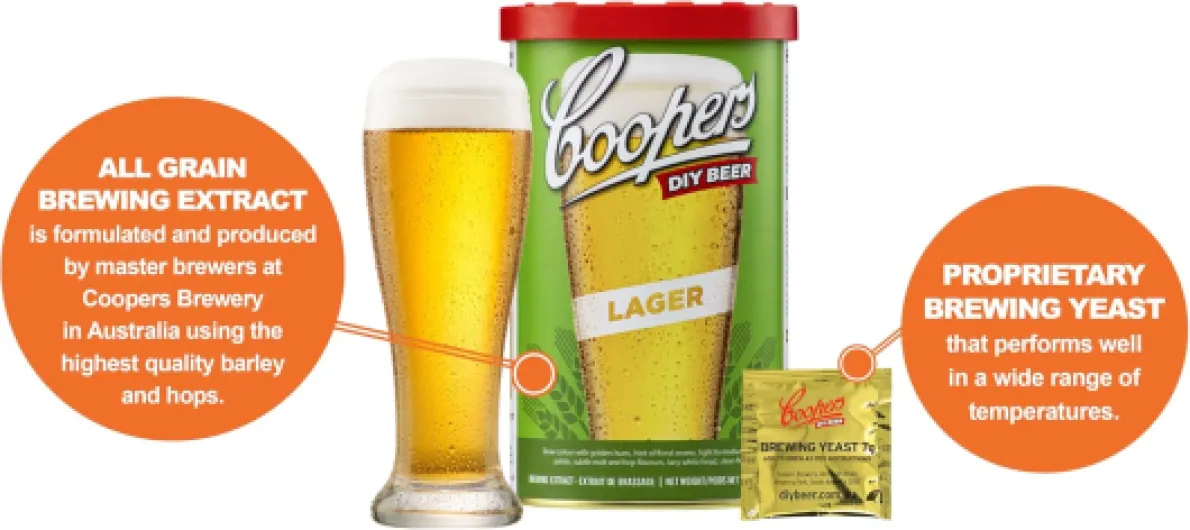
The kit comes with a Coopers Lager extract, which gives you a light, straw‑colored beer with a white head. My first batch, brewed more or less by the book with the included Brew Enhancer and the standard yeast, turned out perfectly drinkable but nothing special. Think along the lines of a basic supermarket lager: light body, mild malt, gentle bitterness, and a clean finish. It’s fine for BBQs, watching a game, or just having a cold one after work. If you’re expecting a complex, hoppy craft IPA, you’ll be disappointed.
What matters more than the extract, honestly, is how patient you are. My first batch tasted a bit “young” at 2 weeks in the bottle – drinkable, but slightly rough around the edges. By week 3 and 4, it had smoothed out and was noticeably better. So if you brew with this kit, give the beer time. Don’t judge it only at the 2‑week mark. A lot of people rush it, drink it early, and then complain it tastes a bit like cheap beer. If you let it sit, it improves.
Another thing: the kit itself doesn’t limit your taste options. Coopers has a bunch of different refills (pale ale, stout, etc.), and you can also start tweaking with extra hops, different sugars, or even swapping the yeast once you feel more confident. Out of the box, though, the taste is solid budget beer. It’s better than the cheapest canned stuff, but it’s not going to beat a good microbrew from a bottle shop.
Overall, I’d rate the taste as good enough for the price and effort. If your goal is to impress beer nerds, this isn’t the right path. If you just want to fill your fridge with cheap, reliable lager that you brewed yourself with minimal work, this kit delivers. The base extract is a decent starting point, and with a bit of patience and maybe some small tweaks over time, you can get something you’re happy to drink regularly.
Value: Cheap Beer Factory or Overpriced Starter Toy?
On the value side, this kit sits in a pretty good spot. You’re getting a complete setup that can brew 6 gallons at a time, which is more than a lot of smaller starter kits. Once you’ve bought it, the cost per batch mainly comes down to the extract, sugar, and caps. Several users (and my own rough math) put it at around 30% of the price of buying the same volume of cheap store beer, depending on where you live. If you drink regularly, the kit pays for itself fairly quickly.
Where the value is strongest is for beginners who want something plug‑and‑play. If you tried to piece together the same gear separately – fermenter, bottles, hydrometer, wand, etc. – you’d probably end up spending a similar amount, plus time researching every little item. Here you just buy once and start brewing. For someone curious about homebrewing but not sure they’ll stick with it, this is a low‑risk way in. If you end up loving the hobby, the fermenter and some of the tools will still be useful later, even if you upgrade other parts.
On the downside, it’s still not the absolute cheapest way to brew if you’re willing to shop around for used gear, glass carboys, and so on. Also, the included extract is fine but not special; if you’re picky about beer style, you’ll probably spend extra on different refills or ingredients. And you do have to factor in buying sanitizer, maybe a better thermometer, and possibly replacing PET bottles over time.
But looking at the whole package – ease of use, the amount of beer per batch, and the fact that everything is reusable – I’d say the value is strong for its niche. It’s especially good for people who drink a fair amount of lager and just want a steady supply of decent, cheap beer without going deep into brewing gear. If you’re already an experienced brewer with equipment, it’s less interesting. For a first kit, though, the price-to-fun-and-beer ratio is hard to argue with.
Design: Simple, Plastic, and Mostly Foolproof
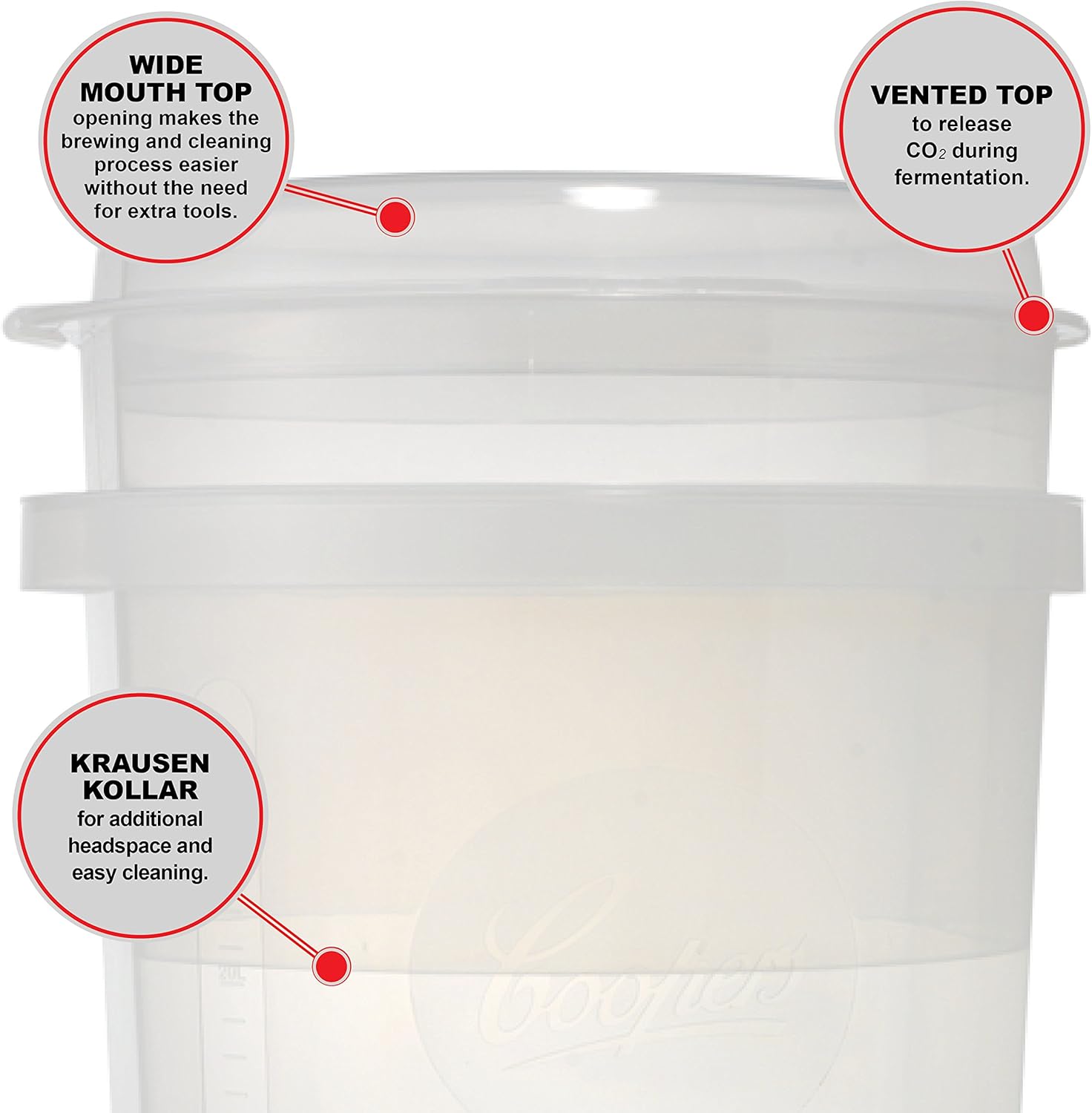
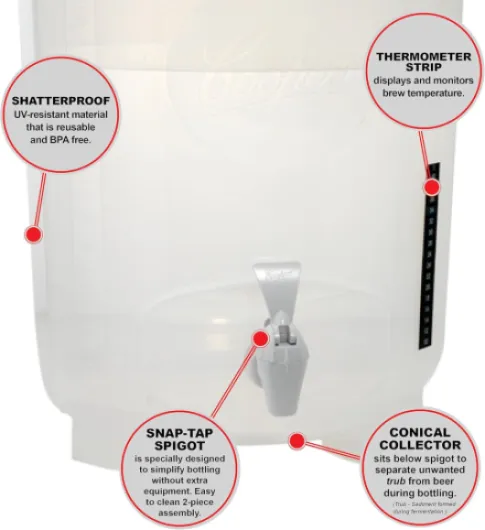
The main piece of this kit is the plastic fermenter, and its design is clearly aimed at people who don’t want to fight with equipment. It’s wide, squat, and has a big opening at the top, which makes cleaning much easier than those narrow carboys. The tap is built into the bottom, so you don’t have to siphon. You just plug in the bottling wand and start filling bottles. For someone who hates dealing with hoses and gravity, this design is pretty convenient.
One detail I liked is that the fermenter is lightweight and shatterproof. Compared to lugging around a full glass carboy, this thing is a relief. I could move it from kitchen to basement without worrying about dropping a glass bomb. The flip side is that it doesn’t feel premium or fancy in any way. It’s just a functional plastic barrel. If you’re expecting pro‑level hardware, you’ll probably find it a bit cheap‑looking, but it does the job.
The PET bottles are also designed with beginners in mind. They’re 740 ml, so bigger than standard beer bottles, and they’re flexible enough to do the classic “squeeze test” to check carbonation. You squeeze the bottle after a few days; if it’s firm, carbonation is going well. That’s handy when you’re new and paranoid about flat beer. The downside is that they look like oversized soda bottles, not like real beer bottles, so they’re not very stylish if you care about presentation.
Overall, the design is function over looks. Everything is made to be easy to clean, easy to move, and easy to use. It’s not pretty, and it’s not something you’ll brag about on a homebrew forum, but if your main goal is to avoid hassle, the design choices make sense. I didn’t have issues with leaks or awkward handling, and after a couple of batches, using the tap and wand becomes second nature.
Materials: Plastic Everywhere, but It Holds Up
Material-wise, this kit is mostly plastic, silicone, and a bit of stainless steel in the smaller parts. The fermenter itself is a thick, transparent plastic. It doesn’t feel flimsy, and after several batches, I didn’t notice any warping or cracks. It’s not on the same level as heavy-duty brewing buckets you see in specialized shops, but for a starter kit, it’s pretty solid. The tap components fit snugly, and I didn’t have any leaks once everything was tightened properly.
The PET bottles are what you’d expect: lightweight, a bit flexible, and clearly not glass. The big advantage is that they’re shatterproof and reusable. I dropped one (empty) on a tile floor and it just bounced, which is exactly what you want after a long bottling session. On the other hand, over time, PET can scratch and hold smells if you’re rough with cleaning. So you have to be a bit careful: use soft brushes, avoid super hot water, and keep an eye on any scuffs inside the bottle. If they start looking tired, I’d replace them rather than risk weird off‑flavors.
The smaller tools – hydrometer, spoon, bottling wand – are basic but fine. The hydrometer isn’t some lab‑grade instrument, but it’s good enough to track fermentation and know when you’re safe to bottle. The spoon is long and sturdy enough to reach the bottom of the fermenter without bending like crazy. The bottling wand has a spring‑loaded tip that works well; it didn’t stick on me, and it made filling bottles to a consistent level pretty straightforward.
In short, you’re not paying for premium materials here, you’re paying for a full set of workable gear. If you treat it decently – don’t scrub it with steel wool, don’t leave it in the sun for days, and actually clean it after use – it should last through many batches. For people who want a plastic, low‑risk setup rather than heavy glass, the material choice makes sense. Just don’t expect this to feel like a pro stainless system; it’s starter‑level, but functional.
Durability: How It Holds Up After Several Batches
Durability was one of my concerns at first, because the whole kit is mostly plastic. After using it for 5–6 batches, my take is that it holds up better than I expected, as long as you’re not rough with it. The fermenter hasn’t warped, the tap still closes properly, and the seal is still good. I always rinse it right after bottling and then give it a proper clean with mild cleaner, and that routine seems to keep it in good shape. If you let dried gunk sit for weeks, that’s on you, not the kit.
The tap and bottling wand are the parts I watched the closest. With repeated use, cheap taps can start to drip or leak. Here, I only had very minor drips when I didn’t fully close the tap or when some grainy residue got stuck. A quick disassembly and clean fixed it. The wand’s spring still works fine and doesn’t stick. It’s not industrial quality, but for a home kit, it’s decent. I’d say if you brew every few weeks, you’ll probably get years out of it before needing to replace parts.
The PET bottles are the weak point in terms of long‑term durability. They survive drops, which is great, but they do pick up small scratches over time. I noticed a couple of bottles starting to look cloudy inside after a few cycles. At that point, I just retired them rather than risk off flavors. The good news is that replacement PET bottles are cheap, and you can also switch to glass later if you want something more permanent.
Overall, for an 8+ kg plastic-based kit, the durability is pretty solid. It’s not heirloom gear you’ll pass down to your kids, but it’s not disposable junk either. If you treat it with basic care – no harsh abrasives, don’t store it in direct sun, actually clean it – it will comfortably survive many batches. For the price and the target audience, the durability level makes sense.
What You Actually Get in the Box
Out of the box, you basically get a full small brewery in plastic form. There’s the patented Coopers fermenter with a tap, a hydrometer, a long mixing spoon, a clip-on thermometer strip, a bottling wand, and about thirty 740 ml PET bottles with caps. On top of that, they throw in a Coopers Lager extract can and a Brew Enhancer, so you can make your first 6‑gallon batch right away. You don’t have to hunt down bottles or extra bits on day one, which I appreciated.
In practice, that means you can go from opening the box to pitching yeast in maybe an hour, even as a beginner. The only things I had to add were: water, basic sanitizer (I strongly recommend buying proper no‑rinse sanitizer if you don’t already have some), and sugar if you want to follow the typical “1 kg sugar + extract” approach. The kit doesn’t include sanitizer, and I think that’s a miss, because cleanliness is half the battle with brewing. So budget a bit extra for that.
The included instruction material is very beginner‑oriented. There’s usually a quick-start guide and, depending on the version, a DVD or online video link. It walks you through mixing the extract, topping up with water, pitching the yeast, and then bottling. If you’ve never brewed before, it feels manageable and doesn’t drown you in technical jargon. For someone who just wants drinkable beer, that’s enough. If you’re already into hydrometer readings and mash schedules, you’ll probably find it too basic, but then again this kit isn’t really aimed at hardcore brewers.
Overall, the presentation is straightforward: everything is there to get you to your first batch with minimal shopping around. It feels like a starter pack, not a lifetime setup, but that’s fine. I didn’t feel lost or overwhelmed, and I didn’t have to run to the store mid‑brew because something obvious was missing, apart from sanitizer. For a beginner kit, that’s exactly what you want: open the box, clean the gear, and get going.
Effectiveness: Does It Actually Make 6 Gallons of Beer Easily?
In terms of pure effectiveness – does this thing let you brew 6 gallons of beer without a headache – I’d say yes, pretty reliably. My first batch hit the expected volume, fermented in about a week at normal room temperature, and carbonated in the bottles over the next two weeks. I didn’t run into infections, stuck fermentation, or major leaks. For a beginner‑friendly kit, that’s already a success. Most of the process is just mixing, waiting, and bottling, which is as simple as homebrewing gets.
The fermenter design helps a lot here. The tap and bottling wand combo makes bottling way less annoying than siphoning into each bottle. You just push the bottle up, it fills from the bottom, you lower it, and it leaves the right amount of headspace. That speeds up the process and cuts down on mess. The hydrometer, while basic, lets you check if fermentation is done, so you’re not guessing and risking bottle bombs. As long as you actually use it and don’t rush, the kit gives you enough tools to avoid the usual beginner mistakes.
Where the kit is less effective is if you want to grow beyond simple extract brewing. It’s great for: lager, pale ale, maybe some basic tweaks. But if you start looking at partial mash or all‑grain, the fermenter is still usable, but everything else will feel a bit limited. You’ll end up buying extra gear anyway: bigger kettles, better temperature control, maybe glass or stainless fermenters. So this kit is effective as an entry point, not as a full long‑term solution for serious hobbyists.
For the average person, though – someone who drinks a fair amount of beer and wants to cut costs – the effectiveness is there. You can realistically churn out batch after batch with very little learning curve. Once you’ve done one, the second and third become almost routine. It doesn’t make perfect beer, but it gets you consistent, drinkable results with much less effort than traditional setups. That’s basically what it promises, and in that sense it delivers.
Pros
- Very beginner-friendly: clear process, built-in tap, and bottling wand make brewing and bottling simple
- Brews a full 6 gallons per batch, keeping cost per beer low compared to store-bought
- Plastic fermenter and PET bottles are lightweight, shatterproof, and easy to handle and clean
Cons
- Beer quality is decent but not on par with good craft or advanced homebrew setups
- Mostly plastic construction and PET bottles may scratch and need replacing over time
- No sanitizer included, so you must buy extra essentials before your first brew
Conclusion
Editor's rating
The Coopers DIY Beer Home Brewing 6 Gallon Kit is basically a shortcut to cheap, drinkable beer for people who don’t want to overcomplicate things. The plastic fermenter, PET bottles, and basic tools work together well enough that even a complete beginner can get a full batch done with minimal stress. The included lager extract gives you a decent, easy‑drinking beer as long as you’re patient and let it condition properly. It’s not bar‑quality craft, but it’s perfectly fine for everyday drinking and way cheaper than buying cases at the store.
This kit makes the most sense if you’re new to homebrewing, have limited space, and mainly care about volume and simplicity rather than chasing perfect recipes. It’s also good if you want to see whether the hobby is for you without dropping a lot of cash on stainless gear. If you’re already into all‑grain brewing, or if you’re very picky about beer styles and flavors, you’ll probably outgrow this pretty fast and see it as too basic. The materials are mostly plastic, but they hold up well if you take care of them, and the whole thing is reusable, so the cost per batch stays low.
In short: solid starter kit, good value, decent beer. Not glamorous, not high‑end, but it gets the job done with less hassle than most beginner setups. Ideal for casual drinkers and curious beginners; serious beer geeks should look at it more as a simple secondary setup than a main system.