
Summary
Editor's rating
How the IPA actually tastes in the glass
Value for money: cheaper than piecing it all together
Design of the kit: simple but a bit basic
Build quality and materials: okay but clearly budget
How it holds up after a batch or two
What you actually get in the box
Does it actually make brewing easier for beginners?
Pros
- Includes almost everything you need to brew your first 40-pint batch
- Easy enough for a complete beginner to follow and get drinkable IPA
- Good value compared to buying equipment and ingredients separately
Cons
- Equipment feels basic and a bit flimsy compared to more expensive gear
- No bottles or capper included, so you still need to source those
- Hop aroma and overall beer character are decent but not very bold

Specifications
View full product page →| Brand | Youngs |
My first batch with the Youngs IPA kit
I picked up the Youngs Micro Brewery Complete Starter Kit IPA Beer Making Kit 1067 because I wanted to try homebrewing without spending a fortune or reading three books first. I’ve brewed with simple malt-extract kits before, but never a full “starter pack” that claims to include pretty much everything. The Amazon rating (4.4/5 from a handful of reviews) looked decent, and the price was reasonable compared to buying all the bits separately, so I went for it.
I used it exactly as someone new would: followed the instructions, didn’t add extra gear except a basic kitchen thermometer and some sanitizer I already had. My goal was drinkable IPA with minimum hassle, not winning a competition. From unboxing to drinking, the whole process took me just under four weeks: about 30–40 minutes to set it up on day one, two weeks of fermentation, then another week and a half in the bottles before I started tasting it.
Right away, the feeling I got was: this is designed for beginners, not for people who already own half a brewery in the garage. The kit wants to hold your hand through the basics. You get the main plastic fermenter, the IPA ingredients, and the usual small accessories. Nothing fancy, but enough to get beer in a glass if you follow the steps. I didn’t have to run to the shop for extra bits, which was a relief.
Overall first impression after my first full batch: it’s a pretty solid starter kit if you want to see whether homebrewing is for you. It’s not perfect, there are corners cut in some parts, and the beer is good but not mind-blowing. But it does what it says: you end up with a fair amount of IPA that’s perfectly drinkable, without too much stress or technical knowledge needed.
How the IPA actually tastes in the glass
Let’s talk about the main point: the beer you end up drinking. I followed the instructions pretty closely: hit the recommended volume, kept fermentation around room temperature (about 19–21°C), and left it in the fermenter for just over two weeks until the hydrometer readings were stable. Then I primed and bottled, and started tasting after about 10 days in the bottle. I’d say the beer really hit its stride after two to three weeks in the bottle, so don’t rush it.
The result is a decent IPA, nothing mind-blowing but definitely drinkable. The bitterness is there but not harsh, and there’s a straightforward malt backbone. Hop aroma is present, but not very strong. If you’re used to modern craft IPAs that are very hoppy and aromatic, this will feel a bit tame. It’s more like a solid pub IPA than a can from a trendy microbrewery. The carbonation was good for me – not too fizzy, not flat – but that depends a bit on how much priming sugar you use and how long you leave it to condition.
In terms of off-flavours, I didn’t get anything nasty: no strong banana, no vinegar, no weird chemical taste. There was a slight “homebrew” character in the first week of tasting, but that faded quite a bit with more time in the bottle. By week three, it tasted clean enough that I’d happily serve it to friends without apologising for it. The alcohol level felt roughly in the mid-5% range, which matches what the kit claims. After two pints I could feel it, so it’s not a weak session beer.
If you compare it to a good supermarket IPA, I’d say it’s on par or slightly better, as long as you manage the fermentation temperature decently. It’s not going to replace higher-end craft beer, but for something you made at home with minimal effort, it’s satisfying. If you’re picky about hops and want big aroma and complex flavours, you’ll probably start tweaking or dry-hopping your next batch. For a first run, though, the taste is solid enough to make the whole process feel worthwhile.
Value for money: cheaper than piecing it all together
On the value side, this kit makes sense if you’re starting from almost nothing. Buying a fermenter, airlock, hydrometer, cleaner, siphon, and an IPA ingredients kit separately usually ends up costing more than this bundle, at least where I live. With Youngs, you pay once and you’re basically ready to brew as soon as you’ve collected enough bottles. Considering the final yield is around 40 pints, the price per pint comes out very low once you’ve done your first batch.
Where the value is a bit mixed is in the quality of the included gear. Some items are clearly budget-level, and if you stick with the hobby you’ll likely replace them. But that’s kind of the point of a starter kit: you’re paying for a low-barrier entry, not for gear that will last a lifetime. For someone who just wants to see if homebrewing is fun without sinking a lot of money, this is good value for money. If you already own basic equipment, then buying just the IPA ingredient kit separately might be smarter.
Compared to other homebrew starter sets I’ve seen, Youngs sits in the middle: not the cheapest, not the most expensive. Some cheaper kits cut corners even more on the equipment or include smaller batches. Some pricier ones add nicer fermenters, bottling wands, or better instructions. For what you pay here, getting a full 40-pint IPA kit plus all the basic tools feels fair. You’re not being ripped off, but you’re also not getting premium hardware.
So in plain terms: if you’re a total beginner with no gear, the cost-to-result ratio is pretty solid. You’ll brew a batch of beer that tastes at least as good as mid-range supermarket bottles, for less money per pint, and you’ll learn the basics. If you’re already halfway into homebrewing, the value drops, because you’ll be paying for equipment you don’t really need. In that case, better to just grab the Youngs IPA kit on its own and use your existing setup.
Design of the kit: simple but a bit basic
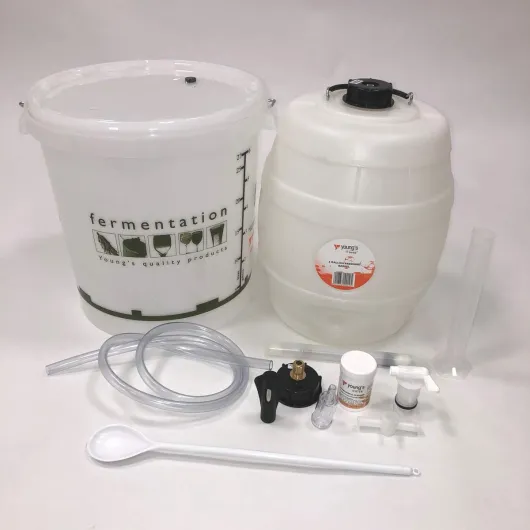
The overall design of the Youngs kit is very straightforward: one main fermenting bucket that does all the work, plus a few simple tools. The fermenter is a big white plastic bin with volume markings on the side. It has a snap-on lid and a hole for the airlock. No taps, no fancy conical bottom, just a basic flat-bottomed bucket. For a first kit, that’s honestly fine. There’s less to break or leak, and cleaning is easy because it’s wide open at the top.
What I noticed, though, is that the bucket is a bit “generic”. The lid doesn’t feel ultra-tight; it snaps on, but you can flex it slightly by hand. It still held pressure well enough for the airlock to bubble away for two weeks, so functionally it’s okay. If you’ve used more expensive fermenters with metal clips or rubber seals, you’ll feel the difference. But as a first-timer tool, it gets the job done and I didn’t have any infection or off smells, so it clearly did its job.
The hydrometer and trial jar are as basic as they come. The hydrometer is clear enough to read, but the print is small and not super bold. I had to hold it up to decent light to read the gravity properly. Still, it let me check starting and finishing gravity, which is important if you want to know that fermentation is done and roughly how strong your beer is. For a beginner who just wants a yes/no answer on whether the beer is ready, it’s sufficient.
The rest of the design is equally minimal: a straight siphon tube (no fancy bottling wand), a long plastic spoon that’s light but a bit bendy, and a simple airlock. Everything works, but nothing feels premium. If you stick with homebrewing, you’ll probably upgrade parts over time. As a starter layout, though, the design is clear: keep it simple, keep it cheap, and focus on the basics needed for a 40-pint batch of IPA without overcomplicating things.
Build quality and materials: okay but clearly budget
Material-wise, you can tell this is a budget-friendly kit, not professional gear. The fermenting bucket is standard food-grade plastic, a bit on the thin side but not flimsy to the point of breaking. I carried it full (around 23 litres of liquid) from the kitchen to a cooler corner of the house and it held up without warping or feeling like it would crack. The handles feel a bit sharp on the hands when it’s full, so I ended up supporting the bottom with my arms as well.
The lid is the part that feels the most “cheap”. It’s just a pressed plastic top that snaps on via a simple ridge. There’s no rubber gasket. That said, after two weeks of fermentation, there were no leaks and the airlock behaved normally. I didn’t see any dried krausen leaking out, so the seal was good enough. I wouldn’t stack anything heavy on top of it, though. It’s clearly designed to be used carefully, not chucked around like a commercial keg.
The accessories – hydrometer, siphon tube, spoon – are all basic plastic. The tube kinks if you bend it too sharply, so you have to be a little gentle when siphoning. The spoon is long enough for the bucket but very light; when I stirred the malt extract and hot water, it flexed a bit. It didn’t break, but you can feel it’s not heavy-duty. These are the sort of tools that will last for a few batches if you’re careful, but if you get into the hobby properly you’ll probably replace them with sturdier versions.
On the ingredient side, the malt extract comes in a sturdy pouch and the hops and yeast are sealed properly. No leaks, no weird smells from the packaging. Everything looked fresh enough and behaved as expected during brewing. Overall, materials are in line with the price: nothing fancy, but functional. If you want thicker plastic, stainless steel, or more long-term gear, you’ll need to pay more or slowly upgrade. For trying homebrew without a big investment, what you get here is acceptable.
How it holds up after a batch or two
Durability-wise, I’ve put the kit through one full batch and a second partial one, and nothing has broken so far. The fermenting bucket cleaned up fine after each use. I used a soft sponge and standard brewing cleaner, no scrubbing pads, and there are no visible scratches inside. The printed volume markings are still readable. The lid hasn’t warped, and the airlock grommet is still snug. So for a couple of batches, it seems to hold up without issues.
That said, you can feel this isn’t gear built for decades. The plastic is on the thinner side, so if you drop it hard when it’s empty or bang it against a sharp edge, I wouldn’t be shocked if it cracked. It’s the kind of kit where you treat it with a bit of care. Don’t stack heavy boxes on top of the bucket in the garage, don’t clean it with rough brushes, and don’t pour boiling water straight into it. If you’re sensible, it should last several batches. If you’re rough with your stuff, you might shorten its life.
The hydrometer is the most fragile part. Like most hydrometers, it’s basically a thin glass tube, and if you knock it off the counter it’s gone. That’s not really a fault of this brand; they’re all like that. I stored mine back in the original packaging after each use, and so far it’s fine. The siphon tubing is still flexible but has taken on a slight curve from being stored coiled. I’d expect to replace the tubing after a handful of batches just for hygiene and because it tends to cloud a bit over time.
In general, I’d rate the durability as decent for the price. It’s not heirloom equipment, but it’s good enough to get you through several brews while you decide how deep you want to go into the hobby. If you end up brewing regularly, you’ll probably upgrade to sturdier gear anyway. If you only ever do a couple of batches a year, this kit should survive that without any drama as long as you look after it.
What you actually get in the box
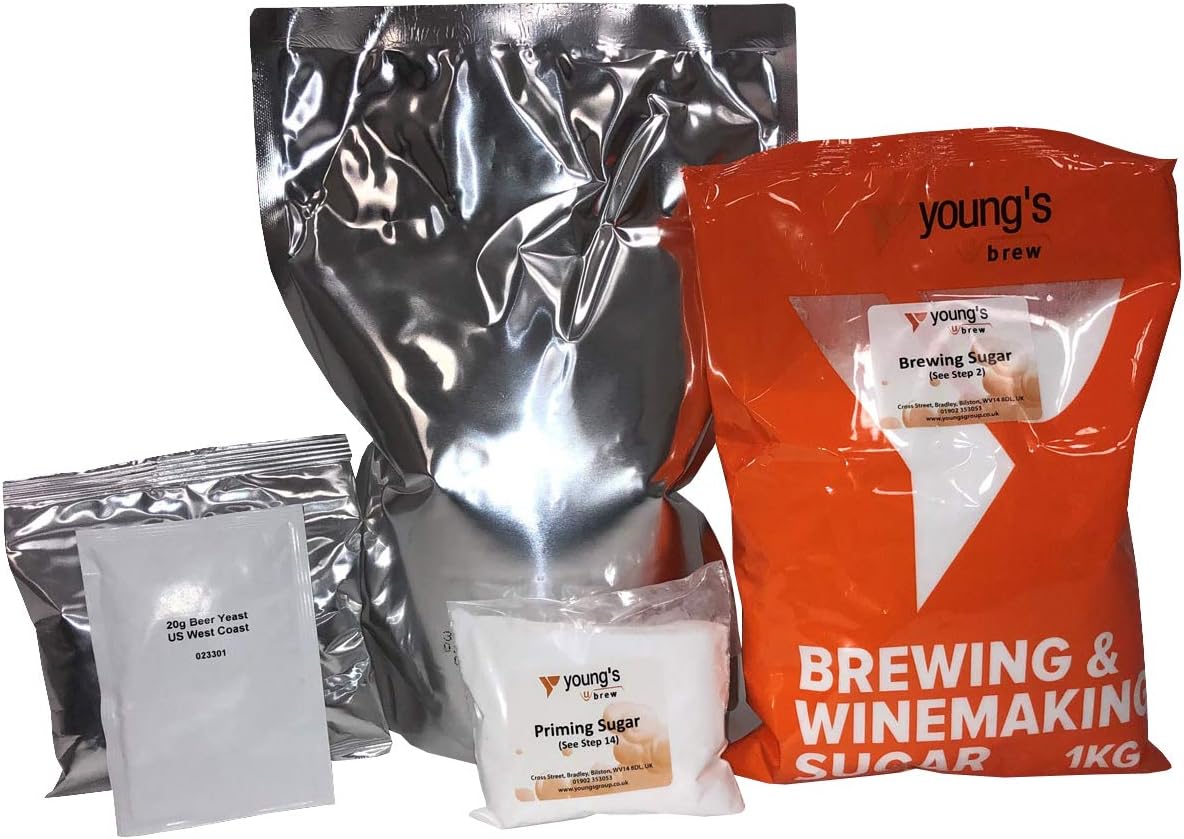
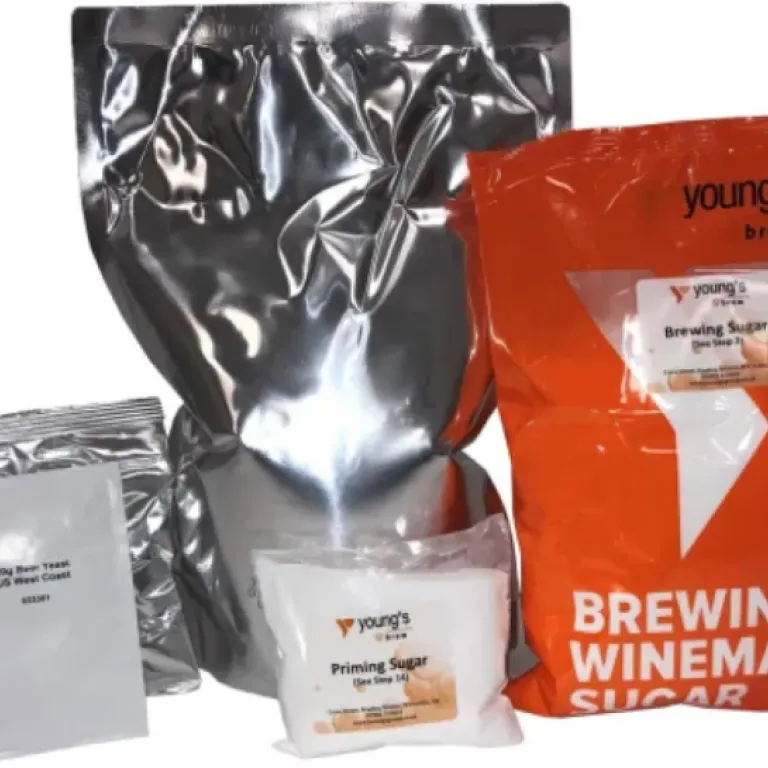
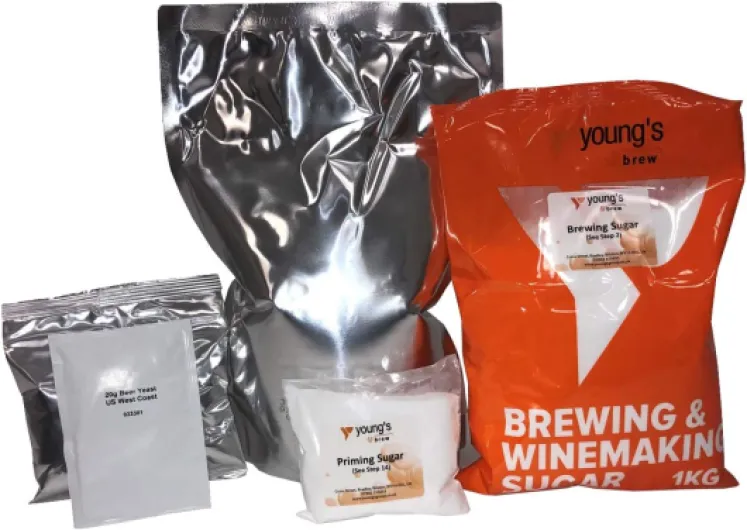
When you open the Youngs Micro Brewery Complete Starter Kit IPA, you’re not greeted by fancy branding or anything like that. It’s basically a no-nonsense bundle of gear and ingredients. In my box I had: a plastic fermenting bin with lid and airlock, the IPA beer kit (malt extract pouch and hops), yeast sachet, basic siphon/tubing, some cleaning/sanitizing stuff, a mixing spoon, and a simple hydrometer with trial jar. That’s pretty much the minimum to go from zero to drinkable beer.
From a practical point of view, that’s the main thing: you don’t need to buy loads of extras to get started. You’ll still want a few household items like a kettle for boiling water, a large spoon (they give you one, but I used my own too), and empty bottles with caps, of course. The kit doesn’t include bottles or a capper, so if you have nothing at home you’ll need to factor that in. I reused old swing-top bottles and that worked fine.
The instructions are printed and fairly clear, but they’re written in that slightly dry, technical way. I had to re-read a couple of steps, especially around temperatures and when exactly to add the hops. Someone who has never brewed or cooked much might feel a bit nervous at first. It would be easier with a few more diagrams or photos, but it’s not a disaster. I got through it without YouTube, though I did check a video later to confirm I hadn’t messed up.
In terms of feeling, the presentation is very “homebrew shop” and not “fancy gift set”. If you’re buying this as a present for someone, just know it looks practical, not pretty. Personally I’m fine with that: I’d rather have usable gear than nice cardboard. But if you’re expecting a polished unboxing moment, this isn’t that. It’s a kit that looks like it’s meant to be used and probably stored in a shed, not displayed on a shelf.
Does it actually make brewing easier for beginners?
For me, the effectiveness of this kit comes down to one question: can someone with almost no brewing experience follow the steps and end up with drinkable beer without a disaster? Based on my batch, I’d say yes. I didn’t need to buy extra specialist tools (apart from bottles), I didn’t need advanced knowledge, and I didn’t spend hours babysitting it. The active time on brew day was under an hour, including cleaning and mixing, and then it basically just sat there bubbling away.
The instructions guide you through the usual steps: cleaning, dissolving the malt extract, topping up with water, pitching the yeast, and then waiting. There are no complex mash steps or hop schedules. For a beginner, that’s a good thing. You learn the basics of sanitation, fermentation, and bottling without being overwhelmed. The hydrometer lets you check that things are progressing, even if you’re not obsessed with the exact numbers. I liked that everything was sized properly for a typical 40-pint batch, so there was no guesswork about volumes.
The kit is less effective if you’re already a bit more advanced. There’s no tap on the fermenter, which makes bottling slightly more awkward and increases the chance of disturbing the sediment at the bottom. The siphon is basic, so you have to be careful not to suck up too much trub. Also, there’s not a lot of flexibility built into the instructions: it’s very much “do it this way”. If you want to experiment with extra hops or different yeast, you’re basically going off-script.
Overall, as a “does it work for what it’s meant for” assessment, I’d say it’s pretty effective for first-timers. It gives you a clear path from box to beer, with enough hand-holding to avoid the classic beginner mistakes. It’s less impressive once you’ve done a few batches and start noticing the limitations of the gear, but by then you’ll know whether you want to invest in better equipment anyway. For testing the waters of homebrewing, it does its job.
Pros
- Includes almost everything you need to brew your first 40-pint batch
- Easy enough for a complete beginner to follow and get drinkable IPA
- Good value compared to buying equipment and ingredients separately
Cons
- Equipment feels basic and a bit flimsy compared to more expensive gear
- No bottles or capper included, so you still need to source those
- Hop aroma and overall beer character are decent but not very bold
Conclusion
Editor's rating
After brewing with the Youngs Micro Brewery Complete Starter Kit IPA Beer Making Kit 1067, my take is simple: it’s a solid beginner kit that does what it’s supposed to do, with a few rough edges. The equipment is basic but functional, the instructions are clear enough if you read them properly, and the final beer is perfectly drinkable. You’re not getting fancy design or premium materials, but you are getting everything you need to turn water and malt extract into a decent IPA without much prior knowledge.
I’d recommend this kit mainly to people who are curious about homebrewing and want a low-risk way to try it. If you have no fermenter, no hydrometer, and no idea where to start, this bundle gives you a straightforward path from box to glass. On the flip side, if you already own brewing gear or you’re fussy about hop character and equipment quality, you’ll probably find it a bit limited and might be better off buying separate components. For the price, though, and for a first step into the hobby, it offers good value for money and a pretty painless first brewing experience.