Why a home draft beer dispenser feels different from bottles and cans
Why beer from a tap feels more alive
Pouring a pint from your own tap at home is a different experience from cracking open a bottle or can. The first thing you notice is the texture. Draft beer usually has a softer, creamier carbonation because it is served under controlled pressure, not shaken around in transport. That means a smoother mouthfeel and a more rounded impression of the malt and hops.
A home draft setup also lets you serve beer at the right temperature for the style. Lagers shine when they are crisp and cold, while many ales open up their aromas a little warmer. With a dispenser, you are not stuck with the one-temperature-fits-all setting of your kitchen fridge.
Aroma, foam and the ritual of the pour
When you pull a handle and watch the beer flow, you are creating the head instead of accepting whatever the can gives you. A proper pour builds a dense, creamy foam that traps hop oils and malt aromas. That first sniff over the glass is often more intense than from a bottle neck.
The ritual matters too. Setting a clean glass under the faucet, tilting it, straightening it at the end of the pour – it all feels closer to being in a bar, just without leaving your kitchen or living room.
Consistency, savings and control
Once you dial in your system, every pint can taste the same from the first to the last. You control gas pressure, temperature and line length, which you will understand better when you get into the hardware details and system types. Over time, buying beer in kegs can also be cheaper per pint than stocking cases of bottles.
If you are unsure whether a kegerator or a compact capsule system fits your space and habits, this in-depth comparison of the best home draft system for your lifestyle is a helpful next step before you choose your first dispenser.
Key parts of a home draft beer system and what they actually do
From keg to glass : the hidden journey
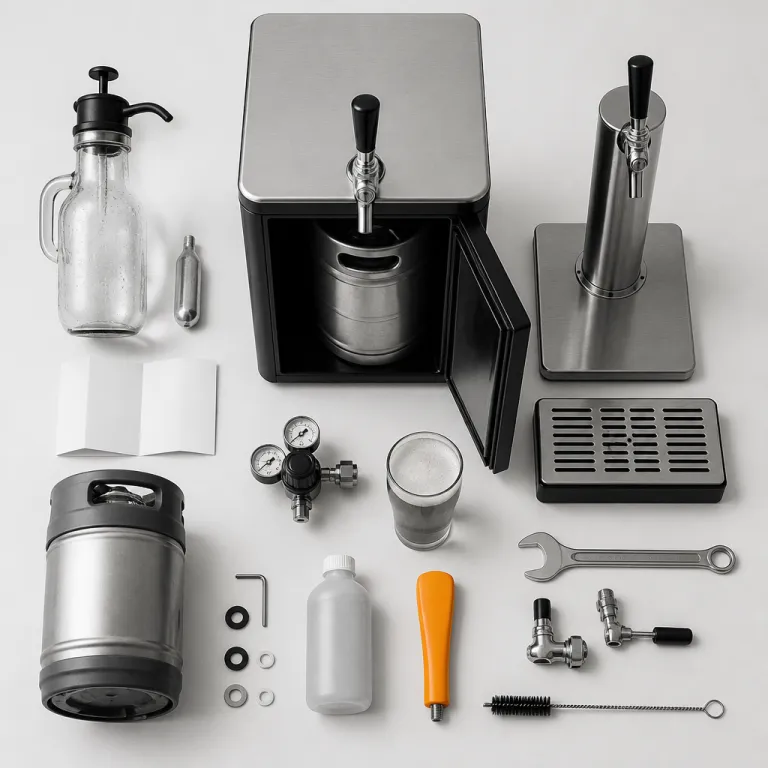
Every home draft system, from compact countertop units to full-size kegerators, is built around the same basic path your beer follows. Understanding this makes it much easier to choose, use and troubleshoot your setup later on.
It all starts with the keg, the sealed container that keeps beer fresh and protected from light and oxygen. Inside, your beer is already carbonated, but it needs help to leave the keg in perfect condition.
That is where the CO₂ source comes in. A gas cylinder or small cartridge pushes on the beer, maintaining pressure so carbonation stays stable and pours stay consistent. A regulator, like the one you would find on a compact cocktail keg system such as this portable draft dispenser with tap and CO₂ regulator, lets you set and read that pressure precisely.
From there, beer travels through beer lines. Their length, diameter and cleanliness all affect foam, flavor and aroma. Clean, correctly sized lines mean fewer problems and a more enjoyable pour.
Next is temperature control. A kegerator or cooled draft tower keeps beer at a steady serving temperature. Too warm and you get foamy, dull-tasting pints ; too cold and flavors are muted.
Finally, the faucet or tap shapes the pour. Good faucets allow smooth flow, help manage foam and are easy to disassemble for cleaning. Together, these parts form a simple but precise system that protects freshness and delivers that bar-quality pint at home.
Types of home draft beer dispensers and how to match them to your life
Compact countertop units for casual pours
If you mainly drink on weekends or share a few pints with friends, a compact countertop dispenser can be ideal. These systems usually take 2–5 litre kegs or proprietary beer cartridges. They chill quickly, fit in small kitchens, and are easy to move for parties.
The trade-off is capacity and flexibility. You will not be running multiple taps or serving a big crowd, but you gain simplicity. They are great for people who love fresh draft but do not want to commit fridge space or deal with full gas setups.
Freestanding kegerators for everyday beer lovers
Freestanding kegerators look like small fridges with a tap tower on top. They are the sweet spot for many homes : enough capacity for a full-size keg or several smaller ones, but still plug-and-play.
They suit people who keep a favourite lager or IPA on tap all the time, and maybe rotate a seasonal beer. If you already care about serving temperature and glassware, this style matches your habits. You will also appreciate the gas control and line balancing you learned about when looking at the system components.
Built-in and keezer setups for serious enthusiasts
Built-in kegerators and chest-freezer “keezers” are for those who plan their beer like others plan their wine cellar. These systems can run several taps, hold multiple kegs, and be customised with digital temperature control, nitro lines, or dedicated stout and lager setups.
They work best for home brewers and collectors who understand how the beer brewing process affects serving needs. If you brew your own saisons, stouts and lagers, or host regular tastings, the flexibility and capacity of a keezer-style system will match your lifestyle far better than a compact unit.
How to balance freshness, price and style when you choose a kegerator
Choosing the right keg size for how you actually drink
Start with how often you drink beer at home and how many people usually share it. A full-size keg is great for frequent hosts, but it can be overkill if you only pour a couple of pints a week.
- Mini kegs and 1–2.5 gallon kegs : ideal for small fridges, trying new styles and avoiding waste.
- Quarter and sixth barrels : a sweet spot for most households, balancing variety and freshness.
- Full-size kegs : best when you have a dedicated space and a go-to beer you never tire of.
Remember what you learned about how draft beer feels different from bottles and cans : once a keg is tapped, the freshness clock starts ticking. If you will not finish it within a few weeks, size down.
Balancing upfront cost with long-term savings
Price is more than the sticker on the kegerator. Think in terms of total cost over a year or two.
- Equipment cost : cabinet, tower, faucets, CO₂ tank and regulator.
- Operating cost : electricity, CO₂ refills, occasional gasket or line replacements.
- Beer cost : kegs are usually cheaper per pint than cans, especially for your everyday lager or pale ale.
If you brew your own beer, factor in the savings from skipping bottling and going straight from fermenter to keg, as well as the flexibility you get from the system parts you already understand.
Matching style and features to your space
Once size and budget are clear, choose the look and features that fit your life. A stainless steel cabinet suits modern kitchens, while a simple black unit can disappear in a garage or basement bar.
Decide whether you need dual taps for variety, digital temperature control for precise styles, or casters so the kegerator can roll out for parties and tuck away afterward.
Real use cases and tips from home brewers and beer fans
How a compact kegerator changed weeknight beers
Emma, a pale ale fan in a small apartment, swapped a crowded fridge door of bottles for a single-tap kegerator with a 5-liter mini keg. She chose it because it fit under the counter and plugged into a regular outlet.
Her main lessons :
- Plan your keg size around your habits – a mini keg lasts her about two weeks, so she finishes it well before flavor drops.
- Keep lines short and cold – she trimmed the beer line and made sure it stayed inside the chilled cabinet to avoid foamy pours.
- Use one “house beer” – she keeps a balanced pale ale on tap that works for most guests, then experiments with cans for variety.
What home brewers learned from their first full-size setup
Raj and Lina are home brewers who moved from bottling to a two-tap kegerator. They already understood carbonation and temperature from brewing, but draft service added new variables.
They now :
- Match pressure to beer style – lower PSI for English bitters, higher for wheat beers, using the gas and regulator basics you would expect from any draft system.
- Schedule cleaning like brew day – they clean lines every keg change and deep-clean monthly, which keeps off-flavors away.
- Label everything – each tap has a tag with beer name, ABV, and carbonation level so guests pour confidently.
Hosting tips from people who pour a lot of pints
Regular hosts often mention the same tricks :
- Chill glassware lightly, not ice-cold, to avoid killing aroma.
- Show guests how to open the tap fully in one motion to reduce foam.
- Keep a small spill tray and bar towel near the tap so cleanup is effortless.