Summary
Editor's rating
Value for money: tempting price, but hidden costs in CO2 and frustration
Design: compact and practical, but with weak points
Materials: solid stainless body, but the fittings are the concern
Durability: tank seems fine, accessories feel like the weak link
Performance: pressure problems and flat beer risk
What you actually get in the box
Effectiveness for homebrewers and casual drinkers
Pros
- Compact 5L size that fits easily in most fridges
- Stainless steel keg body feels solid and easy to clean
- Includes tap and pressure gauge for basic draft-style pouring
Cons
- Struggles to hold pressure consistently, leading to flat beer risk
- Handle and fittings feel fragile and not very durable
- Higher CO2 cartridge usage due to small leaks, hurting long-term value
Specifications
View full product page →| Brand | Tomotato |
| Model Number | Tomotatokq6wfnshgb |
| Product Dimensions | 30 x 20 x 20 cm; 3.09 kg |
| Item Weight | 3.09 kg |
| ASIN | B0BV1KN4DQ |
| Customer Reviews | 1.0 1.0 out of 5 stars (1) 1.0 out of 5 stars |
| Best Sellers Rank | 864,664 in Home & Kitchen (See Top 100 in Home & Kitchen) 38 in Mini Beer Keg Dispensers |
| Date First Available | 7 Feb. 2023 |
A mini keg that looks handy on paper, but how does it really pour?
I picked up this Tomotato 5L stainless steel mini keg because I wanted something simple for small batches and to keep draft beer in the fridge without dragging out a full-size kegerator. On paper it ticks the boxes: 5L capacity, stainless body, pressure gauge, adjustable tap, CO2 cartridges. Basically, a compact growler that’s supposed to keep beer carbonated and ready to pour for a few days or a weekend with friends.
In reality, my experience has been more mixed. It’s not a total disaster, but it’s not the plug-and-play solution I was hoping for either. I tested it over a couple of weeks with two different beers: one homebrew and one commercial beer I transferred in. I went through several CO2 cartridges and a few trial-and-error sessions with the pressure before I got a clear picture of how this thing behaves in day-to-day use.
The first thing I noticed is that the product looks solid when you unbox it, but the weak point is clearly the pressure side: seals, regulator, and how well it actually holds gas over time. For a system that’s supposed to keep your beer fizzy, that’s not a small detail. If the gas leaks, you’re basically just drinking flat beer from a fancy metal bottle, which defeats the whole point of a pressurized growler.
So this review is not about saying it’s perfect or terrible in one sentence. I’ll go through the design, materials, how it performs with pressure, and if it’s worth the money compared to other mini keg systems. I’ll be blunt: there are things it does pretty well, but there are also clear issues that would make me think twice before buying it again, especially if you care about consistent carbonation and not wasting CO2 cartridges.
Value for money: tempting price, but hidden costs in CO2 and frustration
Price-wise, the Tomotato 5L mini keg usually sits in the lower range compared to more established brands. That’s what got my attention initially: a full stainless mini keg with tap and regulator for less than some competitors charge for just the bare keg. On the surface, it looks like good value for money if you just compare specs and photos. But after using it, I’d say the value is more questionable once you factor in gas consumption and the reliability issues.
If the system leaked no gas and held pressure perfectly, the cost of CO2 cartridges would be manageable. You’d probably use one or maybe two cartridges to empty a full 5L keg, which is reasonable. But with the small leaks I experienced, and the similar feedback from the Amazon review, you can easily end up using extra cartridges just to keep the pressure up. Over time, that eats into the savings you thought you made on the initial purchase. Plus, there’s the non-monetary cost: dealing with flat or half-flat beer is just annoying, especially if you put effort into brewing it.
Compared to other mini keg setups I’ve used or seen, this one clearly sits in the “budget” corner. If you’re trying mini kegs for the first time and don’t want to drop a lot of cash, it can be a way to test the concept. But if you already know you like draft-at-home setups and you care about reliability, I’d rather put more money into a better-known brand with stronger reviews. The current Amazon rating (1 out of 5 from the only review) isn’t encouraging, and after using it myself, I understand why the rating is that low.
In short, the value is only decent if you go in with low expectations, use it gently, and accept that it’s more of a starter or backup solution. If you expect a worry-free, long-term mini keg system, the apparent savings may not be worth the hassle and the running cost of extra CO2, not to mention the risk of wasting good beer when the pressure doesn’t hold.
Design: compact and practical, but with weak points
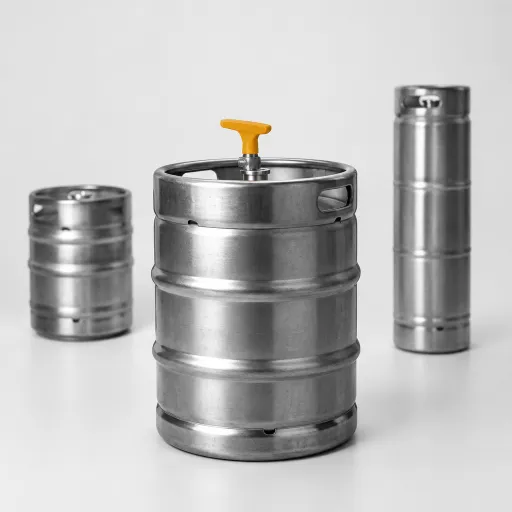
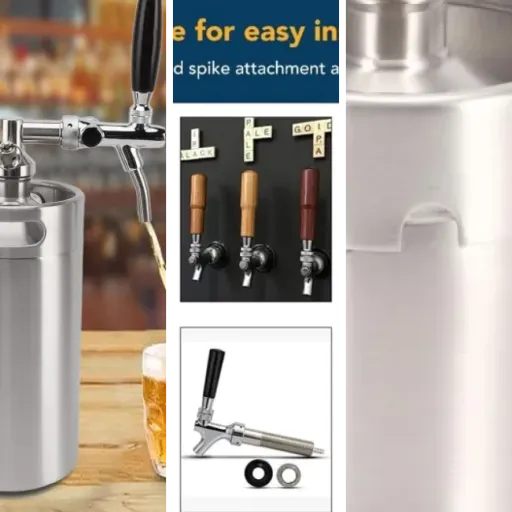
Design-wise, the Tomotato mini keg is fairly simple: a cylindrical stainless steel tank, a screw-on top, and a tap assembly that sits on top with the pressure gauge and CO2 input. The look is pretty plain – brushed silver, no big logos. Personally, I like that. It doesn’t scream for attention in the fridge, and it’s easy to wipe down. The size is one of the main pros: 5L is roughly 10 standard 50cl beers or around 13 small 330ml bottles, so it’s a nice amount for a small party or a weekend.
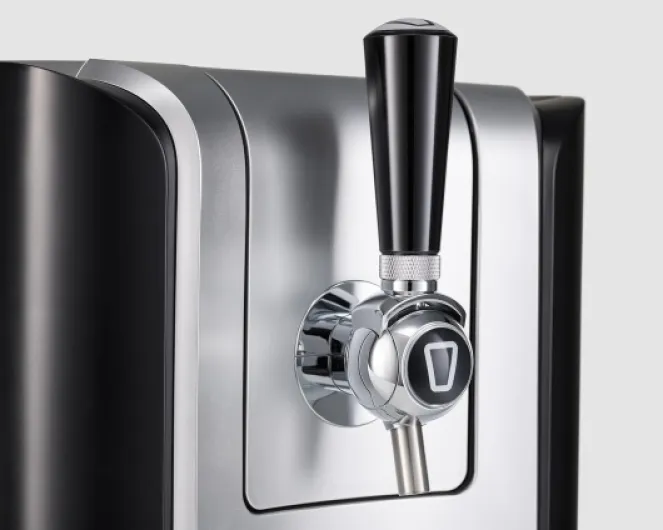
The tap is adjustable, which in theory should help you avoid foam if you tweak the pressure and flow. The pressure gauge is mounted so you can see it easily while pouring, which is handy. The handle on top is there to help carry it, but this is one of the parts that feels more fragile. On mine, it’s not broken, but I can see how a heavy night of use, people grabbing it roughly, or lifting it when it’s full and cold could stress it. The single Amazon review mentioning a broken handle after one gathering doesn’t surprise me at all based on how it feels in the hand.
In practice, the design has a clear weak point: the sealing and gas retention. The way the regulator and tap connect to the keg relies on a few gaskets and threaded connections. If any of those are slightly off, you’ll leak CO2 slowly. At first you might not notice, but after a few hours or a day in the fridge, your pressure drops, and your beer starts going flat. This isn’t a design choice you can easily fix yourself unless you start swapping seals or adding Teflon tape, which you shouldn’t have to do on a new product.
Overall, the design idea is good – compact, vertical, with visible pressure and a standard faucet – but the execution feels a bit “budget”. It’s not a product I’d toss around or loan to friends without expecting it to come back with at least one part bent or stressed. If you’re gentle and careful, it’s usable; if you want something tough for regular parties and travel, I’d be cautious.
Materials: solid stainless body, but the fittings are the concern
The keg body itself is made from 304 stainless steel, which is pretty standard for brewing gear. That part is honestly the least of my worries. It feels thick enough, there’s no flex when you press on it, and after a few uses and washes, I haven’t seen any rust spots or odd discoloration. For hygiene and taste, stainless is a good choice: it doesn’t keep smells, and it’s easy to clean with normal brewery cleaner or just hot water and a bit of detergent if you’re lazy.
The problem is more on the top side: the tap, the regulator, and the small parts. These seem to be a mix of stainless, some plated metal, and plastic. The faucet itself is okay – not high-end bar quality, but good enough for home use. The regulator and gauge feel cheaper. The plastic knobs and housing don’t inspire much confidence if you plan to adjust pressure a lot or transport the keg often. When you tighten things, you feel where corners were cut: threads that don’t feel buttery smooth, and parts that you’re afraid to overtighten because they might strip or crack.
Where this matters most is the seals and gaskets. If those were top quality, the rest of the materials would be fine. But based on my use, plus the user review complaining about gas leakage, it’s clear the sealing materials (and/or how they’re seated) aren’t great. I had to re-seat the top connection a couple of times after noticing a slight hiss and bubbles when I sprayed soapy water around the joints. That’s not something you want to be doing with a supposedly ready-to-go consumer product.
So to sum it up on materials: the main tank is pretty solid and should last a long time if you don’t drop it from a height. The upper parts feel more like generic, lower-cost components. They work, but they’re the likely failure points over time. If the brand had put a bit more money into better gaskets and sturdier fittings, the whole product would jump a level in reliability. As it stands, you get decent core material for the keg, but the accessories attached to it are more on the “budget” side.
Durability: tank seems fine, accessories feel like the weak link
After a couple of weeks of use, the stainless steel tank itself still looks almost new. No dents, no warping, no obvious damage. That part will probably last years unless you actually drop it hard or bang it around in a car trunk without any protection. From a long-term point of view, I have no real concern about the keg body. It’s thick enough and the material is standard for brewing gear, so that’s the most reassuring part of the product.
The durability worries start with the handle, regulator, and tap assembly. The handle on top is convenient, but it doesn’t feel like it was designed for rough handling. When the keg is full, you’re lifting more than 7 kg (5L of beer plus the 3+ kg keg itself). Doing that repeatedly by the handle, especially if it’s a plastic or thinner metal piece, is asking for trouble. The Amazon user reporting a broken handle after one intense use sounds very plausible. I personally started carrying it by holding the body instead of trusting the handle completely.
The regulator and tap also give a “don’t push your luck” vibe. Threads feel like they could strip if you overtighten, and the plastic parts don’t inspire long-term confidence. I haven’t broken anything yet, but I was careful from day one because it just doesn’t feel bombproof. If you plan to take this to barbecues, transport it often, or let different people handle it, you’re increasing the chances of something getting knocked or over-tightened. Once one of those parts goes, the whole system becomes useless unless you can find compatible replacements.
So on durability, I’d split my judgment: keg body: solid; fittings: questionable. If you treat it gently and mostly leave it in the fridge, it could last a while. If you want something you can throw in the car every weekend and pass around at parties, I wouldn’t rely on it. There are sturdier mini keg systems out there, usually at a higher price, but you do feel the difference in build when you handle them side by side.
Performance: pressure problems and flat beer risk
This is where things get tricky. The whole purpose of a pressurized mini keg is to keep beer carbonated and pour it under pressure. In my tests, performance was inconsistent. The first fill went okay: I chilled the beer, transferred it carefully to avoid too much foam, hooked up a fresh CO2 cartridge, and set the pressure around a moderate level. For the first couple of pours, it worked fine. The flow was a bit fast at first, but with some tweaking I got a decent pour with a normal head and not a glass full of foam.
The problems showed up after some time in the fridge. I left the keg overnight with a bit of pressure on it. The next day, the gauge was down more than expected, and the pours started weaker. I had to hit it with more CO2 to get the same flow. I checked for leaks with soapy water and did find small bubbles at one of the connections. After re-tightening, it improved, but the trust was gone. It basically means that if you want to keep beer in there for several days, you’ll likely burn through multiple cartridges, and the risk of ending up with flatter beer is real.
The Amazon review saying they had to use three cartridges to empty the keg and still got flat beer lines up with my experience. I wouldn’t say every single use was that bad, but I never had the feeling of a perfectly sealed, efficient system. You always feel like you’re chasing the right pressure and compensating for small leaks. For a casual user who just wants cold draft beer without tinkering, that’s frustrating. You shouldn’t need to babysit the gauge and connections all the time.
In terms of pouring behavior, when the pressure is right and you’ve chilled the beer properly, the pours are okay. Foam is manageable, and you can get a clean glass. But performance over time is the issue. As a one-evening dispenser where you fill it, chill it, and empty it the same day, it’s serviceable. As a real mini keg meant to keep beer fresh and fizzy for several days, it falls short. That’s the main reason I wouldn’t rely on it for storing good homebrew I care about – I don’t like the idea of risking a batch on something that might leak gas overnight.
What you actually get in the box
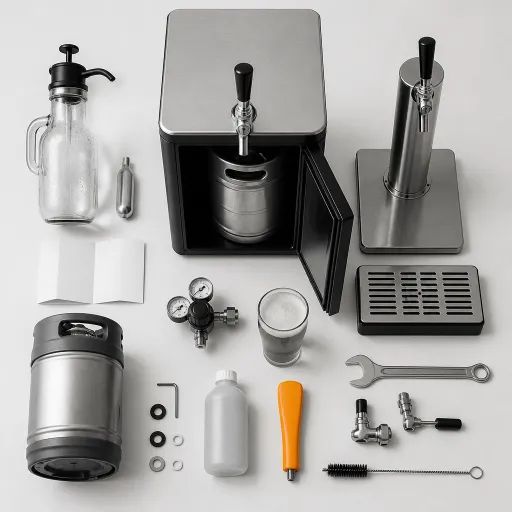
Out of the box, you get the 5L stainless steel keg body, the tap system with adjustable faucet, the pressure gauge/regulator unit, and the hardware to connect everything. No CO2 cartridges are included, which is noted in the listing but still a bit annoying if you expect to use it right away. You’ll need standard small CO2 cartridges (the typical 16g style used for mini dispensers). If you don’t already have some at home, that’s an extra purchase before you can pour a single beer.
The keg is roughly the size of a big milk jug, so it fits easily on a fridge shelf. The stated dimensions (about 26.5 x 17 cm for the keg, and around 30 cm total height with the tap) are pretty accurate. In my normal fridge, I had to adjust one shelf, but it fit without having to lay it sideways or do anything weird. That’s one of the strong points: it’s compact and simple to place, unlike bulky kegerator setups that take over a whole corner.
Assembly is straightforward but not idiot-proof. You need to screw on the tap, connect the regulator, and make sure all the seals are properly seated. The instructions with mine were basic and a bit vague. If you’ve ever used any keg system before, you’ll figure it out. If it’s your first time, you might need to look up a video or two to feel confident you’re not cross-threading something or missing a gasket. The listing claims it’s easy to use, and it’s not complicated, but it’s not as simple as just turning a cap and pouring.
From a presentation point of view, I’d call it functional but no-frills. There’s no fancy branding, no accessories, no cleaning kit, no spare seals. It’s basically just the bare minimum to get started, and that’s it. Personally, I would have liked at least one extra set of O-rings or clear documentation about what to do if it starts leaking, because that’s exactly the kind of issue I ran into after a few uses and you’re pretty much on your own when that happens.
Effectiveness for homebrewers and casual drinkers
From a pure “does it do the job?” angle, I’d say this Tomotato mini keg is usable but unreliable. If your goal is to move beer from a fermenter or a larger keg into a smaller, portable container and drink it over a short period, it can work. I used it for a small gathering, filled it in the afternoon, kept it in the fridge, and we finished it the same evening. In that scenario, the shortcomings matter less: even if there’s a slight leak, you won’t notice much over just a few hours.
For homebrewers who want to ferment directly in the keg, I’d be more cautious. The product description mentions fermenting, storing, and dispensing. Technically you can ferment in stainless, but then the pressure control and sealing become even more important. If it struggles to hold serving pressure consistently, I don’t trust it for pressure fermentation or for long storage. You could use it as a simple storage container with minimal pressure, but then you might as well use a regular growler or a different mini keg without a regulator.
For casual beer drinkers who just want draft beer at home, the main question is: are you okay with fiddling around and possibly wasting CO2? If you’re the type who likes to tweak, check for leaks, and doesn’t mind doing a bit of extra work, you can get decent results out of it. If you want plug-and-play, you might end up annoyed. The fact that one verified buyer gave it 1/5 because of gas loss and a broken handle is a red flag, and my own use doesn’t really contradict that complaint.
So in terms of effectiveness: it does dispense beer, it can keep it reasonably carbonated for a short period, and the pressure gauge is useful in theory. But the core promise – easy, reliable pressurized storage and serving – is only half-kept. I wouldn’t use it as my main or only draft solution. At best, it’s a backup or a cheap way to experiment with mini kegs, knowing that it has clear limitations and might let you down if you expect too much from it.
Pros
- Compact 5L size that fits easily in most fridges
- Stainless steel keg body feels solid and easy to clean
- Includes tap and pressure gauge for basic draft-style pouring
Cons
- Struggles to hold pressure consistently, leading to flat beer risk
- Handle and fittings feel fragile and not very durable
- Higher CO2 cartridge usage due to small leaks, hurting long-term value
Conclusion
Editor's rating
If I sum up my time with the Tomotato 5L stainless mini keg, I’d say it’s a decent idea held back by average execution. The stainless body is solid, the size is practical, and when everything is freshly set up and cold, it can pour a decent beer. For a single evening with friends where you fill it, chill it, and finish it the same day, it does the basic job. You get the feel of draft beer at home without a full kegerator, and that part is pretty satisfying when it works.
But the weak sealing, the so-so fittings, and the fragile-feeling handle make it hard to recommend as a serious, long-term solution. Both my tests and the lone Amazon review point to the same issue: gas loss and flat beer. For a pressurized growler, that’s a big problem. If you’re a tinkerer on a tight budget and you don’t mind checking for leaks, swapping seals, and burning a few extra CO2 cartridges, you might squeeze enough value out of it. If you want something reliable and hassle-free, I’d look elsewhere or be ready to treat this as a temporary or backup option rather than your main draft system.