Summary
Editor's rating
Is the 4-set pack worth your money?
Simple design, a few quirks you should know
Plastic quality and safety feel more budget than pro
How it holds up after several uses
Flow rate, leaks, and real-world use
What you actually get in the box
Does it actually move liquid properly?
Pros
- Four complete siphon setups in one pack, good for backups and different uses
- Flows quickly and transfers 5–10L batches without feeling slow
- Cheap, simple solution for occasional homebrew and general liquid transfers
Cons
- Not a true auto siphon; priming is manual and a bit fiddly
- Basic plastic with limited long-term durability, especially at hose joints
- No sediment guard or extra features, so clean transfers require more attention
Specifications
View full product page →| Brand | IMIKEYA |
| Model Number | 11Q1735O19MXA6G536K |
| Product Dimensions | 35 x 6.5 x 11.2 cm; 392 g |
| Material | plastic |
| Item Weight | 392 g |
| ASIN | B0DL288WBW |
| Date First Available | 26 Oct. 2024 |
A cheap 4-pack for moving booze from A to B
I picked up this IMIKEYA 4-set auto siphon kit because I wanted something cheap and simple for small homebrew and wine batches. I’m not running a brewery, I just do a few demijohns and carboys a year, and my old racking cane had gone cloudy and stiff. The listing looked pretty generic, no big brand name, just “IMIKEYA” and a bunch of copy-paste style text, but the price for four sets was low enough that I figured I’d risk it. Worst case, I’d have some backup tubing for other household stuff.
When the box arrived, my first reaction was honestly: “Yep, this is exactly the kind of plastic siphon kit you get from an unknown brand on Amazon.” No fancy branding, no booklet, just four plastic siphon assemblies and tubing tossed in a bag. That’s not a complaint, just setting expectations. If you’re used to more polished gear like the bigger homebrew brands, this feels more like a budget hardware-store buy than a specialist brewing tool.
I tested it over about three weeks on a few things: racking a 5L fruit wine, transferring a 10L beer batch from fermenter to bottling bucket, and even moving some water and a light cleaning solution between containers in the kitchen and garage. So I didn’t baby it; I used it the way most people would: quick rinse, sanitize for the booze, and then go. By the end of that, I had a pretty clear idea of what’s good, what’s just okay, and what you need to watch out for.
Overall, it’s not some magical brewing upgrade. It’s a basic, functional siphon kit that does what it’s supposed to do if you treat it gently and don’t expect pro-level build quality. If you’re fine with that and mainly care about price and having several spares, it can make sense. If you’re picky about fittings, seals, and long-term durability, you’ll probably want to spend a bit more on a better-known siphon system.
Is the 4-set pack worth your money?
On the value for money front, this kit makes sense if you look at it as a low-cost, multi-purpose pack rather than a premium brewing tool. You’re getting four complete siphon setups for about the price of one or maybe one and a half branded auto siphons. If you’re just starting out with homebrew, or you want several hoses around the house for different liquids, that’s not a bad deal. You won’t cry if one gets cloudy, stained, or accidentally used for something non-food.
Compared to my older, more expensive siphon from a known brewing brand, this IMIKEYA kit is clearly cheaper in build and comfort, but also much cheaper in price. The branded one has a real auto-priming mechanism, thicker plastic, and nicer fittings. But I paid more for that single tool than for this whole four-pack. So it comes down to what you care about more: convenience and durability, or quantity and low cost. For someone who brews twice a year and wants simple gear, this set is plenty.
One thing to keep in mind is the hidden “cost” of hassle. Because there’s no real auto-siphon function and no sediment guard, you spend a bit more time and attention on each transfer. If you value your time or hate fiddly setups, that matters. Personally, I don’t mind an extra couple of minutes of manual work for the price I paid, but I can see some people getting annoyed and wishing they’d just bought a better-designed siphon once and been done with it.
Overall, I’d call the value pretty decent for casual users. If you brew often, care a lot about build quality, or want something that feels solid and polished, I’d say skip this and invest in a better-known brand. But if you’re on a tight budget, want backups, or just need a simple way to move wine, beer, or even water around, this four-pack does make financial sense.
Simple design, a few quirks you should know
The design is as basic as it gets: a straight plastic tube for going into your carboy or bucket, and a flexible hose that carries the liquid to the receiving container. There’s no built-in clamp, no anti-sediment tip, and no shut-off valve. That simplicity isn’t all bad – fewer parts mean fewer things to break – but it does mean you have to handle it more carefully when you’re trying not to disturb the yeast cake at the bottom of a fermenter.
On my first use with a fruit wine, I noticed the bottom end of the rigid tube is cut pretty square. There’s no special end piece to reduce sediment pickup. That means if you go too close to the bottom, you’ll easily suck up lees and gunk. Compared to my older branded racking cane that had a slightly angled and slotted tip, this IMIKEYA one requires more manual control. I ended up holding it a bit higher and tilting the carboy slightly to leave the sediment behind, which worked but needed more attention.
The connection between the rigid tube and the soft hose is just a simple friction fit. No threaded fittings, no clamps. Out of the box, it was tight enough that nothing leaked during my tests, but you can feel that if the tubing loosens over time, it could slip if you pull too hard. For safety, I’d probably either warm the tubing and push it further up the cane or add a small clamp if you plan to use it for heavier liquids or frequent transfers. For light homebrew use, it held fine, but I wouldn’t hang a full hose of liquid by the joint.
Overall, the design is functional but not clever. It doesn’t really try to solve common brewing annoyances like sediment pickup or easy priming. If you’re okay doing things the old-school way and you don’t mind a bit of manual fiddling, it’s totally usable. If you want more convenience features, you’ll feel the difference compared to more polished siphons that include self-priming pumps, curved canes, or sediment guards.
Plastic quality and safety feel more budget than pro
The whole kit is 100% plastic – both the rigid cane and the flexible tubing. The rigid part feels like standard clear PVC or similar, not the thicker, more rigid material you see on some higher-end homebrew siphons. It has a bit of flex if you push it, which is good in the sense that it’s less likely to snap, but it also feels a bit cheaper in the hand. After a few uses and washes, it stayed clear, though I wouldn’t be shocked if it starts to haze a bit over time.
The soft tubing is on the thinner side. It’s flexible enough to route around the edge of a counter or into a bucket without kinking too badly, but you can tell it’s not premium, heavy-duty hose. When I bent it too sharply, it did pinch off the flow, so you need to be a little mindful of how you position it. I also noticed a faint plastic smell when I first opened the package. After a thorough wash with hot water and a no-rinse sanitizer, that smell was basically gone, and I didn’t pick up any off-flavors in the wine or beer, which is what really matters.
In terms of food safety, there’s no big certification logo printed on the tubing that I could see. The listing claims it’s suitable for wine and other liquids, and that’s about it. This is where the unknown brand factor comes into play: with bigger brewing brands, you usually get clear “food-grade, BPA-free” statements. Here, you’re kind of trusting the listing. Personally, I’m fine using it for homebrew that I’m drinking myself, but if you’re super strict about material certifications, you might prefer a better-documented product.
Bottom line, the materials are decent for light home use, but they don’t feel like something that will survive years of rough treatment. If you coil the hoses gently, avoid high heat, and don’t step on the canes, they should last a while. Just don’t expect industrial-grade plastic or the thick, sturdy feel of more expensive siphon systems.
How it holds up after several uses
Durability is where you really feel that this is a budget, unknown-brand kit. After a few weeks of on-and-off use, nothing has broken, which is already a good sign. The rigid tubes are still straight, no cracks or white stress marks, and the hoses are still flexible. But you can tell from the feel of the plastic that it’s not something I’d expect to last for years if you rack every weekend.
I washed the parts by hand with warm (not boiling) water and a mild detergent, then rinsed and sometimes soaked them in a no-rinse sanitizer before using them with beer or wine. As long as I avoided really hot water, the tubing stayed in shape. One time I did rinse with water that was a bit too hot, and I noticed a slight softening of the hose for a moment, which made me back off. So I’d say: keep it away from very hot or boiling water, or you might deform the tubing or shorten its life.
The ends of the soft hose where it slides over the rigid cane might be the first point of wear. After a few times of pulling it off and pushing it back on, you can feel it getting a little looser. It still seals, but I can see this being an issue after many uses. That’s probably why getting four sets in one purchase isn’t a bad idea – you kind of accept that these are semi-disposable and rotate them as they wear out.
If you’re gentle – no stepping on them, no bending them at sharp angles, no dishwasher – I think a casual homebrewer could get a decent amount of use out of each set. But if you’re brewing or transferring liquids very often, you’ll likely hit the limits of this plastic sooner rather than later. For light, occasional use, durability is okay. For heavy-duty or long-term brewing gear, I’d personally go for something more robust.
Flow rate, leaks, and real-world use
In actual use, the performance is pretty solid for the price. Flow rate is good: once the siphon is started, it maintains a steady stream without much fuss. I timed a rough test with plain water: moving about 5 liters from a bucket on the counter to another container on a chair took just under 4 minutes, which is totally acceptable for homebrew. With beer and wine, the speed felt similar, and I never had the flow randomly stop unless I kinked the hose by accident.
Leak-wise, I didn’t have any real issues. The friction fit between the rigid tube and the hose held up well for multiple uses. No drips at the joint, even when the hose was full. The only time I got a small leak was when I twisted the hose too aggressively while it was running, which slightly loosened the connection. Once I pushed the hose back on firmly, it was fine. So I’d say: it doesn’t leak if you treat it reasonably, but don’t yank on it like a garden hose.
I also tried it on non-brewing tasks just to see how versatile it is. I used it to move some water out of a storage bin and to transfer a diluted cleaning solution between jugs. It handled those just fine. This is where the four-pack makes sense: you can keep one or two for anything drink-related and sacrifice the others for more dirty jobs without feeling guilty. Just don’t mix them up afterwards – I’d keep the “beer/wine” ones separate from anything used for chemicals or strong cleaners.
Over a few weeks, performance stayed consistent. No cracks, no sudden discoloration, and the tubing didn’t stiffen up noticeably. I still don’t see this as a long-term, heavy-use workhorse, but for occasional brewing and general household transfers, the performance is honestly decent. It’s not impressive, but it doesn’t frustrate you either, as long as you accept the manual priming and basic design.
What you actually get in the box
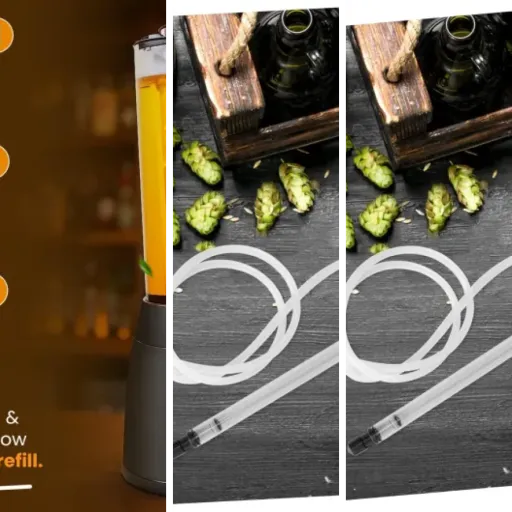
Out of the package, you get four siphon setups, each basically consisting of a rigid plastic tube (the siphon “cane”) and a length of flexible tubing. There’s no clear manual in my box, just a basic label with the product name and some specifications in small print. If you’ve ever used a siphon before, it’s pretty obvious how to assemble it: you push the soft tube onto the rigid part and that’s it. For a total beginner, it might look a bit bare-bones, but you’ll figure it out in two minutes.
The product page calls it an “auto siphon”, but in practice it behaves more like a regular siphon tube with a priming action. There’s no fancy pump head like on higher-end auto siphons. You still need to get the flow started by either sucking on the end (not ideal for wine/beer) or filling the tube with liquid beforehand. So if you’re buying this expecting the same convenience as a premium auto siphon with a plunger, you might be a bit disappointed. It works, but the “auto” part is a stretch.
Size-wise, the rigid tube is fine for small to medium containers. It fit easily into my 5L demijohn and also reached the bottom of a 10L plastic fermenting bucket. For a full-size 23L carboy, it’s usable but a bit short if you want to keep the outlet tube at a decent height above your receiving container. You can make it work by lowering the bucket or getting creative with positioning, but it’s not as comfortable as longer, branded siphons. The soft tubing length is okay, not super long, but enough for basic setups where both containers are on the same table or one on the counter and one on a chair.
In terms of overall presentation, it screams budget multi-pack: minimal packaging, no frills, and no extras like clamps or sediment stoppers. You don’t get bottling wands, no shutoff valves, nothing like that. It’s literally just the tubing and canes, which is fine if that’s what you’re expecting. I see it more as a “utility pack” for people who want several simple siphons lying around rather than one polished, feature-rich kit.
Does it actually move liquid properly?
On the effectiveness side, it does what it’s supposed to: it moves liquid from one container to another at a reasonable speed. Once you get the siphon going, the flow is surprisingly quick for such a simple setup. When I transferred about 5 liters of wine, it emptied the demijohn in just a few minutes. Same with a 10L beer batch from fermenter to bottling bucket – it didn’t feel slow or sluggish at all. So if all you care about is “does it flow?”, then yes, it’s fine.
Where things get a bit clunky is priming. Since there’s no proper auto-siphon mechanism, you have to either pre-fill the tube with sanitized liquid or do the classic suck-on-the-end method (which I don’t love for hygiene reasons). I usually fill the hose with sanitizer, plug the end with my thumb, and then drop the cane into the fermenter. That works, but it’s an extra step every time. Compared to real auto siphons with a plunger you just pump a few times, this feels old school and slightly annoying if you rack often.
In terms of sediment control, it’s average at best. Because the bottom is just a cut tube with no special tip, you need to manually keep it a centimeter or two above the sediment layer. On my first run, I went a bit too low and pulled in some yeast, so I had to stop, let things settle, and start again. After that, I just kept a closer eye on it and tilted the fermenter slightly, which worked. So it can do a clean transfer, but it relies more on your technique than on the design helping you out.
Overall, I’d say it’s effective but basic. It gets the job done with a bit of extra effort from you. If you’re patient and don’t mind handling the cane carefully, you’ll get decent, clear transfers. If you’re looking for something that makes racking almost brainless, this isn’t it.
Pros
- Four complete siphon setups in one pack, good for backups and different uses
- Flows quickly and transfers 5–10L batches without feeling slow
- Cheap, simple solution for occasional homebrew and general liquid transfers
Cons
- Not a true auto siphon; priming is manual and a bit fiddly
- Basic plastic with limited long-term durability, especially at hose joints
- No sediment guard or extra features, so clean transfers require more attention
Conclusion
Editor's rating
The IMIKEYA 4-set auto siphon kit is basic but functional. It’s clearly a budget product from an unknown brand, with simple plastic parts and no fancy features. In practice, though, it does the core job: it moves wine, beer, and other liquids from one container to another at a reasonable speed, without major leaks, as long as you handle it sensibly. You don’t get a true auto-priming mechanism or a smart sediment tip, so you have to rely more on your own technique.
This set makes the most sense for casual homebrewers, people who occasionally make small batches of wine or beer, or anyone who wants a few cheap siphons around for different tasks. The fact that you get four sets means you can dedicate some to food and some to general household use without worrying too much if one wears out. If you treat the plastic gently and avoid very hot water, durability is acceptable for light use, but it doesn’t feel like long-term, heavy-duty gear.
If you’re after comfort, long lifespan, and cleaner design with real auto-priming and better sediment control, you should probably skip this and spend more on a well-known brewing brand. But if you just want something inexpensive that gets the job done, and you’re okay with a bit of manual fiddling, this IMIKEYA kit is a decent, no-frills option.