
Summary
Editor's rating
How the Fresh Squeeze IPA actually tastes in the glass
Is it good value for money for a 5L kit?
Simple, compact setup that fits in a normal kitchen
How the gear holds up after a few batches
Grains, hops and yeast: decent quality, no obvious shortcuts
What you actually get in the box
Does it actually turn a beginner into a home brewer?
Pros
- Clear instructions and video make all‑grain brewing approachable for beginners
- Compact 5L setup fits easily in a normal kitchen and is fully reusable
- Produces a decent, citrus‑forward IPA that tastes like real craft beer
Cons
- Bottles and some useful tools (hydrometer/refractometer, capper) are not included
- Small 5L batch size means higher cost per pint and beer runs out quickly

Specifications
View full product page →| Brand | Bottle Topped |
From beer drinker to beer maker in one weekend
I picked up the Bottle Topped Fresh Squeeze IPA kit because I wanted to try proper grain brewing without filling the whole garage with gear. I’ve used basic malt-extract kits before, but this one is an all‑grain 5L setup, which is closer to what real breweries do. I brewed it in a normal kitchen over a couple of evenings and then waited the usual couple of weeks for fermentation and carbonation.
Right away, what stood out is how small and manageable it is. You’re not dealing with a giant 20+ litre fermenter or loads of pipes and taps. It’s one bucket, a bag, a thermometer and a bottling wand. That’s it. If you’ve got a decent-sized saucepan and a stove, you’re basically ready. I didn’t have to buy much extra, apart from caps and a capper because I wanted to use my own bottles.
I followed the instructions they give and also watched their YouTube video once, just to be sure I wasn’t messing anything up. For a first proper all‑grain attempt, it went smoothly. No weird steps, no advanced jargon, and nothing that needed special tools. The brew‑in‑a‑bag method really helps keep it straightforward, especially if you’ve only done kits with cans of malt before.
End result: after fermentation and a bit of patience, I got a decent, drinkable IPA with a clear citrus hop thing going on. It’s not the best beer I’ve ever had in my life, but for something that came out of my kitchen in a 5L bucket, I was honestly pretty happy. It’s not perfect, there are a few little annoyances, but overall it did what I wanted: it turned a casual beer drinker into someone who now tinkers with recipes on weekends.
How the Fresh Squeeze IPA actually tastes in the glass
After fermenting for about two weeks and giving the bottles another week or so to carbonate, I cracked the first one open. Carbonation was good: nice hiss, a proper head, and not flat or over‑gassy. Colour-wise, it poured a light amber to golden, slightly hazy but not a muddy mess. Visually it looked like a small‑batch craft IPA, not like something thrown together in a bucket as a joke.
The smell was the first nice surprise. You get that citrus hop note straight away, plus a bit of orange from the zest you add during brewing. It’s not overpowering, but it’s clearly there. Underneath, there’s a simple malt sweetness. Nothing fancy, but it smells like a real IPA, not a generic lager or bitter. If you’ve had modern UK or US craft IPAs, you’ll recognise the style straight away.
On taste, I’d call it “pretty solid”. There’s a clear bitterness, but it’s not harsh. The citrus and hop character come through enough to keep it interesting, and the malt gives it a bit of body so it doesn’t feel watery. At around 5.5% it has a bit of weight without being heavy. It’s not on the level of the best brewery IPAs I’ve tried, but for a first home‑brewed all‑grain batch, I was genuinely happy to drink it. Friends I shared it with were surprised it came from a starter kit.
It’s not perfect. My batch had a tiny bit more yeast character than a commercial IPA, probably because I rushed the conditioning a little and there was some sediment in the bottles. One Amazon reviewer mentioned not quite getting the full 5L due to sediment, and I saw the same thing: you lose a bit at the bottom of the fermenter and some in the bottles if you’re not careful. But overall, the taste is more than decent for something this simple. If you like citrusy IPAs and don’t expect it to beat your favourite brewery’s flagship, you’ll be happy enough with what comes out.
Is it good value for money for a 5L kit?
On price, you have to keep in mind you’re only getting 5L of beer out of it, which is about 9 pints. If you compare that directly to buying beer in the shop, it’s obviously more expensive per pint. But that’s not really the point. What you’re paying for here is the combination of ingredients plus reusable equipment plus a simple way into proper all‑grain brewing. On that front, the value is pretty good, especially when you consider you can keep using the gear for future batches.
Compared to the really cheap supermarket kits where you just add water to a can of malt extract, this costs more, but you also get a better process and a better end result. The beer tastes closer to something you’d get from a craft brewery. You also learn more, because you’re actually mashing grain and doing a real boil, not just dissolving syrup. If you’re curious about brewing as a hobby, this is a more useful investment than a basic can kit that you’ll probably outgrow after one batch.
Where the value really shows up is if you plan to brew again. Once you’ve done the first IPA, you only need to buy ingredients next time – grains, hops, yeast, and sanitiser. The bucket, wand, bag and thermometer are already there. That brings the cost per batch down noticeably. One Amazon reviewer mentioned they now brew every couple of weeks with 5L kits and even drink less commercial beer because they prefer their own. I’m not quite at that level, but I do see how this kit can kickstart that pattern.
If you just want a one‑off novelty gift for someone who might never brew again, it’s on the pricey side per litre. But as a gift for someone who likes food and drink projects – the kind of person who bakes bread or experiments in the kitchen – I think the balance between cost, learning, and final beer quality is fair. It’s not a bargain basement deal, but it feels like you’re paying for something that actually teaches you a skill and gives you drinkable beer at the end, not just a gimmick.
Simple, compact setup that fits in a normal kitchen
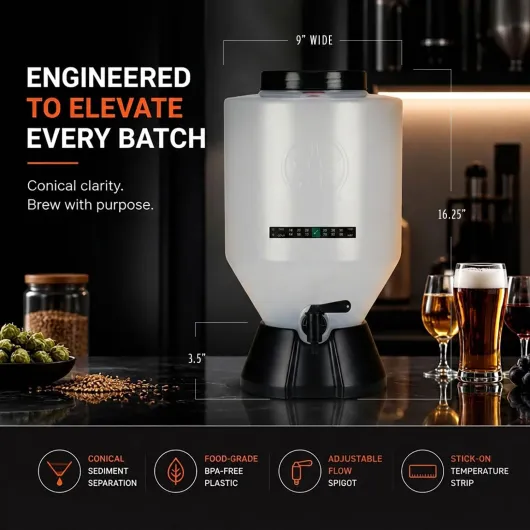
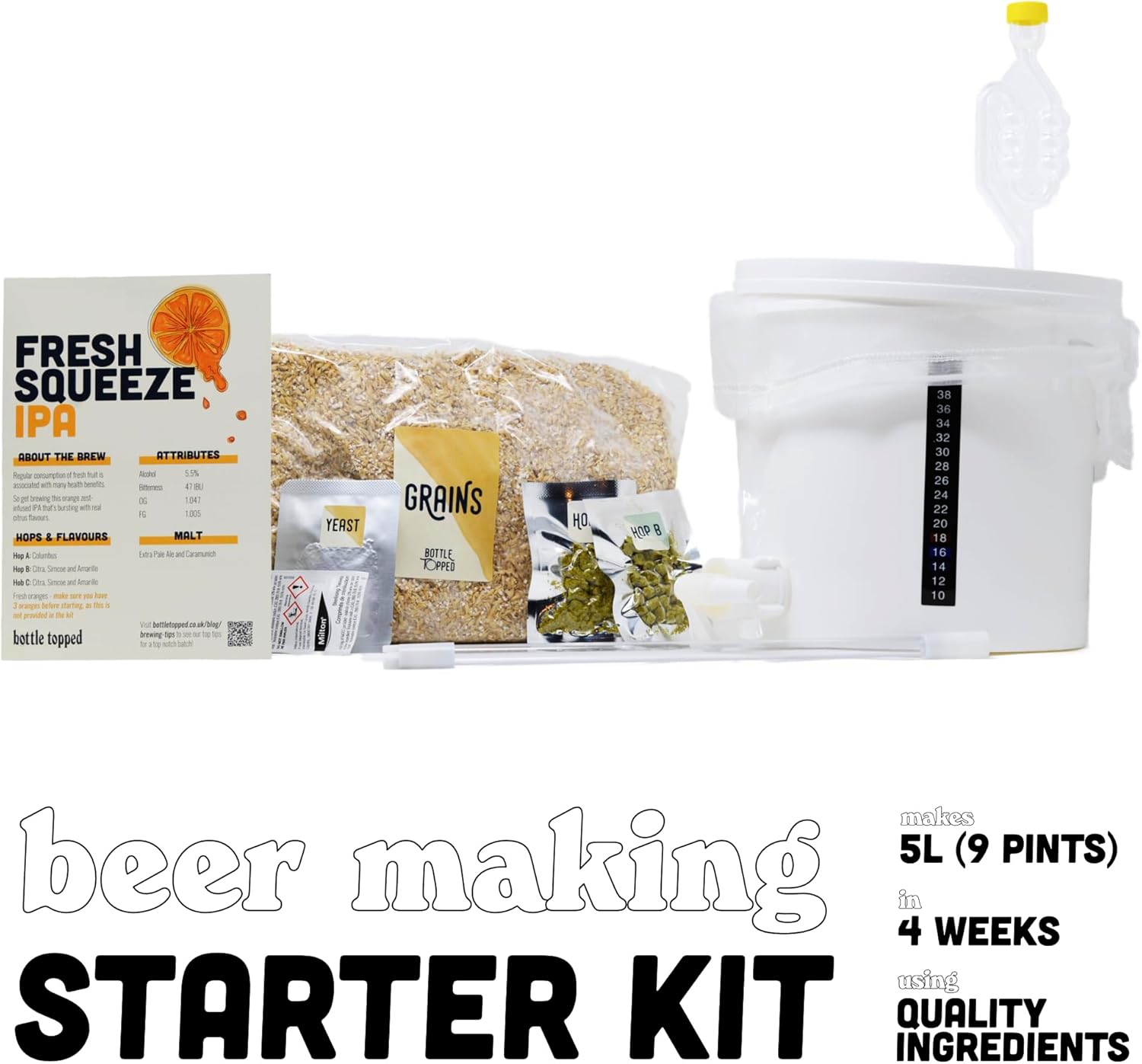
The design of the kit is very much “keep it simple”. The fermenter is a small plastic bucket with a lid that takes an airlock. It’s sized for 5L, which means you can easily store it in a cupboard, under a table, or in a corner of the kitchen while it ferments. Compared to the usual 23L homebrew setups I’ve used before, this felt much less intrusive. You don’t need a dedicated brewing space; a normal flat or small house can handle it.
The brew‑in‑a‑bag approach is the main design choice here, and it makes a lot of sense. Instead of needing a mash tun and extra vessels, you just put the crushed grain in the provided bag, steep it in hot water in your pot, pull the bag out, then boil the resulting wort. Less gear, fewer things to clean. For a first-timer, that reduction in steps and equipment really helps. You just focus on hitting roughly the right temperatures and times.
The bottling wand clips onto the tap on the bucket and has a spring-loaded tip. You press the bottle up, it fills from the bottom, then stops when you lower the bottle. This means less oxygen exposure and less foamy mess on the counter. It’s a simple bit of design but again, compared to my earlier attempts using just a syphon tube, it’s much less annoying. The included thermometer is basic but readable; you’re not getting laboratory gear, but it’s good enough for keeping your mash and pitching temps in the right zone.
If I had to criticise the design, I’d say the bucket could use volume markings on the side. When I was topping up with water, I had to guess a little and then check with a jug. Also, the small size means you get less beer at the end, which is kind of the point of a starter kit, but if you’re used to standard 20+ litre batches, 5L feels like it disappears fast. For learning and for gift purposes, though, the design choices make sense and keep the whole thing approachable.
How the gear holds up after a few batches
Durability is always a question with starter kits, because a lot of cheaper ones feel like they’re made to be used once and then thrown away. With this one, after using it for the Fresh Squeeze IPA and then again for another recipe, the gear still feels fine. The fermenting bucket hasn’t warped, the tap doesn’t leak, and the lid still seals well enough for the airlock to bubble properly. As long as you clean and sanitise it carefully, it should last for several small batches.
The brew bag is the bit I was a bit worried about at first, because it’s fabric and does a lot of work holding wet grains. After two uses, it’s still in good shape: no tears, no loose seams. You obviously need to rinse it properly and let it dry out fully between brews, otherwise you’ll get smells and maybe mould. Treated reasonably, it looks like it’ll survive multiple brew days. Same for the bottling wand – the spring still works, and the plastic hasn’t cracked.
The thermometer is basic but has held up fine. It’s not as tough as a metal probe thermometer, but if you don’t drop it or leave it sitting on the bottom of a scorching hot pan, it should last. The sterilising tablets do the job, though once they’re gone you’ll need to buy more sanitiser of some kind, which is normal for any brewing setup. None of this feels like premium, heavy‑duty professional gear, but it also doesn’t feel like throwaway toy plastic.
If you plan to brew every week for years, you’ll probably end up upgrading some parts over time, especially the thermometer and maybe the fermenter. But for someone doing a batch every month or so, the durability seems good enough. I don’t feel like I bought a single‑use kit; I feel like I bought a small, reusable brewing setup that can handle several rounds before I even think about replacing anything.
Grains, hops and yeast: decent quality, no obvious shortcuts
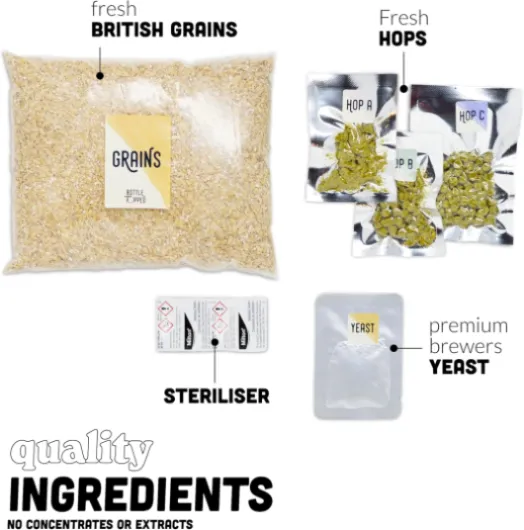
The ingredients are all‑grain, which is what makes this kit more interesting than the usual cans of syrup you see in supermarkets. You get a bag of crushed malt, measured out for the 5L batch, plus portioned hops and a proper brewing yeast. Everything came clearly labelled with when to add it. Nothing looked stale or dusty, and there were no odd smells from the grain or hops when I opened the packs, which is a good sign.
During the mash and boil, the wort smelled like a proper brew day: malty, then hoppy, then that citrus note when you add the zest. The hops gave off a nice fresh smell, not that old cheesy aroma you sometimes get from badly stored hop pellets. The yeast was a dry brewer’s yeast; it rehydrated and took off quickly once pitched. Within about 12–18 hours I had steady activity in the airlock, and it kept going nicely for several days, which tells me the yeast was in good shape.
In terms of how the ingredients translate into the final beer, you end up with something that tastes like a modern IPA: noticeable hop bitterness, clear citrus character, and enough malt backbone to keep it from being thin. The kit says around 5.5% ABV, and based on my gravity readings I landed roughly in that area. Obviously, your exact numbers will depend on how well you hit the mash temps and boil times, but the recipe is balanced enough that even if you’re slightly off, you still get a solid result.
If you’re coming from supermarket extract kits, this is a clear step up. You can taste that it’s real grain and a proper hop schedule, not just a can of syrup and a random yeast packet. The only minor gripe is you don’t get a lot of flexibility within the kit itself – it’s a fixed recipe – but that’s normal for a starter pack. The upside is you can reuse the equipment with other grain and hop combos later, which is what I’ve started doing after the first batch.
What you actually get in the box
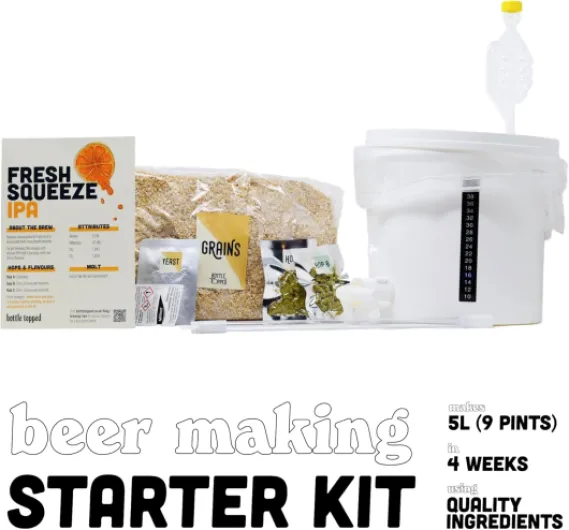
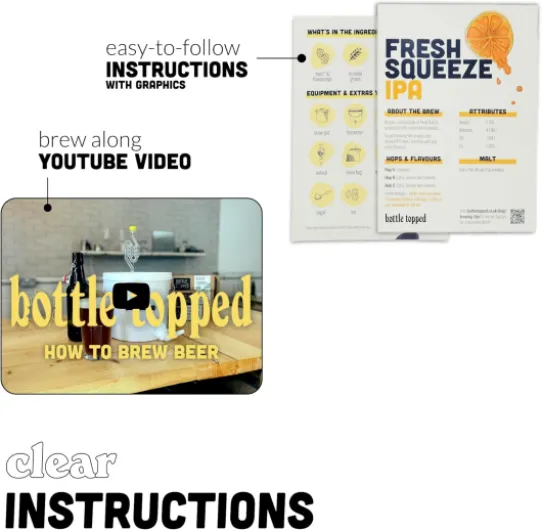
Out of the box, the kit is pretty compact. You get a small fermenting bucket with a lid and airlock, a bottling wand, a brew bag for the grains, a thermometer, sterilising tablets, plus the ingredients: grains, hops, yeast, and any extras the recipe calls for. Mine included the bits needed for the Fresh Squeeze IPA, which has that citrus twist (you’ll need to supply your own orange for zest, which they mention). No bottles included, which is fine, but you should know that before brew day or you’ll be scrambling to find empties.
The instructions are printed clearly and don’t read like a chemistry manual. They walk you through step by step: heat the water, steep the grains in the bag, boil with hops, cool, pitch yeast, ferment, then bottle. They also send you to a YouTube video, which I did watch once. That video is handy if you’re nervous about your first brew. It matches the written steps so you can check visually that you’re doing the right thing.
What I liked is that there isn’t any pointless plastic junk. Every piece in the box has a job and can be reused for future batches. The fermenter is sized for 5L, so it doesn’t hog half a room. The bottling wand is a nice touch; it makes filling bottles less messy and gives you a more consistent fill level. It sounds like a small thing, but if you’ve ever tried to bottle with just a bit of tubing and a tap, you’ll notice the difference.
On the downside, there’s a bit of an assumption that you either already have or will get some basic extras: a big enough stockpot, a way to cap bottles, and ideally something to check gravity (hydrometer or refractometer). One Amazon reviewer mentioned a refractometer; I just used a basic hydrometer I already owned. If you’re starting totally from zero, keep in mind the kit is a strong base, but not the full ecosystem. Still, as a starter bundle, it’s pretty solid and doesn’t feel cheap or half‑baked.
Does it actually turn a beginner into a home brewer?
In terms of doing what it claims – helping a beginner brew drinkable beer at home – it does the job. The step‑by‑step approach, plus the video, means you’re not guessing your way through the process. I’ve brewed before, but I deliberately followed their method as if I were new, and I didn’t hit any confusing dead ends. The timings, temperatures, and fermentation guidance are clear enough that you can just follow along without needing to read a whole book on brewing first.
The kit also works well as a gateway to more brewing. One of the Amazon reviewers said it “started something”, and I get that. Once you’ve done this 5L batch, you understand the basics: mashing, boiling, hopping, cooling, fermenting, and bottling. The equipment is reusable, so you can buy more grain and hops – either from Bottle Topped or elsewhere – and keep experimenting. I’ve already reused the fermenter and bottling wand for another small batch, and they hold up fine.
There are a few caveats. To really make the most of it, you should add a couple of basic tools: a hydrometer or refractometer for gravity readings, and some way to cap bottles. One review mentioned a refractometer as “the only thing you need” beyond the kit, and I agree a gravity tool is very useful if you want to check fermentation is finished and get a rough ABV. Without that, you’re brewing a bit blind. The kit technically works without it, but you’re guessing more than you need to.
Overall, though, as a starter system it’s effective. It won’t do the work for you – brew day still takes a few hours and you need to pay attention – but if you can follow a recipe in the kitchen, you can get from water and grain to bottled IPA with this box. For me, it did exactly that and made me want to keep going with more recipes, which is really the main measure of success for a beginner kit.
Pros
- Clear instructions and video make all‑grain brewing approachable for beginners
- Compact 5L setup fits easily in a normal kitchen and is fully reusable
- Produces a decent, citrus‑forward IPA that tastes like real craft beer
Cons
- Bottles and some useful tools (hydrometer/refractometer, capper) are not included
- Small 5L batch size means higher cost per pint and beer runs out quickly
Conclusion
Editor's rating
The Bottle Topped Fresh Squeeze IPA Home Brew Starter Kit is a solid way to dip your toes into real all‑grain brewing without needing a garage full of gear. The instructions and YouTube video are clear, the equipment is compact and reusable, and the ingredients produce a genuinely decent citrus‑leaning IPA at around 5.5%. It’s not some magic shortcut – you still need to spend a few hours on brew day and wait a couple of weeks for fermentation and carbonation – but if you can follow a recipe, you can get from grain to glass with this kit.
It’s best suited for curious beginners, or for gifting to someone who already enjoys craft beer and kitchen projects. If that person ends up liking the process, the kit gives them a good base they can reuse for many more 5L batches. The main downsides are the small batch size, the lack of bottles in the box, and the fact you really benefit from adding a couple of extra tools like a hydrometer or refractometer. If you’re only after cheap beer in bulk, this isn’t for you. But if you want to try proper brewing on a small scale and don’t mind a bit of effort, this kit is a pretty solid starting point that does what it promises without feeling like a gimmick.