
Summary
Editor's rating
How the Blackout Chocolate Stout actually tastes
Is it worth the money for 5L of beer?
Simple gear that mostly does the job
Build quality and ingredient quality
Packaging and unboxing experience
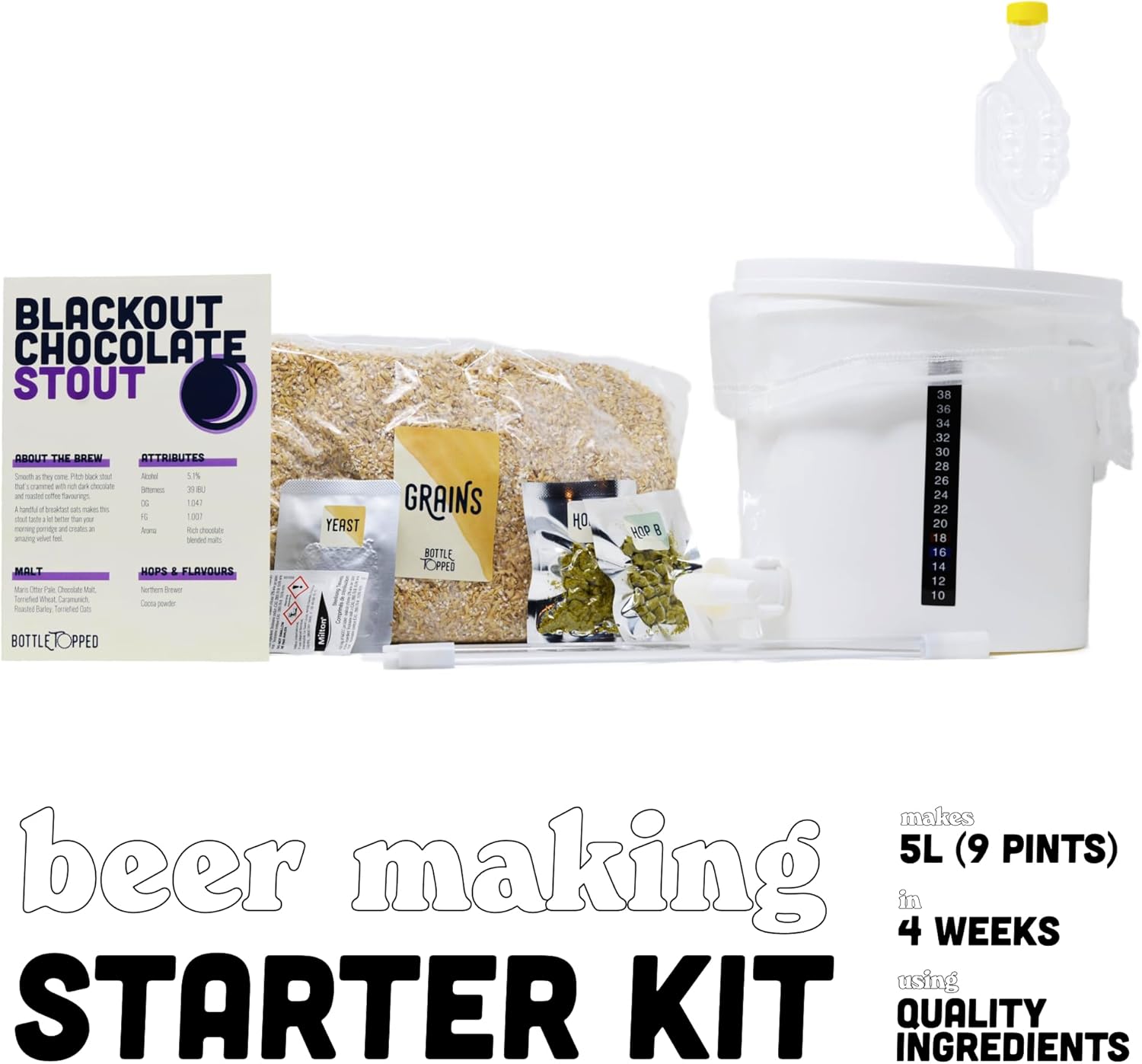
What you actually get in the box
Does it really turn you into a home brewer?
Pros
- Genuinely beginner‑friendly all‑grain process with clear instructions and video support
- Produces a decent, drinkable chocolate stout with proper body and aroma
- Includes reusable core equipment (bucket, bottling wand, thermometer, bag, airlock) for future brews
Cons
- Small 5L batch size, so cost per pint isn’t cheaper than shop beer on the first run
- Lightweight plastic gear and no hydrometer, so some homebrewers may outgrow it quickly

Specifications
View full product page →| Brand | Bottle Topped |
Turning the kitchen into a mini brewery
I tried the Bottle Topped Blackout Chocolate Stout kit as someone who likes craft beer and has done a bit of basic homebrew before, but I’m far from an expert. I wanted to see if this 5L kit was actually beginner‑friendly, or if it would end up half‑used in a cupboard like a lot of DIY kits. I brewed it in a normal flat kitchen with one big stock pot and no fancy gear, just what comes in the box plus my own bottles.
The first thing I noticed is that this is a real all‑grain kit, not a cheap syrup can with sugar. You’re actually mashing grain in a bag, boiling hops, the whole thing. So it feels like proper brewing, just shrunk down. That’s good if you want to learn, but it also means you need to set aside a few hours and pay attention to temperatures and cleaning.
I followed the instructions step by step and also checked their YouTube video on my phone a couple of times when I wasn’t sure. In practice, brew day took me around 3.5 hours from heating the first water to having the wort in the fermenter with the yeast pitched. That’s including some faffing around and checking notes. Fermentation took about 10 days in a cool room, then I bottled and left it another two weeks before tasting.
Overall, my first impression: it’s a pretty solid starter kit for someone who actually wants to learn brewing, not just mix and forget. It’s not perfect, there are a couple of small annoyances, but it does what it promises: you end up with drinkable stout and a decent idea of how all‑grain brewing works. Whether it’s the right choice for you depends on if you want something quick and lazy, or you’re happy to spend a half‑day actually brewing.
How the Blackout Chocolate Stout actually tastes
Let’s talk about the end result, because that’s what matters. After about 10 days fermenting and 14 days in the bottle, I cracked the first one. I got a dark, almost black stout with a decent tan head. Carbonation was moderate – not flat, not super fizzy, somewhere in the middle. The aroma had a clear roasted malt smell with a bit of chocolate and a slight coffee note. Nothing too fancy, but it smelled like a proper stout, not a weird homebrew experiment.
On the taste side, I’d describe it as solid and drinkable. There’s a roasted malt base, some chocolate character, and a light bitterness that keeps it from being too sweet. The body is medium; it’s not a thick dessert stout, more like a normal pub stout with a chocolate twist. At 5.1% ABV (roughly, since I didn’t have a hydrometer), it drinks fairly easily. I had two pints on a Friday night and felt like I’d had a normal stronger beer, nothing extreme.
Compared to commercial chocolate stouts, it’s not as rounded or polished, but honestly for a first homebrew it’s better than I expected. No weird off‑flavours, no funky sourness or cardboard taste. If anything, my batch could maybe have used another week in the bottle to smooth out a slight harshness in the roast. I also think serving it slightly warmer than fridge‑cold helped bring out the chocolate side more.
If you’re expecting a super thick, pastry‑style stout with loads of sweetness, you’ll probably find this a bit tame. It’s more in the “classic stout with a hint of chocolate” area. For me, that’s fine – I wanted something I could actually drink a couple of glasses of, not a sugar bomb. So I’d rate the taste as good, not mind‑blowing, but absolutely respectable for a kit of this size and price. Friends I gave a bottle to said it tasted like a normal craft stout you’d get on tap, which is kind of the goal.
Is it worth the money for 5L of beer?
On value, you have to be realistic: you’re not brewing this to save money compared to supermarket beer. For a 5L kit, by the time you add the kit price plus maybe buying caps or a capper if you don’t already have one, your cost per pint isn’t going to beat cheap lager from the shop. Where the value makes sense is as a learning experience and a gift item for someone who likes craft beer and DIY projects.
You’re getting reusable equipment (bucket, bottling wand, thermometer, bag, airlock) plus a full set of ingredients. If you used the same equipment again and just bought fresh ingredients, the cost per batch would drop quite a bit. So the first batch is the most expensive; after that it becomes more reasonable. Compared to some other small‑batch all‑grain kits I’ve seen, the price feels in the right ballpark, especially considering it’s currently ranking well in Home Brewing Kits and has a 4.3/5 rating from other users.
Compared to a basic extract kit (the ones where you just mix syrup and sugar), this is a bit more expensive and more effort, but the beer quality is better and you actually learn real brewing. If you’re serious about getting into homebrew, I’d rather spend a bit more on this kind of kit than a cheaper one that makes mediocre beer and puts you off the hobby. If you just want a quick novelty drink for a party, then a simpler kit might be enough and cheaper.
So in my opinion, the value is pretty solid if you care about the process as much as the result. As a gift for a dad, partner, or mate who talks about craft beer all the time, it’s a nice balance between price and “this feels like a real project”. If your only goal is cheap alcohol, look elsewhere. If you want a small, manageable first step into actual brewing, the price is fair.
Simple gear that mostly does the job
The overall design is very straightforward: it’s built around the brew‑in‑a‑bag (BIAB) method. That means you put the crushed grains in the supplied mesh bag, dunk it in a big pot of hot water, hold it at the right temperature, then lift the bag out. It keeps the process simple and keeps grain bits out of your wort without needing extra filters or fancy mash tuns. For a small 5L batch, this design makes sense and is easier to manage in a home kitchen than a full three‑vessel setup.
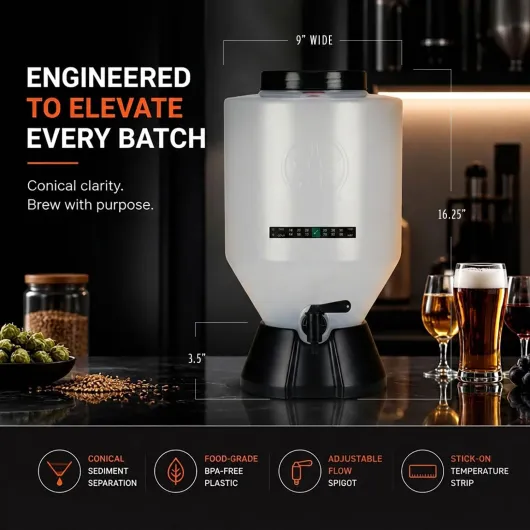
The fermenting bucket is basic but fine. It’s light plastic with a lid that takes the airlock. The tap and bottling wand setup is probably the best bit of the design. Once fermentation is done, you just attach the bottling wand to the tap and you can fill bottles from the bottom, which reduces splashing and mess. It’s not pro‑level kit, but for this batch size it works well. You don’t get a hydrometer, so there’s no easy way to check alcohol content or fermentation progress beyond watching bubbles. For beginners it’s okay, but anyone curious about numbers will miss that.
The thermometer is the classic cheap brewing type: a glass or basic probe that gets you “good enough” readings. It’s not ultra precise, but it let me keep the mash in the right temperature range. If you want to be picky, you could use your own digital thermometer. The only design gripe I had was the grain bag: it’s large enough, but the drawstring could be sturdier. When the bag is soaked with hot water and grain, it’s heavy and awkward to lift. I ended up supporting it with a colander over the pot, which worked but isn’t mentioned in the instructions.
In practice, the design is geared towards making the process as simple as possible without too many moving parts. That’s good for beginners, but there are a couple of corners cut compared to more advanced gear: no tap on the kettle side (obviously, it’s just your pot), no chiller, no hydrometer. For a first kit, I think that’s acceptable. You’re paying to learn the basics, not to build a full brewery in one go.
Build quality and ingredient quality
On the equipment side, most of the materials are lightweight plastic. The fermenting bucket is thin but not flimsy. It held up fine through cleaning, sanitising, and a full fermentation cycle. The tap didn’t leak for me, which is always the main worry with cheaper plastic taps. The bottling wand is also plastic with a spring‑loaded tip; it feels a bit cheap in the hand but it worked and didn’t stick or jam during bottling. For a 5L batch, you’re not putting it under heavy stress anyway.
The grain bag is a synthetic mesh. It’s fine for this volume, but I wouldn’t pull on it too hard when it’s soaked and heavy – I supported it with a colander as a safety measure. The thermometer is basic but did survive being dunked in hot wort repeatedly. None of the plastics picked up any obvious smells or discolouration after one batch, so I’d say you can get multiple uses out of the gear as long as you clean and store it properly.
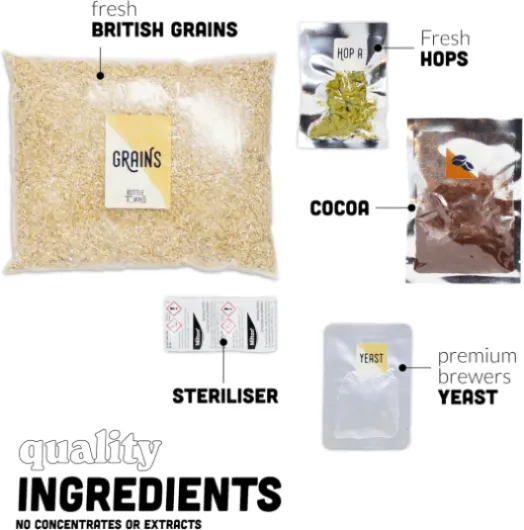
Ingredient‑wise, I was pleasantly surprised. The grains arrived vacuum‑sealed and smelled fresh when I opened the bag – that nice toasty, slightly chocolatey malt smell you’d expect from a stout recipe. The hops were in small, clearly labelled packets, and the aroma when I added them to the boil was solid, not stale. The yeast is a standard brewer’s yeast, not a generic baking yeast, which is important. It kicked off fermentation within about 12 hours for me, and the airlock was bubbling steadily for several days.
Overall, the materials feel decent for the price point. This isn’t pro‑grade stainless steel, but it’s also not pound‑shop junk. If you want to brew regularly, you’ll probably upgrade some pieces later (better thermometer, maybe a sturdier fermenter), but to learn the basics and do a few batches, what’s in the box is good enough. The main value here is that the ingredients are pre‑measured and fresh, which takes a lot of guesswork out for a first‑timer.
Packaging and unboxing experience
The kit arrives in a sturdy branded box that looks decent enough to give as a gift without extra wrapping if you’re not fussy. Inside, everything is organised: the bucket takes up most of the space, and the smaller items and ingredients are packed inside it. Nothing was rattling around loose when mine arrived. No damaged sachets, no cracked plastic, which is always the risk with cheaper kits.
The grains were vacuum‑sealed, which is a good sign for freshness. The hop packets were labelled clearly with the step they’re used at, not just the hop name, which is useful for beginners. The yeast packet was also easy to spot and not just buried under everything. Sterilising tablets were in a small bag with clear instructions on dosage. The thermometer, airlock, and tap were wrapped in simple plastic but not over‑packaged.
Visually, the packaging doesn’t scream luxury, but it doesn’t feel bargain‑bin either. It sits somewhere in the middle: clean, practical, and gift‑friendly. The outside of the box explains the main idea (5L stout, BIAB method, what’s included), so anyone opening it knows what they’re getting into. It does mention that bottles are not included, but I think that point could be even clearer on the outside, because that’s the one thing people might assume is in there.
From a practical point of view, you can reuse the box to store the gear between brews, which is handy if you don’t have much space. After brewing, I cleaned everything, let it dry, and put most of it back in the box. So the packaging isn’t just a throwaway; it doubles as a storage solution. Nothing fancy, but it works and keeps all the little bits together so they don’t get lost in a cupboard.
What you actually get in the box
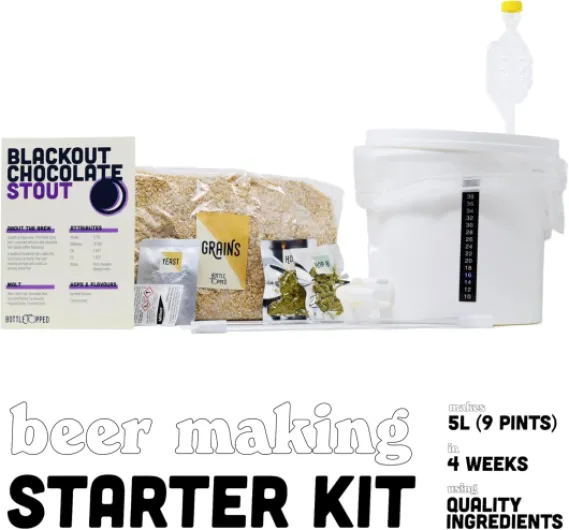
Out of the box, the kit looks tidy and organised. You get a 5L fermenting bucket with lid and airlock, a bottling wand, a thermometer, a grain bag for the BIAB method, sterilising tablets, and all the ingredients: pre‑measured grains, hops in labelled sachets, and a packet of brewer’s yeast. No bottles included, which they clearly say, so you either buy theirs separately or keep your old beer bottles and clean them properly.
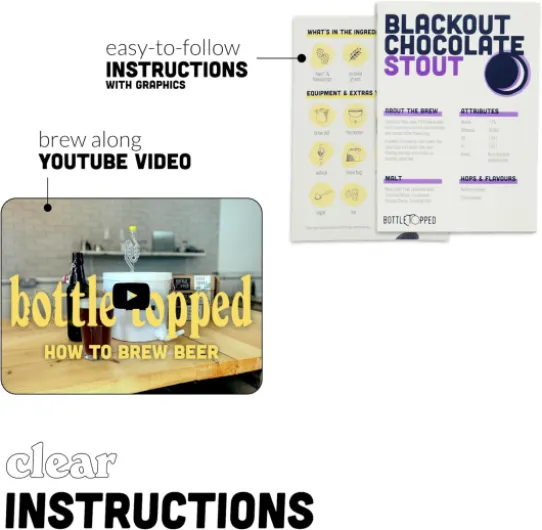
The ingredients are all clearly labelled by step (mash, boil, etc.), which is handy if you’re new and easily confused by timings. The instructions are printed in a small booklet. They’re not fancy, but they’re clear enough. What I liked is that they don’t assume you already know brewing jargon; they explain things like mashing and boiling in simple terms and point you to a YouTube video if you’re more of a visual learner.
One thing to know: this is a 5L kit, which is about 9 pints. So don’t expect a fridge full of beer. For me, that’s actually a good size for a first attempt: if you mess it up, you haven’t wasted loads of ingredients, and it’s easier to handle a small batch in a normal kitchen. But if you’re thinking of stocking a party, this is too small on its own.
In terms of overall presentation, it feels like a giftable product. The packaging doesn’t look cheap, and everything is packed logically. I could easily see giving this to someone who likes dark beers and gadgets. Just be aware that whoever gets it will also need a decent‑sized pot, a way to cool the wort (I used a cold water bath in the sink), and at least 8–10 bottles with caps. The kit doesn’t hide that, but it’s easy to overlook if you just see the phrase “starter kit” and assume it’s 100% complete.
Does it really turn you into a home brewer?
In terms of doing what it claims – letting a beginner brew 5L of stout at home – it gets the job done. I followed the instructions, didn’t use any fancy extra tools, and ended up with 9 decent pints of drinkable stout. No infections, no exploding bottles, no stuck fermentation. For a starter kit, that’s already a win. The process taught me the main brewing steps: mashing, boiling with hops, cooling, fermenting, bottling, and conditioning.
The instructions plus the YouTube video make the whole thing pretty approachable. If you can follow a recipe and keep an eye on temperatures, you can get through brew day. It’s not as mindless as pouring a can of extract and adding sugar, but that’s kind of the point. You actually feel like you brewed something. The only part that might trip people up is temperature control during the mash and fermentation. I don’t have fancy equipment, I just used a stove and a cheap room thermometer. It still worked, but it takes a bit of attention.
Fermentation was straightforward. The yeast took off quickly, and the airlock activity matched what the instructions described. I left it a couple of days longer than the minimum just to be safe. Bottling with the wand was cleaner than my old method of using a siphon, and I didn’t have any major spills. Carbonation was even across bottles, so the priming sugar instructions seem accurate. No bottle bombs, which is always a relief.
As a learning tool, I’d say this kit is effective for someone who actually wants to get into homebrew properly. If you’re just curious and want an easy novelty, this might feel like too much effort. But if you think you might brew again, this is a good first run. After doing this kit, I’d feel comfortable buying grains and hops separately and trying another recipe using the same basic equipment.
Pros
- Genuinely beginner‑friendly all‑grain process with clear instructions and video support
- Produces a decent, drinkable chocolate stout with proper body and aroma
- Includes reusable core equipment (bucket, bottling wand, thermometer, bag, airlock) for future brews
Cons
- Small 5L batch size, so cost per pint isn’t cheaper than shop beer on the first run
- Lightweight plastic gear and no hydrometer, so some homebrewers may outgrow it quickly
Conclusion
Editor's rating
After brewing and drinking the full 5L batch, I’d say the Bottle Topped Blackout Chocolate Stout kit is a good entry point into real homebrewing. It’s simple enough for a beginner to follow, but still teaches you the proper all‑grain process instead of just having you mix syrup and sugar. The equipment is basic but reusable, the ingredients are fresh, and the final beer tastes like a genuine stout with a decent chocolate note, not a weird homebrew experiment.
It’s not without downsides. You need a few hours free on brew day, some basic kitchen gear (big pot, bottles, caps), and a bit of patience for fermentation and conditioning. The batch size is small at 5L, so this isn’t about filling a keg; it’s more about trying the hobby in a manageable way. The plastic gear is on the light side, and there’s no hydrometer or fancy tools, but for a starter kit at this price, that’s understandable.
I’d recommend this kit to people who enjoy dark beers and are genuinely curious about brewing: dads who like a project, craft beer fans who want to see how it’s made, or anyone thinking about getting into homebrew and wanting a low‑risk first run. If you just want quick, cheap booze with zero effort, this isn’t the right product. But if you’re happy to spend an afternoon brewing and a few weeks waiting, you’ll end up with 9 pints of decent stout and a much better idea of whether homebrewing is your thing.