
Summary
Editor's rating
Value for money: decent price for a reliable basic tool
Design: clear scales but you’ll want good lighting
Materials: classic glass build, with the usual pros and cons
Durability: tough enough if you respect the glass
Performance in real brewing sessions
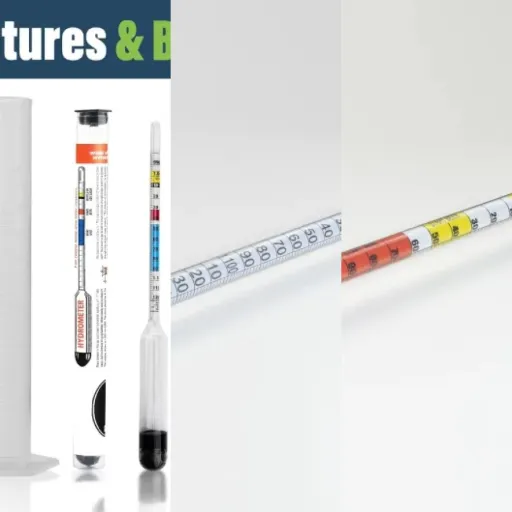
What you actually get in the box
Effectiveness: does it actually help you brew better?
Pros
- Accurate and consistent readings across multiple batches
- Triple scale (SG, sugar, alcohol potential) covers beer, wine, and mead
- Protective plastic tube makes storage safer and more convenient
Cons
- Glass construction is fragile and will break if dropped
- No included trial jar or detailed instructions, beginners must look things up

Specifications
View full product page →| Brand | Stevenson Reeves |
A simple glass tool that can save your whole brew
I’ve been brewing beer and the odd batch of mead at home for a while, and one thing I’ve learned the hard way is this: guessing whether fermentation is finished is a good way to ruin bottles, carpets, and your mood. That’s why I picked up the Stevenson Reeves Triple Scale Hydrometer (S1207). It’s a basic glass hydrometer with three scales, nothing fancy, no app, no Bluetooth nonsense, just a float in a tube. Exactly the kind of thing you forget about until you suddenly really need it.
Over a few weeks, I used it on a beer kit and a small test batch of cider. My goal was simple: see if it’s accurate, easy to read, and not a total pain to handle and clean. I’m not a lab technician, I just want to know if my brew is done and roughly how strong it is. If a tool slows me down or feels fragile every time I pick it up, I just stop using it.
The first impression was pretty normal: clear plastic tube, glass hydrometer inside, simple printed scales. No instructions in my box apart from what’s on the tube, so I relied on my usual brewing routine and a quick check online. If you’ve never used a hydrometer before, you’ll need to look up how to read specific gravity properly, but that’s true for any brand, not just this one. Once you understand that, it’s basically: take a sample, float it, read the line.
Overall, this intro period made it clear: this hydrometer is not special or fancy, but it does the core job. It helped me follow fermentation, spot when things slowed down, and decide when to bottle without stressing about bottle bombs. It’s not perfect, and there are a few small annoyances, but for a simple glass stick, it pulls its weight in a homebrew setup.
Value for money: decent price for a reliable basic tool
On the value side, this Stevenson Reeves Triple Scale Hydrometer sits in that mid-range sweet spot: not the cheapest random one from a no-name brand, but still very affordable for what it does. Considering it’s made in the UK and comes from a known manufacturer rather than a totally generic listing, I’m comfortable with the price. You’re basically paying for a tool that should last several batches, maybe years, as long as you don’t smash it.
What you get for the money is: reliable readings, triple scale (SG, sugar, alcohol potential), and a protective case. You don’t get any fancy extras like a printed brewing guide, a stand, or a trial jar. So if you’re starting from zero, remember you’ll still need a separate container to take readings. For me, that’s not a big deal, since most starter kits come with a jar anyway, but it’s worth noting if you’re counting every penny.
Compared to cheaper hydrometers I’ve had, the print quality and overall feel on this one is a bit better. I’ve used bargain models where the scale was slightly off or the glass felt very flimsy. This Stevenson Reeves one feels more dependable and better finished. If you brew regularly, paying a little more for something you trust is worth it in my book, especially when the difference in cost is small compared to the price of your ingredients and time.
So in terms of value for money, I’d call it good but not mind-blowing. It gets the job done, it’s reasonably priced, and it’s from a brand with a decent reputation. There are cheaper options, and there are more expensive hydrometers or refractometers with extra features, but for most homebrewers who just want accurate, simple readings, this hits a sensible balance between cost and reliability.
Design: clear scales but you’ll want good lighting
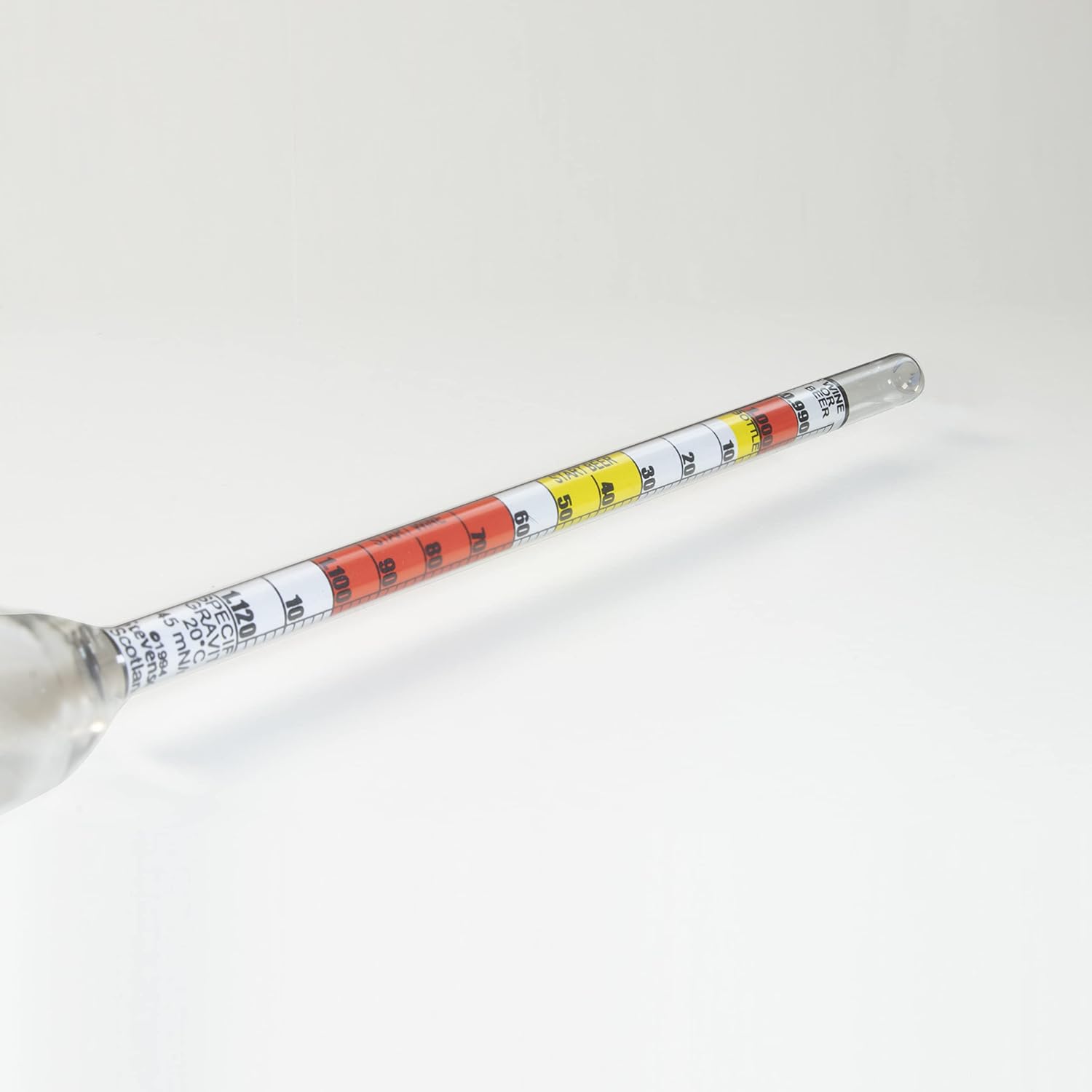
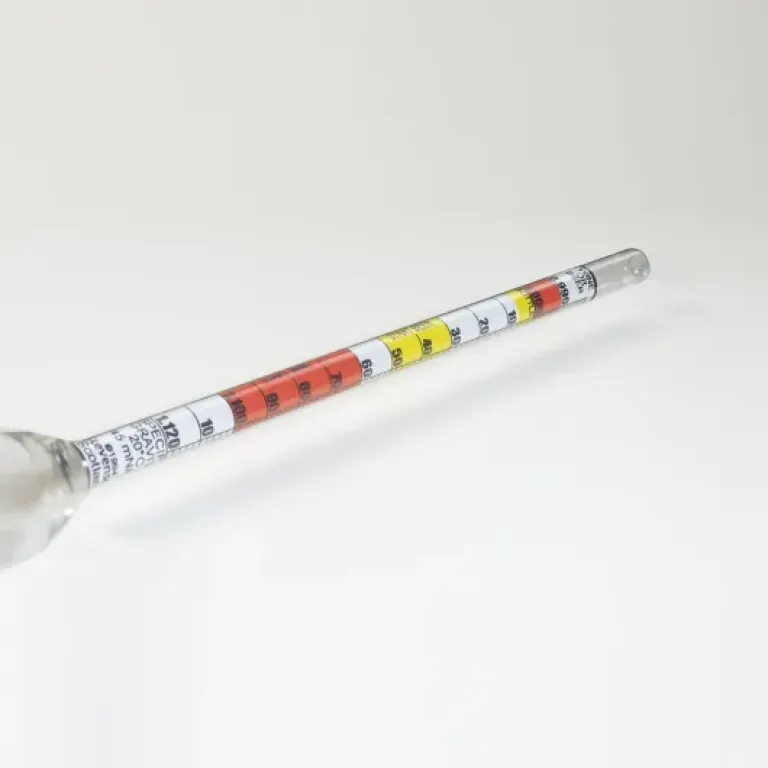
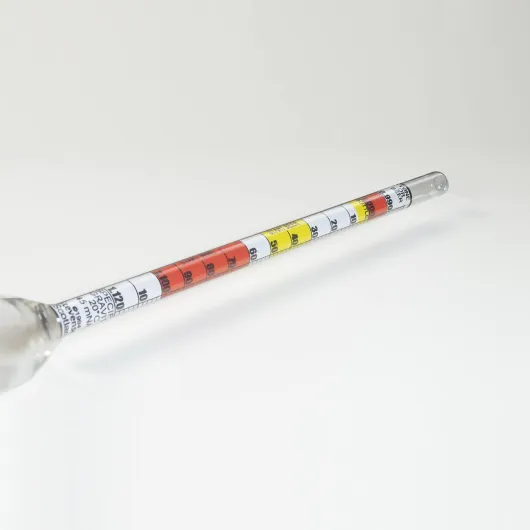
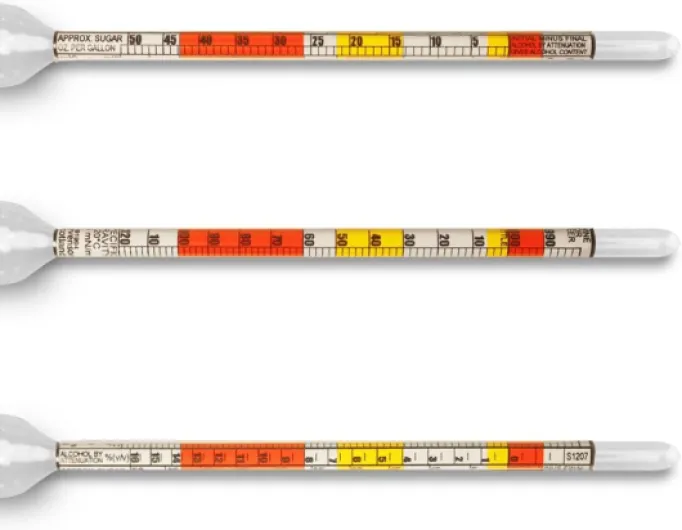
Design-wise, this hydrometer is very classic: thin glass body, weighted bulb at the bottom, paper scale inside. The print quality on mine was clean, no smudged lines or misaligned numbers. The specific gravity scale is the one I used most, and the spacing between marks is decent. It’s not a lab instrument, but I could comfortably read to about 0.001 SG if I took my time and had good light. The color coding between scales helps a bit, so you don’t mix up the sugar and SG lines.
One thing I noticed is that, like most glass hydrometers, it’s not super friendly in low light. If your brewing area is a dim garage or shed, you’ll be squinting a bit. I ended up moving closer to a window or using my phone torch to make sure I read the meniscus correctly. That’s not a flaw specific to this model, just something to keep in mind. If you’re expecting big, bold numbers like on a digital display, forget it; this is old-school analog.
The length (23 cm) is pretty practical. It’s long enough to be stable in the sample, but not so long that you’re struggling to find a container tall enough. It floated well in a 100 ml trial jar with enough clearance at the bottom and top. The hydrometer sinks gradually as fermentation progresses, and you can clearly see the difference between a 1.050 starting gravity and, say, 1.010 near the end. Watching it drop over a week or two gives you a good visual on how active your yeast is.
Design downside: it’s just glass with no rubber or protective end caps. So if you’re clumsy or tend to rush on brew day, you have to be careful setting it down on the counter or dropping it into the jar. A small protective bumper at the top or bottom would have been nice. Still, for a simple tool, the design is clean, readable, and does what it’s supposed to do without extra nonsense.
Materials: classic glass build, with the usual pros and cons
The hydrometer is made of plain glass with a paper scale inside, which is pretty standard for this type of tool. The glass on mine feels reasonably thick for what it is, not super chunky but not ultra fragile either. I wouldn’t let kids anywhere near it, but in normal adult hands it feels okay. The weight at the bottom seems well balanced, so it doesn’t wobble like crazy when you put it in the sample; it settles in a couple of seconds.
The outer storage tube is a rigid clear plastic that actually does a decent job of protecting the hydrometer when it’s not in use. I tossed it into a drawer with other brewing bits and pieces and it came out fine, no cracks or chips. The cap closes fairly tightly, so dust and random splashes from brew day don’t get in easily. It’s not some premium case, but it does exactly what you need: keep the glass from getting knocked around.
The obvious downside of glass is that one bad move and it’s dead. I had another brand’s hydrometer before this one and broke it by tapping it against the sink while cleaning. With this Stevenson Reeves one, I was more careful, but the risk is the same. If you’re the type who rushes and bangs things about, you might prefer a cheaper backup or accept that one day this will snap. That’s just the reality of glass tools in a busy kitchen or garage.
Overall, I’d say the materials are nothing fancy but appropriate: simple glass, clear print, and a protective plastic tube. No rust, no electronics to fail, no batteries to replace. As long as you don’t drop it, it should last. If you want something bombproof, you’re in the wrong category; hydrometers are basically all like this, and this one sits right in the normal range for quality.
Durability: tough enough if you respect the glass
Durability is always a bit of a joke with glass hydrometers, because at the end of the day, if you drop it on a hard floor, it’s gone. That said, after several brew days, rinses, and being knocked around a bit in its tube, this Stevenson Reeves hydrometer is still in one piece and reading fine. The protective plastic case helps a lot. I’ve accidentally let it roll off a low shelf while in the tube, and it survived without any cracks or chips.
When it’s out of the tube, you do feel like you’re handling something that needs a bit of care. I always fill the trial jar first, then gently lower the hydrometer in by the stem. If you slam it in or let it hit the bottom hard, you’re asking for trouble. So in terms of real-world use, durability is mostly about your habits. If you’re careful and don’t rush, it should last a good while. If you’re heavy-handed, no brand will save you.
The printed scales inside haven’t faded or bled, even after contact with sticky wort and cider followed by rinsing in warm water. I always just rinse in lukewarm water and wipe dry with a soft cloth, and that seems to be enough. No need for harsh cleaners. The manufacturer says “wipe clean”, and that’s accurate: it’s easy to maintain as long as you don’t use boiling water or bash it around in the sink.
So, durability verdict: fine for what it is. It’s not bombproof, it’s not unbreakable, but it’s no worse than other decent hydrometers I’ve used. The main thing protecting it is the plastic tube and your own common sense. Treat it like a glass thermometer, not like a metal spoon, and you should be okay.
Performance in real brewing sessions
Performance-wise, the hydrometer behaves like you’d expect a decent one to behave. It floats quickly and stabilizes in a few seconds, so you’re not standing around forever waiting for it to stop bobbing. The response time is basically instant once you lower it gently into the sample. The manufacturer mentions a 1-second response time, which is a bit of a silly spec for something like this, but practically speaking, you can read it almost right away.
Temperature-wise, I used it on samples between about 18°C and 24°C. Like with any hydrometer, you’re supposed to correct for temperature if you want very accurate readings, but for normal homebrew use, I just tried to let the sample cool close to room temp before measuring. The glass handled the temperature range fine, and I didn’t see any weird fogging or trapped bubbles on the stem. As long as you spin it gently when you drop it in, it shakes off bubbles and you get a clean reading.
One performance detail I noticed: the scale is reasonably easy to read at the surface of the liquid, but you still have to look at the bottom of the meniscus (the curved surface). If you’re not used to that, your first few readings might be off by a couple of points. After a couple of batches, it becomes second nature. Compared to a cheaper no-name hydrometer I had before, this one felt a bit clearer and less cluttered, especially on the SG scale, which helped me be more confident in the readings.
Over several uses, I didn’t see any drift or damage to the scale. No water seeped inside, and the print stayed sharp. So in terms of performance over time, it’s been reliable and consistent. It’s not doing anything special beyond that, but for brewing, that’s exactly the kind of boring reliability you want: same reading today, same reading tomorrow under the same conditions, no surprises.
What you actually get in the box
Out of the package, the Stevenson Reeves Triple Scale Hydrometer is basically one glass hydrometer plus a clear plastic storage tube. That’s it. No fancy extras, no stand, no trial jar. The hydrometer itself is about 23 cm long, which fits fine into a standard 100 ml trial jar or a tall narrow glass if you’re improvising. The tube doubles as a protective case and, in a pinch, as a sample jar, though I’d still prefer a proper one because the tube is a bit tight and not that stable.
The scales printed on the hydrometer are: specific gravity from 0.980 to 1.120, a sugar scale in oz/gal, and an alcohol potential scale. So you can use it for beer, wine, and mead without needing a separate tool. For a normal homebrewer, that range is plenty. I used it on a beer wort at around 1.046 and a cider must at about 1.060, and both sat nicely in the mid-range of the scale, which makes reading easier and a bit more accurate.
In practice, the triple scale is handy if you like numbers and want to compare different batches. For example, I could quickly see sugar content in oz/gal when planning how dry or sweet I wanted the cider, then switch my brain back to specific gravity when logging notes. If you’re new, it looks busy at first, but after two or three uses you mostly focus on the SG scale and ignore the rest unless you really need it.
So on the presentation side, it’s simple and functional: a clear analog tool, no gimmicks. The downside: there’s not much handholding. If you’re expecting step-by-step printed instructions or shortcuts to ABV without doing any math or using an online calculator, this won’t give you that. It’s more like: here’s the data, you figure out the rest. For me that’s fine, but total beginners might need a quick YouTube search to feel comfortable.
Effectiveness: does it actually help you brew better?
In practice, this hydrometer does what I needed: track fermentation and estimate alcohol content. I used it on a beer kit that started at around 1.046 SG. I took readings on day 1, day 4, day 7, and day 10. Watching the hydrometer sink from 1.046 down to about 1.010, then stay there for two days in a row, told me fermentation was basically done and safe to bottle. Without it, I’d be guessing based on airlock bubbles, which is honestly unreliable.
To check accuracy, I compared it against a friend’s hydrometer on a sugar-water test at 20°C. Both gave the same reading within 0.001 SG, which is totally fine for homebrewing. That’s enough precision to calculate ABV using any online calculator. Just to be clear: the built-in alcohol scale on the hydrometer is more of a rough guide. If you want a proper ABV number, you still need to record starting and final gravity and do the math. That’s not a fault of this model, that’s just how hydrometers work.
The most useful part for me was spotting a slow fermentation on a small cider batch. The gravity barely moved between two readings a few days apart, which made me check temperature and give the fermenter a gentle swirl to wake the yeast up. Without the hydrometer, I probably would have assumed it was done and bottled too early, ending up with overcarbonated bottles or worse. So from a practical brewing point of view, this thing helped me avoid problems.
So, in terms of effectiveness, I’d say it’s pretty solid. It doesn’t try to be anything more than a measuring tool, and that’s exactly what you need. If you’re expecting it to spit out a final ABV number without any effort, you’ll be disappointed. But if you accept that you need to log readings and do a tiny bit of math or use a calculator app, this hydrometer gives you reliable data to work with.
Pros
- Accurate and consistent readings across multiple batches
- Triple scale (SG, sugar, alcohol potential) covers beer, wine, and mead
- Protective plastic tube makes storage safer and more convenient
Cons
- Glass construction is fragile and will break if dropped
- No included trial jar or detailed instructions, beginners must look things up
Conclusion
Editor's rating
After using the Stevenson Reeves Triple Scale Hydrometer (S1207) across a few batches, my overall take is pretty straightforward: it’s a solid, no-nonsense tool that does its job without fuss. The readings matched another hydrometer I tested against, the scales are clear enough once you get used to them, and the triple scale gives you flexibility if you brew different styles like beer, cider, or mead. It helped me track fermentation properly and avoid bottling too early, which is honestly the main reason to own one.
It’s not perfect. It’s glass, so one clumsy move and it’s gone. There’s no real handholding for beginners, and you’ll still need to do basic calculations or use an online calculator to get the actual ABV. But those are normal trade-offs for this type of tool. For the price, the build quality, print clarity, and included protective tube feel fair. It’s not fancy, not high-tech, just a reliable analog stick that tells you what’s going on in your fermenter.
I’d recommend this to homebrewers who are past their first couple of “winging it” batches and want to get a bit more serious about consistency and safety. If you already have a working hydrometer, this isn’t going to change your life. If you’re starting from scratch or replacing a flimsy cheap one, this is a good, practical choice that should cover your needs as long as you treat it with basic care.