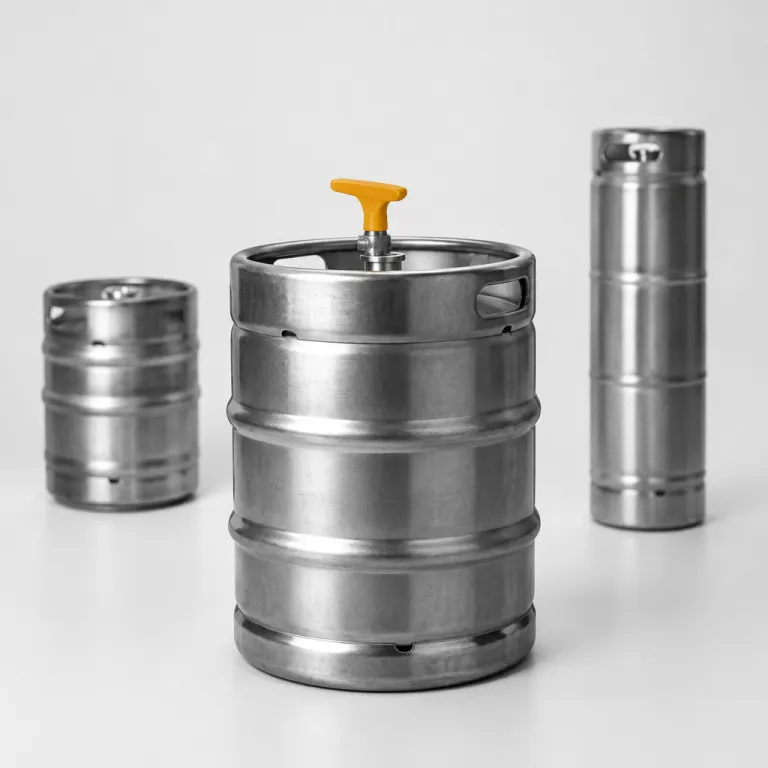
Why keg sizes for kegerator setups matter more than you think
Choosing the right keg size is not just a technical detail ; it shapes how you enjoy beer at home. The keg you pick affects freshness, how often you need to refill, and even which beers you can realistically keep on tap.
Freshness, foam and wasted beer
Beer is at its best when it is fresh and properly carbonated. If you buy a keg that is too large for how quickly you drink, the last pints can taste flat or oxidised. Go too small, and you may find yourself constantly swapping kegs and interrupting your pours.
Keg dimensions also influence serving quality. A keg that barely fits your kegerator can restrict air circulation and make temperature control harder, which often leads to foamy pours and inconsistent carbonation. Getting the size right helps your system run smoothly and keeps every glass tasting like it came straight from the brewery.
Space, budget and beer variety
Your kegerator’s internal layout, number of taps and available height all limit which keg formats you can use. Some setups can handle a full-size keg, while others are better suited to smaller formats or multiple slim kegs for variety.
Cost per pint changes with keg size too. Larger kegs usually offer better value, but only if you can finish them in time. Smaller kegs can be more expensive per litre, yet they let you rotate styles more often and reduce the risk of stale beer.
If you are just starting with draft beer at home, pairing your kegerator with a compact mini keg dispenser can be a smart way to test what size and capacity truly fit your drinking habits before committing to bigger kegs and more complex setups.
Standard commercial keg sizes and how they fit common kegerators
The most common keg formats you will run into
When people talk about “standard” kegs, they usually mean the half barrel, quarter barrel, and sixth barrel. These are the workhorses of bars, breweries, and many home kegerator setups.
- Half barrel (full-size keg) – About 15.5 gallons. This is the classic tall keg you see in commercial walk-in coolers. It can pour a lot of pints, but it is heavy and takes up most of a full-size kegerator.
- Quarter barrel (pony keg) – About 7.75 gallons. Shorter and wider than a half barrel. Many single-tap kegerators are designed to handle this size comfortably.
- Sixth barrel (sixtel) – About 5.16 gallons. Tall and slim, often used by craft breweries for rotating taps. Great when you want variety instead of one huge keg.
How these kegs actually fit inside a kegerator
Capacity charts on kegerator product pages can be confusing. The interior layout, compressor hump, and CO2 placement all affect what really fits. A “full-size” kegerator might hold one half barrel, or it might be better suited to two sixth barrels for more tap options.
Measure the interior height and width of your unit, then compare to keg dimensions from your distributor or brewery. Pay attention to both diameter and height ; a quarter barrel may fit in height but be too wide if your CO2 tank sits inside.
Commercial keg logistics and home setups
If you are buying commercial kegs from a distributor, you will usually deal with deposits, returns, and sometimes minimum orders. Planning your keg size around how quickly you drink beer (and how often you want to swap kegs) will make life easier. For those who also bottle some of their batches, a manual beer bottle capping machine can complement your kegerator setup nicely.
Smaller keg types for home use, variety and outdoor kegerators
Compact kegs that keep your beer lineup flexible
Once you move beyond full-size commercial kegs, a whole world of smaller formats opens up. These compact kegs are ideal when you want variety on tap, have limited space, or need something portable for patios and parties.
The most common small format is the sixth barrel (sixtel). Holding about 5.16 gallons, it is a favorite for home kegerators because you can often fit two side by side in a standard unit. That means two different beers on tap without upgrading to a larger fridge. Sixtels are also easier to lift, store, and swap out than half barrels.
Another option is the Cornelius keg (Corny keg), popular with homebrewers. These usually hold 5 gallons and use ball-lock or pin-lock connections instead of standard commercial couplers. They are perfect if you brew your own beer or like to force-carbonate cold brew coffee, kombucha, or soda. Pairing Corny kegs with a triple scale hydrometer for home brewing helps you dial in fermentation and carbonation before the keg ever hits your kegerator.
For outdoor setups and tailgates, mini kegs and 1.75–3 gallon “picnic” kegs shine. They chill quickly, fit in coolers, and are easy to transport. Some kegerators can squeeze one of these alongside a larger keg, giving you a “guest tap” for seasonal or experimental beers.
When you think about capacity and dimensions, remember how these smaller kegs interact with your overall setup. They let you rotate styles more often, keep beer fresher, and experiment with new breweries or homebrew batches without committing to a full-size keg.
How to match keg sizes, dimensions and capacity to your kegerator
Measuring your kegerator’s real-world space
Before you fall in love with a keg size, grab a tape measure. Interior dimensions on product sheets are often optimistic. Measure width, depth and height inside the cabinet, then subtract space for the compressor hump, temperature probe and any interior fan housing.
Do not forget vertical clearance. You need room for the keg, coupler, beer line bend and a bit of wiggle room so you are not fighting the door every time you swap kegs.
Translating dimensions into actual capacity
Once you know your usable space, compare it to keg diameters and heights you have already seen for standard and smaller formats. Ask yourself :
- Can I fit two sixtels side by side, or only one quarter barrel ?
- Will a slim quarter and a sixtel fit together, or will the door hit ?
- Is there still room for the gas tank inside, or must it live on the back ?
Sketching the footprint on paper (or tape on the floor) helps you visualise combinations before you start ordering kegs.
Balancing volume, freshness and serving needs
Matching size to space is only half the job. You also want the beer to stay fresh and pour the way you like. Larger kegs mean fewer swaps, but they demand faster consumption. Smaller kegs give you variety and reduce the risk of stale beer if you drink slowly.
Think about how often you entertain, how many taps you run and how quickly you emptied kegs in the past. If you regularly host big gatherings, a half barrel or multiple slim quarters might make sense. If you mostly pour a pint or two in the evening, sixtels or Corny kegs will align better with your habits while still fitting comfortably in your kegerator’s measured space.
Choosing the right keg size keg for your drinking habits and beer style
Aligning keg size with how often you pour
Start with how frequently you actually pour pints. If you only tap a beer on weekends or for the occasional game night, a full half barrel can go stale before you finish it. In that case, a sixth barrel or slim quarter is usually a better match, giving you enough volume without racing the clock on freshness.
For households that pour a few pints most evenings, a half barrel or standard quarter barrel makes more sense. You will turn the keg over quickly, which keeps flavors bright and carbonation lively.
Matching keg volume to beer styles
Different beer styles age and are consumed differently, which should influence your keg choice :
- Hop-forward IPAs and pale ales – These are best when fresh. Smaller kegs (sixtels, slim quarters) help you finish them before hop aroma fades.
- Lagers and light beers – Easy-drinking and crowd-friendly, they are ideal for larger kegs, especially if you host parties or watch parties often.
- Strong ales, stouts and sours – You usually sip these more slowly. A smaller keg lets you keep variety on tap without committing to a huge volume of one intense beer.
Balancing variety, budget and storage
If you love variety, two sixtels in a dual-tap kegerator can be better than one half barrel. You get more styles on tap, and you can rotate seasonals more often.
On the other hand, if you mainly drink one go-to lager, a larger keg often brings a lower cost per pint. Just make sure your kegerator’s dimensions and coupler setup, covered earlier, are compatible with the keg format you choose.
Think of keg size as part of your overall drinking routine : how many people you serve, how adventurous your tastes are, and how quickly you go through a keg all point to the ideal size for your kegerator.