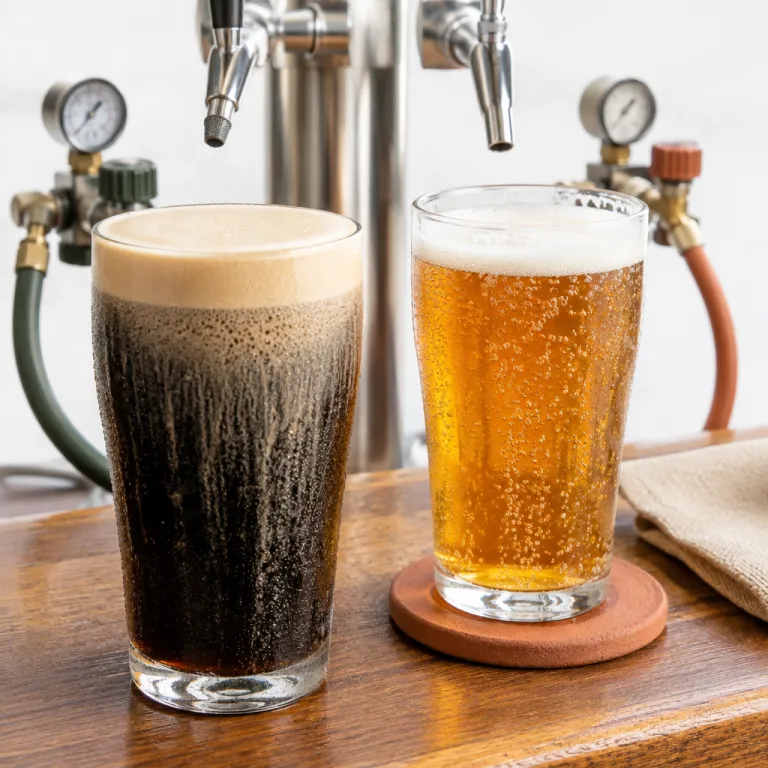
Why gas matters more than most drinkers think
Why the gas behind the tap quietly shapes your pint
When most people talk about draft beer, they focus on the recipe, the brewery, or how cold the pint is. Yet the gas pushing that beer from keg to glass quietly changes almost everything you experience : aroma, bubbles, foam, and even how quickly the beer seems to “fill you up”. Ignoring the gas is like judging a concert without noticing the sound system.
Carbon dioxide and nitrogen behave very differently once they are dissolved in beer. CO2 is highly soluble and creates lively bubbles and a sharper bite on the tongue. Nitrogen is far less soluble, forming tiny, creamy bubbles and a softer, rounder mouthfeel. The same stout can feel harsh and fizzy on straight CO2, then suddenly become silky and dessert-like when served on a nitrogen blend.
For bar owners and home draft enthusiasts, gas choice is not just a technical detail ; it is a flavor and texture decision. The wrong gas pressure or gas type can flatten hop aroma, blow out delicate foam, or make a balanced lager taste harsh and carbonic. The right setup, on the other hand, can turn an ordinary beer into a memorable pour.
Gas also affects how consistently your system pours over time. As kegs empty and temperatures change, the balance between gas pressure and beer carbonation shifts. That is why serious home brewers invest in proper kegging gear and even a manual beer bottle capping machine when they want to lock in carbonation for take-home bottles.
Once you understand how gas shapes foam, mouthfeel, and flavor, choosing between nitrogen, CO2, or a blend becomes a creative tool rather than a guessing game.
Nitrogen vs CO2 draft beer : how each gas changes foam, mouthfeel and flavor
How nitrogen reshapes the head on your pint
Nitrogen changes the look of a beer before you even take a sip. Because nitrogen is far less soluble than CO2, it forms tiny, tight bubbles instead of big, lively ones. That is why nitro pours show a dense, creamy head and that signature cascading effect in the glass.
With less gas actually dissolved in the beer, nitro pours feel smoother and softer. The carbonation prickle is muted, so the head sits like whipped cream rather than a fluffy foam cap. This suits styles that benefit from a velvety presentation, such as stouts and some malt-forward ales.
How co2 shapes carbonation and aroma
CO2 is the standard gas for most draft systems because it dissolves easily into beer. Higher solubility means more carbonation, more sparkle, and a livelier head. Those bigger bubbles lift aroma compounds out of the glass, making hop-forward beers smell brighter and more expressive.
That extra fizz also sharpens the perception of bitterness and dryness. A crisp pilsner or IPA feels snappier and more refreshing on CO2, with a foam that is lighter and more airy than a nitro head.
Flavor perception : when gas changes what you taste
Gas does not add flavor on its own, but it changes how you experience what is already in the glass. Nitro’s low carbonation softens roast, bitterness, and alcohol warmth, letting chocolate, coffee, or caramel notes glide across the palate. CO2, on the other hand, amplifies bitterness and acidity, which is why hop-driven and sour styles usually shine on straight CO2.
Even the same recipe can feel like two different beers depending on the gas you choose. That contrast becomes crucial when you start planning a full draft lineup or tweaking a home system with custom draft beer tap handles and dedicated nitro lines.
Gas blends, beer gas and how draught systems keep pints stable
Why bars rely on gas blends instead of pure co2 or nitrogen
In real draft systems, most beers are not served on pure CO2 or pure nitrogen. Bars often use “beer gas” – a blend of CO2 and nitrogen – to balance carbonation, foam, and keg pressure. The goal is simple : keep the beer at the right carbonation level while pushing it through the lines without over-carbonating or flattening it.
CO2 is what actually dissolves into the beer and creates carbonation. Nitrogen barely dissolves at all, but it is great for pushing beer long distances and maintaining stable pressure. By adjusting the CO2 percentage in the blend, bars can match the gas to the beer style, serving temperature, and line length.
Common beer gas ratios and what they are used for
Typical blends include :
- 25 % CO2 / 75 % nitrogen – classic stout and nitro ale blend, keeps carbonation low and creamy.
- 30–40 % CO2 / 60–70 % nitrogen – often used for mixed tap lines with both ales and lagers on long runs.
- 60 % CO2 / 40 % nitrogen – closer to straight CO2, useful when you need more carbonation but still want stable pressure.
Dialing in these ratios is a bit like recipe design. Brewers and bar managers look at the beer’s target volumes of CO2, then choose a blend and pressure that will hold that level over time. Tools such as a triple scale hydrometer for home brewing help confirm that carbonation and fermentation are where they should be before the keg ever hits the tap.
When the blend is right, the system stays in balance : pints pour consistently, foam behaves, and the beer tastes the way the brewer intended, night after night.
Real bar stories : how changing gas changed the beer
When a stout went from flat to fan favorite
One neighborhood bar had a dry stout that just would not move. Regulars called it “the flat one” ; the head collapsed in seconds and the beer tasted sharp and thin. The keg was on straight CO2 at a fairly high pressure to push through a long line run.
The owner finally brought in a draft tech. They switched the keg to a typical beer-gas blend on a nitro faucet and dropped the serving temperature slightly. Within a day, the same stout poured with a dense, cascading head and a silky mouthfeel. Customers assumed it was a new recipe. Sales of that keg doubled compared with the previous month, even though nothing in the cellar changed except the gas and faucet.
Saving a pale ale from “soda pop” carbonation
At a small taproom, a bright, hoppy pale ale kept getting complaints : “too fizzy”, “like beer soda”. The brewer had set the CO2 pressure high to speed up carbonation and keep a lively head, but the result was prickly carbonation that stripped away hop aroma.
After revisiting the draft setup, they lowered the CO2 pressure, lengthened the beer lines, and gave the keg more time to naturally reach equilibrium. The foam looked slightly less towering, yet the beer suddenly tasted softer and more aromatic. Guests started ordering second and third pints instead of stopping after one.
The brewer later experimented with a small nitro pilot batch of the same pale ale. The nitro version muted the bright hop snap too much, turning it into a creamy, almost golden-ale variant. That trial made it clear : for this beer, balanced CO2 was ideal, while nitrogen worked better for their stout and porter. The lesson behind the bar was simple ; gas choice can make the same recipe feel like two completely different beers.
How to choose between nitrogen and CO2 for your draft beer setup
Start with the beer styles you love most
Begin by listing the beers you actually plan to pour. If your lineup is mostly lagers, pale ales, IPAs, wheat beers or Belgian styles, a CO2 system at typical pressures and temperatures will serve you very well. These beers are designed around natural carbonation and will taste “right” with CO2 as the only gas.
If you are building a tap list that leans heavily on stouts, porters, cream ales, Irish reds or smooth, low-bitterness styles, a dedicated nitrogen line becomes much more attractive. The cascading pour, dense foam and softer mouthfeel you read about earlier are not just visual tricks ; they genuinely change how these beers drink.
Match gas choice to your hardware and budget
Next, look at what you already have – or what you are willing to buy. A nitrogen setup needs a different tank, regulator and usually a stout faucet. If you only pour one nitro beer, that extra cost and space might not be worth it. In that case, a single CO2 system with well-tuned pressures is the practical choice.
Running multiple lines ? Many bars use CO2 for most taps and reserve one or two lines for nitrogen or a beer-gas blend. That hybrid approach lets you keep classic carbonation on most beers while giving dark ales and creamier styles the nitro treatment.
Think long term about flexibility
Finally, consider how often you rotate beers. If you love experimenting, CO2 gives you maximum flexibility with minimal fuss. If you know you will always keep a stout or smooth ale on tap, investing in a nitro line pays off over time with a consistently impressive pour that guests remember.