
Summary
Editor's rating
Value for money: decent bundle if you accept the compromises
Simple design with a few minor annoyances
Food‑grade plastic that feels decent but clearly budget
Feels okay now, but I wouldn’t abuse it
What you actually get in the box
Does it actually move beer and wine without a fight?
Pros
- Complete starter bundle: siphon, hose, airlocks, stoppers, grommets, and cleaning brush included
- Siphon works reliably once started, with no major leaks in normal use
- Good price compared to buying each component separately
Cons
- Build quality and materials feel clearly budget, especially the airlocks
- Quality control seems inconsistent, with some reports of non‑working siphons or leaky airlocks
- Pump action is a bit rough and the bottom cap fit can be loose on some units

Specifications
View full product page →| Brand | Dbgogo |
A budget siphon kit for lazy homebrewers like me
I picked up this Dbgogo 14" auto siphon kit because I wanted something simple for small homebrew batches without having to buy every piece separately. I do 1–3 gallon batches of wine and beer in buckets and small carboys, so I wanted an auto siphon, some tubing, and a couple of airlocks in one shot. This kit basically promised that: a 14" auto siphon, 5.5 ft hose, airlocks, drilled stoppers, and grommets. The price was on the low side compared to buying a name‑brand siphon plus separate airlocks.
Going in, my expectations were pretty modest: I just wanted it to start a siphon easily, not leak, and not feel like it would crack the first time I used it. I’ve used the standard Fermtech-style auto siphons before, so that’s my reference point. I’m not super picky about looks, I just care about whether I can rack a batch without stirring up all the trub or spilling sticky beer all over the floor.
After a few uses, I’d say this kit is very much in the “budget but usable” category. It’s not trash, but it’s not the nicest siphon I’ve ever handled either. Some parts are pretty solid for the price, and some bits feel a bit cheap, especially the airlocks. You can tell corners were cut here and there. Still, it did move beer and wine from point A to point B, which is what I bought it for.
If you’re expecting pro‑level gear, you’ll probably be annoyed by a couple of details. If you just want something that mostly works and you’re okay with a few quirks, this kit is fine. In the rest of the review I’ll break down what I liked, what bugged me, and where I think they clearly saved money on materials and build quality.
Value for money: decent bundle if you accept the compromises
On the value side, this kit sits in that middle area where you’re getting a lot of pieces for not a lot of cash, but you’re also accepting some quality trade‑offs. If you price out a name‑brand auto siphon, 5+ feet of decent tubing, two airlocks, and a couple of drilled stoppers separately, you’ll usually end up paying more than this bundle. So purely in terms of how many tools you get for the price, it’s a good value, especially for someone just getting into homebrewing and not wanting to overthink it.
Where the value dips a bit is the quality control and the airlocks. Some reviews mention dead‑on‑arrival siphons and leaky airlocks. Mine worked, but I can see how the manufacturing tolerances aren’t super tight. If you’re unlucky and have to replace parts, the cheap price suddenly doesn’t look so great. Also, the feeling of the pump action and the thinness of some plastic parts remind you that this is not top‑shelf gear. It’s more like “starter kit from Amazon” level, which is fine as long as your expectations match that.
For a casual brewer doing a few batches a year, this is actually a reasonable way to get up and running. You can upgrade individual pieces later: buy better airlocks, swap the hose if you want something thicker, or eventually move to a higher‑end siphon if this one wears out. For a more serious brewer who’s already brewing regularly, I’d say skip the bundle and buy a better siphon on its own, then choose your own accessories.
So in terms of value for money, I’d call it “good but not outstanding.” It’s cheap, it mostly works, and you get everything you need to start racking and fermenting small batches. Just don’t expect premium materials or flawless quality control. If you go in thinking it’s a budget kit that will probably last you a few seasons with careful use, you’ll be satisfied. If you expect it to feel like pro gear at this price, you’ll be disappointed.
Simple design with a few minor annoyances
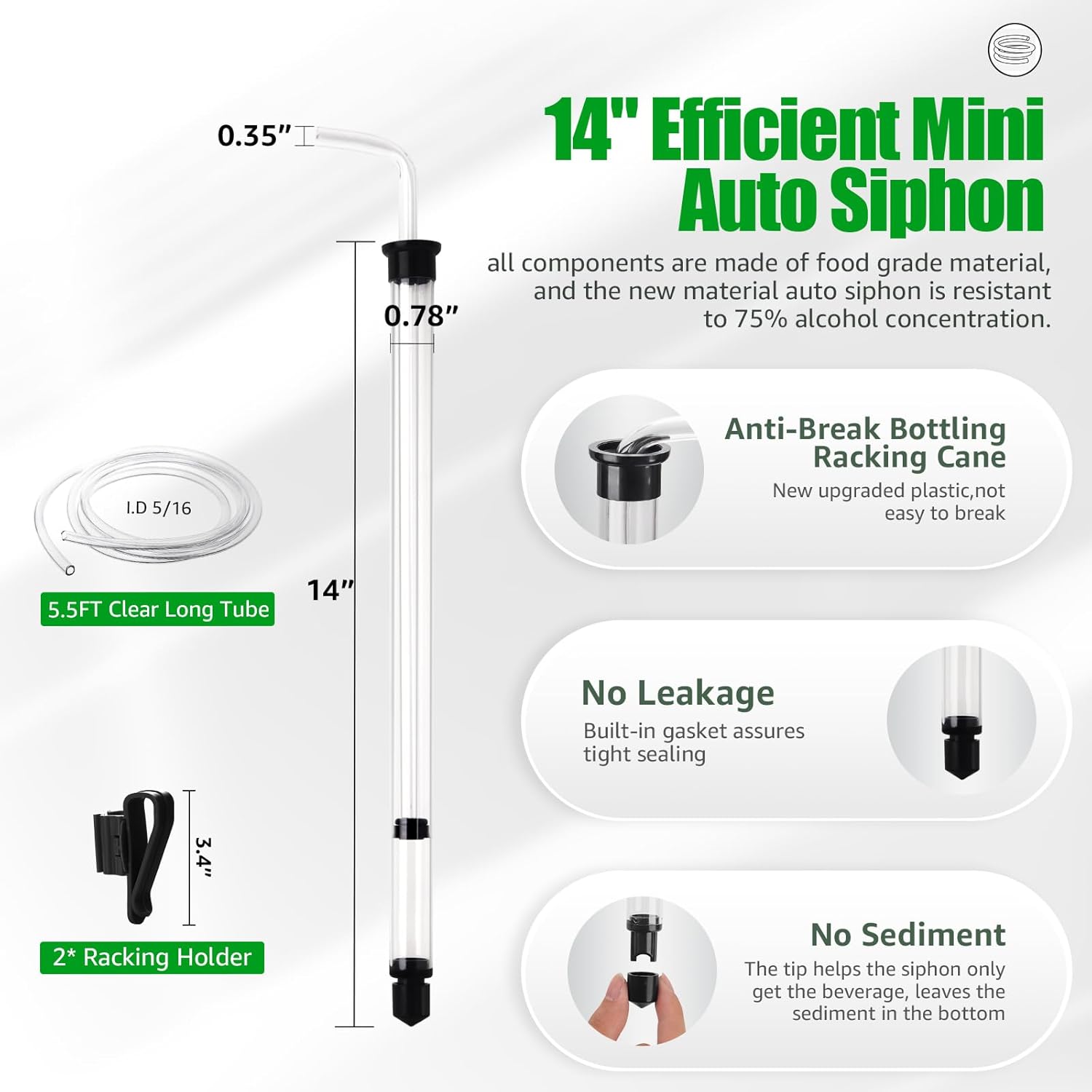
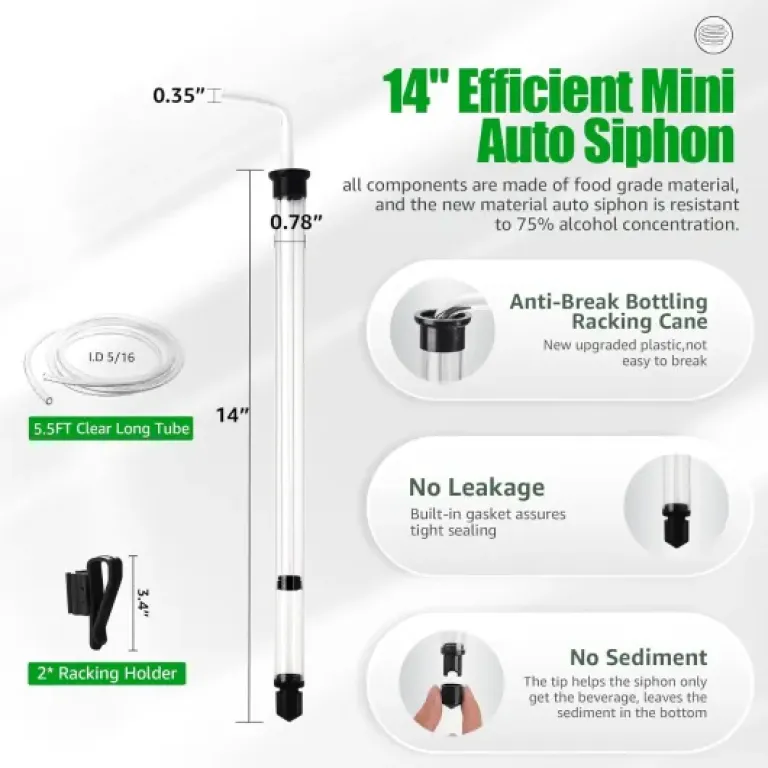
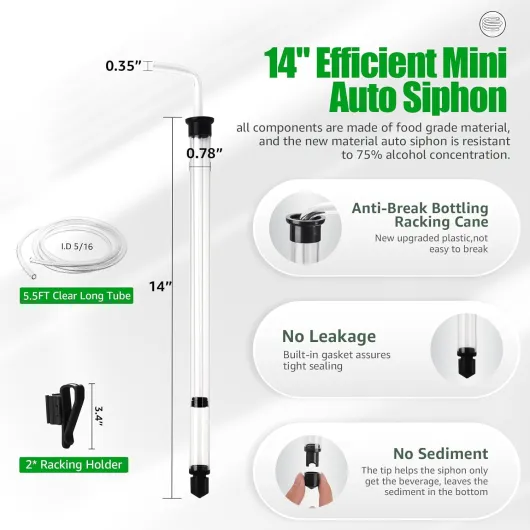
The design of the auto siphon itself is the classic pump‑to‑start setup: a larger outer tube, an inner racking cane with an elbow at the top, and a one‑way valve at the bottom. You stick it in the fermenter, pull the inner cane up and push it down a couple of times, and it should start the siphon. In theory, it’s the same design as the better‑known brands, but here you can feel that the tolerances are a bit looser. The inner cane doesn’t glide as smoothly; you can feel a bit of friction and a faint squeak the first few times.
The bottom tip is detachable, which is good for cleaning and for keeping the cane off the sediment. In practice, the tip on mine fits, but the connection isn’t super tight. It didn’t fall off during use, but when I was washing it, it slipped off pretty easily. Some Amazon reviewers say the cap won’t stay on; mine is okay but I can see how a slightly different molding could be looser. That’s one of those details where you see the difference between this and a more expensive siphon.
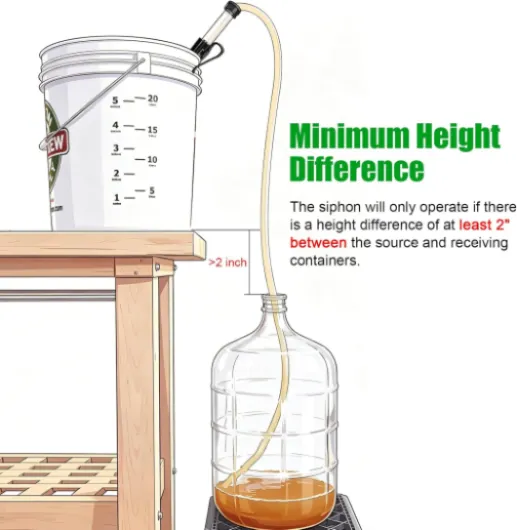
The included clamp is basic but useful. You clip it onto the side of the fermenter and it holds the siphon at a fixed depth, which helps keep you from dragging the tip through the trub. It’s not very adjustable beyond sliding it up and down the tube, but for buckets and carboys it’s enough. The long hose means you can set your receiving vessel a fair distance away, which is nice if you’re trying to avoid bending over or if you’re short on counter space.
Design‑wise, the main trade‑off is that everything is built to a price. There are no fancy features, no markings on the tube for depth, no quick‑release for the hose. It’s a straightforward, functional design that does the job but doesn’t feel especially refined. If you’re used to more solid brewing hardware, you’ll notice the difference when you handle it. If this is your first auto siphon, you’ll probably think, “okay, this is how these things work” and that’s about it.
Food‑grade plastic that feels decent but clearly budget
The brand advertises food‑grade plastic, and from what I can see and smell, that seems accurate. There’s no weird plastic odor, and after a couple of washes with cleaner and hot water, there was no taste transfer into the beer or wine that I could notice. The main siphon tube is rigid, transparent plastic, similar to other homebrew siphons I’ve used. It’s not glass‑level rigid, but it’s firm enough that it doesn’t flex much when you pump it.
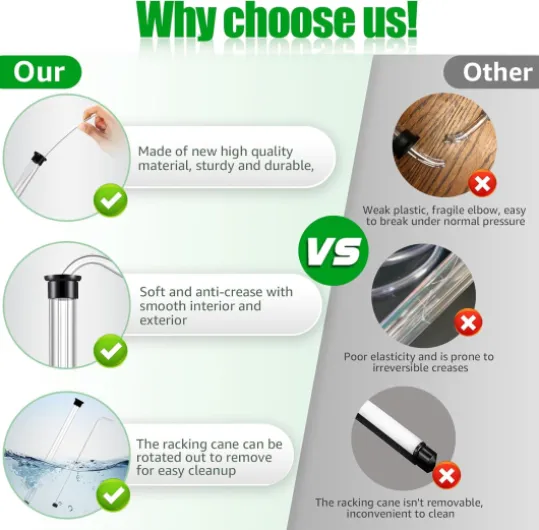
The inner cane and elbow are also plastic, and the elbow in particular feels a bit more solid than I expected for the price. They claim it’s “anti‑break,” which is a stretch, but I’ll say it doesn’t feel like it’s going to snap under normal use. You’d have to really lean on it or twist it hard to break it. The tubing is where I actually think they did okay: it’s soft, flexible silicone‑type material, and it springs back without kinking permanently, even after being folded in a drawer. You can tell it’s not the thickest hose on the market, but it’s not that stiff PVC junk either.
The airlocks and stoppers are clearly the cheaper part of the kit. The plastic airlocks are thin and a bit cloudy. They work, but I wouldn’t be surprised if one cracked if you stepped on it or dropped something on it. One Amazon reviewer mentioned a pinhole leak in an airlock; mine didn’t have that issue, but I did notice some slight molding imperfections. The rubber stoppers are standard, nothing special. They have a bit of that rubber smell at first, but it fades after a wash and a soak.
In terms of material quality, I’d call this kit “good enough for casual homebrewing.” If you brew a couple of times a year, this will probably last you a few seasons if you don’t abuse it. If you’re brewing constantly and racking batches every week, you might want to invest in a more robust auto siphon and better airlocks. For the price, though, the plastics are acceptable and didn’t give me any safety or contamination worries after using standard brewing cleaners.
Feels okay now, but I wouldn’t abuse it
Durability is where I’m a bit cautious with this kit. I’ve only put it through a handful of uses and a few cleaning cycles, so I can’t pretend I’ve stress‑tested it for years. After several transfers and multiple washes with warm (not boiling) water and brewing cleaner, there are no cracks, no cloudy stress lines, and the seals still hold. So short term, it’s holding up fine. The pump action hasn’t loosened to the point of leaking air, which is a common issue with really cheap auto siphons.
That said, when you handle it, you can tell this is not built like the pricier, thicker‑walled siphons. The outer tube walls feel a bit thinner, and if you squeeze them lightly you can feel some flex. I would not run boiling water through this or leave it in a hot car. I also wouldn’t store it under a pile of heavy brewing gear. The elbow joint at the top feels like the part most likely to crack if you drop it or knock it against something hard.
The hose has held up well so far. I folded it a couple of times to fit it in a drawer, and it bounced back without permanent kinks. No signs of splitting at the ends where it pushes over the siphon outlet. The airlocks, on the other hand, feel like the most disposable part of the kit. I wouldn’t be shocked if one broke if I dropped it on a tile floor. If you’re brewing regularly, you might want to buy a couple of better airlocks separately and keep these as backups.
Overall, I’d rate durability as “acceptable for light to moderate use.” If you’re careful, don’t use extreme temperatures, and don’t crank on the pump like a maniac, it should last through multiple batches. If you’re rough on your gear or plan to brew very often, I’d treat this as a starter kit and upgrade later to something more robust, especially for the siphon itself. For the price, I’m not shocked by the build; it’s just clearly not designed for heavy, professional‑level abuse.
What you actually get in the box
Out of the box, you get a decent amount of stuff for a starter kit. There’s the 14" auto siphon body with the inner racking cane, a 5.5 ft length of clear tubing, a clamp, two plastic 3‑piece style airlocks, two drilled rubber stoppers, and two small grommets for bucket lids. They also throw in a long cleaning brush that can reach inside the siphon tube, which is actually pretty handy. Everything is transparent or semi‑transparent plastic, nothing fancy, just basic brewing hardware.
The first thing I checked was whether the hose actually fit snugly on the siphon outlet, because that’s a common annoyance. It does fit tight enough that you have to twist it on, which is good because it doesn’t leak once it’s in place. The 5.5 ft hose is on the longer side for small batches, which is both good and bad. It gives you flexibility to have the fermenter on a counter and the receiving carboy on the floor, but you will probably end up trimming it if you’re working in a tight space.
The airlocks are the classic cheap plastic style you see everywhere. They work, but they feel light and a bit flimsy. One of mine was slightly warped at the top, which didn’t affect function but doesn’t inspire a lot of confidence. The drilled stoppers are standard rubber bungs; they seated fine in my 1‑gallon glass jugs and a 3‑gallon carboy. The grommets are meant for bucket lids; if you already have fermentation buckets with holes, they’ll probably fit, but tolerances are not perfect so you might need to push them in firmly.
Overall, as a presentation, it’s a straightforward, no‑frills kit. Nothing is labeled with fancy branding, and you don’t get detailed instructions, just basic use guidance. For someone who has brewed even one or two batches before, it’s obvious how to put it together. For a total beginner, you might need a quick YouTube search to see how to assemble the airlocks and how far to insert the siphon. The whole thing feels like a budget bundle: plenty of pieces, functional enough, but you can tell they focused on cost more than on polish.
Does it actually move beer and wine without a fight?
On the effectiveness side, the main test is simple: how easily does it start a siphon, and does it keep going without sucking in air or stirring up sediment? In my case, I used it on a 1‑gallon apple wine and a 2‑gallon pale ale in a bucket. For both batches, it took me two or three pumps to get the siphon going. Once it started, the flow was steady and didn’t cut out. I didn’t see any obvious air bubbles traveling down the hose after the first second or two, so the internal seal is doing its job.
Where it’s a bit less smooth than a higher‑end siphon is the feel of the pumping action. It’s slightly rough and you can feel that the inner cane isn’t gliding perfectly. That doesn’t stop it from working, but it makes it feel cheaper. I also had to be a bit careful not to yank the cane too hard at the top, because you can feel there isn’t a ton of extra strength in the plastic. Used gently, though, it did what it was supposed to. I didn’t have any complete failures like “it just won’t start” like one of the 1‑star reviewers reported, but I can believe there are some duds out there.
The bottom tip did a decent job of keeping the end off the sludge. On the pale ale, I still ended up picking up a little bit of trub at the very end, but that’s normal unless you stop early. The clamp helped a lot with holding the cane just above the sediment line. I adjusted it once mid‑transfer to chase a bit more clear beer, and it didn’t slip. No leaks at the hose connection or at the top during both transfers, which is honestly what I care about most.
So in terms of effectiveness, I’d call it “pretty solid for casual use.” It’s not silky smooth, and the quality control seems a bit hit‑and‑miss judging from other reviews, but my unit worked as intended. If you’re unlucky and get a bad seal or a faulty airlock, you’ll be annoyed, but if you get a normal unit like mine, it simply gets the job done without being impressive. For a low‑cost kit, that’s about what I expected.
Pros
- Complete starter bundle: siphon, hose, airlocks, stoppers, grommets, and cleaning brush included
- Siphon works reliably once started, with no major leaks in normal use
- Good price compared to buying each component separately
Cons
- Build quality and materials feel clearly budget, especially the airlocks
- Quality control seems inconsistent, with some reports of non‑working siphons or leaky airlocks
- Pump action is a bit rough and the bottom cap fit can be loose on some units
Conclusion
Editor's rating
Overall, the Dbgogo 14" Auto Siphon kit is a budget‑friendly starter option that does what it says, with a few rough edges. The siphon itself works: it starts after a couple of pumps, doesn’t leak, and transfers beer and wine at a decent pace. The 5.5 ft hose is practical, the clamp is handy, and the included brush is actually more useful than I expected. Materials are clearly on the cheaper side but still food‑grade and fine for normal home use. After several batches, I didn’t see any cracks or serious wear, as long as I treated it gently and avoided very hot water.
On the downside, you can feel that the whole kit is built to hit a low price point. The pump action isn’t perfectly smooth, the plastic feels thinner than higher‑end models, and the airlocks in particular are flimsy. Some users clearly got faulty units, which suggests quality control is a bit hit‑or‑miss. If you brew often or you’re picky about your gear, you’ll probably be happier spending more on a sturdier siphon and better airlocks. But if you’re just starting out, doing small batches, and want an all‑in‑one kit that mostly gets the job done without costing much, this is a reasonable choice.
I’d recommend this kit for beginners and casual homebrewers who want something simple and cheap to get started and who are okay with the idea that they might upgrade pieces later. If you’re already serious about brewing or you hate dealing with any potential defects, I’d skip this and go for a more established brand with better build quality and consistency.
![93L Drinks Fridge, 126 Can Beer Fridge with Glass Door, Wine fridge with Adjustable Shelves for Soda Beer or Wine, Home/Bar/Office, Black, Steel, One-Touch Control [Energy Class F] 126 Can Black](https://www.beer-insiders.com/storage/947010/conversions/71yTIYeFRgL._AC_SL1500_-medium.webp)