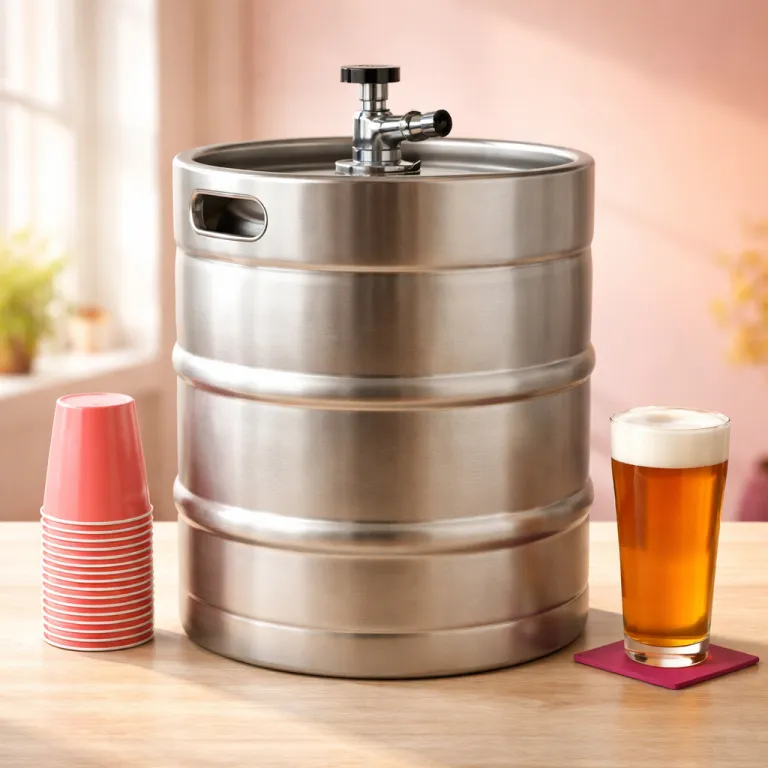
What a 1 2 barrel keg really means
Understanding what “1 2 barrel” really stands for
When people talk about a “1 2 barrel keg”, they almost always mean a half barrel keg. The confusing part comes from the way the term is written ; it looks like a fraction, but in the beer world it is simply shorthand for half of a standard US beer barrel.
A full US beer barrel is defined as 31 gallons. A half barrel keg therefore holds about 15.5 gallons of beer. In more familiar terms, that is roughly 165 standard 12 oz servings, or about 124 pints at 16 oz. So when you see a 1 2 barrel keg behind a bar, you are looking at the workhorse size that keeps many taps flowing.
Why the half barrel became the standard keg
The half barrel sits at a sweet spot between volume, handling, and serving flexibility. It is large enough to supply a busy party or a popular draft line, yet still manageable for staff with proper equipment. This balance is one reason it remains the reference point when comparing other keg sizes and planning how much beer you need.
Because of its capacity, a 1 2 barrel keg also pairs well with home draft systems designed for serious beer fans. If you are considering a dedicated setup, looking at a home beer cooler and dispenser system can help you understand how a half barrel fits into your space and serving habits.
Once you know what a 1 2 barrel keg really is, it becomes much easier to compare it with other keg formats, think about how you will tap and pour it, and decide whether this classic size matches your budget and the way you like to serve beer.
How a 1 2 barrel keg compares to other keg sizes
Understanding keg sizes at a glance
When you hear “1/2 barrel keg”, it helps to picture it alongside the other common keg formats you might encounter at bars, parties, or home draft setups. In the US system, a full-size 1/2 barrel keg holds 15.5 gallons of beer. That is the benchmark most people use when planning events or comparing options.
By contrast, a 1/4 barrel (often called a “pony keg”) holds about half that volume, and a 1/6 barrel (sometimes called a “sixtel”) holds roughly a third of a 1/2 barrel. Slim versions of these smaller kegs are also popular, especially when fridge space is tight.
How many servings you actually get
Thinking in pints and bottles makes the comparison clearer. A 1/2 barrel keg typically yields around 165 standard 12 oz servings, or about 124 pints at 16 oz. A 1/4 barrel gives you roughly 82 twelve-ounce pours, while a 1/6 barrel offers about 55. This is why the 1/2 barrel is the go-to choice for larger gatherings and for many bar setups.
Space, equipment and practical trade-offs
The trade-off for that capacity is size and weight. A full 1/2 barrel keg is heavy and bulky, so you need enough cold storage and a sturdy draft system. Smaller kegs are easier to move, chill, and rotate, which is ideal if you like to keep several beer styles on tap at once.
If you are planning a home bar or kegerator, it is worth looking at how modern home beer cooler and dispenser systems handle different keg sizes. This will help you balance variety, storage space, and how often you want to change kegs, before you commit to the 1/2 barrel format for your setup.
Tapping systems, sankey valves and how the beer pours
How the keg connects to your draft system
A 1/2 barrel keg almost always uses a Sankey (S-type or D-type) coupler. This coupler locks onto the keg valve with a twist, then pushes down to open both the gas and beer lines. CO2 (or a CO2/nitrogen blend for some styles) is fed in through the gas side, pushing beer up the stainless steel spear and out to your faucet. Because a full-size keg holds so much beer, a reliable gas setup and leak-free connections are essential for consistent pours.
Why pressure and temperature matter for your pour
With a 1/2 barrel, small mistakes in pressure or temperature are magnified. Too much pressure and you get foamy, over-carbonated beer ; too little and the beer pours flat and sluggish. Most lagers pour best around 10–12 PSI at about 36–40 °F (2–4 °C), while some ales and specialty styles may need slight adjustments. Keeping the keg cold from top to bottom is key ; warm spots in the fridge or kegerator can cause CO2 to break out of solution and create foam at the faucet.
Lines, faucets and beer quality in the glass
Line length and diameter also affect how a 1/2 barrel keg pours. Longer, narrower lines add resistance, slowing the flow and helping control foam. Short, wide lines can cause beer to blast out of the tap, especially when the keg is full and pressure is high. Cleanliness is just as important ; dirty lines or faucets will quickly spoil the flavor of such a large volume of beer. If you are serving different styles from multiple kegs, it is also worth checking whether your chosen beers are brewed with animal-derived finings by reading up on whether beer is vegan or not before you tap them for guests.
Prices, sale offers and how to choose the right keg size
Typical price range for a 1/2 barrel keg
A standard 1/2 barrel keg usually sits in the mid to upper price range of draft options. For mainstream lagers, you are often paying less per pint than with smaller kegs or bottles, even if the upfront cost feels high. Craft and imported beers in 1/2 barrels can be significantly more expensive, but the price per serving is still competitive when you calculate it against six-packs or cases.
What really affects the final cost
- Beer style and brand – Flagship lagers and light beers are cheaper ; limited releases, IPAs, and strong ales cost more.
- Deposit and hardware – Expect a refundable keg deposit, and sometimes extra fees for a hand pump or CO2 tank.
- Retailer type – Prices from a local bottle shop, supermarket, and wholesale distributor can vary widely.
- Taxes and local regulations – Alcohol taxes and licensing rules in your area can nudge the price up or down.
When a 1/2 barrel keg is the best value
A 1/2 barrel shines when you have a large group and a single crowd-pleasing beer. If you are serving a wedding, big backyard party, or a bar’s house lager, the cost per pint is hard to beat. For smaller gatherings, or when you want several different styles on tap, multiple smaller kegs may be smarter than one large one.
How to choose the right keg size for your needs
Start by estimating how many guests will actually drink beer and how many servings each person is likely to have. Then think about variety ; do you want one core beer or several options ? Finally, match that to your draft setup and storage space. If your kegerator or cold room is built around full-size kegs and you expect heavy consumption, a 1/2 barrel is often the most economical and practical choice.
How 1 2 barrel kegs shape beer culture and service
The role of half barrels in bars and taprooms
The 1 2 barrel keg is the workhorse of many bars and taprooms. Its capacity lets venues keep flagship beers flowing steadily, which shapes what regulars think of as the “house” selection. When a bar commits a tap line to a half barrel, it is usually for a core lager, pale ale or IPA that guests expect to find every visit.
This consistency influences beer culture ; people build habits around those ever-present draft options. It also affects freshness. Because a 1 2 barrel holds so much beer, it works best for high‑turnover taps where pints move quickly, keeping the beer bright, aromatic and properly carbonated.
How 1 2 barrel kegs influence events and social rituals
From weddings to sports nights, the half barrel has become a symbol of communal beer drinking. Its size encourages sharing ; you do not buy a 1 2 barrel for solo sipping. Instead, it anchors gatherings where everyone is pouring from the same source, talking about the beer and the occasion.
This shared keg experience often nudges hosts toward approachable styles that please a wide crowd. That is why you so often see classic lagers, wheat beers and easy‑drinking ales in half barrels at parties, while more experimental or strong beers are reserved for smaller kegs.
Impact on breweries, logistics and sustainability
For breweries, 1 2 barrel kegs are a key part of draft strategy. They streamline distribution to high‑volume accounts and reduce packaging waste compared with bottles or cans. Reusable stainless steel kegs can circulate for years, lowering the environmental footprint per pint.
However, their weight and bulk also shape how breweries plan deliveries and which accounts they prioritize. Smaller venues or those focusing on rotating taps may lean toward sixth barrels or sixtels, while larger bars and beer halls rely on half barrels to keep their main lines pouring without interruption.