
Summary
Editor's rating
Stella from the keg vs bottles and cans
Is it really worth the money for what you get?
Big, chunky, and very much a countertop commitment
Build quality vs real-world reliability
Cooling, pouring, and where it actually delivers
What you actually get out of the box
Does it really deliver the ‘home pub’ promise?
Pros
- Pours consistent, cold, pub-style pints when working properly
- Adjustable temperature (0–12°C) and 30-day freshness are genuinely useful
- Wide keg choice and keg return credit help make the system more flexible
Cons
- High upfront cost plus ongoing expensive kegs makes it a pricey habit
- Multiple reports of early failures and very poor return/support experience
- Bulky, heavy machine that needs space and careful placement to avoid overheating

Specifications
View full product page →| Brand | PerfectDraft |
Home draft beer that sounds great on paper…
I picked up the PerfectDraft Pro with the Stella Artois keg because I wanted a simple way to pour decent pints at home without messing around with CO₂ bottles or mini fridges. On paper, this thing looks pretty solid: 6L kegs, app control, adjustable temperature, and the promise of fresh beer for 30 days. Basically, the dream setup for watching the game with a few mates.
In reality, my experience has been a mix of “nice idea” and “why is this so annoying for the price?”. I’ll be straight: when it works, the beer comes out cold, with a proper head, and it does feel close to what you’d get at a pub. But the big question is whether that justifies the cost of the machine plus the ongoing price of the kegs, and whether you’re ready to deal with the quirks.
I’ve used it regularly over a few weeks, enough to run through Stella and a couple of other kegs and to see how it behaves day to day. I also paid attention to the stuff other buyers complain about: power issues, returns, and support. Reading the 1-star reviews before and after buying it, I can see where the frustration comes from, even if my unit hasn’t totally died on me (yet).
So I’ll break it down like I’d explain it to a friend: what works, what’s just hype, and what can really bite you in the wallet if the machine decides to stop playing ball. It’s not a disaster, but it’s definitely not a simple “plug and forget” toy either.
Stella from the keg vs bottles and cans
The Stella Artois keg itself is pretty straightforward: 6 litres of 5% beer. If you already drink Stella in bottles or cans, the taste here is familiar. What changes is more the texture and the feel than the actual flavor. From the PerfectDraft Pro, the beer feels fresher and smoother, mainly because of the controlled temperature and the proper pour with a head. It’s not some totally new drink, it’s just Stella served closer to how you get it on tap at a pub.
When the temperature is set right, the beer goes down easily. At around 3–4°C, I found it crisp without being icy. If you drop it closer to 0°C, it gets a bit too numbing and you lose some of the taste, so personally I preferred to keep it slightly higher. Foam is usually clean and not too dense, so you don’t feel like you’re drinking half a glass of head. After a few kegs, the thing I liked is that the last pint is still decent, not flat or weird, even when the keg has been in the machine for a couple of weeks.
Compared to bottles from the fridge, I’d say the difference is more about the experience than a massive taste upgrade. Yes, it feels more “draft-like”, but it’s still standard Stella. If you’re expecting some big jump in depth or character, you’ll be disappointed. It’s just a more consistent, pub-style pour. For casual drinking during a game or barbecue, it’s pretty enjoyable. For beer geeks chasing complex flavours, this is not going to blow your mind.
Overall, the taste is decent and reliable. It’s not magic, it’s just well-served Stella. Whether that’s worth investing in a whole machine depends on how much you like the ritual of pulling a pint and how often you actually drink 6L of the same beer within a month. If you only have one or two beers a week, you might not really get the benefit compared to sticking to bottles or cans.
Is it really worth the money for what you get?
This is where things get tricky. The machine itself is not cheap, and then you have the running cost of the kegs. Even with the £5 credit when you return empties, you’re still paying a premium per pint compared to cans or bottles from the supermarket. You’re basically paying for the draft experience, the convenience of a chilled keg ready to go, and the fun of pulling your own pint at home.
If you host a lot, drink beer regularly, and really like the idea of a home tap, you can justify it more easily. Spread over months and years, the cost of the machine plus the slightly higher price per pint becomes a kind of hobby expense, like owning a decent coffee machine or a barbecue. In that case, the value is okay, not great, but understandable. The thing I liked is that when it works, the experience is consistent, and guests are always curious and happy to try it.
But if you’re an occasional beer drinker or you’re on a tighter budget, the value quickly starts to look poor. You’re committing to a closed system (their kegs, their machine), and if the unit dies or support lets you down, you lose a lot in one go. The Amazon rating of 2.9/5 and the angry 1-star reviews are not just noise; they directly hit the perception of value. Paying several hundred pounds for something that might be hard to return if faulty is a serious downside.
So in plain terms: the value is decent only if you really use it often, have the cash, and accept the risk. For everyone else, especially casual drinkers or people who hate dealing with customer service drama, it’s hard to justify. You can get a lot of beer and a good cool box or fridge for the same money, without worrying about electronics or app updates.
Big, chunky, and very much a countertop commitment
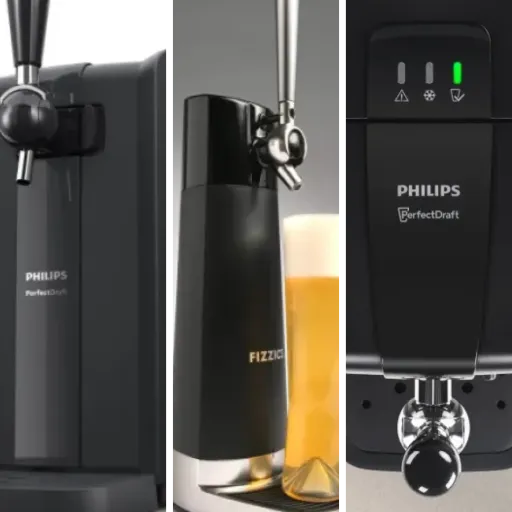
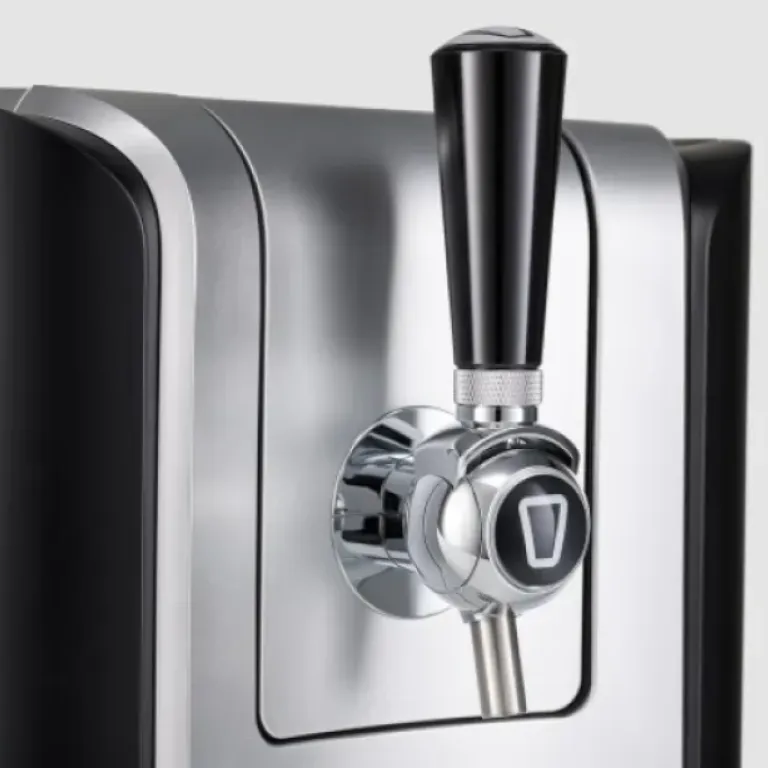
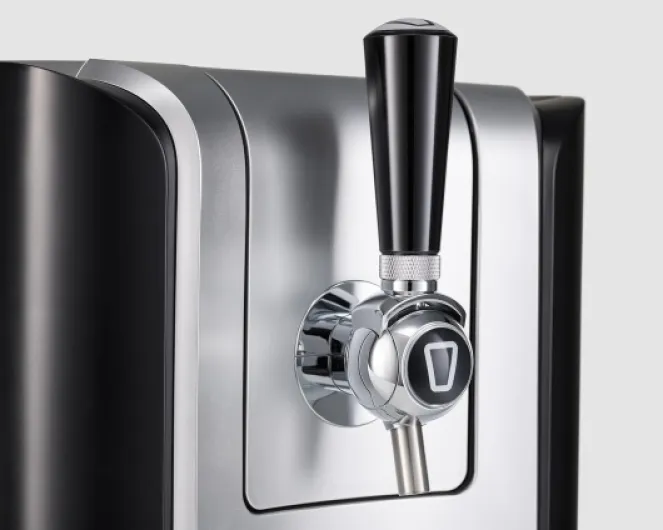
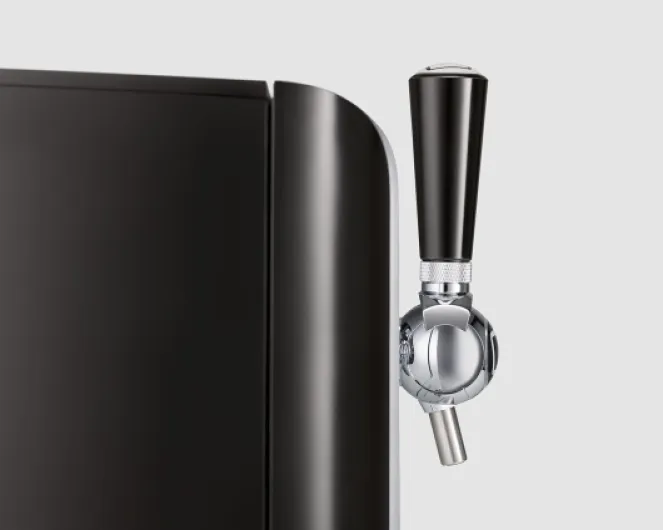
The design is clearly made for people who want a mini bar corner at home. The machine is bulky and heavy, with a fairly plain black exterior and a tap handle on the front. It looks decent enough, but it’s not some stylish centerpiece. It’s more like a serious kitchen gadget: functional, a bit industrial, and clearly built to sit in one place and not move around every weekend.
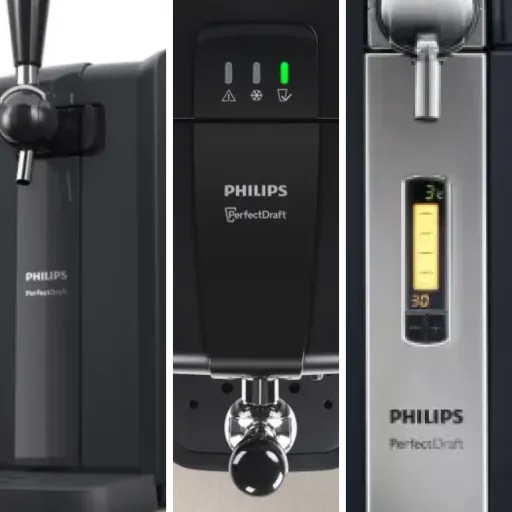
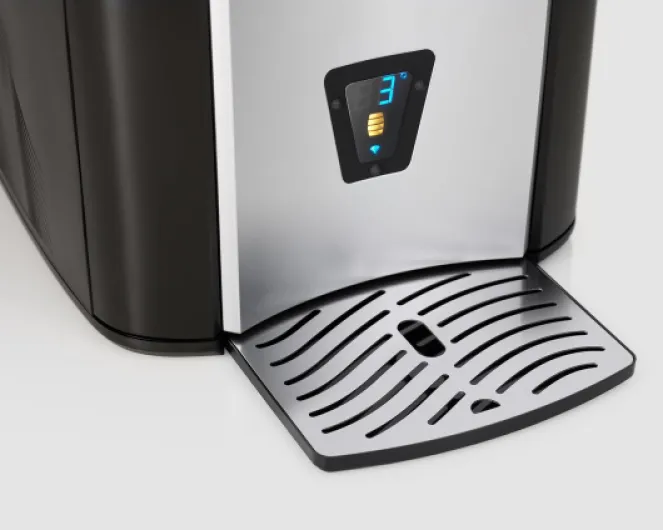
On the front you’ve got the tap, a small display, and the spot where you can put the branded magnetic medallions so people know what’s on tap. It’s a small detail but actually quite handy when you swap kegs often. The drip tray is basic but does its job. Nothing fancy there. The main thing to know is that the machine needs space around it: they recommend at least 10 cm away from walls or other appliances so it doesn’t overheat. That means you can’t just cram it into a tight shelf or under a low cupboard without thinking.
The user interface is a mix of physical buttons and the app. You can see the temperature and basic info on the machine itself, but the app is where you get more details like keg level and freshness. That’s cool in theory, but I’d have liked a clearer and bigger display directly on the unit so I don’t have to grab my phone just to check how much beer is left. Also, the power button and cable setup are pretty standard, nothing special. But given how many reviews mention power issues and machines not turning back on, I’m not super confident about the internal electronics, even if mine hasn’t failed yet.
In short, the design is practical but not compact. If you’re tight on space, this will be a problem. If you have a dedicated bar area or a spare corner in the kitchen, it fits the role. Just don’t expect something small or discreet. It’s more like having a permanent mini tap system than a little gadget you pull out for parties and then hide away.
Build quality vs real-world reliability
Physically, the machine feels sturdy. It’s heavy, the casing is solid, and nothing seems flimsy when you handle the tap or open the front to insert a keg. It doesn’t feel cheap at all. When you first set it up, you get the impression that it’s built to last, like a small appliance rather than a toy. The weight and the materials give a sense of seriousness, which is what you’d expect at this price.
But durability isn’t just about how it feels on day one, it’s about how it holds up and how failures are handled. This is where the alarm bells start ringing. Multiple user reviews mention machines that stop powering on after a few hours or days, and then the owners struggle to get a refund or replacement. Being bounced between Amazon and the manufacturer is exactly the kind of thing that makes a product feel risky, even if your own unit seems fine at first.
During my few weeks of use, I didn’t have a total failure, but I did notice that the machine gets quite warm on the sides and back, which explains the 10cm clearance recommendation. If you ignore that and jam it against a wall or into a tight spot, I can easily imagine overheating and long-term damage. So you really need to respect the placement guidelines if you want to give it a chance to last. Still, for this kind of money, I’d expect more reassuring data from users and a smoother support experience.
So my honest take on durability: the build feels solid, but the reliability track record and weak after-sales support make it hard to trust. If you’re unlucky enough to get a bad unit, the product suddenly looks very fragile from a financial point of view. That’s not a good feeling for something that should be a long-term fixture in your home bar.
Cooling, pouring, and where it actually delivers
Performance-wise, I’ll give it this: when the machine is up and running, it does pour a pretty solid pint. The beer comes out at the set temperature, the head is consistent, and once you’ve done two or three pours, it becomes very natural to use. The variable temperature (0–12°C) is not just a gimmick. I played around with it: Stella felt best for me around 3–4°C, while some other beers were nicer a bit warmer. Being able to tweak that is a real plus compared to simple chill-and-pour machines.
The cooling time is roughly in line with the promise. From a room-temperature keg to drinking temperature, I usually had to wait most of a day. It’s not quick, but it’s predictable. Once it’s cold, it stays stable, even when the room gets a bit warm. They claim it can hold performance up to 38°C; I didn’t push it that far, but in a warm kitchen it still held the set temperature just fine. Noise-wise, it hums like a small fridge. You notice it in a quiet room, but it’s not outrageous. During a match or with some music on, you forget it’s there.
The pour quality is generally good, but you need to respect the basics: tilt the glass, don’t yank the handle fully open like a maniac, and give it a second between pours. If you do that, you get a nice flow with not too much foam. The first pint from a new keg can be a bit more foamy, but that’s normal. After that, it settles. I didn’t have huge issues with wasted beer due to foam, which was one of my initial worries.
Where things get less positive is reliability and the stories from other users. Some people report machines dying after an hour or a few days, and then getting stuck between Amazon and the manufacturer for returns. That’s a big red flag for a product in this price range. Mine has held up for now, but knowing the rating is only 2.9/5 and seeing multiple 1-star reviews about power failures doesn’t give much peace of mind. So yes, performance when it’s alive is good, but the risk of ending up with a dead, expensive box is something you really need to keep in mind.
What you actually get out of the box
Out of the box, you get the PerfectDraft Pro machine and one 6L Stella Artois keg. No extra glasses, no drip tray accessories beyond the basic stuff, no fancy extras. The machine itself is quite big and heavy: around 21.5 kg and roughly 48.5 x 34.5 x 74 cm. So this is not something you casually slide between the toaster and the coffee machine. You need a solid bit of counter or a sideboard that can take the weight.
Setup is straightforward but not instant. You have to unbox the keg, click it into the machine, connect the tube, close things up, and then wait for it to cool. They say it can cool from room temperature in under 12 hours, which is roughly what I saw. So if you’re planning to drink on Saturday, you basically have to load it on Friday. That’s fine once you’re used to it, but it’s not a “spontaneous pint” device.
The package is clearly focused on the beer experience, not on lots of accessories. The keg itself is 6L, which is about 10–11 pints depending on how generous you are. The machine keeps the beer fresh for up to 30 days once tapped, which is handy if you’re not draining it in one weekend. There’s also the keg return system: you can send back empty kegs and get a credit (about £5), which helps a bit with the running cost, but the price per pint is still higher than just buying bottles or cans.
Overall, from a pure contents point of view, you get what you need to start pouring, but nothing more. No surprise, no bonus goodies. For the price, I would have liked at least a couple of branded glasses or extra tubing sets in the box. It feels more like buying an appliance than a “special kit”, which is fine, but it makes the steep price stand out even more.
Does it really deliver the ‘home pub’ promise?
If I boil it down, the main job of this machine is simple: keep beer cold, keep it fresh, and pour it in a way that feels like a pub. On those points, the PerfectDraft Pro gets the job done most of the time. The 30-day freshness claim held up for me. I had a keg open for just over three weeks, and the last glass still tasted fine, with a normal head and no weird aftertaste. So in that sense, the system works as advertised.
The app is a nice add-on but not essential. You can control the temperature, see how much beer is left, and check freshness. It’s handy when you’re planning a party and want to know if you need a backup keg. That said, the connection is sometimes a bit slow, and I had a couple of moments where the app didn’t immediately detect the machine. Not a disaster, just slightly annoying for something marketed as “smart”. I’d describe it as a bonus, not a killer feature.
Where the effectiveness drops is everything around ownership: returns, support, and the fact that if the unit fails, you’re stuck with a very expensive dead weight. Reading reviews from people who had machines die after an hour or a couple of days and then couldn’t get a clear return process is worrying. I didn’t hit that wall myself, but it’s part of the real-world experience. A product like this is only truly effective if the backing service is solid, and here it feels shaky. For something this pricey, that’s a big minus.
So, in practice: yes, it does what it says when it’s working, and the beer experience is pretty solid. But the overall effectiveness as a long-term purchase is questionable if you factor in the risk of faults and the hassle of support. If you’re unlucky and get a bad unit, you’re not just annoyed, you’re seriously out of pocket. That’s the part that makes it hard to recommend without a big warning label.
Pros
- Pours consistent, cold, pub-style pints when working properly
- Adjustable temperature (0–12°C) and 30-day freshness are genuinely useful
- Wide keg choice and keg return credit help make the system more flexible
Cons
- High upfront cost plus ongoing expensive kegs makes it a pricey habit
- Multiple reports of early failures and very poor return/support experience
- Bulky, heavy machine that needs space and careful placement to avoid overheating
Conclusion
Editor's rating
After living with the PerfectDraft Pro and the Stella keg for a while, my conclusion is pretty simple: the drinking experience is good, but the overall package is shaky. When it’s running properly, you get a solid pub-style pint at home, steady temperature, and a nice “pull your own beer” vibe that’s fun for evenings with friends. The app, adjustable temperature, and 30-day freshness are all nice to have, and the taste from the keg is on par with what you’d expect from draft Stella.
The problems start when you look at the price, the reports of machines dying quickly, and the messy return process some users describe. For something this expensive, that’s a big risk. You’re locking yourself into their keg system, paying a premium per pint, and betting that your unit won’t join the 1-star horror stories. If you’re a big beer fan with spare cash, space on the counter, and you’re okay with that gamble, you’ll probably enjoy it a lot when it works. If you’re more cautious with money, drink less often, or hate dealing with support, I’d honestly say skip it and stick to bottles, cans, or just go to the pub.