
Summary
Editor's rating
Is it worth the money compared to other mini kegs?
Compact, practical, but with a few quirks
Stainless steel build that feels solid and safe
Built to last, as long as you respect the seals and threads
How it actually pours and holds carbonation
What you actually get in the box
Pros
- Keeps beer carbonated and fresh for more than a week when properly pressurized
- Solid 304 stainless steel body that feels durable and easy to clean
- Compact 5L size fits in most fridges and is portable for parties or trips
Cons
- Requires separate CO2 cartridges and some tinkering with pressure settings
- Instructions are basic and don’t fully explain how to avoid foam or dial in the system
- Random placement of the pressure relief hole can make orientation and handling slightly awkward

Specifications
View full product page →| Brand | Baxnore |
A small keg for people who are tired of flat growlers
I picked up this Baxnore 5L mini keg because I was tired of regular glass growlers going flat after a day or two in the fridge. I mostly drink craft beers and sometimes kegged homebrew, and I wanted something small that could sit in the fridge and pour like a draft tap. On paper, this thing checks a lot of boxes: stainless steel body, 60 PSI regulator, proper faucet, and a 5L capacity that’s roughly a little over 10 standard 16oz pints. It sounded like a decent way to have draft beer at home without committing to a full kegerator.
In practice, it’s a bit of a mixed bag. It works, and it does keep beer carbonated longer than a normal growler, but it’s not a plug-and-play toy. You need to be comfortable with CO2, pressure, and a bit of fiddling. If your idea of fun is just cracking open a can, this will feel like extra work. If you already mess with homebrew or sodastream-style setups, it’s more natural.
After a couple of weekends of using it for parties and a few quiet nights at home, I’d say it does what it promises, but with some caveats. The regulator is okay but not super precise, the faucet pours nicely once dialed in, and the overall build feels solid enough. There are some quirks, like the randomly placed pressure relief hole and the usual learning curve with foam and pressure settings.
So this review is basically my honest rundown after filling it a few times, hauling it to a friend’s place once, and running different beers through it. It’s not perfect, there are cheaper and more polished options out there, but if you know what you’re getting into, it can be a pretty solid little draft setup for home or small gatherings.
Is it worth the money compared to other mini kegs?
Price-wise, this Baxnore 5L keg sits in the mid-range of mini keg systems. You can definitely find cheaper options that are just plain growlers without pressure, and you can also find more expensive “premium” systems with nicer regulators, longer hoses, or more polished taps. For what you get here—a 5L stainless keg, regulator, faucet, and basic accessories—the value is pretty decent, but not mind-blowing. You still need to factor in the cost of CO2 cartridges and cleaning chemicals if you don’t already have them.
Compared to a simple glass growler, this is obviously more money, but also a completely different experience. You’re paying for the ability to keep beer fresh for more than a couple of days and to pour like a draft system. If you only pick up a growler once every few months, this probably isn’t worth it. If you regularly buy fills from local breweries or you already keg your own beer and want a portable option, it starts to make more sense. I found that for weekend use and small get-togethers, it was a nice middle ground between cans and a full kegerator.
Against other mini-keg brands, it’s competitive but not clearly better. Some competitors offer nicer packaging or slightly better documentation, and some have longer beer lines or built-in cooling sleeves. Baxnore’s main strengths here are the solid stainless body and the fact that you get a full basic kit in one go. The random pressure relief hole placement and the so-so instructions are the main weak points from a value perspective, because they make the experience a bit rougher than it needs to be.
Overall, I’d say the value is pretty solid for someone who knows what they’re getting into: a functional, somewhat DIY-feeling mini draft system. If you’re expecting a super polished, totally hassle-free product, you might feel it’s a bit pricey for what it is. But if you’re already into homebrew or you don’t mind tweaking pressure and cleaning parts, the price aligns fairly well with the build quality and the usefulness you get out of it.
Compact, practical, but with a few quirks
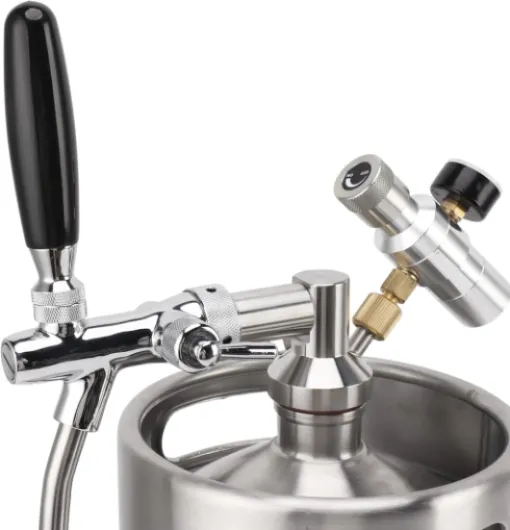
Design-wise, the Baxnore 5L keg is pretty straightforward: a stainless steel cylinder with a flat bottom, threaded top opening, and ports for the faucet and gas. The 5L size is actually a sweet spot for a home fridge. It fits in a standard fridge shelf on its side or upright in many larger fridges. I had to remove one shelf to stand it upright, but laying it on its side with the faucet pointing out worked fine. It’s not tiny, but it’s a lot easier to live with than a full corny keg setup.
The handle is a nice touch and makes a real difference when the keg is full. At about 3.1 kg empty and more once filled, it’s not featherlight. With beer inside, you’re looking at something you want a secure grip on, especially if you’re carrying it to a party or out to the backyard. The handle feels sturdy enough, though I wouldn’t swing it around. The faucet assembly sticks out a bit, so you do have to be careful not to bang it against door frames or cooler edges.
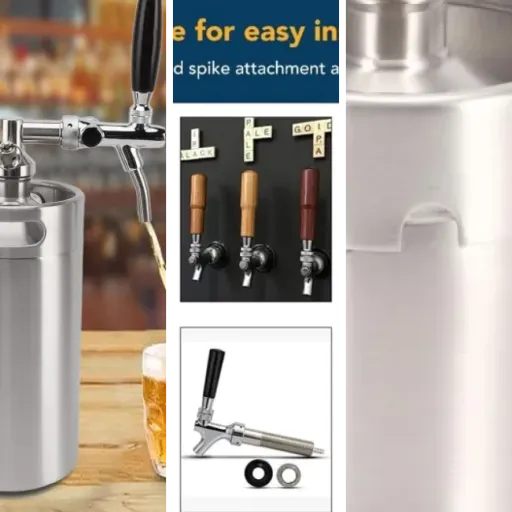
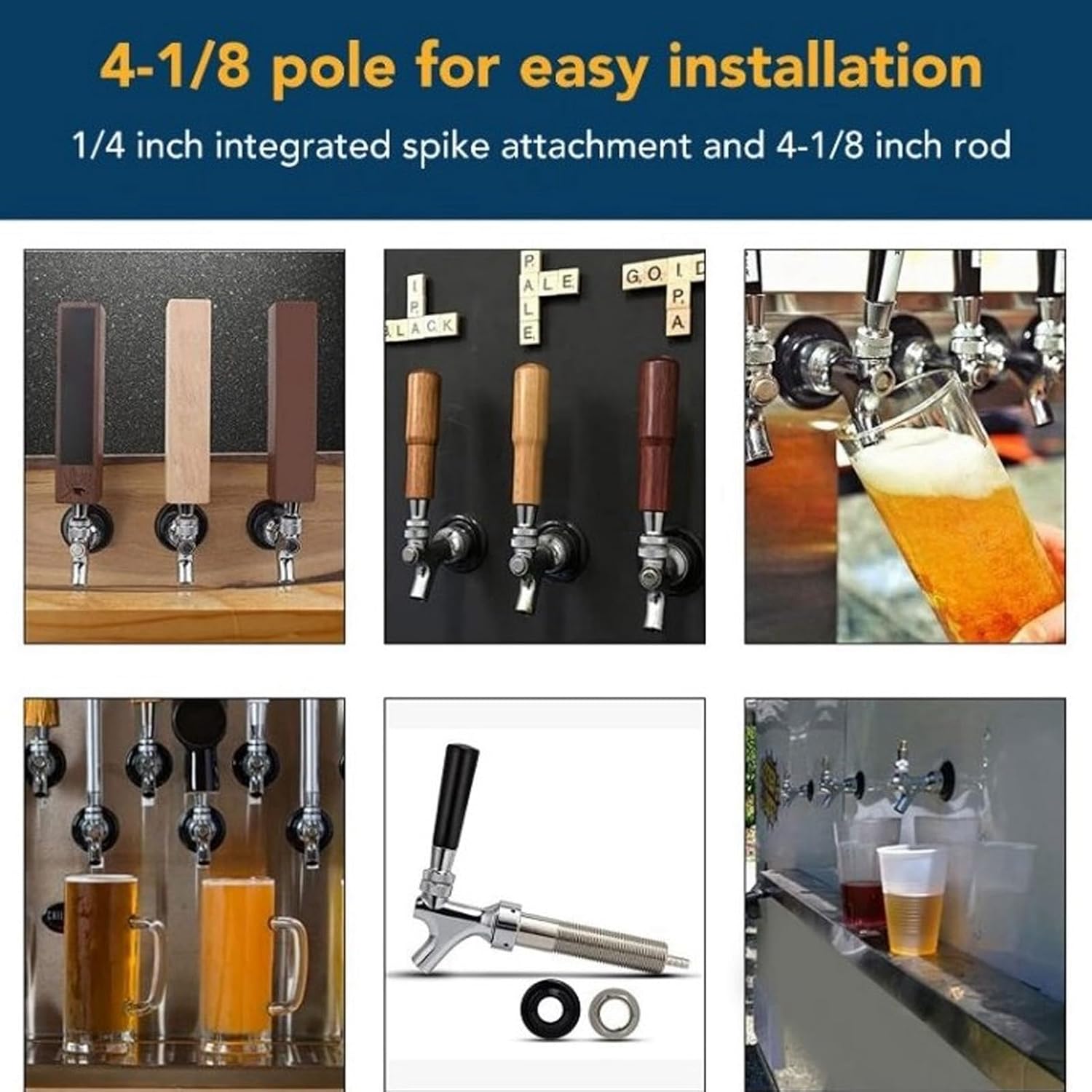
The faucet itself is a basic stainless design with an ergonomic lever. It’s not some fancy flow-control tap like you’d see on a high-end kegerator, but it pours reasonably well. There is some basic adjustment you can do with pressure and how far you pull the lever to manage foam. Once I found a pressure sweet spot (around 8–12 PSI for most beers), the pours were pretty clean. If you crank the regulator up closer to its 60 PSI limit for storage and forget to dial it down before pouring, you’ll get a glass of foam. That’s more user error than bad design, but a clearer on-device reminder would help.
One design annoyance is that everything sticks up from the top, so storing it upright in a crowded fridge can get awkward. The faucet, regulator, and hose form a bit of a cluster. It’s manageable, but you do need to plan your fridge layout around it. Also, because the pressure relief hole position is random, you might end up with a setup where the neatest faucet orientation doesn’t line up with the easiest access to the relief. In short, the design is practical and mostly thought through, but not perfectly polished.
Stainless steel build that feels solid and safe
The main body is made from 304 stainless steel, which is pretty standard for food and beverage gear. That’s good news if you care about durability and not having plastic in contact with your beer for long periods. The walls feel thick, not flimsy, and there’s no flex when you press on the sides. It definitely feels more like a small commercial keg than a gimmicky toy. After a couple of fills, cleaning cycles, and a trip in the car, there are no dents or warping on mine.
Inside, the welds and seams look clean enough. I ran a couple of hot PBW (cleaner) cycles through it, followed by sanitizer, and there was no odd smell or taste left behind. The steel doesn’t retain odors, which is important if you plan to switch between different drinks like beer, cider, or cold brew coffee. As long as you clean it properly after each use, it shouldn’t hold onto flavors. I didn’t notice any metallic taste in the beer, which is the main thing.
The faucet and fittings are also stainless steel, with some rubber or silicone seals at the connection points. Those seals are the bits you’ll want to keep an eye on over time, because that’s where leaks can start. Out of the box, everything sealed well, but I did have to snug up a couple of connections with a wrench to stop a slow drip after the first fill. Nothing major, just normal maintenance for this kind of setup. The hose is short and fairly stiff; it does the job but doesn’t feel fancy.
In terms of thermal performance, the steel body offers basic insulation, but it’s not a vacuum growler or anything like that. If you take it out of the fridge and leave it on the table, it will warm up like any metal container. For longer sessions, I kept it in a bucket with ice or just left it in the fridge and ran the tap from there. The product copy talks about “excellent insulation,” but I’d say it’s just average for a single-wall stainless keg. The good part is that the material seems safe, tough, and easy to clean, so from a materials perspective, it’s pretty solid.
Built to last, as long as you respect the seals and threads
After a couple of weeks of use, I haven’t seen any real signs of wear on the stainless body. It feels like it could take some knocks without complaining. I accidentally bumped it against the edge of my fridge and the car’s trunk latch; it left tiny scuffs on the brushed finish but nothing serious. This is the kind of gear you can throw into a cooler or the backseat without babying it, which fits the whole “portable keg” idea.
The parts that will decide how long it really lasts are the seals, threads, and the regulator. The threads on the keg and fittings are cut cleanly and haven’t shown any cross-threading issues so far, but you do have to be patient when screwing things in. If you rush and misalign something, you could damage them. I always start connections by hand, then give them a gentle snug with a wrench. After a few assembly/disassembly cycles for cleaning, everything still feels tight and smooth.
The rubber/silicone seals are okay but feel fairly standard, not heavy-duty. I’d recommend lightly lubricating them with food-safe lubricant from time to time and maybe ordering spares if you plan to use this long-term. If one of these fails, you’ll get slow leaks, which are annoying because you lose both beer and CO2. During my tests, I had one minor leak at a connection that I fixed just by reseating the seal and tightening the fitting. That’s kind of normal for this style of system, but it’s something to be aware of.
As for the regulator, it’s held up fine so far. No sticking, no weird jumps in pressure, and the gauge hasn’t fogged up or anything. I can’t say how it will behave after a year of regular use, but it doesn’t feel like a throwaway piece. Still, compared to more expensive homebrew regulators, this one feels more basic. I’d treat it with some care: don’t drop the keg on its head, don’t overtighten the CO2 cartridges, and store it dry after use. Do that and I don’t see any reason why this setup wouldn’t last several seasons of backyard use.
How it actually pours and holds carbonation
This is the part that really matters: does it keep beer fresh and pour properly? In short, yes, but you need to dial it in. I filled it twice from a local brewery (they were fine filling a clean stainless growler) and once with my own kegged homebrew. With a steady 8–10 PSI on the regulator, the pours were mostly clean with a reasonable head. When I first set it up, I had the pressure too high and ended up with half a glass of foam. Once I realized I needed to drop it before pouring, things improved a lot.
Over time, it does a good job at holding carbonation. I kept one fill in the fridge for about 10 days, pouring a pint every couple of days. The last glass still had decent fizz and tasted like it did on day one. That’s the main advantage over normal growlers, which are usually flat after 48 hours. The 60 PSI regulator is more headroom than you realistically need for drinking, but it’s handy if you want to store something quite carbonated or quickly bump up the pressure after pouring a few pints.
One thing to note: the gauge on the regulator is not super high-end. It’s readable and does the job, but I wouldn’t trust it for very precise carbonation targets like you might do with a full-size homebrew setup. It’s accurate enough to stay in a sensible range, which is all most people need. The safety lock on the regulator is a nice touch, especially if you’re worried about someone fiddling with it at a party. I didn’t have any accidental releases, and the valve behavior was consistent.
Foaming is mostly a combination of beer temperature, line length, and pressure. Since the line is quite short, you really do need to keep the beer cold and not over-pressurize. When I poured straight from a fridge-cold keg at 8 PSI, it behaved well. When I tried pouring from a slightly warmer keg on the patio with higher pressure to compensate, it was more temperamental. In other words, it performs best when treated like a small draft system, not a casual picnic jug. If you’re okay with that, it does its job fairly well.
What you actually get in the box
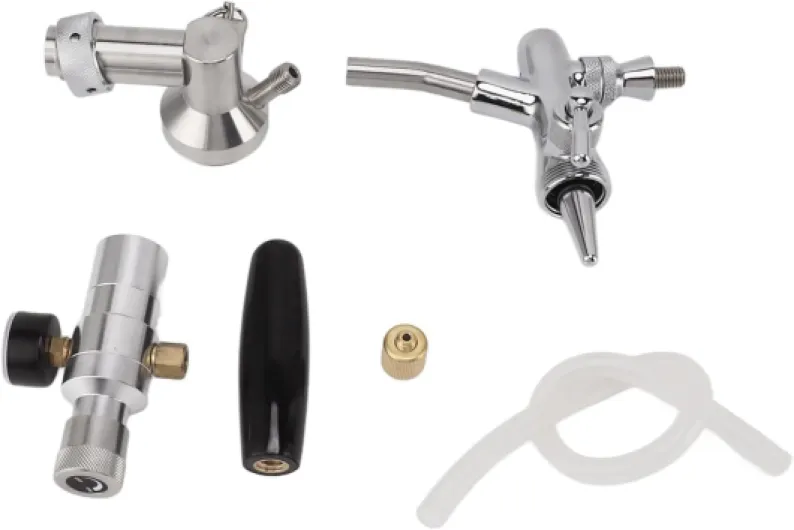
Out of the box, the Baxnore mini keg setup is fairly complete, but not 100% turnkey. You get the 5L stainless steel keg, a 60 PSI pressure regulator, a stainless faucet assembly with a large tailless outlet valve, a carry handle, a short hose, a couple of small accessories (mainly fittings and seals), and a basic instruction sheet. There is no CO2 cartridge included, so plan on buying standard small CO2 bulbs separately before you can pour anything. If you expect to use it the same night you receive it, you’ll be annoyed if you didn’t read the listing carefully.
The instruction sheet is decent but not great. It explains the main parts and the basic assembly, but it’s a bit light on practical advice like what pressure to start at for different beer styles, or how to avoid foamy pours when the keg is nearly empty. I ended up watching a couple of generic mini-keg videos online to fill the gaps. If you’ve never used a pressurized growler before, you’ll probably do the same. It’s not rocket science, but you do want to be sure you’re using the regulator correctly.
One thing they mention is that the pressure relief hole position is random. That sounds minor, but it does matter for how you orient the keg in the fridge or cooler. On mine, the relief hole ended up in a slightly awkward spot when the handle is facing forward, so I had to rotate the keg a bit to keep the valve accessible. Not a deal breaker, but it feels a bit sloppy for something that’s supposed to be a neat, clean system.
Overall, the presentation is pretty no-nonsense. No fancy packaging, just cardboard and foam, which I actually prefer. The parts don’t feel cheap, but they also don’t scream premium. For the price point, I’d say the bundle is reasonable: you can start pouring as soon as you have CO2 on hand and beer to fill it. Just be aware that this is more of a functional kit than a polished “giftable” product, so don’t expect fancy unboxing vibes.
Pros
- Keeps beer carbonated and fresh for more than a week when properly pressurized
- Solid 304 stainless steel body that feels durable and easy to clean
- Compact 5L size fits in most fridges and is portable for parties or trips
Cons
- Requires separate CO2 cartridges and some tinkering with pressure settings
- Instructions are basic and don’t fully explain how to avoid foam or dial in the system
- Random placement of the pressure relief hole can make orientation and handling slightly awkward
Conclusion
Editor's rating
After using the Baxnore 5L Mini Beer Keg Growler for a couple of weeks, my take is pretty straightforward: it does what it claims, but it’s not magic and it’s not totally idiot-proof. It keeps beer carbonated for well over a week, pours nicely once you’ve dialed in the pressure, and the stainless steel build feels solid. If you’re already used to CO2 systems or homebrewing, you’ll adapt quickly and probably be happy with it. For regular beer drinkers who just want cold beer without fuss, there’s a bit of a learning curve that might feel like too much effort.
This setup is best for people who often buy growler fills, brew their own beer, or host small gatherings and want proper draft pours without going full kegerator. It’s portable enough for tailgates or camping (as long as you keep it cold), and the 5L capacity is a nice balance between size and practicality. On the flip side, if you only drink occasionally, hate cleaning gear, or get nervous around pressurized systems, you’re better off with cans, bottles, or a simple non-pressurized growler.
Overall, I’d rate it as good but not flawless. The build quality is reassuring, the performance is solid once tuned, and the price is fair for what you get. The weaker points are the basic instructions, the random relief hole placement, and the fact that you need to buy CO2 and do some tinkering. If you’re okay with that, it’s a handy little draft system that gets the job done and makes sharing beer a bit more fun.