
Summary
Editor's rating
Is it good value for money compared to other options?
Compact design that’s fridge-friendly, but a bit fiddly on top
304 stainless steel keg: solid base, cheaper-feeling accessories
How it holds up after repeated use and cleaning
Real-world performance: leaks, foam, and temperature
What you actually get in the box
Does it keep beer carbonated and easy to pour?
Pros
- Compact 2L stainless steel keg fits easily in most fridges and is easy to carry
- Keeps beer carbonated and drinkable for several days when properly pressurized
- Complete starter kit (keg, tap, mini regulator, seals) at a relatively low price point
Cons
- Mini CO2 regulator feels cheap and is not very precise, leading to foam issues if not carefully adjusted
- Multiple seals and fittings make initial setup a bit fiddly and prone to minor leaks if not assembled correctly
- Requires regular cleaning, especially of the faucet, or it starts to clog and stick after a couple of days

Specifications
View full product page →| Brand | Restokki |
A small keg for people who are tired of flat bottles
I picked up this 2L stainless steel beer keg mainly because I was tired of opening a batch of homebrew bottles and having half of them under-carbonated and the other half turning flat in the fridge. I didn’t want a full-size kegerator with Corny kegs, CO2 bottle, the whole circus. This looked like a middle ground: small, portable, and supposedly easy to set up with mini CO2 cartridges.
To be clear, this is a no-name (or almost no-name) kit: 2L keg, mini CO2 regulator, faucet, hose, a few silicone rings, and a handle. Nothing fancy, no app, no gauge porn, no brand prestige. Just a stainless can with some fittings on top. I went in with modest expectations: something that would keep my beer carbonated over a weekend and be easier to pour than messing with swing-top bottles.
I’ve used it now for a few small batches and also once as a growler to bring draft beer from a local brewery to a barbecue. So I’ve tried it both as a homebrew mini-keg and as a portable growler. In both cases, I paid attention to leaks, carbonation, how annoying it is to clean, and how stable the pouring is when people who are not used to gear like this start yanking the tap.
Overall, it does what it says, but it’s not perfect. You get a compact way to keep beer under pressure, but you also have to accept a bit of fiddling with seals, a regulator that feels cheap, and cleaning that you can’t ignore. If you’re expecting professional bar gear, you’ll be disappointed. If you just want your beer to stay fizzy and cold in a small stainless steel tank, it’s pretty solid for the price.
Is it good value for money compared to other options?
Price-wise, this kit usually sits below the big-name mini keg brands. You’re paying for a basic but complete setup: 2L stainless keg, tap, regulator, seals, hose. If you tried to piece that together with a more famous brand, you’d likely spend more. So from a pure cost perspective, it’s attractive, especially if you’re not sure yet whether you’ll actually use a mini keg regularly and don’t want to dump a lot of money into it.
Compared to using bottles only, this is obviously more expensive upfront, but you gain convenience and better carbonation stability once you’ve figured it out. Compared to a full Cornelius keg setup with a big CO2 tank, regulators, and all that, this is cheaper and takes up way less space, but also gives you less control and capacity. I’d say it hits a middle ground for people who want to test the waters with kegging without going all-in.
The downsides that impact value are mostly around fiddliness and long-term durability of the accessories. The regulator is usable but not precise. The tap is fine but not great. You’ll spend some time at the beginning learning how to assemble everything leak-free. If that kind of tinkering annoys you, the value drops because your time and patience are part of the cost. If you enjoy gear and don’t mind tweaking things, you’ll probably feel you got a decent deal.
Overall, for what you pay, you get a functional small keg that keeps beer carbonated and portable. There is definitely better gear out there if you’re ready to spend more, especially from well-known homebrew brands with sturdier regulators and taps. But if your budget is limited and you just want to see if a mini keg fits your habits, this kit is good value for money, as long as you accept its budget feel and minor quirks.
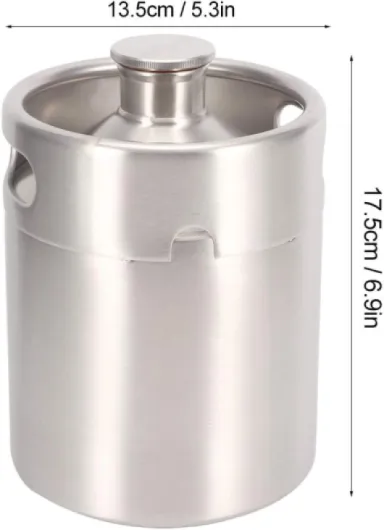
Compact design that’s fridge-friendly, but a bit fiddly on top
The overall design is pretty straightforward: a stainless steel cylinder with a threaded neck where the top assembly screws on. What I liked right away is the compact shape. It’s short and chunky rather than tall and thin, which makes it stable on a table and easier to fit in a crowded fridge. At a party, I didn’t worry about someone knocking it over when they bumped the table, which is always a risk with taller growlers.
The top section is where things get a bit more fiddly. You’ve got the regulator on one side, the faucet on the other, and the gas/beer passages going through the main cap with silicone rings to keep everything sealed. In practice, this means several potential leak points. The kit gives you spare silicone rings, which is good, but it also tells you that leaks are a known risk. I had to re-seat one ring after my first test fill because I saw a bit of foam and beer seep out when I pressurized it.
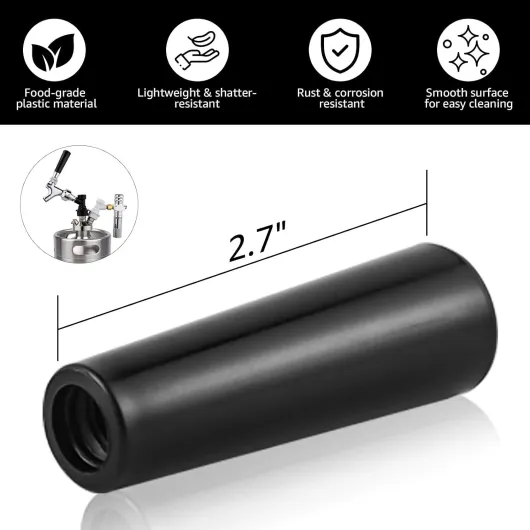
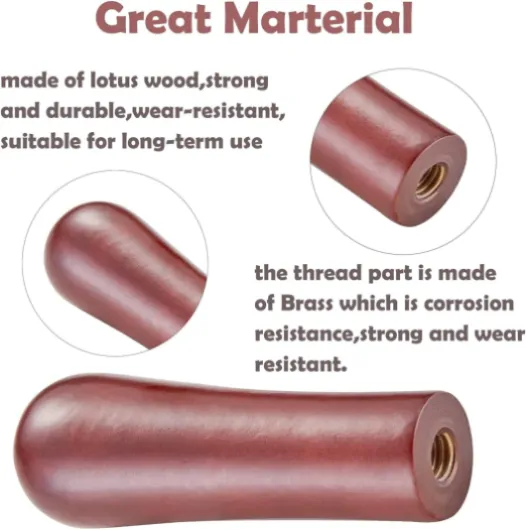
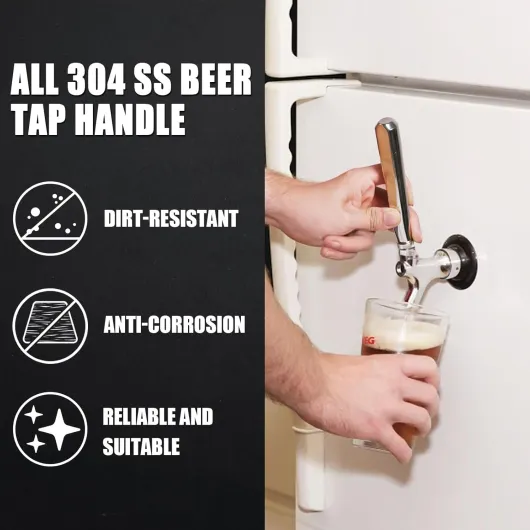
The faucet design is okay for casual use. It’s not a professional tap, but it opens and closes smoothly enough. The handle they include is basic plastic, and it doesn’t feel very premium, but it works. The biggest design annoyance for me is that the whole top assembly makes the keg a bit taller when assembled, and you have to be careful when putting it in the fridge so the tap doesn’t catch on a shelf or wall. It’s not a huge problem, just something you notice after the third time you scrape the faucet.
Visually, it’s plain brushed stainless with no branding drama, which I actually like. It doesn’t scream “gadget”. At the same time, there’s nothing clever in the design that makes cleaning or disassembly easier than usual. It’s a functional, simple design: it works, but you can tell it was built to hit a price point, not to impress gear nerds.
304 stainless steel keg: solid base, cheaper-feeling accessories
The keg itself is made of 304 stainless steel, which is standard for food and beverage gear. That’s a good point: it doesn’t pick up smells easily, it’s resistant to rust, and it’s fine for acidic drinks like beer or even cold-brew coffee. After a few uses and a couple of cleaning cycles with hot water and cleaner, the inside still looks clean with no staining or weird residue. From a material standpoint, the body of the keg is the strongest part of the kit.
The accessories are where you feel the cost-cutting more. The silicone rings are okay but not top notch. They seal, but you can feel they’re a bit soft and might not survive years of rough handling. That said, they give you five of them, which is a decent buffer. The hose is thin and flexible, but it doesn’t feel like high-end beverage tubing. It’s fine for home use, but I wouldn’t want to be taking this kit apart every day in a bar setting.
The mini CO2 regulator looks and feels cheaper than the stainless keg. It’s mostly light metal and plastic. Mine worked, but the adjustment knob isn’t very precise. You turn it a bit, and the pressure jumps more than you’d expect. There’s a clear difference between the solid feel of the keg and the more “budget” feel of the regulator and tap. The faucet itself is mostly metal with some plastic parts, and you can tell it’s not meant to be disassembled a hundred times without care.
In practice, the material quality is good enough for home users who will use this once in a while or a couple of times per month. If you baby it a little, it should hold up. If you’re planning to throw it in a bag, bang it around in the trunk regularly, and use it every weekend, the keg will probably cope, but I’m less confident about the long-term durability of the regulator and the seals. For the price point and the fact it’s an unknown brand, I’d say the material balance is acceptable: solid main body, average accessories.
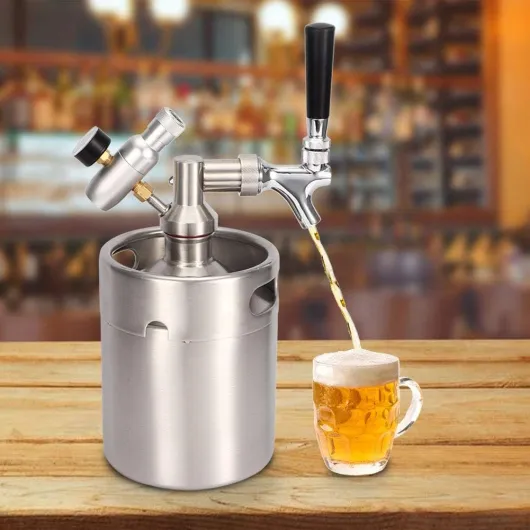
How it holds up after repeated use and cleaning
I’ve run several fills through this keg now, and I paid attention to how it handles cleaning and repeated assembly. The stainless keg body is holding up well: no dents yet, no rust, and the brushed finish still looks decent after a few trips in and out of the fridge and the sink. I’ve cleaned it with warm water and a mild brewery cleaner, plus a soft brush for the inside, and there’s been no discoloration or weird smells sticking around.
The more fragile parts are definitely the silicone rings and the fittings on the top. The manual note about cleaning regularly is not just a suggestion. If you leave beer sitting in the lines and faucet for more than a couple of days, it will start to gum up. I tested this once (by laziness), and sure enough, the faucet started sticking and was harder to open. A quick soak in cleaner fixed it, but it shows that you can’t just forget about it for a week and expect it to work like new.
After a few assembly/disassembly cycles, the threads on the keg and top cap still feel solid. The regulator screw and tap lever haven’t loosened up or broken, but again, they don’t feel bombproof. I wouldn’t be rough with them. The silicone seals haven’t cracked on me yet, but I can see them wearing over time, especially if you pull them out with fingernails or tools. Good thing they include spares; I’d expect to replace one or two after a year if you use the keg often.
Overall, I’d rate durability as good for occasional to moderate home use, but not built for heavy commercial-style abuse. If you’re careful with cleaning and don’t over-tighten everything like a maniac, it should last you a while. If you want something you can throw in a backpack, forget about, and beat up every weekend, I’d look at higher-end branded mini kegs with better fittings and seals.
Real-world performance: leaks, foam, and temperature
In real use, I focused on three things: leaks, foam control, and how it behaves in the fridge. On leaks, I had one minor issue at the start. During my first fill, I didn’t tighten the top enough or seat the silicone ring correctly, and I noticed a small ring of beer around the neck after pressurizing. Not a flood, but enough to show that the system is unforgiving if you’re sloppy. After re-seating the ring and tightening it properly, the leak stopped and didn’t come back in later uses.
On foam, the performance is a bit sensitive to pressure and temperature. When the beer and keg are properly cold, and the regulator is set low, the pour is quite stable. If the keg warms up or you bump the pressure too high, you’ll get foam first, beer second. This is normal with many small keg systems, but with this one, the cheap-feeling regulator makes it more noticeable. You don’t have a super fine adjustment, so the sweet spot is narrow. Once you find it, though, you can leave it there and it behaves okay over a whole evening.
Temperature-wise, the keg is just a passive stainless container. It does not keep things cold by itself. In the fridge, it cools quickly enough and holds temperature like any other metal growler. Outside the fridge, at a backyard barbecue, it warmed up faster than I’d like. After an hour or so in warm weather, the pours got foamier as the beer heated up. That’s not really a flaw of this product specifically, just a reality of a small metal keg without insulation.
Over several uses, performance is stable if you respect its limits: keep it cold, don’t crank the regulator, check the seals when assembling, and don’t expect it to behave like a bar tap. Compared to glass growlers, it clearly keeps beer carbonated for longer. Compared to a full keg system, it’s more fiddly and less precise. For a casual homebrewer or someone who wants a portable pressurized growler, I’d say the performance is pretty solid, with some minor annoyances you learn to work around.
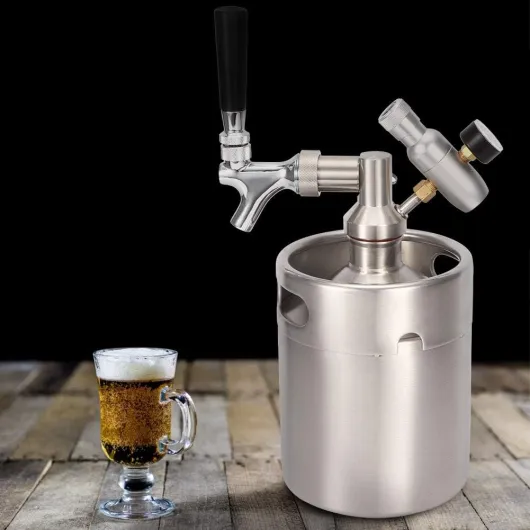
What you actually get in the box
When you open the box, you’re not hit with premium unboxing vibes or anything like that. It’s very basic. Inside, you get the 2L stainless steel keg, the faucet assembly, a small hose, the mini CO2 regulator, a handle, and a bunch of silicone rings (five in my kit). There’s also what they call the “wine maker body”, which is basically the top piece that connects the regulator and faucet to the keg. No CO2 cartridges are included, which is important to know before you plan to use it the same day.
The first strong point: everything you need to pour is technically there, apart from gas. You don’t have to buy a separate tap or regulator right away. The weak point: the instructions are minimal and not super clear. I had to double-check how the seals stack on the top piece and where exactly to tighten to avoid leaks. If you’ve never used any keg system before, you’ll probably spend 20–30 minutes just figuring out the assembly by trial and error.
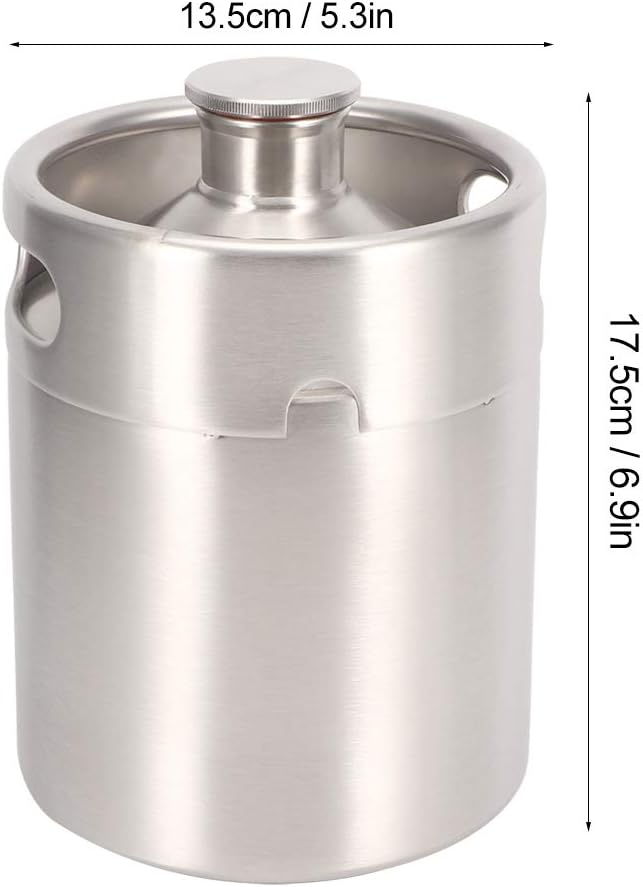
In terms of size, the 2L capacity is about four standard 500 ml bottles or a bit more than a six-pack of small 330 ml bottles. The keg itself is roughly 17.5 cm high and 13.5 cm in diameter, so it fits easily on a fridge shelf or in the door of some fridges. I tested it in two different fridges: in one, it fit upright on the main shelf; in the other, it was a bit tight but still manageable. This is a big plus compared to bigger mini-kegs that hog half a shelf.
To sum it up, the kit is complete but basic. You get a usable mini-keg setup out of the box, but don’t expect hand-holding or polished documentation. If you’re comfortable tinkering a bit and you already know that you need to buy CO2 cartridges separately, the initial setup is fine. If you’re a total beginner and want plug-and-play, you might find the first use a bit confusing.
Does it keep beer carbonated and easy to pour?
This is the main point: does it actually keep beer fizzy and easy to serve? In my tests, yes, as long as you set it up correctly and don’t expect miracles. I filled it first with a basic pale ale from my homebrew batch. I pre-chilled the keg, transferred the beer gently, sealed it, and hooked up a CO2 cartridge. After dialing in a moderate pressure, I left it in the fridge overnight. The next day, the beer poured with a nice head and stayed carbonated over the next two days.
Where you need to be careful is with pressure adjustment. The mini regulator is not super precise, so if you crank it too high, you’ll just get a foamy mess when you open the tap. I had one session where I over-pressurized, and the first two glasses were mostly foam, which annoyed my friends. After backing off the pressure and letting it settle, the pours were fine. Once you find the right spot on the regulator, it’s consistent enough, but you’ll need a bit of trial and error at the beginning.
Another thing: this kit is more about maintaining carbonation than force-carbonating from scratch. You can technically use it to add CO2 to flat beer, but because the volume is small and the regulator is basic, it’s not as precise as a proper kegging setup. I had better results when the beer was already reasonably carbonated and I just used the keg to keep it under pressure and protect it from oxygen.
Over a weekend barbecue, the keg was opened and closed a lot, and the beer stayed drinkable and fizzy until the end. So in that sense, it does the job. It’s not as smooth or controlled as a full-size keg with a big regulator, but for a 2L home kit, the effectiveness is decent but nothing more. It will keep your beer carbonated and pourable if you treat it right and don’t mess with the pressure too much.
Pros
- Compact 2L stainless steel keg fits easily in most fridges and is easy to carry
- Keeps beer carbonated and drinkable for several days when properly pressurized
- Complete starter kit (keg, tap, mini regulator, seals) at a relatively low price point
Cons
- Mini CO2 regulator feels cheap and is not very precise, leading to foam issues if not carefully adjusted
- Multiple seals and fittings make initial setup a bit fiddly and prone to minor leaks if not assembled correctly
- Requires regular cleaning, especially of the faucet, or it starts to clog and stick after a couple of days
Conclusion
Editor's rating
After using this 2L stainless steel mini keg for a while, my overall take is that it’s decent, practical, and a bit rough around the edges. The keg body itself is solid 304 stainless steel, easy to clean, and small enough to fit in most fridges. It does what it’s supposed to do: keep beer under pressure, protect it from oxygen, and let you pour a decent pint at home or at a small gathering. If you’re coming from bottles or basic glass growlers, the difference in carbonation stability is clear.
On the other hand, you feel the budget side of the kit in the regulator, the tap, and the seals. You need to be careful with assembly to avoid leaks, and you’ll probably spend a couple of sessions dialing in the right pressure to avoid excessive foam. Cleaning can’t be skipped, otherwise the faucet will start to clog, just like the note in the description warns. It’s not a product you can abuse and ignore; it rewards a bit of care and patience.
I’d recommend this to homebrewers and beer fans who want a small, affordable step into kegging and don’t mind tinkering a bit. It’s also handy if you occasionally want to bring 2L of draft beer to a barbecue without lugging a big setup. If you’re looking for pro-level gear, ultra-precise pressure control, or something that feels premium in the hand, you should probably spend more on a higher-end branded system. For casual home use on a budget, though, it gets the job done and offers good value for money, with manageable compromises.