
Summary
Editor's rating
Value for money: worth it for the shell if you plan to upgrade parts
Design: looks bar-ready, but details are a bit rough
Materials: solid stainless body, budget-level hardware
Durability and reliability: solid shell, inconsistent QC
Performance: pours beer, but expect to tweak and maybe swap parts
What you actually get out of the box
Pros
- Solid stainless steel T-body that looks and feels sturdy
- Comes pre-assembled with lines, faucets, and hardware for quick setup
- Four taps give good flexibility for multiple beers or beverages
Cons
- Included faucets and shanks are chrome-plated brass and feel cheap compared to stainless options
- Basic insulation and air cooling lead to warmer first pours and more foam unless you add a fan or extra insulation
- Quality control seems inconsistent, with some users reporting defective units out of the box

Specifications
View full product page →| Brand | Bev Rite |
A 4-tap tower that looks pro, but is it worth the hassle?
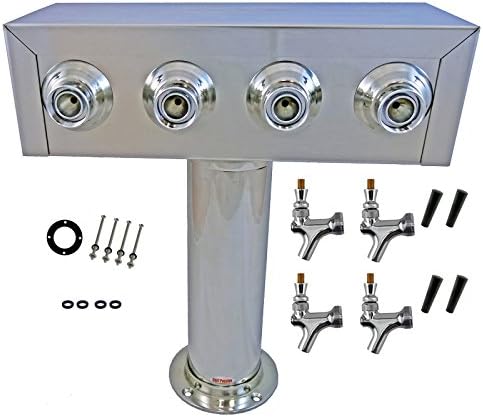
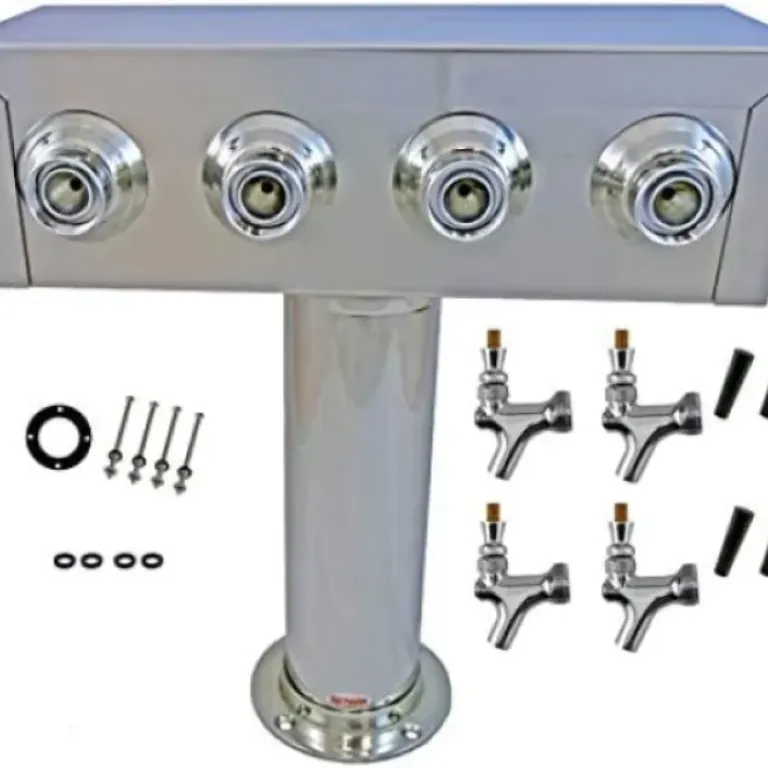
I put the Bev Rite CTT4-186 4-product draft beer T-tower on my kegerator because I wanted to run four different beers from one box without turning my garage into a full-blown bar project. On paper, it ticks most of the boxes: stainless body, four faucets, lines already installed, and it’s made in the US. In reality, it’s a bit of a mixed bag. It looks like a serious piece of gear, but you quickly see where they saved money once you start hooking everything up and actually pouring pints.
During setup, I noticed right away that the outside finish is pretty clean, but the internal components and insulation feel more basic. It’s not junk, but it’s not what I’d call high-end either. I’ve used cheaper single-tap towers before, and compared to those, this feels like a step up in looks, but not always in performance. For the price, I expected fewer compromises, especially on the faucets and the way the lines and insulation are handled inside the tower.
I ran it over a couple of weekends with a mix of standard American lagers and a couple of homebrew kegs. The tower definitely gives the setup a more “bar-like” vibe, and having four taps is honestly the main reason to consider this thing. But once the novelty wears off, you start judging it on pour consistency, foam, and how much fiddling you need to do with the hardware. That’s where the shortcomings become more obvious, especially if you’re picky about your draft setup.
So, if you’re thinking about this tower, go in with realistic expectations: it’s a decent stainless shell with usable parts, not a premium all-round package. You’ll probably end up upgrading a couple of pieces over time. If you’re okay with that and handy with basic tools and draft hardware, it can work. If you want something you bolt on and never think about again, this one might frustrate you.
Value for money: worth it for the shell if you plan to upgrade parts
On the value side, the Bev Rite CTT4-186 sits in an odd middle ground. Price-wise, it’s often cheaper than some big-brand 4-tap stainless towers, especially ones that come with better faucets. That’s probably why some people are happy with it: you get a stainless T-tower, four taps, and lines for less than many competitors. One reviewer even pointed out that it was cheaper than other options and arrived in good shape, which matches my experience on pricing. If you look at it as a way to get a decent stainless shell without paying top dollar, it starts to make sense.
But you also have to factor in the hidden costs. If you end up replacing the faucets with stainless forward-sealing models, that’s a noticeable extra expense. If you want longer or different lines, that’s more money. If your unit shows up with defects or leaks, there’s the hassle of returns and replacements. The comment about bad insulation and cheap accessories isn’t totally off the mark: the insulation is minimal, and the accessories are clearly where they cut corners to hit the price point.
In practice, I’d say this tower is good value for someone who is comfortable treating it as a base to build on. If your mindset is, “I’m buying a solid stainless structure and I’ll upgrade the guts over time,” then it’s a decent deal. You get the look and the basic functionality, and you can slowly swap in better faucets, maybe better shanks, and tweak the internals. If you want a fully sorted, premium-feeling system out of the box, this is not that, and you’ll probably feel like you overpaid once you start replacing parts.
So, value rating: pretty solid for DIY tinkerers, mediocre for plug-and-play buyers. The Amazon score around 3.8/5 matches how I feel. It’s not junk, but it’s not a standout bargain either. It’s more like a workable compromise if you’re trying to keep costs down on a 4-tap build and you’re okay throwing some extra time and a bit more cash at upgrades later.
Design: looks bar-ready, but details are a bit rough
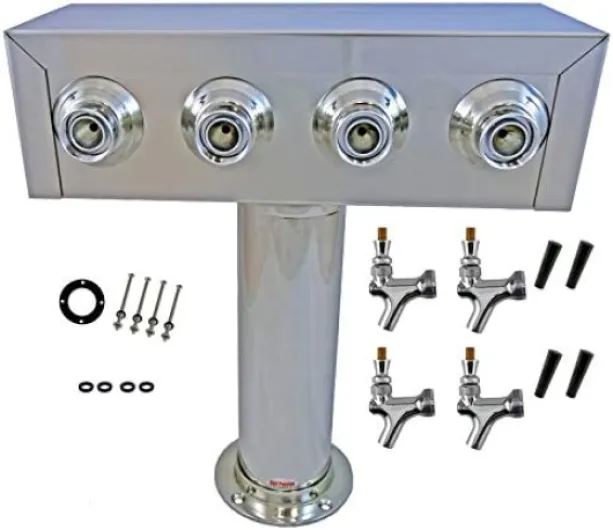
From a distance, the design is the main selling point. The stainless T-box with four taps across gives your kegerator that bar feel instantly. The #4 polish stainless finish is clean and fairly uniform. It’s not mirror-level shiny, but it looks good and doesn’t scream “cheap.” The 3-inch column size is standard, so if you’ve ever mounted a tower before, this won’t surprise you. The flange and mounting hardware are straightforward, and the footprint is reasonable for most DIY kegerator tops or countertop cutouts.
Once you start handling it, though, you notice that the focus is on the shell, not the small details. The edges on the box are okay but not particularly softened, so you can feel some sharper corners inside when you’re routing lines or insulation. Inside the T-box, the space is a bit tight once all four lines are in place, and the insulation isn’t super generous. It’s air-cooled, which is fine if your kegerator has a fan or you rig a small blower to push cold air up into the tower, but on its own, it’s not doing any miracles. In my setup, the top of the tower definitely ran warmer than the kegs, especially during longer sessions.
The faucet spacing is workable. You can grab each handle without bumping into the next one, but if you have big hands or use larger aftermarket tap handles, it can feel a bit cramped. I ran a couple of taller handles in the middle and shorter ones on the sides to avoid knocking them into each other. Threading on replacement faucets or swapping to better ones is simple; the standard threading means you aren’t locked into the included hardware.
Visually, it’s the kind of tower that makes guests think you spent more than you did, which is nice. But design isn’t just looks. In practice, the limited insulation, the air-cooling approach, and the basic faucet selection mean you’ll probably have to tinker with airflow and maybe upgrade parts to get the performance to match the appearance. If you only care about looks and basic function, it does the job. If you’re picky about consistent cold pours and neat internal routing, the design will feel like “good shell, average guts.”
Materials: solid stainless body, budget-level hardware
The main body of the Bev Rite CTT4-186 is where the value sits: it’s stainless steel with a #4 polish, which is pretty standard for commercial draft gear. It feels sturdy, doesn’t flex, and the welding on the T-joints is decent. I didn’t see sloppy welds or obvious defects on the shell. For something that’s going to sit in a humid garage and get wiped down with cleaner regularly, stainless is the right call. It also doesn’t pick up fingerprints too badly, which is nice if you don’t want to be constantly polishing it.
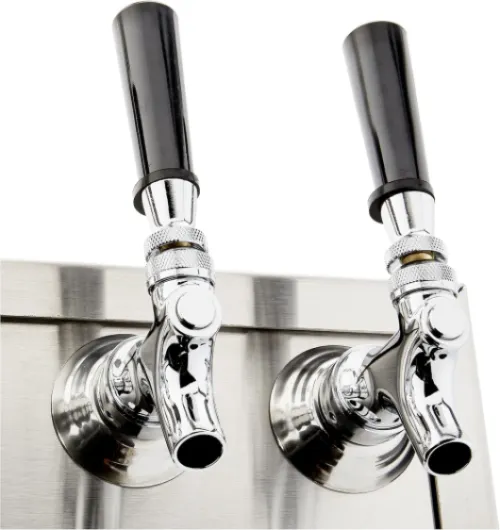
The weak point is the choice of faucet and shank material. They’re chrome-plated brass, not stainless. That’s fine for a starter setup, but if you’ve ever switched to full stainless or forward-sealing faucets, you know this is a downgrade. Over time, chrome-plated brass can pit and wear, especially if you’re not diligent with cleaning. They also tend to stick more when beer dries in the mechanism. In my experience, after leaving the system unused for a few days, I had to give the handles a firm pull to “break them loose,” which is classic older-style faucet behavior.
The beer lines are NSF-listed, which is good from a safety standpoint, and they feel like standard vinyl draft line. No complaints there. Five feet is on the short side for some setups, but that’s more of a performance tuning issue than a material quality problem. The washers and fittings included are average: they didn’t leak on me, but they don’t feel like heavy-duty commercial-grade parts either. If you’re the type who tightens things hard, be gentle, because you can definitely crush some of these washers or stress the threads.
Inside the tower, the insulation is basic foam. It’s better than nothing, but it’s not thick or particularly dense. You can improve things yourself with extra foam or pipe insulation stuffed into the column if you care about keeping the lines cold. That’s basically what I ended up doing. So, overall: good stainless shell, average-to-cheap internals. If you treat the included faucets as temporary and plan to upgrade to stainless forward-sealing ones later, the materials choice makes more sense. If you expect everything out of the box to be long-term gear, you’ll probably be a bit let down.
Durability and reliability: solid shell, inconsistent QC
In terms of durability, the stainless body itself feels like it will last years. It’s thick enough, doesn’t flex, and after getting knocked a few times during installation and use, I didn’t see dents or warping. Wiping it down with mild cleaner didn’t affect the finish. So if we’re talking about the outer shell and basic structure, I don’t see any big durability red flags there. This part of the tower is probably the strongest aspect.
Where things get shaky is quality control and the internal components. One Amazon reviewer mentioned ordering two units and having to return both due to defects, which doesn’t inspire confidence. I didn’t get anything that bad, but I did notice little things: one faucet felt rough when opening and closing, and one of the shank connections needed extra tightening to stop a tiny leak. That’s the kind of stuff you can fix if you’re comfortable with draft hardware, but it also shows that the factory assembly isn’t always dialed in perfectly.
The chrome-plated brass faucets and shanks are also the weak link long-term. They’re fine for a while, but you can already tell they won’t age as nicely as stainless. After some use, I could see small wear marks near the spout where the plating will likely degrade over time. If you’re planning on using this tower heavily—like every weekend or for parties—I’d honestly consider the included faucets as temporary. The lines themselves held up fine during my use; no discoloration or stiffness after a few weeks, but vinyl lines are consumables anyway and should be replaced regularly in any system.
Taking all that into account, I’d say the durability is split: the tower body is long-term gear, the included hardware is medium-term at best. The inconsistent user reports about defects suggest their QC isn’t perfect, so if you buy one, inspect it carefully before installing. Check all welds, test each faucet, and pressure test the lines with water before you hook up beer. If you’re unlucky and get a dud, be ready to send it back right away instead of trying to fight it into working.
Performance: pours beer, but expect to tweak and maybe swap parts
Performance-wise, the Bev Rite CTT4-186 is okay once you put some work into your setup, but it’s not plug-and-play perfect. With the stock 5-foot lines and basic faucets, my first pours were a bit foamy, especially on slightly higher carbonation beers. For standard lagers at around 10–12 PSI, it was manageable, but if you like your beers more carbonated or you’re running multiple styles, you’ll probably need to adjust line length and pressures more carefully.
The air-cooled design means the tower itself warms up faster than a glycol-cooled bar system. That’s normal for home setups, but you feel it more with four lines packed into one T-box. The first pour after the taps have been idle is noticeably warmer and foamier. I ended up running a small fan inside the kegerator to push cold air up into the column, and that helped a lot. Without that, the first beer of a session was usually half foam, then it settled down. So the tower will perform better if you’re willing to tinker with airflow and not just rely on passive cooling.
The faucets do their job, but they’re basic rear-sealing style. That means they’re more prone to sticking and drips. After a couple of weekends, I got tired of yanking the handles loose and swapped two of them for stainless forward-sealing faucets I already had. The difference in feel and consistency was immediate. That experience lines up with some of the Amazon feedback: the outside is nice, but the included hardware isn’t great. If you’re picky about smooth, predictable pours, you’ll probably end up doing the same upgrade path.
Once I dialed in the gas pressures, added a small tower fan, and upgraded two faucets, the system poured pretty well. Four different beers on tap is obviously the main advantage: I ran a light lager, an IPA, a stout, and a soda line for kids/guests, and the tower handled that mix fine. But I wouldn’t say the tower itself is the reason it worked well; it’s more that the base structure is decent and you can make it work with some effort. Out of the box, I’d rate the performance as “serviceable, but expect tuning and maybe some part swaps.”
What you actually get out of the box
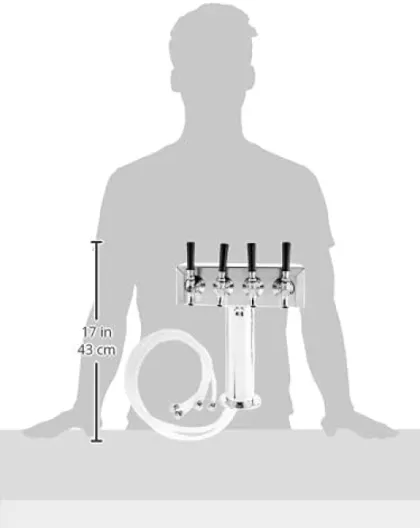
Out of the box, the Bev Rite CTT4-186 is basically a complete 4-tap tower assembly: stainless steel T-style box, a 3-inch round column, four faucets, handles, shanks, and 5-foot beer lines already attached. The manufacturer lists it at around 15 inches tall from base of the tower to the top of the box, with the box itself about 13" long, 5" wide, and 4" high. In other words, it’s a fairly standard commercial-style 4-tap T-tower that will sit nicely on top of most chest freezers or commercial kegerators.
The included lines are NSF-listed and already crimped on with connections and washers, which is handy if you don’t want to mess around with cutting and clamping your own lines. That said, they’re 5 feet long, which is okay for basic setups but not ideal if you’re trying to really dial in line resistance for higher carbonation beers. I ended up swapping a couple of lines later for longer ones to reduce foam on some beers, but for a basic lager setup, the stock lines are usable.
The faucets and shanks are chrome-plated brass, not stainless. That’s important to know. They work, but they’re more of an entry-level setup. If you’ve used forward-sealing stainless faucets before, you’ll feel the difference right away. These are more old-school: they pour fine when clean, but they can stick if they sit unused for a few days, and they won’t hold up as nicely cosmetically over a long time, especially if you’re in a humid garage or basement.
One thing to be clear about: this tower does not include the full gas side of your system. You still need a CO2 tank, regulator, gas lines, a distribution block or manifold, and keg couplers. So the tower is just one piece of the draft puzzle. If you’re new to kegerators, don’t expect this to be a full kit. As long as you go in knowing that, the package content itself is fair, just not luxurious. For the price, I’d call the overall bundle “usable but basic,” with the main value being the stainless T-body and pre-installed lines.
Pros
- Solid stainless steel T-body that looks and feels sturdy
- Comes pre-assembled with lines, faucets, and hardware for quick setup
- Four taps give good flexibility for multiple beers or beverages
Cons
- Included faucets and shanks are chrome-plated brass and feel cheap compared to stainless options
- Basic insulation and air cooling lead to warmer first pours and more foam unless you add a fan or extra insulation
- Quality control seems inconsistent, with some users reporting defective units out of the box
Conclusion
Editor's rating
The Bev Rite CTT4-186 is basically a decent stainless 4-tap T-tower wrapped around budget-level internals. The outer shell is solid, the dimensions are practical, and it gives your kegerator a proper bar look. If all you want is four taps on top of your fridge or keezer and you’re comfortable doing some tuning, it gets the job done. But you need to go in knowing that the included faucets, shanks, and insulation are nothing special, and quality control seems a bit hit-or-miss based on user reports and my own little issues.
This tower makes the most sense for people who like to tinker: homebrewers, DIY kegerator builders, or anyone who’s already familiar with swapping faucets and adjusting line lengths. For that crowd, it’s a reasonable way to get a stainless T-body without paying premium prices, then slowly upgrade the weak points. If you’re expecting flawless performance and long-term durability from every included part right out of the box, you’ll probably be disappointed and end up spending more than you planned on replacements.
If you’re on a tight budget, want four taps, and you’re okay with “good enough” hardware for now, it’s a workable option. If you want a more polished, worry-free system with better faucets, stronger insulation, and more consistent QC, I’d look at higher-end brands or at least factor in the cost of immediate faucet and maybe shank upgrades. In short: decent base, mediocre accessories, and fair value if you treat it as a project rather than a finished product.