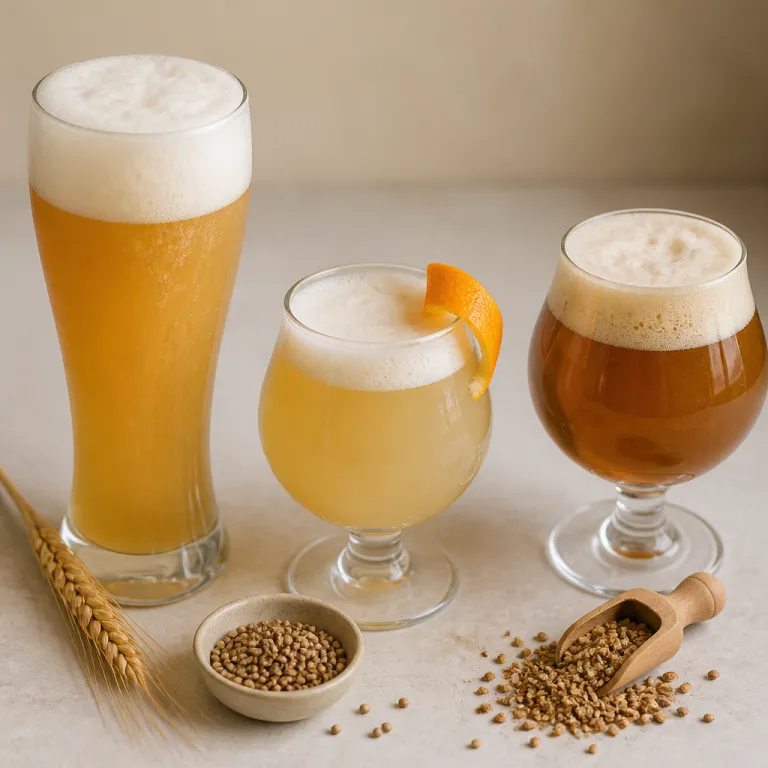
Why wheat beer feels so different from other beer style
What makes wheat so special in your glass
Wheat beer feels instantly different from the first sip. The grain bill – the mix of malts used – includes a high proportion of malted wheat instead of relying mostly on barley. That simple change transforms the texture, aroma and appearance of the beer.
Wheat has more proteins and different starches than barley. In the glass, this creates the familiar hazy look and a dense, mousse-like head that lingers. On the palate, it brings a soft, pillowy mouthfeel that many drinkers describe as silky or creamy, even when the beer is highly carbonated and refreshing.
From grain character to signature flavors
The grain itself adds gentle flavors : fresh bread dough, crackers, light grain sweetness and sometimes a subtle tart edge. These notes are the canvas on which yeast and, in some styles, spices or hops will paint their own character.
In German traditions, yeast creates clove, banana and bubblegum notes. Belgian brewers lean into citrus peel and coriander, while American brewers often highlight clean grain and hop brightness. English and hybrid brewers push wheat into even more unexpected directions, from hop-forward to barrel-aged expressions.
Why wheat beer feels so approachable
Because wheat softens bitterness and sharp edges, these beers often feel welcoming to newer drinkers yet stay interesting for seasoned enthusiasts. The same creamy body and gentle grain character that make a classic hefeweizen so easygoing also support bolder interpretations you will meet in later sections.
If you want a quick overview of how varied these beers can be, explore some of the top Belgian-style wheat ales : you will see how one simple grain can lead to radically different aromas, textures and food-pairing possibilities.
German wheat beer styles ; hefeweizen, kristallweizen and dunkles weizen
Hefeweizen: the cloudy classic
German hefeweizen is the benchmark for wheat beer. “Hefe” means yeast, and that suspended yeast is what gives the beer its signature haze and silky mouthfeel. Expect aromas of banana, clove, and sometimes bubblegum, all coming from the special yeast strain rather than added spices.
On the palate, hefeweizen is light to medium-bodied, with soft wheat sweetness, low bitterness, and a lively carbonation that makes it incredibly refreshing. It is a great starting point before you explore more complex wheat beers later in the guide.
Kristallweizen: bright and sparkling
Kristallweizen begins life as a hefeweizen, but the yeast and proteins are filtered out. The result is a brilliantly clear beer with a sparkling appearance and a slightly crisper profile.
You still get the familiar banana and clove notes, but they tend to be more restrained, letting the clean malt character shine. If you enjoy the flavors of wheat beer but prefer a polished, lager-like look in your glass, kristallweizen is an ideal choice.
For drinkers who want a lighter option in the same spirit, alcohol-free wheat beers such as this zero-alcohol wit-style pack can offer a similar refreshing feel without the buzz.
Dunkles weizen: wheat beer with a darker soul
Dunkles weizen (or dunkelweizen) takes the hefeweizen template and adds darker malts. The color shifts to deep amber or brown, and flavors of caramel, bread crust, and light chocolate join the familiar banana and clove.
This style bridges the gap between refreshing wheat beers and richer, malt-forward options you will meet when exploring stronger variations like weizenbock. It pairs beautifully with roasted meats, grilled sausages, and hearty autumn dishes.
Belgian and american style wheat beer ; from witbier to american wheat ale
From cloudy and spiced to clean and citrusy
Belgian and American wheat beers share the same grain base as their German cousins, but they head in very different directions. Where German styles lean on yeast-driven banana and clove, Belgian brewers often highlight spice and subtle tartness, while American brewers chase bright, clean drinkability and hop expression.
Classic Belgian witbier typically uses unmalted wheat, giving a hazy, pale straw appearance and a soft, pillowy mouthfeel. Coriander and orange peel are traditional additions, layering gentle citrus, herbal spice and a faint peppery note over a lightly tangy, refreshing base. Fermentation character is present, but more restrained than in hefeweizen, with hints of clove, white pepper and stone fruit rather than bold banana.
American wheat ales, by contrast, usually rely on neutral ale yeast. This keeps fermentation flavors in the background and lets grain and hops shine. Expect a light to medium body, bready or crackery wheat character and a crisp finish. Many examples lean into modern hop varieties, adding grapefruit, lemon, tropical fruit or pine aromatics without the bitterness of an IPA.
Because they are so approachable, American wheat ales often appear in non-alcoholic craft beer styles as well, where wheat’s natural body helps compensate for the thinner texture that can come with low or no alcohol.
Compared with the richer, more yeast-forward German versions and the stronger, maltier wheat beers you will meet elsewhere in this guide, Belgian witbier and American wheat ale occupy the bright, refreshing end of the spectrum. They are ideal when you want something aromatic and characterful, yet easy to drink in warm weather or alongside lighter dishes like salads, seafood and fresh goat cheese.
English style wheat beer and hybrid twists like india pale wheat and wood barrel aging
From British tradition to modern wheat experiments
When people think about wheat beer, Germany and Belgium usually come first. Yet England has its own, quieter relationship with wheat. Historically, English brewers used small amounts of wheat in otherwise barley-focused ales, mainly for head retention and a soft, bready note rather than as a dominant flavor. Modern English-style wheat beers keep this subtle approach : they are often less cloudy, less estery, and more hop-balanced than their German cousins.
Instead of the banana and clove profile you meet in Bavarian wheat beers, English versions lean toward gentle biscuit, light honey, and soft grain. Yeast character is restrained, with fewer spicy phenols and fruity esters. Bitterness is usually moderate, giving a drier, more pub-friendly drink that feels closer to a pale ale with a wheat twist than to a classic hefeweizen.
India pale wheat and other hop-forward hybrids
Once American craft brewers embraced wheat, they began pushing it into new territory. India pale wheat (sometimes called wheat IPA) takes the soft, pillowy body of a wheat beer and layers it with modern hop varieties. Expect juicy citrus, tropical fruit, or piney notes over a hazy, pale-gold base. Compared with the more traditional styles, these beers trade clove and banana for mango, grapefruit, and passion fruit.
Wood barrel aging adds another dimension to wheat beer. Aging a strong wheat ale in oak, wine, or spirit barrels can bring vanilla, coconut, tannins, and gentle oxidation, turning a refreshing style into a contemplative sipper. The creamy texture of wheat works beautifully with these layers, much like you see with darker barrel-aged ales, but with a lighter color and a more delicate grain profile.
How to taste wheat beer ; aroma, flavor, color and fermentation characteristics
Preparing your senses
Start by serving wheat beer a bit cooler than cellar temperature, but not ice cold. This lets the subtle yeast and grain notes open up. Use a tall, gently curved glass if you can ; it helps build a dense, creamy head where many aromas concentrate. Swirl the glass lightly to release the bouquet, but avoid aggressive shaking that can knock out carbonation.
Reading the color and haze
Hold the glass against a white background. German hefeweizen usually shows a hazy straw to deep gold color, while dunkles weizen leans amber to brown. Belgian witbier tends to be very pale and cloudy, and American wheat ales often look clearer, especially when filtered. Haze is not a flaw here ; it often signals suspended yeast and proteins from the wheat that contribute to mouthfeel and flavor.
Exploring aroma layers
Take a few short sniffs rather than one long inhale. In German styles, look for banana, clove, bubblegum, vanilla, and fresh dough. Belgian wits add coriander, orange peel, and a gentle lactic tang. American wheat ales usually show cleaner yeast profiles, highlighting citrusy or tropical hops instead. Note how the yeast character differs from the malt and hop emphasis you find in many other beer families.
Tasting flavor, texture, and finish
Take a small sip and let it coat your tongue. Wheat typically brings soft, bready, or cracker notes and a silky, sometimes pillowy body. Notice the carbonation ; many wheat beers are highly effervescent, lifting the flavors and making them feel refreshing. Pay attention to balance : does fruitiness dominate, or do spice and gentle acidity keep it in check ? On the finish, look for lingering clove, citrus zest, or light tartness, and how clean or creamy your palate feels afterward.
Choosing the right wheat beer style for your mood and food
Matching wheat beer to your mood
Start by asking what kind of experience you want. Refreshment after a long day ? A contemplative sipper for a quiet evening ? Something playful for a party ?
- Light and sunny mood – Reach for a classic hefeweizen. Its soft body, banana and clove notes, and gentle carbonation feel like a breeze in a glass.
- Curious and exploratory – Belgian-style witbier, with its citrus peel and coriander, offers layers of spice and zest without being heavy.
- Cozy and reflective – Darker wheat beers like dunkles weizen or weizenbock bring caramel, bread crust and dried fruit tones that suit slow sipping.
- Hop-forward mood – Hybrid styles such as india pale wheat give you the softness of wheat with a modern, aromatic hop punch.
Pairing wheat beer with food
Think of wheat beer as a versatile bridge between delicate and bold dishes. Its high carbonation and creamy texture help cleanse the palate while highlighting flavors.
- Fresh and light dishes – Salads, sushi, ceviche and goat cheese pair beautifully with witbier or pale hefeweizen. Their citrusy, spicy notes echo herbs and dressings.
- Comfort food – Sausages, roast chicken, schnitzel and soft pretzels love the bready, banana-clove profile of German wheat beers.
- Spicy cuisine – Thai, Indian or Mexican dishes benefit from the gentle sweetness and effervescence of American wheat ales, which cool heat without muting flavor.
- Desserts – Fruit tarts, banana bread and vanilla ice cream pair wonderfully with richer wheat beers like weizenbock, whose malt depth complements sweetness.
Simple rules to choose confidently
- Match intensity with intensity ; delicate dishes with lighter wheat beers, robust dishes with darker or stronger styles.
- Use contrast for excitement ; spicy food with soft, fruity wheat, rich desserts with lively carbonation.
- When in doubt, start with a classic hefeweizen – it is one of the most forgiving and food-friendly beers you can pour.