Summary
Editor's rating
Value for money: solid, but depends what you’re coming from
Design: compact and practical, but not flawless
Materials and build: solid steel, a few concerns
Durability and long-term use: feels solid, but mind the electrics
Performance: brews good beer, but 120V is slow
What you actually get with this kit
Effectiveness: does it actually make brew day easier?
Pros
- All-in-one electric BIAB system with kettle, grain basket, pump, and chiller included
- Stable mash temperature control with digital controller and PID auto-tuning
- Compact stainless design that runs on standard 120V outlets, no special wiring needed
Cons
- Slow heating and relatively mild boil due to 120V / 1650W limit
- No printed instructions in the box, you have to rely on online guides and videos
- Electrical safety concerns if used outside its intended power standard (e.g., UK review reporting shocks)

Specifications
View full product page →| Brand | Clawhammer Supply |
A full electric brewery in one pot… on paper
I’ve been brewing at home for a while, mostly with the classic cooler mash tun and propane burner setup. I picked up the Clawhammer 10 Gallon Electric Home Brewing System (120V, BIAB) because I was tired of dragging propane tanks around and babysitting mash temps in winter. The idea of one stainless kettle with a digital controller and a pump sounded like a nice upgrade, without turning my garage into a chemistry lab.
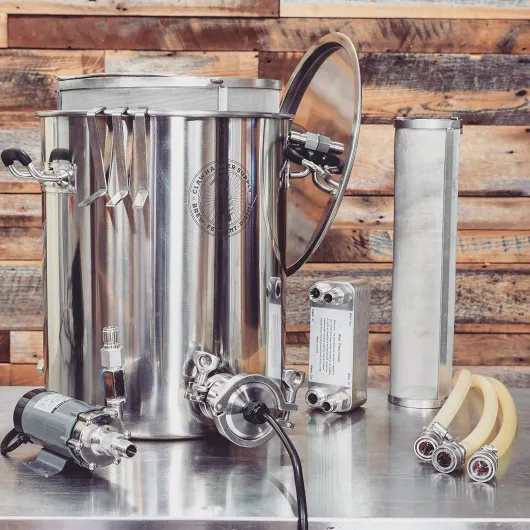
Out of the box, it looks like a reasonably complete kit: kettle, grain basket, pump, hoses, chiller, digital controller. The promise here is basically: plug into a normal 120V outlet, set your temp, and brew all-grain or extract in a semi-automated way. No gas, less mess, and supposedly less stress. That’s what convinced me to give it a try.
I’ve run several batches through it now, mostly 5-gallon all-grain BIAB recipes: a Citra session ale, a simple pale ale, and a darker porter. So I’ve gone through the full cycle multiple times: heating strike water, mashing, mash-out, boiling, hop additions, and chilling. Enough to see what works smoothly and what’s annoying in practice.
Overall, it’s not perfect, but it does what it says for the most part. It makes brewing indoors or in a small space a lot easier, but you have to accept some trade-offs: slower heating because of 120V, some fiddly bits with hoses and the pump, and the fact that you’re depending heavily on the digital controller. If you expect a plug-and-play miracle, you’ll be disappointed. If you’re okay with a learning curve and a few quirks, it’s a pretty solid electric setup.
Value for money: solid, but depends what you’re coming from
On the value side, you have to look at what you’re getting: an all-in-one electric system with a kettle, grain basket, pump, chiller, and digital controller. If you tried to piece all of that together separately—buying a quality stainless kettle, an element, a standalone controller, a pump, and a chiller—you’d probably end up in a similar price range or higher, plus a lot of DIY work. So for someone who wants a ready-to-brew kit and doesn’t want to wire their own controller, the price feels fairly reasonable.
Compared to higher-end 240V all-in-one systems, this Clawhammer setup is cheaper, but you also give up faster heating and sometimes nicer integration. Some competitors have more polished interfaces, built-in pumps in the base, and more refined firmware. Here, you’re getting a functional but basic controller and a more modular feel. The upside is that parts are replaceable and upgradable, which is good if you like tinkering. The downside is it doesn’t feel as slick.
For someone brewing 5-gallon batches in a small space, especially in an apartment or a house where gas is a hassle, the value is pretty good. You can brew all-grain with decent efficiency, keep your setup compact, and plug into a normal outlet. If you already own a good propane burner, a kettle, and you don’t mind manual temp control, this will feel like a convenience upgrade rather than a necessity. In that case, the value is more about comfort and control than saving money.
The 4.1/5 average rating on Amazon seems fair to me. It’s not perfect, and there are some rough edges like the lack of included printed instructions and concerns for non-US power. But for a complete electric system that actually brews solid beer, I’d say the value is pretty solid if you understand the limitations. If you expect it to be fast like a 240V system or as polished as more expensive brands, you might feel it’s a bit pricey. If you just want a reliable, compact electric brewery without a ton of DIY, it’s a decent deal.
Design: compact and practical, but not flawless
The overall design is compact and reasonably thought-out for small spaces. The kettle footprint is about 43 x 43 cm and under 50 cm tall, so it fits on a sturdy table or a counter if you’re brave. Everything is stainless, so it looks like a proper piece of brewing gear, not a hacked-together stock pot. The handles are silicone-coated, which is actually useful when you need to shift the kettle a bit during cleanup and it’s still warm.
The digital controller sits in a separate box with buttons for temperature and pump control. I liked that the pump is integrated into the controller logic, so you’re not fumbling with separate switches all over the place. The front display is basic but readable. No fancy touchscreen here, just buttons. That’s fine by me; less to break. The downside is that the interface is a bit clunky when you first start using it, especially when you get into PID auto-tuning and setting target temps. Plan on reading or watching a guide at least once.
The grain basket design is decent. It clips onto the top of the kettle so you can let it drain after the mash. It’s not as effortless as some three-tier or hoist setups, because you are still lifting wet grain, but for 5-gallon batches it’s manageable if you’re reasonably strong. If you load it up close to the max with grain for a big beer, you’ll feel it. I’d think twice before doing very heavy grain bills without a helper or some way to support the basket.
One design thing I’m not thrilled about is the cable and pump routing. The hoses and power cords can get a bit tangled if you don’t set up your workspace smartly. Also, the pump and controller box add more stuff to wipe down and keep dry. Not a deal-breaker, but it’s not as clean and integrated as some more expensive all-in-one systems where everything is mounted on one frame. Overall, the design is functional and compact, but you can tell it’s more about practicality than polish.
Materials and build: solid steel, a few concerns
The good news first: the main build is 304 stainless steel, and it feels solid. The kettle walls are sturdy enough that they don’t flex when you grab the handles, and the welds around the ports and element look clean on my unit. After several brew days, some light scrubbing, and a bit of banging around in storage, there are no dents or weird discolorations beyond normal heat marks. This is the kind of thing you expect to last years if you don’t abuse it.
The grain basket is also stainless and has held up well. The perforations are fine enough to keep grain from slipping through but open enough for decent flow. I haven’t noticed any rust spots or bending, even after cleaning it with a brush and letting it air dry. The silicone handles and hoses are decent quality too. They haven’t cracked or gone cloudy yet, and they handle the heat of recirculating near-boiling wort without any weird smells or taste carryover.
Where I get a bit more cautious is with the electrical side and the pump housing. One Amazon review mentioned getting shocks from the power supply case and the pump when using it on British power. I’m in North America on standard 120V, and I haven’t had that problem personally, but that kind of feedback makes me double-check my GFCI and my grounding. The unit claims GFCI protection and safety features, but I’m still careful to keep everything dry and plugged into a proper protected outlet.
Overall, I’d say the materials are pretty solid for the price: real stainless where it matters, silicone where it touches hot liquid, and a pump that feels like a typical homebrew pump (not industrial, but fine). It’s not bulletproof, and I wouldn’t toss it around, but for home use, it feels sturdy enough. My main advice is: treat the electrical box and pump with respect, don’t skimp on using a GFCI outlet, and do a quick visual check of cords and connections before each brew day.

Durability and long-term use: feels solid, but mind the electrics
I’ve only had the system for a handful of batches, so I can’t pretend I’ve stress-tested it for years, but I can share what’s obvious so far and what I expect. The stainless kettle and grain basket look like they’ll last a long time. No warping, no loose fittings, and the welds don’t show any signs of stress. This is the part of the kit that feels like a long-term investment and should easily outlive the electronics if you treat it decently.
The heating element is an ultra-low watt density design, which is supposed to help avoid scorching and extend lifespan. So far, I haven’t had any scorching issues, even on thicker mashes or when I accidentally let the recirculation slow down. Cleanup around the element with the right brush is straightforward, and I haven’t seen any pitting or weird corrosion. If you keep it clean and avoid running it dry, it should hold up.
The pump and the digital controller are the more fragile parts in my opinion. They work fine for now, but any time you mix water, steam, and electricity, you have potential failure points. The one-year warranty is okay but not particularly generous. I haven’t had failures yet, but I could see the pump being the first thing to give up after a lot of use, just based on past experience with similar homebrew pumps. I always let it dry out fully and don’t store the unit in a damp basement corner.
The Amazon review about electric shocks in the UK is a red flag for people outside North America. It suggests that if you’re not on the exact power standard this thing was designed for, you might run into grounding or compatibility issues. I’d be very cautious about using it with adapters or in countries with different mains standards. In my case (US 120V with GFCI), no problems so far, but I still treat it with respect. Overall, durability looks decent, but I wouldn’t call it bombproof. The metal parts are likely to last; the electronics and pump are the question marks over the long run.
Performance: brews good beer, but 120V is slow
Performance-wise, this system gets the job done, but you need to understand the limits of 120V and 1650W. Heating water from tap temperature to mash temp takes a while. For a typical 5-gallon batch with around 4–4.5 gallons of strike water, I’m looking at roughly 30–40 minutes to get from cold to mash temperature. Going from mash-out to a full rolling boil is another chunk of time. It’s not instant, so don’t expect to speed-run a brew day.
Once you’re at temp, the digital controller is the main strength. After doing the PID auto-tuning, I found mash temperature control to be pretty stable, usually within 1–2°F of my target. That’s good enough for consistent conversion. On my Citra session ale, I got about 72% mash efficiency, which lines up with the better user reviews. With recirculation running, the temp throughout the grain bed felt even, and I didn’t see big swings at the top versus the bottom.
The boil is where you really feel the 120V limitation. You do get a boil, but it’s not super vigorous if you’re pushing close to the full volume. For most normal gravity beers, it’s fine, but if you like very intense boils or big 1.080+ beers with full-volume boils, you’ll notice it’s a bit mild. You may need to adjust your boil-off expectations and maybe boil a bit longer to hit your targets. For my porter, I had slightly less boil-off than with propane, so I tweaked my recipe the next time.
The pump itself works well enough for recirculation and moving wort through the chiller. It’s not silent, but it’s not obnoxious either. As long as you don’t kink the hoses and you prime it properly, it keeps up. I haven’t had it stall or overheat so far. Overall, performance is solid but not mind-blowing: it makes consistent beer, the controller does its job nicely, and the main compromise is speed due to the 120V power. If you can live with a slower heat-up, it’s perfectly usable.

What you actually get with this kit
The Clawhammer system is basically a 10.5-gallon 304 stainless kettle with an electric heating element, a digital controller box, and all the plumbing to circulate and chill your wort. It’s a BIAB (Brew in a Bag) style setup, but instead of a floppy bag, you get a rigid grain basket that sits inside the kettle. That means mash, boil, and hop additions all happen in the same vessel, which is convenient if you don’t have much space.
The kit I got included: the kettle with element installed, a grain basket with clips, a pump, silicone hoses, filters, and a basic immersion-style chiller that hooks into your water supply. The controller has buttons for temperature and pump control, and it runs on a standard 120V outlet at 1650W. So no special wiring, which is nice if you’re in an apartment or a rental and don’t want to mess with 240V circuits.
In practice, the system is set up to handle both all-grain and extract brewing. For all-grain, you fill with strike water, heat to mash temp, lower the grain basket in, mash with recirculation, then pull the basket and go straight to boil. For extract, you basically skip the grain basket or use it for steeping specialty grains and then just add extract. Either way, it’s one pot from start to finish, which keeps things simple.
One thing to note: the instructions are not in the box. You have to go to the manufacturer’s website or their YouTube channel. They do have good videos, but if you’re the type who wants a printed manual with wiring diagrams and a step-by-step, you’ll be annoyed. Personally, I had my laptop open during the first brew day, pausing their video every few minutes. It works, but it’s not super polished. Still, once you’ve done one run, the process is pretty straightforward.
Effectiveness: does it actually make brew day easier?
From a practical point of view, the big question is: does this system actually simplify brew day compared to a classic cooler + propane setup? For me, the answer is mostly yes, with a few caveats. The fact that everything happens in one kettle is a big plus. No more juggling a mash tun, a hot liquor tank, and a separate boil kettle. You heat, mash, pull the basket, and boil right there. That alone cuts down on the number of things you need to clean and store.
The temperature automation is the other big win. Being able to set a mash temp and walk away for short stretches is nice. I still check on it, stir the mash a couple of times, and make sure the pump is flowing, but I’m not constantly fiddling with burner knobs or adding boiling water to keep the mash in range. On longer step mashes or when I’m doing something else in the garage, it reduces stress. I wouldn’t leave it totally unattended, but it’s definitely less hands-on than gas.
Where it’s less effective is overall brew day duration. The slower heating times mean that while the actual mash and boil are easier to manage, the total time from filling with water to finishing the boil can be similar or even longer than propane. So it’s simpler, but not necessarily faster. Also, since the instructions are online-only, the first session feels more like a project than a relaxed brew day. You’re pausing videos, double-checking hose connections, and making sure you’re not missing a step.
Cleaning is somewhere in the middle. You have one kettle and a grain basket instead of multiple vessels, which is good. But you also have the pump, hoses, and chiller to clean and flush. If you’re used to electric brewing gear, it’s normal. If you’re coming from a very basic stovetop BIAB with a bag and a pot, it will feel like more work. Overall, I’d say the system is effective at making brewing more controlled and more compact, but not necessarily simpler in every single aspect. It’s a trade-off that will suit people who value temperature control and indoor brewing more than raw speed.
Pros
- All-in-one electric BIAB system with kettle, grain basket, pump, and chiller included
- Stable mash temperature control with digital controller and PID auto-tuning
- Compact stainless design that runs on standard 120V outlets, no special wiring needed
Cons
- Slow heating and relatively mild boil due to 120V / 1650W limit
- No printed instructions in the box, you have to rely on online guides and videos
- Electrical safety concerns if used outside its intended power standard (e.g., UK review reporting shocks)
Conclusion
Editor's rating
After a few full brew days with the Clawhammer 10 Gallon Electric Home Brewing System, my opinion is that it’s a pretty solid electric setup for homebrewers who want control and compactness more than speed. It heats slower than gas or 240V systems, but once you’re at temp, the digital controller holds mash temperatures well, and the BIAB design keeps everything in one kettle. The beer I brewed on it turned out clean and consistent, with mash efficiencies in the low 70% range once I dialed it in.
It’s not perfect. The lack of printed instructions is lazy, and your first brew day will likely involve watching YouTube and double-checking connections. The 120V limitation means slower heat-up and a gentler boil, so if you’re used to a roaring propane burner, you’ll need to adjust your expectations. I’d also be cautious using this outside North America given the one-star review about shocks on British power; I personally stick to a proper GFCI outlet and keep the electrics dry.
I’d recommend this system to homebrewers who: brew mostly 5-gallon batches, want to brew indoors or in tight spaces, and value stable mash temps and an all-in-one approach. If you like tinkering, you’ll appreciate the modular parts and upgradability. On the other hand, if you’re chasing super fast heat times, very vigorous boils, or you already have a solid gas setup you’re happy with, this might feel like an expensive sideways move rather than an upgrade. Overall, it’s a good, practical tool that does what it’s supposed to do, as long as you’re okay with its limits.