Summary
Editor's rating
Taste: light IPA vibes without the punch
Value for money: good everyday option if you like it light
Smell: hoppy and citrusy, but fairly mild
Packaging and practicality: simple, sturdy, a bit bulky
Performance over an evening: sessionable like it claims
What you actually get in the case
Pros
- Light 3.4% ABV makes it easy to drink several cans without feeling too heavy or drunk
- Decent hoppy, citrus taste that suits casual drinking and pairs well with common foods
- Good value as a 24 x 440 ml case for stocking the fridge or hosting friends
Cons
- Flavour and aroma are fairly basic for serious craft beer fans
- Large 440 ml cans and 24-pack format take up a lot of fridge space
Specifications
View full product page →| Brand | Drayman Direct |
A session IPA you can actually drink all night
I went through a full case of this Innis and Gunn Session IPA over a couple of weeks, mostly between quiet evenings at home and a small barbecue with friends. I’m not a beer snob, but I drink enough IPAs to tell when something is good, average, or just supermarket filler. With this one, I was mainly curious about two things: the low 3.4% alcohol and whether 24 big 440 ml cans were actually worth the money and fridge space.
Right away, it felt like a beer designed for people who want the IPA taste without getting knocked out after two or three. It’s clearly lighter than a typical 5–6% IPA, but it still has that hoppy, citrus thing going on. I’d say it sits halfway between a classic IPA and a standard supermarket pale ale. It doesn’t taste watered down, but you can tell it’s a session beer and not a heavy hitter.
I used it in pretty normal situations: one can after work, a couple of cans with pizza, and then a pile of them at a weekend barbecue. That helped me see how it behaves over a whole evening. No big surprises: it’s easy to drink, doesn’t feel heavy, and you don’t wake up the next day feeling like you’ve overdone it after three or four. For a session IPA, that’s kind of the point.
It’s not the best beer I’ve ever had and it’s not going to blow away serious craft beer fans, but it does the basic job: cold, hoppy, a bit citrusy, and light enough to keep going. If that’s what you’re after, it’s a pretty solid everyday option. If you’re chasing complex, niche craft brews, this will probably feel a bit basic.
Taste: light IPA vibes without the punch
The taste is what you’d expect from something called a session IPA: it’s hoppy, a bit citrusy, and easy to drink, but it doesn’t smack you in the face like some stronger IPAs. When you first sip it cold, you get a clear hop bitterness and a light citrus note, like grapefruit and a bit of orange. Nothing crazy, but enough to feel like you’re drinking a real IPA and not just a random lager with a fancy label.
The body is pretty light. You can tell it’s 3.4% just from how it feels in the mouth. Compared to a 5.5% IPA, it’s thinner and less malty. If you’re used to big, juicy, thick IPAs, you’ll probably find this a bit on the weak side. But if you’re after something that doesn’t feel heavy or sticky after two cans, it actually works out well. I found it especially decent with food, because the bitterness cuts through greasy stuff like burgers and pizza without making you feel bloated.
Over a few evenings, I noticed the taste is quite consistent: no weird aftertaste, no metallic hint from the can, and it doesn’t suddenly taste off halfway through. The bitterness is there but not harsh. I’d say it’s somewhere in the middle: stronger than a basic supermarket pale ale, but milder than most craft IPAs you’d buy in individual cans. After two or three in a row at the barbecue, it stayed drinkable and didn’t get sickly.
My honest take: the taste is decent and does the job for casual drinking. It’s not going to impress someone who spends their weekends hunting down rare double IPAs, but that’s not really the audience here. For people who like a bit of hop and citrus and want something they can drink a few of without getting wrecked, it’s pretty solid. If you want depth, complexity, or big tropical notes, there are better options, but they’ll usually cost more per can and hit harder on the alcohol.
Value for money: good everyday option if you like it light
Value depends a lot on what you usually buy. This is a 24-pack of 440 ml cans at 3.4% ABV. So compared to buying individual craft IPA cans at 5–6% in 330 ml, you’re getting more liquid beer per pound, but less alcohol and less intensity. If your goal is strong, punchy IPAs where you only drink one or two, this will feel like a downgrade. If your goal is a steady supply of easy-drinking beer for evenings and barbecues, the price per pint is usually pretty reasonable.
For me, the value felt decent because I used it exactly for what it’s meant for: casual drinking, sharing with friends, and having something on hand that suits most people. At a small get-together, even the non-IPA drinkers were fine with it because it’s not overly bitter or heavy. That means you’re not stuck buying three different styles to keep everyone happy. One case covered a few different occasions without any drama.
Where it loses a bit of value is for people who really care about strong craft beer character. If you’re used to paying more for bold, complex IPAs, this will probably taste a bit generic. Not bad, just not very special. In that case, you might prefer to spend the same money on a smaller number of higher-ABV, more characterful beers. Also, because it’s only 3.4%, if you mainly drink for a buzz, you’ll go through cans faster than with a 5–6% IPA.
Overall, I’d say the value is good if you want a light, sessionable IPA-style beer to have around the house or for parties. It’s less convincing if you’re chasing strong, intense craft experiences. For me, it sits in that “pretty solid fridge filler” category: not exciting, but reliable, and you don’t feel like you’ve wasted your money when you crack one open after work.
Smell: hoppy and citrusy, but fairly mild
I tried this both straight from the can and poured into a glass, and the smell changes quite a bit depending on how you drink it. From the can, the aroma is there but pretty muted: a bit of hops, a bit of citrus, nothing that jumps out. Once you pour it into a glass, you actually get a nicer nose: light grapefruit, some generic tropical fruit vibes, and that usual hoppy smell you expect from an IPA.
It’s not very strong though. Compared to some craft IPAs where you can smell the beer from across the table as soon as you crack the can, this is much more restrained. For some people that’s good, especially if you’re drinking in a small room or with people who don’t love strong beer smells. For others, it might feel a bit underwhelming. Personally, I’m fine with it because it matches the whole “session” idea: more low-key, less intense.
Over a couple of weeks, I didn’t notice any variation from can to can. Every one I opened had the same basic aroma profile: light citrus, mild hops, and a clean smell with no weird off-notes. No skunky smell, no cardboard smell, nothing that made me think of old or badly stored beer. That’s partly the benefit of cans: they’re sealed and don’t let the light mess with the beer.
Overall, I’d say the fragrance is simple but clean. It smells nice enough when you pour it properly, but it won’t fill the room or impress hardcore IPA fans. If you care a lot about aroma and like to sit and sniff your beer before every sip, you’ll probably find it a bit basic. If you just want something that smells fresh and doesn’t have any nasty surprises, it gets the job done.
Packaging and practicality: simple, sturdy, a bit bulky
The case arrived as a basic cardboard box with 24 loose cans inside, not shrink-wrapped into smaller packs. The cardboard is thick enough that it didn’t crumble when I moved it around or stacked something on top. No fancy opening system, you just rip the top open and pull the cans out. It’s not stylish, but it’s practical. For storage, the box held up fine over the couple of weeks it sat half-full in my hallway.
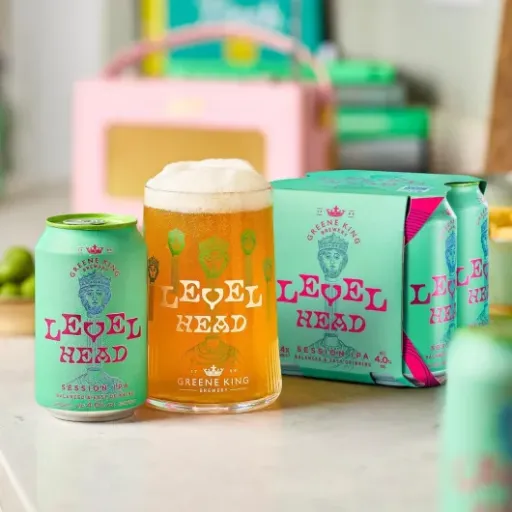
The cans are standard 440 ml with a normal pull tab. I didn’t have any issues with dodgy tabs or cans that were hard to open. No sharp edges or weird dents either. The design is busy but clear: you can see the brand, the style (Session IPA), and the strength (3.4%) right away. That’s important when you’ve got other beers in the fridge and want to grab something specific without thinking too much.
One thing to note: 24 x 440 ml cans take up a lot of fridge space. If you’ve got a small fridge or you live with other people, you’re not going to chill the whole case at once. I ended up rotating 6–8 cans in and out of the fridge and leaving the rest in a cupboard. It’s not a big problem, but it’s worth knowing if you were imagining a fully loaded beer fridge. Bottles can sometimes stack more neatly; these cans are just big and a bit awkward in tight spaces.
On the plus side, cans are easier to recycle and safer to transport than glass. I took a few in a bag to a friend’s place and didn’t worry about anything breaking. So from a pure practicality point of view, the packaging is decent: sturdy box, reliable cans, nothing fancy, nothing annoying. If you want something gift-ready or premium-looking, this is pretty basic. If you just want a big box of beer that survives delivery and stacks reasonably well, it does its job.
Performance over an evening: sessionable like it claims
For beer, “performance” basically comes down to how it drinks over time: does it stay enjoyable after a few cans, does it feel heavy, and how do you feel afterwards. On that front, this Session IPA does what it says. At 3.4% ABV, it’s clearly lighter than most IPAs, and you feel that after a long evening. I had three cans over a barbecue that lasted a few hours, plus food, and I still felt clear-headed and not weighed down. With a stronger IPA, three 440 ml cans would have been too much for me.
Carbonation is moderate: it’s fizzy enough to feel refreshing, but not so gassy that you end up burping every two minutes. I noticed it holds its carbonation reasonably well in the glass; it doesn’t go flat instantly. Even if you take your time over a pint, it still tastes okay by the end. That’s handy when you’re chatting and not just necking it quickly.
In terms of how it behaves with food and different situations, it’s pretty flexible. I had it with burgers, pizza, some spicy wings, and even just on its own after work. The bitterness is enough to cut through fat and spice without clashing. On a hot day at the barbecue, it definitely felt refreshing rather than heavy. On a cooler evening indoors, it still worked, but it’s clearly more of a warm-weather or social beer than a “sit by the fire and sip slowly” kind of drink.
If you’re looking for something you can drink several of over a long weekend with friends without ending up useless the next morning, this fits that role well. If you want a beer where one or two cans feel like a treat and you’re done, this might feel a bit too light and repetitive. So in short: as a session beer, its performance is solid. As a “wow, one and done” experience, it’s pretty average.
What you actually get in the case
This is a full case of 24 cans, each 440 ml, so you’re looking at just over 10.5 litres of beer in total. The case I got was a standard cardboard box, nothing fancy, just printed branding and basic product info. It arrived intact, no dents, no leaking cans. From a practical point of view, it’s the kind of box you can slide straight into a cupboard or stack in a corner of the kitchen without it falling apart.
The cans themselves look like typical Innis and Gunn branding: fairly busy design, lots of text and graphics, but you can clearly see it’s a Session IPA and the 3.4% ABV is printed clearly. I like that the style and strength are obvious at a glance. When you’re digging around in a cold fridge with friends waiting, you don’t want to be reading fine print to figure out what you’re grabbing.
In terms of how it fits into normal life: 440 ml is slightly bigger than the classic 330 ml craft beer can, so one can is basically a full pint in a glass. For me, that made it good for meals and barbecues. One can per plate of food felt about right. The downside is if you just want a quick beer, a full 440 ml can can feel a bit much, especially on a weekday night. I sometimes ended up leaving a few sips warm at the bottom if I wasn’t really in the mood.
Overall, the presentation is straightforward and practical. Nothing fancy, but it looks like a proper beer, not some bargain-basement thing. The case is clearly aimed at stocking up rather than gifting. If you want something that looks premium as a present, I’d go for bottles or a mixed selection. For filling your own fridge for a month or for a party, this format makes sense.
Pros
- Light 3.4% ABV makes it easy to drink several cans without feeling too heavy or drunk
- Decent hoppy, citrus taste that suits casual drinking and pairs well with common foods
- Good value as a 24 x 440 ml case for stocking the fridge or hosting friends
Cons
- Flavour and aroma are fairly basic for serious craft beer fans
- Large 440 ml cans and 24-pack format take up a lot of fridge space
Conclusion
Editor's rating
After working through the case, my overall feeling is that Innis and Gunn Session IPA is a solid, easy-going beer that does what it promises. It’s light at 3.4% but still has enough hop and citrus character to feel like an IPA, not just a random pale lager. It’s the kind of beer you can drink several of over an evening without feeling wrecked or overly full, which is exactly what a session beer is supposed to be. No weird aftertastes, no inconsistent cans, and it pairs well with the usual barbecue and takeaway food.
It’s not perfect though. If you’re into big, bold craft IPAs with complex flavours and strong aroma, this will feel a bit basic and maybe even boring after a while. The smell is mild, the body is light, and the overall character is fairly straightforward. It’s also quite bulky in the fridge because of the 440 ml can size and the fact there are 24 of them. But as an everyday, “keep it in the fridge for guests and easy nights” option, it makes sense and offers decent value for money.
I’d recommend it to people who like IPA-style beers but want something lighter in alcohol, or anyone stocking up for a party or barbecue where you need a safe, crowd-friendly choice. If you’re a serious craft beer nerd looking for depth and strong flavours, or you prefer stronger beers where one or two cans are enough, you’ll probably want to look elsewhere.