
Summary
Editor's rating
Value for money: worth it if you’re actually going to use three taps
Design: compact for what it holds, but still a big metal box
Materials and build: mostly solid, with a few cost-cut corners
Durability and long-term feel (based on early use)
Performance: cooling, pouring, and how it handles three kegs at once
What you actually get when this thing shows up
Effectiveness: does it really replace a pub-style setup at home?
Pros
- 160L interior easily fits three 19L Corny kegs or a 50L commercial keg
- Preassembled 3-tap UltraTap tower pours smoothly with less sticking and foam
- Integrated font fan keeps the tower and lines cooler for better first pours
Cons
- Takes up a lot of space and can be awkward to fit under shallow counters
- Bundle still requires extra parts (lines, disconnects, gas bottle) to be fully ready
- Compressor and fan noise may bother you in a quiet living room setup

Specifications
View full product page →| Brand | DIAH DO IT AT HOME |
A home bar upgrade for people who are actually serious about draft
I’ve been running basic single-tap kegerators for a while, and I finally decided to go bigger with this Do It At Home Kegmaster Premium XL 3 Tap Kegerator. I’ve used it for a few weeks now with a mix of homebrew Corny kegs and one commercial keg, so I’ve had time to see where it works well and where it’s a bit annoying. I’m not a bar owner, just a homebrew nerd who got tired of juggling kegs and swapping lines every weekend.
Right away, this thing feels more like something you’d see behind a bar than a toy for beginners. It’s heavy, it’s bulky, and it doesn’t really try to hide that it’s a piece of equipment first and a piece of furniture second. If you’re used to those tiny countertop beer dispensers, this is another world entirely. It’s closer to a small under-counter fridge with taps bolted on top.
I mainly wanted three taps so I could keep a lager, an ale, and something like cider or kombucha on at the same time. In that sense, it does exactly what I was hoping for. No more half-warm bottles in the fridge and no more swapping couplers mid-party. But you pay for that in space, setup time, and a bit of noise. It’s not just plug-and-play and forget about it, especially if you’re picky about carbonation and serving pressure.
So if you’re wondering whether this is just an overbuilt fridge with taps, or an actually useful tool for a home bar, I’ll walk through how it’s been in real use: the good stuff, the clunky bits, and whether I think it’s worth the price and the floor space. Short version: it gets the job done very well, but it’s not magic and it’s not for everyone.
Value for money: worth it if you’re actually going to use three taps
Price-wise, this isn’t a cheap toy. You’re paying for a 160L fridge, a 3-tap tower with better-than-basic taps, a gas regulator, and the integrated font fan. If you add up buying a basic fridge, separate tower, taps, and a regulator yourself, you might be able to save some money by DIY, but you’ll spend more time sourcing parts and probably swearing at fittings. This bundle sits in that middle area: not bargain-basement, not high-end commercial, but aimed at serious home users.
For me, the value comes from the fact that it actually solves several annoyances at once: cooling capacity for three kegs, stable pours thanks to the fan and decent taps, and a regulator that works out of the box. If you only ever plan to run one keg, honestly, this is overkill and not good value. A smaller single or dual-tap kegerator would do the job for less money and take up less space.
Compared to cheaper kegerators I’ve used, the main difference is consistency. The cheaper ones often struggle with temperature, thin walls, or flimsy taps. Here, you get more stable cooling and taps that don’t stick after a few days. That alone is worth something if you’re tired of fighting with foam or cleaning up leaks. On the other hand, if you’re super budget-conscious and don’t mind tinkering, you could build something similar from a converted fridge and separate parts, but it will take time and some trial and error.
So in terms of value, I’d say it’s good for people who are already committed to draft beer at home and want a cleaner, more reliable setup without going full commercial. If you’re still just experimenting with your first keg, I’d start smaller. For regular homebrewers or anyone who hosts often and wants three taps ready to go, the price feels reasonable for what you’re getting.
Design: compact for what it holds, but still a big metal box
Design-wise, the Kegmaster Premium XL is pretty simple: it’s a black fridge body with a stainless-looking tower on top. No fancy lights, no glass doors, no touchscreen. Personally, I prefer that. It looks like equipment, not a gimmick. The 160L interior is the main design point, and in practice it really does take three 19L Corny kegs without you playing Tetris. I managed three Corny kegs plus a small CO₂ bottle inside, though it gets tight and you need to think about hose routing.
The internal floor is flat and solid enough for heavy kegs, and the door seals decently. After loading it with three full kegs, the door still closed properly without having to slam it. There aren’t many shelves or storage options inside, because it’s clearly built for kegs, not mixed groceries and beer. If you’re thinking of using it partly as a normal fridge, it’s not really designed for that. It’s a keg box first.
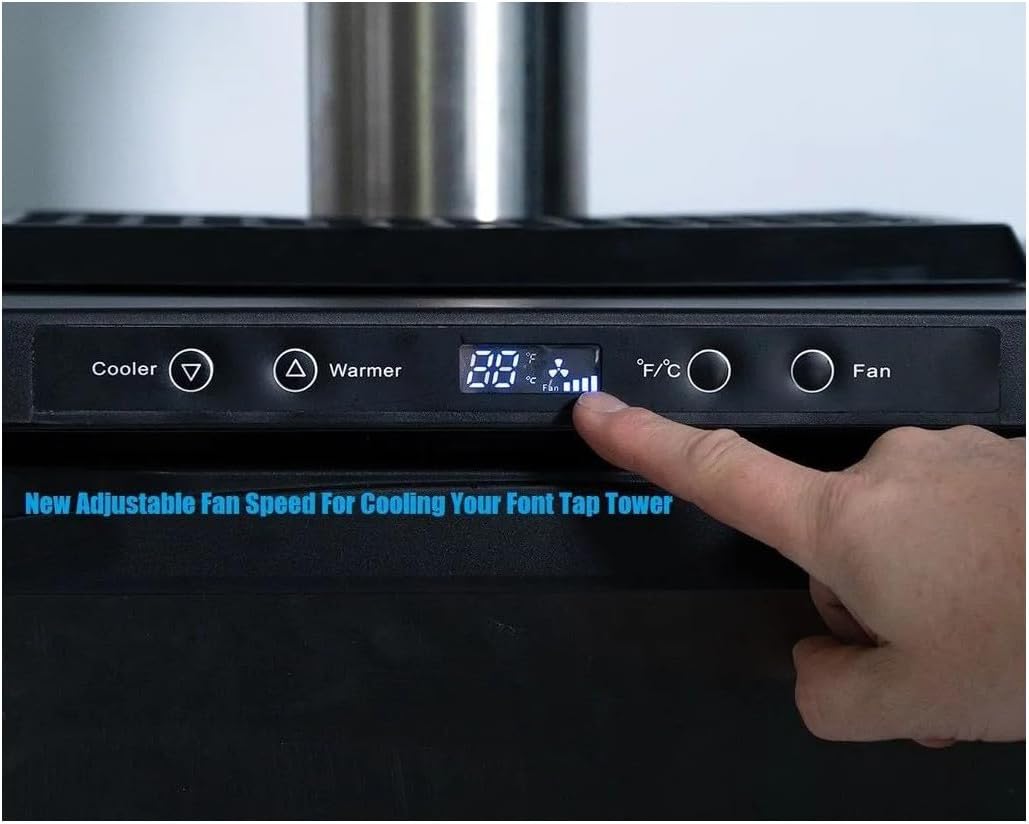
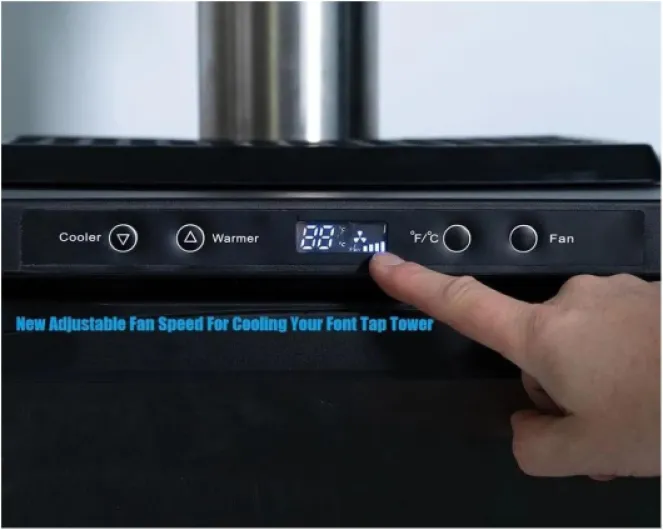
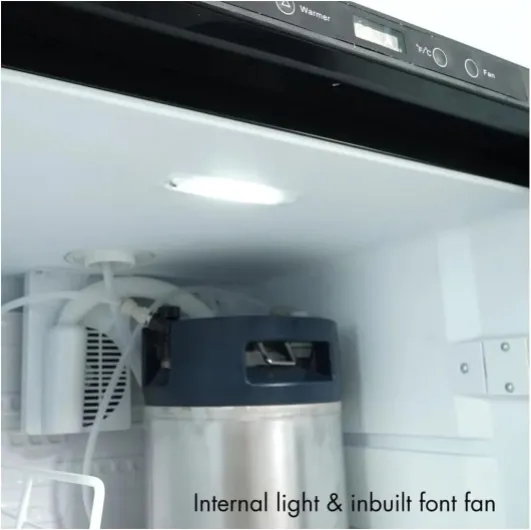
The tower sits centered at the top and is fed by the integrated font fan, which pushes cold air up into the tower. That’s a nice touch because it helps keep the lines cold and reduces that first foamy pour you get with warm lines. The downside is that it adds some complexity inside the cabinet with the fan ducting and wiring, so you have a bit less clean, empty space for kegs and bottles. The control knob for the fan speed is basic but functional.
From a layout perspective, it’s pretty practical: you can run gas either inside or from a bottle outside the unit, and the back is flat enough to sit against a wall without weird bulges. But it’s still 610mm wide and 660mm deep, so in a small flat it will dominate the corner you put it in. I’d say the design is focused on function and capacity rather than looks. It’s not ugly, just plain, and I’m fine with that for a home bar in a garage or a dedicated corner rather than a stylish living room centerpiece.
Materials and build: mostly solid, with a few cost-cut corners
The unit uses a lot of stainless steel and metal where it matters, which is reassuring given the weight of full kegs. The taps themselves (UltraTaps) feel sturdy in the hand, no wobble, and the forward-sealing design means less gunk drying inside. I’ve had cheaper rear-sealing taps seize up if I didn’t pour for a few days; so far these stayed smooth even after leaving a line unused for almost a week. That’s a clear plus for me.
The fridge body panels are decent thickness, not paper-thin, and the door has a proper gasket that seems to seal well. I didn’t notice condensation issues around the door frame even when the room was fairly warm. The interior is basic plastic and metal, nothing fancy, but it wipes down easily. If you spill beer or blow a keg and get foam everywhere, a quick wipe with a cloth cleans it up. The floor doesn’t feel like it’ll crack under keg weight, which is the main thing I worry about with cheaper units.
On the more budget side, the plastic fittings and some of the internal bits (like some fan housing and smaller brackets) feel a bit generic. They work, but you can tell where they saved some cost compared to high-end commercial setups. The MKX regulator is mostly metal and feels solid, but the gauge faces and knobs have that "mid-range" look rather than premium lab gear. It’s totally fine for home use, but if you’re used to heavy-duty commercial regulators you’ll notice the difference.
Overall, the materials are pretty solid for the price bracket: metal where there’s stress, plastic where it doesn’t really matter. It’s not luxury, but it’s not flimsy either. For a home bar that might see weekend parties and some rough handling of kegs, I’d call the build quality good enough to trust, with only a few parts I might upgrade over time if they ever fail or annoy me.
Durability and long-term feel (based on early use)
I haven’t had this unit for years, so I can’t pretend I know exactly how it will age, but a few things stand out from the first weeks. First, the door hinges and handle feel strong enough for repeated daily use. I’ve yanked it open with a full hand of bottles more than once and nothing feels loose or wobbly. The interior hasn’t shown any signs of flexing under full keg weight, which is important. Some cheaper fridges start to bow slightly; this one hasn’t yet.
The compressor and cooling system sound like a standard small fridge. No weird rattles, no grinding. Noise level stayed the same from day one to a few weeks in. The font fan also kept running without any odd vibrations. Those are usually the first things that give clues about long-term durability, and so far they’re normal. The UltraTaps, after a lot of opening and closing, still feel tight with no side play in the handles.
The weak points, if I had to guess, will probably be the plastic bits and maybe the regulator gauges over a few years. The plastic inside is fine but not overbuilt, so if you’re rough when moving kegs, I could see scratches and maybe cracks over time. The regulator works fine now, but like most mid-range regulators, it might need replacing if you want super stable pressure for many years. None of this is unique to this model; it’s just how most home-level draft gear is.
Based on the materials and early usage, I’d say it feels like something that should last several years without drama if you treat it normally and keep it reasonably clean. It doesn’t feel fragile, but it also doesn’t feel like a tank built for a nightclub. For a home bar, that’s acceptable, just don’t expect it to shrug off serious abuse or constant moving around.
Performance: cooling, pouring, and how it handles three kegs at once
Performance is where this thing matters, and on that front it’s pretty solid. Cooling-wise, it gets down to serving temperature reasonably fast. When I loaded three room-temperature Corny kegs, it took several hours to get everything cold, which is normal for that much warm metal and liquid. Once it’s down to temp, it holds it without big swings. I didn’t see major condensation inside, and the compressor cycles were noticeable but not constant, even in a warmer room.
The integrated font fan is actually useful, not just a gimmick. On my old kegerator without a tower fan, the first pour of the day was always half foam because the beer sitting in the tower was warm. Here, with the fan on a medium setting, the first pour is much closer to what you get on the second or third glass. It’s not perfect—if the room is hot and you leave it for many hours, the very first second can still be a bit foamy—but it’s way better than a passive tower.
The UltraTaps pour nicely when you dial in your pressure. I ran around 10–12 PSI on my ales and a bit lower on cider, and the flow stayed predictable. The forward-sealing design also means less dribble or sticking when you open them after a break. One thing to note: with three taps sharing the same fridge, you still need to manage line lengths and maybe use flow control if you’re mixing high and low carbonation drinks. The system doesn’t magically fix bad line balancing; it just gives you a stable base to work with.
In practice, over a few weekends with friends, it kept up with continuous pouring without the fridge temperature spiking too badly. The compressor noise is noticeable but not crazy; in a living room it might bug you, but in a kitchen or garage it fades into the background. As a whole, I’d say the performance is reliable and predictable: it cools well, pours well if you set it up right, and doesn’t do anything weird like random temperature jumps or pressure leaks.
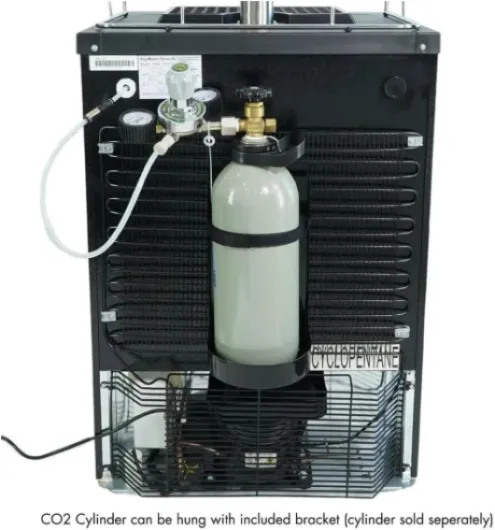
What you actually get when this thing shows up
Out of the box, the Kegmaster Premium XL comes across as a pretty complete bundle, but not fully idiot-proof. You get the 160L fridge body, a preassembled 3-tap tower with UltraTaps, the MKX gas regulator, and the built-in font fan system. What you don’t get are kegs, gas bottles, or all the beer/gas lines you might expect if you’ve never set one of these up before. So you still need to plan for extra bits, especially if you’re running three kegs right away.
The fridge itself is about 850mm high, 610mm wide, and 660mm deep. In practice, that means it fits under a standard counter height-wise, but the depth can be tight if your counters are shallow or you have skirting boards. I had to pull my unit a few centimeters forward so the door could open fully without hitting the cabinets. Not a deal-breaker, but don’t assume it’ll slide in perfectly without measuring.
The tower comes preassembled with the UltraTaps already mounted, which I liked. I didn’t have to mess around with tap bodies or gaskets, just bolt the tower on, connect the beer lines, and go. The MKX gas regulator feels solid enough and not like cheap plastic. I ran it with a standard CO₂ bottle and it held pressure fine over several days without drifting. Still, the bundle feels a bit "bare" if you’re new to draft systems, because you’ll realize quickly you also need splitters, ball lock disconnects or commercial couplers, and some extra clamps.
Overall, the presentation is more “semi-pro kit” than plug-and-play toy. If you’ve installed a kegerator before, it’s straightforward and you’ll appreciate that they didn’t overcomplicate it. If this is your first draft setup, you should expect a learning curve and probably one extra order of fittings and tubing before everything is running the way you want.
Effectiveness: does it really replace a pub-style setup at home?
For what it’s supposed to do—keep multiple kegs cold and pour them consistently—the Kegmaster Premium XL is effective. I’ve had three different drinks on tap (pale ale, pilsner, and cider) and everyone could just walk up and pour without me playing bartender all night. That alone makes it worth considering if you host often. Compared to my older single-tap kegerator, it’s a big step up in convenience. No more swapping lines mid-evening, no more half-warm bottles in the fridge.
The 160L capacity is actually practical, not just a number in the specs. Three 19L Corny kegs fit with room to route lines without crushing them. I also tried it with one 50L commercial keg, and while the fit is snug, it works. Having that flexibility is handy if you sometimes buy commercial kegs for parties and sometimes run homebrew. The MKX regulator handled both setups fine; I didn’t see any obvious pressure creep or inconsistent pours once things were dialed in.
Where it’s less "effective" is for people who want zero maintenance. You still need to clean the lines regularly, check for CO₂ leaks, and keep an eye on your temperatures and pressures. The system doesn’t automate any of that. If you ignore cleaning, your beer will taste off, just like any draft system. Also, running three kegs at once means you’ll go through CO₂ faster, so be ready for more frequent gas refills compared to a single-tap fridge.
In daily use, though, it does what I bought it for: it gives me a simple way to have a small tap list at home without constant tinkering. It’s not perfect and it doesn’t do the work for you, but if you’re willing to do basic draft system upkeep, it’s a very practical setup that behaves more like a small bar system than a toy gadget.
Pros
- 160L interior easily fits three 19L Corny kegs or a 50L commercial keg
- Preassembled 3-tap UltraTap tower pours smoothly with less sticking and foam
- Integrated font fan keeps the tower and lines cooler for better first pours
Cons
- Takes up a lot of space and can be awkward to fit under shallow counters
- Bundle still requires extra parts (lines, disconnects, gas bottle) to be fully ready
- Compressor and fan noise may bother you in a quiet living room setup
Conclusion
Editor's rating
The Do It At Home Kegmaster Premium XL 3 Tap Kegerator is a solid option if you’re serious about having a proper draft setup at home rather than a novelty gadget. It’s big, it’s fairly heavy, and it expects you to know at least the basics of kegs, CO₂, and line balancing. In return, it gives you room for three kegs, a stable cooling environment, and taps that pour reliably once you’ve dialed everything in. It feels more like a scaled-down bar system than a toy fridge with a tap stuck on.
Who is it for? People who brew regularly, buy kegs often, or host enough that three taps actually make sense. If you’ve outgrown a single-tap unit and are tired of swapping lines and re-chilling warm bottles, this is a practical upgrade. It’s also a decent fit for small bars, clubs, or shared spaces that need a compact but capable draft fridge. Who should skip it? Anyone short on space, on a tight budget, or just curious about draft beer but not fully committed yet. For occasional use or one keg at a time, a smaller, cheaper kegerator or a DIY setup will make more sense.
Overall, it’s not perfect—some plastic bits feel basic, it’s not exactly quiet, and you still need to buy and set up your own lines and kegs—but it gets the core job done well. If you actually plan to run three taps regularly, the cost and footprint are justified. If not, you’re paying for capacity you’ll never really use.