
Summary
Editor's rating
So, How Does the Classic British IPA Actually Taste?
Is Brewery in a Box Good Value for Money?
Kit Design and How It Works in a Normal Kitchen
Build Quality and Ingredients: Decent, Not Fancy
Reusability and How the Kit Holds Up After a Brew
What You Actually Get in the Box
Brew Day and Fermentation: Does It Actually Make Brewing Easier?
Pros
- Genuinely all‑grain brewing with clear instructions and a helpful YouTube video
- Reusable hardware (keg, thermometer, mash net) that holds up fine after a full brew
- Produces a decent, drinkable British‑style IPA with no major off‑flavours
Cons
- Small 5L batch size means a fair bit of work for only 8–10 pints
- Tap and some plastic parts feel a bit cheap and may not last forever
- Requires large pans and a few hours of active work, so not ideal if you just want quick, easy beer

Specifications
View full product page →| Brand | BREW BROS |
A Real First Step Into “Proper” Home Brewing
I got the Brew Bros “Brewery in a Box – Classic British IPA” because I wanted to move beyond the usual syrup/kit beers and try proper all‑grain brewing without spending a fortune on gear. I’ve brewed a few basic kits before, but never mashed grain from scratch. This set looked like a decent halfway house: more serious than a supermarket kit, but not as heavy as buying a full brewing setup with separate fermenter, mash tun, etc.
I’ve now taken it through one full brew and keg, from unboxing to pouring the first pint. So this isn’t a “just opened the box” review; I actually brewed with it, cleaned it, and tasted the result. I’ll be honest: it’s a bit more work than I expected, but that’s also kind of the point. It feels like real brewing, not just tipping a can into a bucket.
The beer itself turned out better than I thought it would for a first try. It’s not going to beat a top craft brewery, but it tastes like a proper British IPA, not sugary homebrew. The house smelled like a small brewery for an afternoon, which I actually liked. If you hate that malty smell, that’s something to keep in mind.
In this review I’ll go through how the kit is put together, how the brew day went in practice, what the beer tasted like, and whether I think it’s good value. I’ll also be clear about the downsides: it needs time, attention, and some kitchen gear. It’s not a plug‑and‑play toy, and that’s both its strength and its weakness.
So, How Does the Classic British IPA Actually Taste?
After brewing, fermenting for about ten days, then leaving it to condition, I finally got to taste the beer. This is the part I was most curious about, because a lot of cheap kits give you something that tastes like sweet homebrew from the 90s. Here, the result was noticeably closer to a real pub IPA. Not the best pint I’ve ever had, but honestly decent, especially considering it was my first all‑grain attempt with this setup.
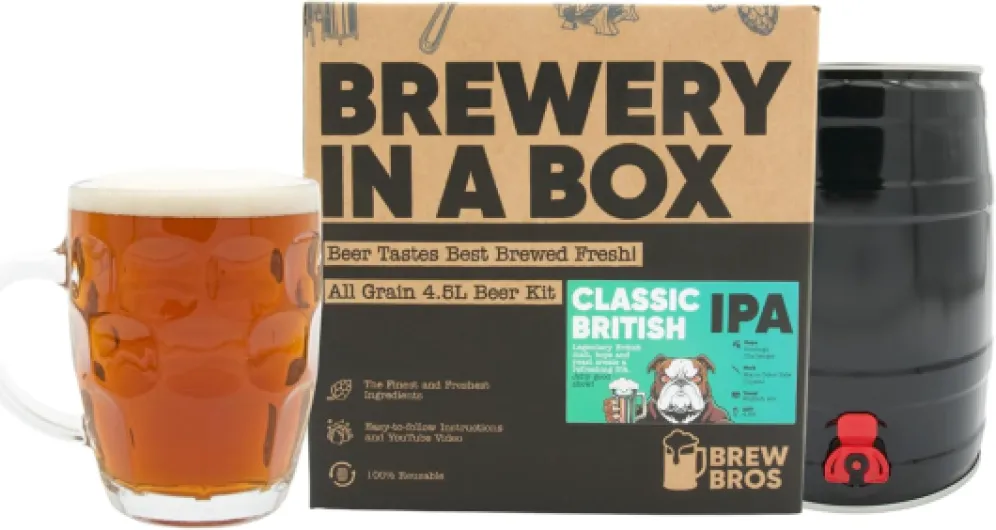
The beer poured a nice amber/golden colour with a light head. Carbonation was on the moderate side; not flat, but not super fizzy either. I probably could have tweaked the priming sugar next time. In terms of taste, you get a solid malt base from the Maris Otter and Crystal – a bit biscuity, a bit caramel – and the Goldings hops give a classic British bitterness. The Citra adds a more modern fruity note. It’s not super intense, but it’s there. I’d call it a balanced, drinkable IPA rather than a hop bomb.
What I liked is that there was no harsh off‑flavour: no strong solvent taste, no weird sourness, no clear sign of infection. That tells me the ingredients are decent and the instructions are good enough to keep beginners out of big trouble as long as they sanitise properly. The bitterness is firm but not aggressive, so you can have a couple of pints without wrecking your palate. Friends who tried it said it tasted like a proper home‑brewed IPA, not like cheap kit beer.
Is it as good as a well‑made craft IPA from a brewery? No. But for a 5L batch made in a normal kitchen with a beginner kit, I was honestly happy to drink it. If you’re expecting pub‑quality from day one, you might be a bit underwhelmed. If you just want a beer that tastes decent and shows you what all‑grain brewing can do, this hits the mark.
Is Brewery in a Box Good Value for Money?
Price‑wise, this sits above the really cheap syrup kits but below a full starter setup with separate fermenter, hydrometer, and so on. You’re paying for the convenience of having a compact, all‑in‑one box that lets you try real all‑grain brewing without a big upfront investment. For what you get – keg, thermometer, net, plus all the ingredients for one 5L batch – I’d say the value is pretty fair, especially if you actually reuse the gear for more brews.
You do have to factor in that you only get about 8–10 pints out of it. If you divide the total cost by the number of pints, it’s not cheap beer compared to a supermarket crate. But that’s not really the point. You’re paying partly for the experience and the learning. As a way to test if you enjoy all‑grain brewing before buying bigger equipment, it makes sense. If you stick with it and buy refill kits or your own ingredients, the cost per pint comes down a bit over time.
Where the value really shows is in the support and instructions. Having clear steps and a video saves you from a lot of trial and error. I saw other buyers mention the seller (Tim) replying quickly to questions; I didn’t need to contact him myself, but it’s good to know that’s there. That kind of support is worth something, especially when you’re new and worried about messing up a batch.
Overall, I’d call it good value for someone who wants to dip a toe into proper brewing without going all‑in on gear. If you just want cheap beer with minimal effort, this is not the best deal for you. If you’re curious about the process and okay with paying a bit for the experience and the reusable kit, then the price feels reasonable.
Kit Design and How It Works in a Normal Kitchen
The overall design is built around brewing in your existing kitchen gear and fermenting directly in the little 5L keg. So instead of a separate fermenting bucket, you basically do your mash and boil in your pans, then transfer the cooled wort into the keg and let it ferment there with the airlock fitted. For a small flat or someone who doesn’t want a big plastic bucket sitting around, that’s actually quite handy. It tucks away easily in a corner.
The custom mashing net is a simple but useful idea. You line your pan with it, add the crushed malt, and it acts as a filter bag when you pull the grain out after mashing. It’s not high‑tech, but it saves you from having to rig up your own grain bag. In practice, it worked fine: no big mess of grain sticking to everything, and cleaning it afterwards was just a quick rinse and dry. I can see myself reusing that net with other recipes.
The 5L keg itself is pretty basic plastic, not some fancy pressure barrel. The tap is okay but a bit on the cheap side in feel. It pours fine once the beer is conditioned, but I wouldn’t drag it around to parties or expect it to handle rough treatment. For sitting in the kitchen or fridge and serving a few pints, it’s fine. I do like that you ferment and serve from the same vessel; less stuff to clean and fewer chances to contaminate the beer.
In day‑to‑day use, the design works, but it has limits. Because of the 5L size, temperature swings during fermentation are more noticeable if your house is cold or hot. Also, if you’re used to bigger batches, this feels a bit like a test rig rather than a main brewing setup. Still, for a first step into all‑grain, the design is simple, small, and practical enough. It’s not perfect, but it’s easy to store and doesn’t take over your kitchen.
Build Quality and Ingredients: Decent, Not Fancy
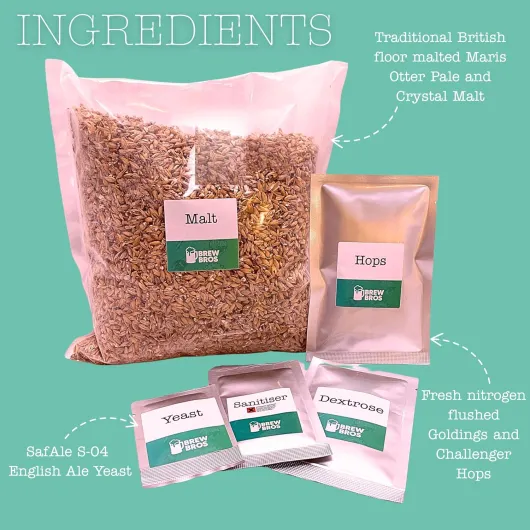
On the materials side, you can split it into two parts: the hardware (keg, thermometer, net, airlock) and the consumables (grain, hops, yeast, dextrose, sanitiser). The hardware feels mid‑range: not cheap toy quality, but not pro gear either. The keg plastic is reasonably sturdy for home use, and the airlock and bung fit snugly. The digital thermometer is basic but did what it needed to do: I checked it against my own kitchen thermometer and it was within a degree or so, which is good enough for a hobby brew.
The mashing net is actually one of the more useful bits. The mesh is fine enough to hold the grain but still let wort flow through, and after one brew and wash it didn’t show any damage or fraying. I’d say that’s the part I’m most likely to keep using with or without the rest of the kit. The only part that feels a bit budget is the tap on the keg. It worked, no leaks in my batch, but the plastic feels a little fragile if you’re heavy‑handed.
On the ingredients, they’ve clearly tried to pick decent suppliers. The malt is Maris Otter Pale with some Crystal, and it looked and smelled fresh when I opened the bags. No weird stale smell, just that standard biscuity malt aroma. The hops (Goldings and Citra) are from a known UK merchant and came vacuum‑packed. They still had a good smell when I opened them, especially the Citra, which is a good sign they haven’t been sitting in a hot warehouse forever.
Overall, I’d say the materials are pretty solid for the price point. You’re not getting heavy stainless steel or lab‑grade tools, but you also don’t really need that for a 5L beginner kit. The main thing is that nothing broke, nothing leaked, and the ingredients tasted and smelled fresh enough to produce a decent beer at the end. For a starter kit, that’s really what matters.
Reusability and How the Kit Holds Up After a Brew
One of the selling points is that the kit is reusable: you can buy refill packs or source your own grain and hops and keep using the hardware. After one full brew and cleaning everything, I had a good look at the state of the gear. The keg, airlock, bung, and tap all survived fine. No cracks, no permanent staining beyond a slight tint inside the keg, which is normal. The digital thermometer still works like day one, and the mashing net cleaned up without any tears or weird smells.
Cleaning is a key part of durability with brewing gear. The sanitiser they include is enough for the first run, and it did the job. After that, you’ll need your own sanitiser if you want to keep brewing. I rinsed the keg and net with warm water right after use, then gave them a sanitising soak before storing. So far, no sign of mould or residue. If you’re lazy about cleaning, this isn’t the kit’s fault, but you will shorten its life quickly.
Realistically, I can see the keg and mashing net lasting through several batches if you treat them decently. The weak point over time will probably be the tap and seals. Plastic taps can start to drip or loosen if you knock them around. For now, mine is fine, but I wouldn’t be shocked if it needed replacing after a bunch of uses. The good news is that standard small keg taps and airlocks are easy to find online and not expensive, so you’re not locked into some weird proprietary system.
So in terms of durability, I’d call it decent. It’s not industrial‑grade kit you’ll pass on to your grandkids, but for a hobby brewer doing occasional 5L batches, it should hold up for multiple brews as long as you clean and store it properly. That makes the reusable claim fair, especially if you go on to buy refill kits or your own ingredients.
What You Actually Get in the Box
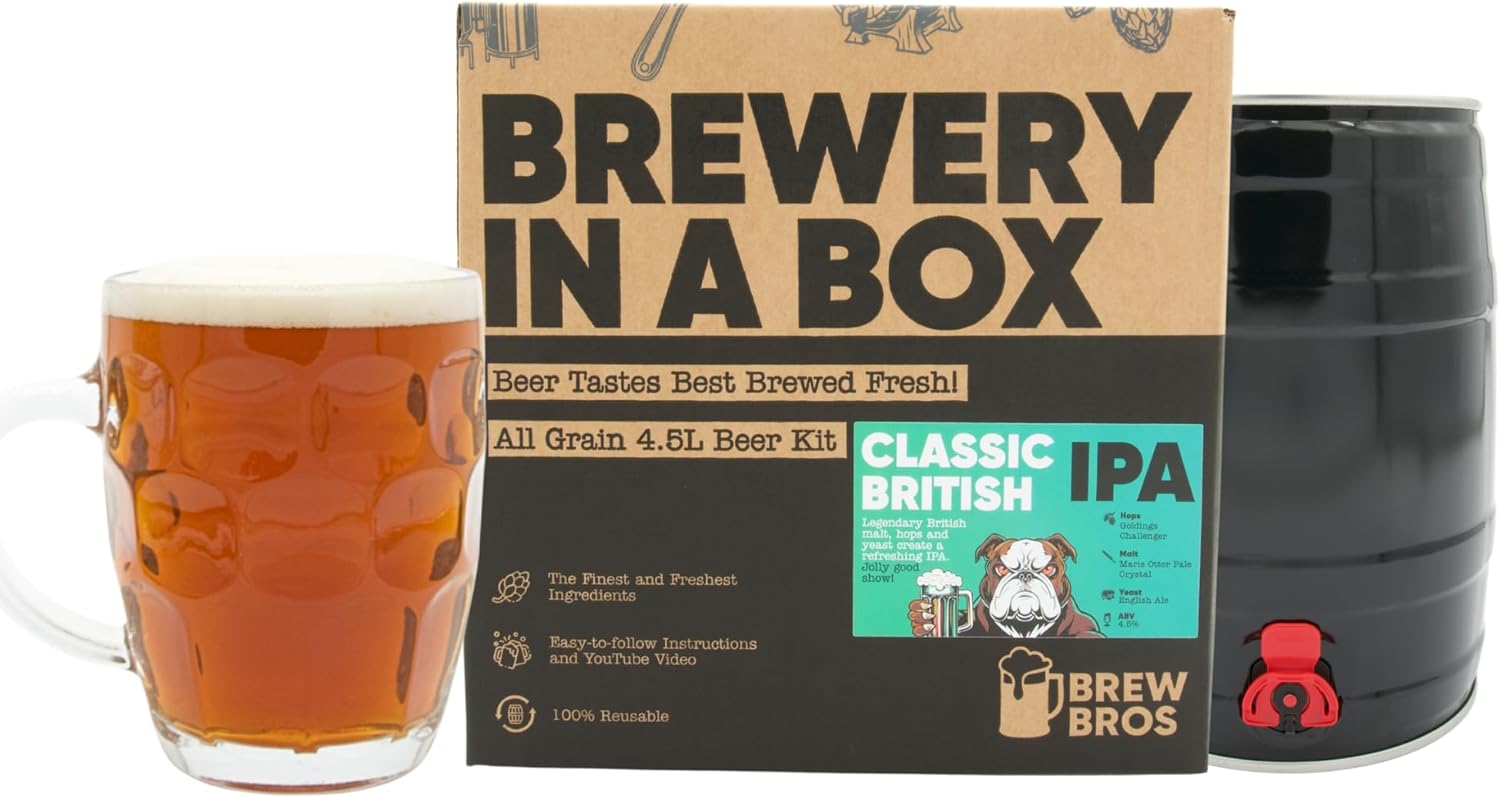
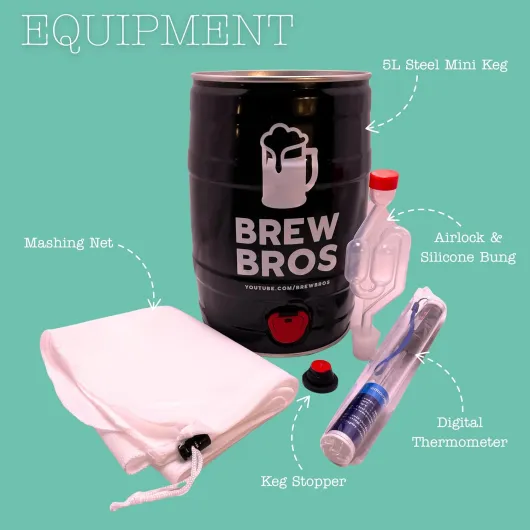
When you open the box, you can see they’ve tried to give you almost everything you need to brew 5L of beer in one go. Inside I had: a small plastic 5L keg with tap, stopper, airlock and bung, a digital thermometer, a custom mashing net, pre‑measured bags of malt (Maris Otter Pale and Crystal), two types of hops (Goldings and Citra), a packet of English ale yeast, dextrose for priming, sanitiser, printed instructions, and a Brew Bros beer mat. The only things I had to provide myself were big pans, a spoon, and a bit of patience.
The instructions are fairly clear and written in normal language, not science‑lab jargon. They also point you to a YouTube demo video, which helped a lot for checking if my mash and boil looked roughly right. I had my laptop on the counter and paused the video at each step. Without that, a complete beginner might feel a bit lost at some points, especially around temperatures and timings.
What I liked is that it feels like a proper all‑grain kit, not just a rebadged syrup can. You’re actually steeping grain, watching the temperature on the digital thermometer, adding hops at different times, the whole thing. For someone who’s only done basic kits, that’s a nice jump. On the other hand, you do notice that 5L is not a huge batch. After all that effort, you end up with roughly 8–10 pints depending on losses, so each pint represents a fair bit of work.
Overall, the presentation is pretty solid: everything is bagged and labelled clearly, the instructions are readable, and you don’t feel like you need a chemistry degree to follow along. It’s not flashy or fancy, but it gets the job done and you can tell someone actually thought about what a beginner would need for a first all‑grain attempt.
Brew Day and Fermentation: Does It Actually Make Brewing Easier?
In practice, the kit does what it promises: it lets you brew a real all‑grain beer at home without buying loads of extra gear. The instructions walk you through mashing the grain, boiling with hops, cooling, pitching the yeast, and fermenting in the keg. I followed their timings and temperatures pretty closely, checking the thermometer every so often, and nothing felt impossible. It took me around 3–4 hours start to finish on brew day, including cleaning up.
The YouTube video is genuinely useful. When I was unsure about how thick the mash should look or when exactly to pull the grain bag, I just checked the video and matched it. That’s a big help if you’ve never done all‑grain before. The main work is babysitting the temperature during the mash and boil, so you do need to be around and paying attention. This is not a set‑and‑forget thing; it’s more like cooking a stew where you hang around the kitchen for an afternoon.
Fermentation in the 5L keg went smoothly for me. The airlock started bubbling after about 12 hours and kept going for a few days. I kept it in a room that sits around 19–20°C and didn’t have any problems. If your house is much cooler or hotter, you might have to think a bit more about where to put it. After about ten days, things had settled down and I followed their instructions for priming and conditioning. A week or so later, it was drinkable, and it got a bit better over the next week.
Overall, in terms of effectiveness, I’d say it scores well. It doesn’t remove the work – you still need time, a couple of big pans, and some basic organisation – but it guides you through a proper process and delivers drinkable beer at the end. For a first‑timer, that’s pretty solid. If you’re already an experienced brewer with your own kit, you’ll probably find it a bit limited and small, but that’s not really who it’s aimed at.
Pros
- Genuinely all‑grain brewing with clear instructions and a helpful YouTube video
- Reusable hardware (keg, thermometer, mash net) that holds up fine after a full brew
- Produces a decent, drinkable British‑style IPA with no major off‑flavours
Cons
- Small 5L batch size means a fair bit of work for only 8–10 pints
- Tap and some plastic parts feel a bit cheap and may not last forever
- Requires large pans and a few hours of active work, so not ideal if you just want quick, easy beer
Conclusion
Editor's rating
After taking the Brew Bros Brewery in a Box Classic British IPA through a full brew, I’d sum it up like this: it’s a solid starter kit for people who actually want to learn how real beer is made, not just mix syrup and wait. The hardware is decent, the ingredients are good enough to produce a drinkable British‑style IPA, and the instructions plus video make the process manageable even if you’ve never done all‑grain before. It does require time, attention, and some basic kitchen gear, but it delivers on what it promises.
This kit is a good fit if you’re a curious beginner, someone who’s done a couple of basic homebrew kits and wants to go one step further, or if you’re buying a gift for a beer fan who likes hands‑on hobbies. It’s also handy if you have limited space and like the idea of fermenting and serving from the same small keg. On the flip side, if your main goal is cheap alcohol with minimal effort, this is overkill. And if you’re already an experienced homebrewer with your own setup, the 5L size and basic plastic keg will probably feel a bit limited.
Overall, I’d give it a solid 4 out of 5. The thing I liked most is that it makes proper all‑grain brewing accessible without being overcomplicated. On the downside, the batch size is small for the effort involved, and some parts (like the tap) feel a bit budget. But for a first step into real brewing, it’s a pretty good package that gets the job done and teaches you something along the way.