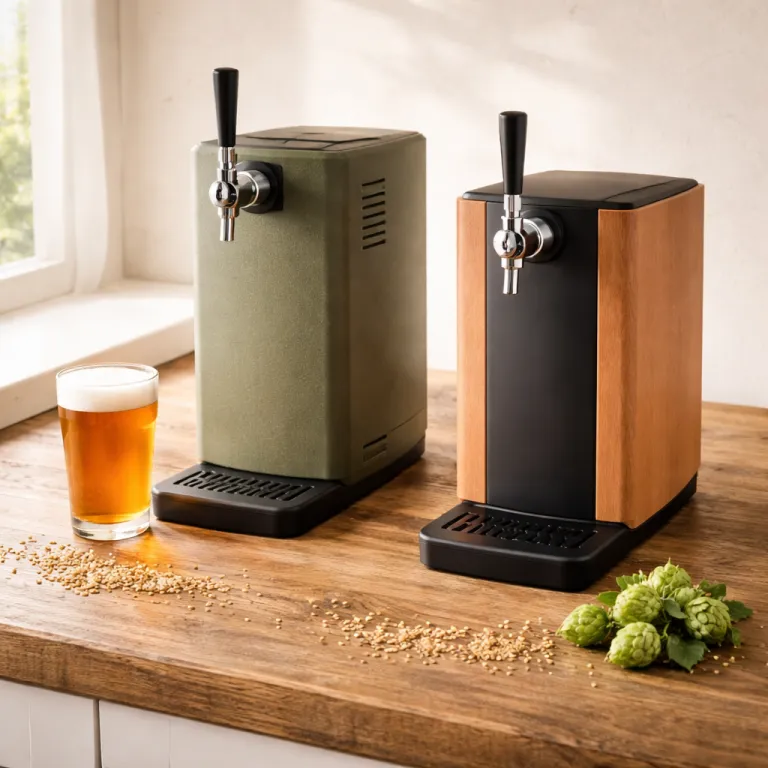

Why a draft beer dispenser at home changes the way you drink beer
From fridge bottles to pub-quality pours at home
Opening a cold bottle from the fridge is nice, but it rarely feels like that perfect pint at your favorite bar. A home draft beer dispenser changes this completely. Instead of sharp carbonation and inconsistent temperature, you get a smooth, creamy pour at a stable serving temperature, glass after glass.
The first big change is freshness. Beer in kegs is protected from light and oxygen far better than in most bottles. When your dispenser is set up correctly, each pour tastes like it has just left the brewery tap. Aromas are brighter, foam is tighter, and flavors feel more balanced.
Then comes consistency. With a home system, you control temperature and pressure. That means no more guessing if the beer will be too warm, too flat, or over-fizzy. Once dialed in, every pint of your favorite lager, IPA, or wheat beer pours the same way, which is especially satisfying when you are comparing different kegs or planning a tasting night.
There is also a social side. A draft dispenser naturally becomes the center of the room during gatherings. Guests can serve themselves, try small pours, and talk about what they are tasting. If you like to bring beer to friends or picnics, pairing your dispenser with quality growlers and beer carafes lets you share fresh draft beer beyond your kitchen or living room.
Finally, a home draft system changes how you think about beer overall. You start paying attention to styles, carbonation levels, and serving temperatures. That curiosity will guide your choices when you look at equipment options, keg formats, and the more technical parts of a complete home setup.
Key parts of a home draft beer system and what they really do
The keg: where your beer’s journey begins
Everything in a home draft system starts with the keg. Whether you use commercial PerfectDraft-style kegs or homebrew corny kegs, this is your pressurised container of beer. Its job is simple : keep oxygen out, carbonation in, and flavours stable. The size you choose (from compact 5-litre to larger 20-litre formats) will affect how often you change kegs and how much space your dispenser needs.
CO₂ and pressure control : the engine behind the pour
To push beer from keg to glass, you need gas. In many home systems, that means a CO₂ cartridge or cylinder. The regulator attached to it controls pressure, which directly affects carbonation and foam. Too much pressure and you get a glass of foam ; too little and the beer pours flat and sluggish. One of the big upgrades in more advanced dispensers is smarter, more stable pressure management, which you will really notice when pouring lighter lagers or highly carbonated wheat beers.
Cooling system and lines : keeping beer at the right temperature
Temperature is where a draft dispenser truly separates itself from bottles in the fridge. Integrated cooling units chill the keg and maintain a steady serving temperature. Short, well-insulated beer lines help prevent warm spots that cause excess foam or dull flavours. When you compare different machines, pay close attention to how quickly they cool a fresh keg and how consistently they hold that temperature during a long evening.
Tap, faucet and finishing touches
The tap is the part you interact with every time you pour. Its internal shape, resistance and angle influence head formation and how gently the beer lands in the glass. Some enthusiasts even go further with presentation, using a bottle sealing wax kit for home beer bottling when they want to complement draft service with a few special keepsake bottles.
How to choose the best draft beer dispenser for home use
Matching the dispenser to how you actually drink
Before comparing PerfectDraft Pro and the original PerfectDraft, start with your own habits. How often do you drink beer at home ? Do you usually share pints with friends, or pour one glass after dinner ? If you only drink occasionally, a simpler, cheaper unit may be enough. If you host parties or love trying new kegs, the extra control and features of a premium machine quickly become valuable.
Think about the beers you enjoy. If you mostly drink classic lagers and Belgian ales, a standard temperature range is fine. If you like hop-forward IPAs, stouts, or craft specialties, the Pro’s finer temperature control and improved cooling help you serve each style closer to its ideal conditions, just like you would aim for when working with a small batch keg system for homebrewing.
Key questions to guide your choice
- How sensitive are you to serving temperature and foam ? If you care about perfect head and mouthfeel, the Pro’s smarter temperature management is a real upgrade.
- How much space do you have ? Measure your countertop and under-cabinet height. The original unit is already compact ; the Pro adds a bit of bulk with its enhanced tech.
- What is your budget over time ? Factor in keg prices and how often you will use the machine. A higher upfront cost can make sense if you pour several kegs a month.
- Do you like to tweak settings, or set and forget ? If you enjoy dialing in details, the Pro’s extra controls will feel rewarding. If not, the original may be all you need.
Real use cases : from homebrew kegs to family pizza nights
Weeknight pints without leaving the sofa
Imagine a Friday evening where you finish work, step into the kitchen, and pull a perfectly chilled pint without even thinking about bottles or cans. That is the everyday reality many people report once a home draft system is set up. The beer is already at serving temperature, carbonation is dialed in, and the pour is consistent. You simply grab a clean glass, open the tap, and enjoy pub-quality beer while you cook, watch a game, or chat with friends.
Because the keg stays sealed and pressurised, you can pour just half a glass if you like and come back later without worrying about the rest going flat. It turns “having a beer” from an event into a relaxed, low-effort habit.
Leveling up family pizza nights and barbecues
Home draft really shines when you host. For family pizza nights, one keg can keep everyone supplied with fresh beer while the fridge stays free for food and soft drinks. No more juggling bottle caps, recycling bins, or warm six-packs on the counter.
- Less clutter : one keg replaces a whole case of bottles or cans.
- Faster service : guests help themselves at the tap, so you are not constantly playing bartender.
- Consistent quality : every glass tastes the same from first pour to last.
Out in the garden, a compact dispenser on a side table becomes the focal point of a barbecue. People naturally gather around the tap, compare pours, and talk about the beer. If you enjoy pairing food and beer, you can keep a crisp lager on tap for grilled chicken, or a hoppy IPA for burgers and spicy dishes.
Once you experience how smoothly a kegged setup fits into these everyday moments, it is hard to go back to mixed boxes of bottles and cans.
Practical tips to keep your home beer dispenser pouring fresh
Dialing in the right temperature
PerfectDraft and PerfectDraft Pro both shine when the temperature is set correctly. As a rule of thumb, most lagers and pilsners taste best between 3–5°C, while hop-forward IPAs and Belgian ales often open up a bit more around 6–8°C. Use the Pro’s finer temperature control for styles that benefit from a slightly warmer pour, and avoid constantly changing settings just for one glass ; let the keg stabilize for a few hours after any adjustment.
Keeping lines and taps spotless
Even the best machine will pour dull, off-flavored beer if the beer path is dirty. Rinse the tap spout with warm water after each session and wipe away any dried foam. Between kegs, run a cleaning solution through the lines if your setup allows it, or at least flush thoroughly with clean water. This prevents yeast, sugar, and hop residue from building up and affecting aroma and head retention.
Managing kegs for freshness
Once tapped, most kegs in these systems stay fresh for several weeks, but only if you respect a few basics :
- Store unopened kegs cool and upright, away from direct sunlight.
- Avoid shaking or rolling kegs ; let them rest before tapping.
- Finish delicate styles (wheat beers, hazy IPAs) sooner, as their hop and yeast character fades faster.
Pouring technique that avoids waste
Open the tap fully in one smooth motion and aim for a gentle angle into a tilted glass. Half-opening the tap creates turbulence and excess foam. If your first pour of the day is too foamy, purge a small amount into a spare glass to clear any warm beer from the line, then pour your serving glass in one go.