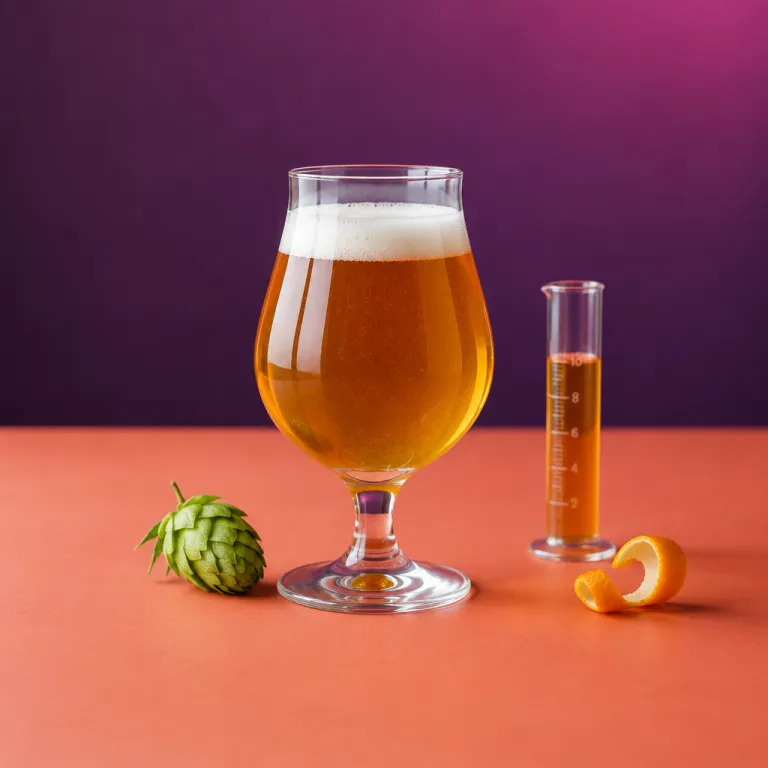

What is IBU and what does it really measure in your beer
Understanding what ibu actually means
IBU stands for International Bitterness Units. It is a scale used in the beer world to indicate how much bitterness is present in a beer, based on certain compounds extracted from hops. In simple terms, the higher the IBU number, the more bitter the beer can be.
Technically, IBU measures the concentration of iso-alpha acids and a few related bitter compounds in beer. These acids come from hops when they are boiled in the wort during brewing. Laboratories can measure them very precisely, and the result is expressed as a number on the IBU scale.
On this scale, a light lager might sit around the lower end, while a hop-forward IPA can reach much higher values. However, IBU is not a quality score or a style label ; it is simply a measurement of bitterness potential. Two beers with the same IBU can taste quite different, which is why it is important to connect the number to flavor and mouthfeel in the next part of this guide.
IBU also helps brewers design and reproduce recipes. By targeting specific IBU levels, they can balance malt sweetness with hop bitterness, whether they are brewing a crisp pilsner or a bold double IPA. For drinkers, IBU numbers on labels or menus are a useful tool, especially when combined with other information like alcohol content and style.
If you enjoy taking your time with a beer and paying attention to these details, using a high-quality insulated beer cooler can keep your drink at the ideal temperature while you explore how bitterness, aroma, and body all come together in the glass.
How IBU connects to taste, flavor and perceived bitterness
Why bitterness on the label is not always bitterness on your tongue
IBU tells you how much bittering potential is in a beer, but your mouth does not read numbers ; it reads sensations. Two beers with the same IBU can taste very different, from sharp and biting to soft and rounded. That is because perceived bitterness is shaped by a mix of sweetness, malt flavor, alcohol, carbonation and even serving temperature.
Think of IBU as the volume knob for bitterness, while the rest of the recipe is the sound system. A dry, crisp beer with little malt sweetness will let bitterness stand out clearly. The same IBU level in a fuller, maltier beer can feel much smoother, because caramel or bready notes balance the hop bite.
How flavor, aroma and balance change what you feel
Hop flavor and aroma also influence how you interpret bitterness. Fruity, citrusy or floral hop notes can make a beer seem more playful and less harsh, even when the IBU is high. On the other hand, earthy or resinous hops can make the same IBU feel more intense and lingering.
Food pairing adds another layer. A moderately bitter pale ale might taste gentle on its own, but feel more bitter next to a sweet dessert, or smoother alongside salty, fatty dishes. If you enjoy matching beer with your favorite slice, a detailed beer and pizza pairing guide can help you understand how toppings change the way bitterness comes across.
As you read IBU numbers on labels or menus, remember that they are only one part of the story. The overall balance of malt, hops and alcohol, plus what you are eating with your beer, will decide how bitter it actually feels in your glass.
Typical IBU ranges : from low bitterness lagers to high IBU IPA
Understanding common ibu ranges in popular beer styles
Now that you know what IBU measures and how it links to perceived bitterness, it helps to place those numbers in context. Different beer styles tend to fall into fairly predictable IBU ranges, even if individual breweries tweak them.
Very low to low bitterness (0 – 20 IBU)
These are the smooth, easy-drinking beers. Think light lagers, many wheat beers, some cream ales, and certain fruit beers. Bitterness is barely noticeable ; malt sweetness and carbonation take the lead. If you are sensitive to bitterness, this is your comfort zone.
Moderate bitterness (20 – 40 IBU)
Here you find most classic lagers and ales : pilsners, amber lagers, blonde ales, kölsch, many English bitters, and some pale ales. Bitterness is clearly present but balanced by malt. For many drinkers, this is the “just right” area where hops add structure without dominating.
Pronounced bitterness (40 – 70 IBU)
This is the territory of pale ales and IPAs. The hop character becomes a key feature, especially when combined with aromatic late and dry hopping. Depending on the malt backbone and yeast profile, these beers can feel crisp and snappy or juicy and soft, even at similar IBU levels.
High to extreme bitterness (70+ IBU)
Double IPAs, some imperial stouts, and other hop-forward specialties can push well beyond 70 IBU. At this point, balance is crucial ; rich malt, higher alcohol, and bold flavors are needed so the beer does not taste harsh. These beers often shine alongside rich foods, for example in a beer and food pairing menu for celebrations, where intense flavors meet their match.
How brewers use hops, alpha acids and IBUs to shape beer
From hop selection to boil timing
When brewers plan a recipe, they start by choosing hop varieties and deciding how bitter they want the beer to be. Each hop has a specific alpha acid percentage, which tells the brewer how much potential bitterness it can contribute. Higher alpha acid hops are efficient for building IBU, while lower alpha hops are often used for more delicate bitterness and aroma.
Next comes timing. Hops added early in the boil (for example at 60 minutes) are exposed to heat for longer, so more alpha acids are isomerized and the IBU climbs. Mid-boil additions add a mix of bitterness and flavor. Late-boil or whirlpool additions contribute less to measured IBU but a lot to hop flavor and aroma, which strongly influences how you perceive bitterness in the glass.
Balancing bitterness with malt and aroma
Brewers do not chase IBU numbers in isolation. They think about how bitterness will balance with malt sweetness, body, and alcohol. A strong, malty beer can carry a higher IBU without tasting harsh, while a light lager needs fewer IBUs to stay refreshing. This is why two beers with the same IBU can taste very different, as you have already seen when looking at perceived bitterness.
Modern brewers also use dry hopping – adding hops after fermentation – to boost aroma without significantly raising IBU. Huge citrus or tropical hop aromas can make a beer feel more bitter or more juicy, depending on the overall recipe. By adjusting hop variety, alpha acid levels, and when hops are added, brewers shape not only the IBU on the label but the full flavor experience you taste in the final pint.
How to use IBU numbers to choose beers you will enjoy
Reading the label without overthinking it
When you pick up a beer, treat the IBU number as one clue among several. Look at the style first, then the ABV, then the IBU. A 40 IBU pilsner will feel sharper than a 40 IBU stout, because the lighter body and lower malt sweetness let bitterness stand out more. Use the number to confirm what the style already suggests, not to replace it.
Matching IBU to your bitterness comfort zone
Think about how you react to coffee, dark chocolate or tonic water. If you find those very intense, you will likely prefer beers in the lower IBU range. As a rough guide :
- 0–20 IBU – very soft bitterness, easy-drinking lagers and wheat beers
- 20–40 IBU – balanced pale ales, amber ales, many modern lagers
- 40–70 IBU – clearly bitter IPAs and some strong ales
- 70+ IBU – assertive bitterness, often for hop lovers
Start where you feel comfortable, then move up or down in small steps of 5–10 IBUs to explore.
Using IBU to compare beers you already know
The most practical way to use IBU is to compare new beers with ones you already enjoy. If your favorite pale ale is 35 IBU and feels perfectly balanced, you can safely try other beers in the 30–40 IBU range. If a 60 IBU IPA felt too harsh, you know that anything above 50 IBU might be risky for you, especially in lighter styles.
Over time, you will build a personal bitterness map. The number on the label will stop being abstract and start meaning something concrete for your own taste, helping you choose beers with much more confidence.