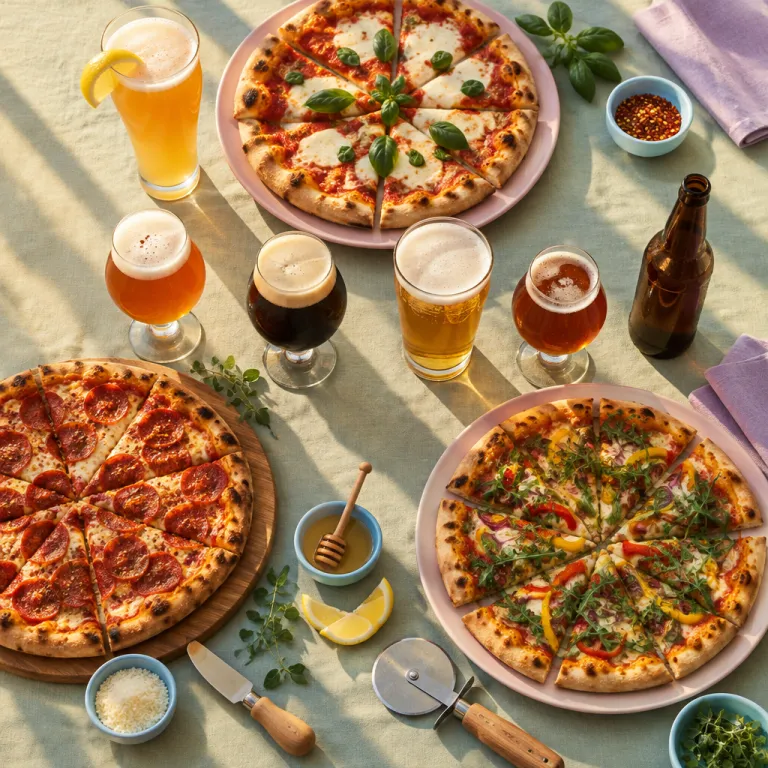
Why beer and pizza pairing works so well
Why this combo feels so natural
Beer and pizza feel like they were made for each other because they balance each other’s strengths. Pizza is rich, salty, cheesy, and often a little oily. Beer brings bubbles, bitterness, and refreshing coolness. Together, they reset your palate with every bite and sip, so you keep tasting bold flavours instead of getting overwhelmed.
The carbonation in beer is a big part of the magic. Those tiny bubbles scrub your tongue, cutting through melted cheese and olive oil. Even a light lager can make a heavy slice feel lighter and cleaner, while a hoppier beer adds a gentle bite that keeps tomato sauce and toppings from tasting flat.
How flavour bridges make pairings click
Great pairings often work because of shared flavour notes. Malty beers echo the sweetness of roasted tomatoes and caramelised crust. Herbal hops can mirror basil, oregano, or peppery rocket. Fruity esters in some ales can highlight sweeter toppings like caramelised onions or pineapple. If you enjoy fruit-forward drinks, you will recognise this effect from more playful options such as the ones explored in this guide to fruit-forward cider pairings.
At the same time, contrast is just as important. A crisp pilsner can slice through a creamy four-cheese pizza, while a roasty stout can stand up to smoky meats. This push-and-pull between harmony and contrast is what the rest of this guide will help you use on purpose, rather than by accident.
Once you understand these basic interactions, it becomes much easier to match specific beer styles to different slices, and to taste more confidently when you experiment at home or in your favourite pizzeria.
Simple rules to pair beer with pizza styles
Think in terms of intensity
Start by matching the overall strength of the pizza with the strength of the beer. A light margherita with fresh basil and delicate mozzarella works best with a crisp, low-ABV lager or a gentle pilsner. A loaded meat feast or extra-cheese pie can handle bolder styles like IPAs, amber ales, or even robust porters.
As a rule of thumb :
- Light toppings and simple sauces → lighter, cleaner beers
- Rich, cheesy, or meaty pizzas → fuller, maltier, or hoppier beers
Match (or contrast) key flavours
Look at the dominant flavours on the slice : tomato sweetness, herbal notes, smokiness, spice, or umami. You can either echo those flavours in the beer or use contrast to create balance.
- Tomato and herbs pair nicely with herbal, slightly bitter beers like pale ales.
- Smoky or charred toppings can be mirrored by roasted malts in a porter or stout.
- Spicy toppings (pepperoni, jalapeños) often benefit from slightly sweet, malty beers that cool the heat.
As you explore how different beer styles shift the pairing, you will see how hops, malt, and carbonation each play a role.
Use texture and temperature to your advantage
Pizza is all about that contrast between crisp crust, melted cheese, and hot toppings. Carbonation in beer cuts through fat and refreshes your palate between bites. Lighter, highly carbonated beers sharpen the edges of a cheesy slice, while smoother, creamier beers soften sharp or salty flavours.
Serving temperature matters too. A well-chilled beer from an energy-efficient beer fridge will feel more refreshing with greasy or spicy pizzas, while slightly warmer serving temperatures can reveal more malt complexity with richer pies.
Classic pizza and beer pairings that rarely miss
Pairings that feel like they were made in the same kitchen
Some beer and pizza combinations work so reliably that they are almost “set and forget”. These pairings are a great starting point before you begin experimenting with more unusual toppings or bolder beer styles.
Margherita and crisp pale lager
A classic margherita, with its light tomato sauce, fresh mozzarella, and basil, shines with a clean, refreshing pale lager. The lager’s gentle bitterness cuts through the cheese, while its carbonation lifts the tomato’s natural sweetness. Because the flavors are delicate, you want a beer that supports rather than dominates. Think of this as your baseline pairing : simple, balanced, and endlessly drinkable.
Pepperoni and American pale ale
Pepperoni brings fat, spice, and a little smokiness. An American pale ale answers with citrusy hops and a firm but not overwhelming bitterness. The hops scrub away the oil, while the malt backbone echoes the crust’s toasty notes. This is a great example of how matching intensity between beer and topping keeps everything in harmony.
Meat lovers and robust amber or brown ale
Loaded pies with sausage, bacon, and ham need a beer with more malt depth. A well-rounded amber or brown ale offers caramel and toasted flavors that resonate with browned meats and charred crust. The moderate bitterness keeps the richness in check without clashing with the savory toppings. If you enjoy hearty food-and-beer combinations, you might also appreciate similar logic in BBQ beer pairings for grilled meats.
Veggie pizza and wheat beer
Vegetable-heavy pizzas with peppers, onions, mushrooms, or spinach pair beautifully with a soft, slightly fruity wheat beer. The beer’s gentle body and subtle citrus notes highlight the vegetables without overwhelming them, while the lively carbonation keeps each bite feeling fresh.
From lager to IPA : how beer styles change the pairing
Light lagers and crisp pilsners
Think of pale lagers and pilsners as your reset button. Their high carbonation and clean finish scrub away cheese fat and tomato acidity, then step back. They are ideal with simple margherita, veggie pies, or white pizzas where you want basil, fresh tomato, or garlic to stay in the spotlight.
Wheat beers and hazy refreshment
Witbiers and hefeweizens bring soft texture and gentle fruit notes. That creamy body wraps around mozzarella and ricotta, while citrus and spice brighten toppings like spinach, mushrooms, or chicken. Hazy pale ales play a similar role, adding juicy hop character that flatters sweeter sauces and roasted vegetables.
Amber ales and malt-forward balance
Amber and Vienna-style lagers bridge the gap between light and dark. Their toasty, caramel malt echoes browned crust and roasted toppings. They shine with pepperoni, sausage, and meat-lovers pies, where a touch of sweetness balances salt and spice without overwhelming the slice.
IPAs and hop-driven contrast
With IPAs, bitterness and aroma hops become tools. Classic West Coast IPAs cut through oily cheese and rich meats, especially on spicy pies with pepperoni, ’nduja, or jalapeños. Modern, softer IPAs work better when you want less bite and more tropical fruit character alongside barbecue chicken or bacon.
Dark beers, roast, and umami
Porters and stouts bring chocolate, coffee, and roasted grain that lock in with charred crust and deeply savory toppings. They are surprisingly good with mushroom, caramelized onion, and truffle pizzas, where umami is high. Even a smoky stout can echo wood-fired notes, turning a simple slice into something that feels slow-cooked and layered.
Practical tasting tips to find your best beer and pizza pairing
Set up a simple side‑by‑side tasting
Pick one pizza style and pour two or three different beers in small glasses. Taste the pizza first, then each beer, paying attention to what changes : does the sauce seem sweeter, the cheese creamier, the toppings spicier ? Note which pairing makes you want another bite.
Focus on four key sensations
- Intensity – Balance is your friend. A delicate pilsner will fade next to a loaded meat pizza, while a bold IPA can crush a light margherita.
- Sweetness and malt – Malty beers can soften acidity in tomato sauce and tame char from the crust.
- Bitterness – Hop bitterness cuts through fat and cheese, but too much can make tomato taste harsh.
- Carbonation – Bubbles scrub the palate, resetting your taste buds between cheesy bites.
Use small adjustments, not big jumps
When a pairing feels “almost right”, tweak one element at a time. Keep the same pizza and move from a pale lager to a hoppier pale ale, or from a session IPA to a fuller IPA. Small steps help you understand how each beer style shifts the experience.
Note your personal preferences
There is no universal “best” pairing. Some people love when beer amplifies spice, others prefer it to cool things down. Keep brief notes on what you enjoy with classic toppings like margherita, pepperoni, or veggie pizzas, then repeat the patterns with new beers.
Recreate pairings in real‑life situations
Once you have a few favourites, test them with delivery pizza nights or at your local pizzeria. Order beers that are close in style to the ones you liked at home and see how they behave with different ovens, crusts, and toppings.