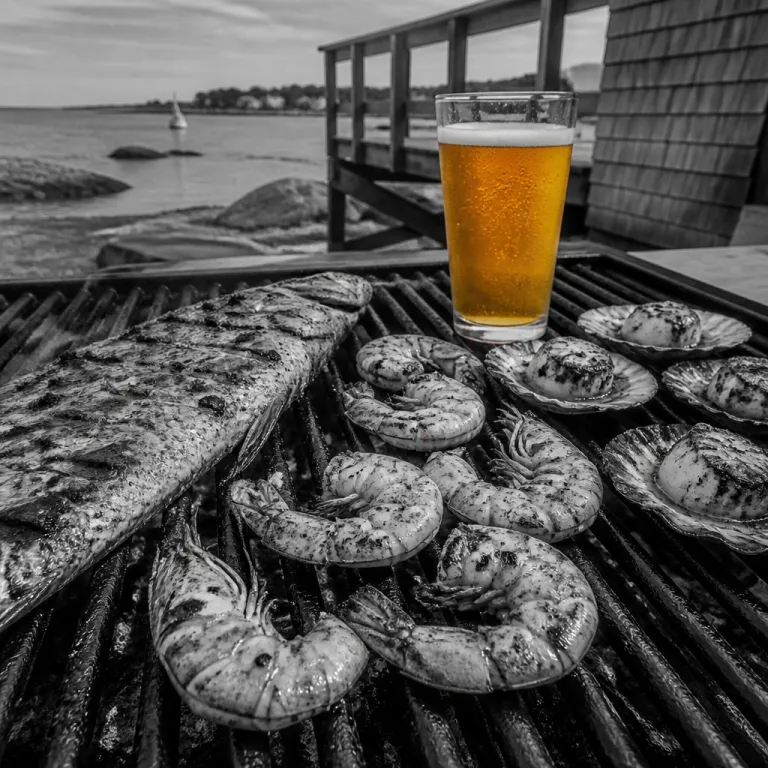
Why beer and grilled seafood pairing works so well
The magic of malt, hops and smoke
Grilling transforms seafood with smoke, char and caramelised edges. Beer does something similar in your glass. Malt brings gentle sweetness and bread‑like notes, while hops add bitterness and aroma. When you sip beer with grilled seafood, these flavours echo the grill’s smoky character and the natural sweetness of fish and shellfish.
The light carbonation in beer is just as important. Those tiny bubbles scrub your palate, lifting away oil and char so each bite of grilled shrimp, sea bass or salmon tastes as bright as the first. This is why a crisp lager can feel so refreshing with a rich, buttery piece of grilled fish, and why more robust styles stand up to bolder marinades and rubs.
Balancing salt, fat, acid and bitterness
Great pairings are all about balance. Grilled seafood often brings together salt (from the sea and seasoning), fat (from olive oil or butter) and acid (from lemon or vinegar). Beer adds bitterness and malt sweetness to that mix.
- Bitterness cuts through oil and rich sauces, keeping dishes from feeling heavy.
- Malt sweetness softens sharp acidity from citrus or vinaigrettes.
- Roasted or toasty malt notes mirror the char from the grill grates.
Even simple additions like a side of naturally cured black olives can deepen the salty, savoury profile and make your beer choice feel even more dialled in.
Once you understand this balance, it becomes easier to match lighter beers with delicate white fish, choose wheat beers and ales for citrusy shellfish dishes, and reach for stronger styles when you serve salmon, mixed seafood platters or fried bites later in the meal.
Light beer with delicate grilled fish and white fish
Why crisp, light beers flatter delicate fish
Delicate grilled fish and white fish have subtle, clean flavors that can be overwhelmed easily. Light beers – think pilsners, helles lagers, and kölsch – bring gentle malt sweetness, soft bitterness, and high carbonation. This combination lifts the natural sweetness of the fish, scrubs away any light oiliness, and refreshes your palate between bites.
When you grill lean fish like cod, haddock, or sole, the slight char adds a faint smokiness. A crisp lager mirrors that roasted note without adding heaviness. The result is a pairing that feels bright and seaside-fresh rather than rich or filling.
Choosing the right light beer for your fish
- Pilsner – Ideal with simply seasoned grilled cod or pollock. Its herbal hop snap cuts through butter or olive oil.
- Kölsch – Great with grilled sea bass or bream, especially with fresh herbs. Its soft fruitiness highlights citrus and green notes.
- Helles lager – A match for grilled halibut or monkfish with a light cream or garlic sauce, thanks to its rounder malt profile.
Keep sauces and seasonings in mind. The more lemon, capers, or fresh herbs you add, the more you can lean into slightly hoppier lagers. For ultra-minimal recipes – just salt, pepper, and a brush of oil – stay with the most delicate, low-bitterness options.
Side dishes and snacks that complete the pairing
Light beers also pair beautifully with briny sides that often share the plate with grilled fish. Think marinated vegetables, pickled onions, or a small bowl of quality olives and pickled goods. Their acidity and saltiness echo the beer’s crisp finish and make each bite of fish taste even fresher.
Once you move to richer seafood or bolder marinades, you can gradually step up to wheat beers and ales, which handle more intense flavors without losing balance.
Wheat beer and ale with shrimp, crab and lemony seafood recipes
Why wheat beers flatter sweet, tender seafood
Wheat beers and many pale ales are natural partners for shrimp, crab, and lemony seafood dishes. Their soft, bready malt and gentle fruit notes echo the sweetness of shellfish, while lively carbonation cuts through any buttery sauces. The subtle citrus often found in these beers acts like an extra squeeze of lemon, brightening grilled flavors without overwhelming them.
Perfect matches for shrimp on the grill
Grilled shrimp skewers with garlic, herbs, and a touch of chili shine next to a classic Belgian witbier or a citrusy American wheat beer. The beer’s orange peel and coriander notes wrap around the charred edges of the shrimp, while the crisp finish keeps each bite feeling light. For spicier marinades, a session pale ale with moderate bitterness helps tame the heat and refresh the palate.
Crab and lemony recipes that love pale ale
Sweet crab meat, whether in simple grilled crab legs or lemon-butter crab claws, pairs beautifully with a balanced pale ale. The gentle hop bitterness highlights the natural sweetness of the crab, and the beer’s malt backbone supports rich clarified butter or aioli. When your recipe leans heavily on lemon zest, capers, or fresh herbs, a zesty wheat beer keeps the pairing bright and focused.
Playing with sauces, marinades, and beer
For lemon-garlic marinades or light cream sauces, try using a splash of the same wheat beer you plan to serve at the table. This creates a seamless bridge between glass and plate, enhancing both. If you want to go deeper into this approach, guides like the art and science of cooking and pairing with beer can help you build recipes where beer is a true ingredient, not just a drink on the side.
Stronger beer pairings for salmon, grilled seafood platters and fried dishes
Bold beers for rich, smoky seafood
When you move from delicate white fish to salmon, mixed seafood platters or anything fried, you need beers with more backbone. The char, fat and intense seasoning call for malt, bitterness and sometimes a touch of sweetness to keep everything in balance.
For grilled salmon, look to amber ales, red ales or Vienna lagers. Their toasted malt and gentle caramel notes echo the fish’s smoky crust, while moderate bitterness cuts through its natural richness. If your salmon is glazed with teriyaki or maple, a slightly sweeter amber or a bock can mirror those flavours without becoming cloying.
Seafood platters with mussels, clams, squid and firm fish often bring garlic butter, herbs and charred edges. Here, pale ales and session IPAs shine. Their citrusy, piney hop character refreshes your palate between bites, and the bitterness scrubs away oil from fried or grilled components.
For fried calamari, fish and chips or tempura-style seafood, reach for crisp, hop-forward beers. American pale ales, West Coast IPAs or even a well-carbonated pilsner with a firm bitter finish slice through batter and oil. The bubbles lift the coating, while hops keep each mouthful lively.
If you enjoy bolder flavours, try pairing smoky grilled octopus or blackened fish with a robust porter or a light stout. Roasted malt notes of coffee and cocoa can play beautifully with charred edges, especially when there is a spicy rub involved. Just keep the alcohol level moderate so the beer supports the dish rather than overwhelming it.
As with lighter pairings, start with a small pour, taste beer and seafood together, then adjust toward more or less bitterness, sweetness or roast depending on what your palate prefers.
Practical tips for beer grilled seafood pairing at home
Setting up your grilling and tasting station
Keep things simple and practical. Arrange your beers from lightest to strongest, just as you move from delicate white fish to richer salmon or mixed seafood platters. Use small glasses so guests can taste without getting overwhelmed, and keep a bucket of ice nearby to maintain the right serving temperature.
Prepare a few basic garnishes that work across different pairings : lemon wedges, fresh herbs (dill, parsley, cilantro), and a neutral dipping sauce. Avoid overly sweet sauces if you are serving crisp lagers or pilsners, as they can clash with the beer’s bitterness.
Easy pairing formulas you can rely on
- Delicate grilled fish + light lager or pilsner : match subtle smoke and salt with clean, refreshing bitterness.
- Shrimp and lemony seafood + wheat beer or pale ale : echo the citrus notes and soft texture.
- Salmon, seafood platters, or fried bites + IPA, amber ale, or stout : let the malt and hops cut through fat and bold seasoning.
Use these as starting points, then adjust based on your marinades and rubs. The more spice and char you add, the more body and bitterness your beer can handle.
How to taste like a pro at home
Serve the seafood first, then take a sip of beer. Notice three things : does the beer refresh your palate, highlight a flavor, or overpower the dish ? If the beer dominates, step down to something lighter. If the food feels heavy or greasy, move to a hoppier or darker style.
Encourage guests to compare two beers with the same dish. A crisp lager versus a citrusy pale ale with grilled shrimp, for example, will show how different directions can still work beautifully.