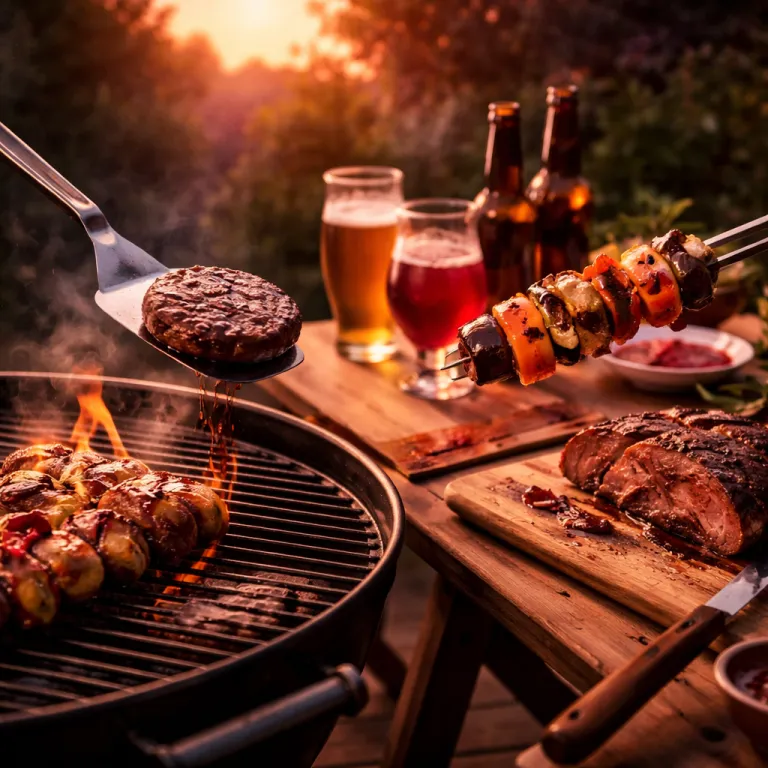

Why beer and barbecue pair so well
Fire, flavor and a cold pint
Barbecue and beer feel made for each other. One brings smoke, char and sticky sauces ; the other offers bubbles, bitterness and refreshing chill. When you put them together, each makes the other taste better. The key is how beer’s carbonation, malt sweetness and hop bitterness interact with grilled and smoked foods.
Carbonation works like a palate reset. Those tiny bubbles scrub away fat and sauce, so each bite of brisket, ribs or grilled veggies tastes bright again. This is why a crisp lager or pale ale feels so satisfying between mouthfuls of rich barbecue.
How beer balances smoke, spice and sweetness
Most barbecue leans into three big flavor zones : smoke, spice and sweetness. Beer can match or contrast each of them :
- Smoke – Malty beers with toasty or roasty notes echo the char on burgers and smoked meats.
- Spice – Hop bitterness and carbonation cut through chili heat, keeping spicy rubs and sauces from overwhelming your palate.
- Sweetness – Many barbecue sauces are sugary ; a drier, more bitter beer keeps things from turning cloying, while richer dark beers can amplify caramelized edges on meats.
Even barrel-aged styles, with their hints of vanilla and oak, can play beautifully with slow-smoked beef and layered sauces. If you enjoy the deeper side of malt and wood, exploring the allure of beer barrel bourbon will give you a sense of how these flavors echo classic barbecue profiles.
Once you understand these basic interactions, it becomes easier to choose light, crisp beers for grilled chicken and turkey, bolder styles for pork and ribs, and darker, richer options for brisket and intensely smoked meats.
Light and crisp beers that pair well with grilled chicken and smoked turkey
Why crisp beers shine with poultry on the grill
Grilled chicken and smoked turkey love beers that refresh rather than overwhelm. Light lagers, kölsch, blonde ales and gently hopped pilsners cut through juicy fat and smoky skin, then reset your palate for the next bite. Their clean profiles highlight the meat’s subtle sweetness instead of fighting it.
Best styles for grilled chicken
For simple salt-and-pepper chicken, reach for a classic pilsner or kölsch. The gentle bitterness and high carbonation scrub away char and bring out the meat’s delicate flavor. If you are using citrus or herb marinades, a wheat beer or Belgian-style witbier works beautifully ; the soft body and notes of orange peel and coriander echo those bright, zesty elements.
Spicy or heavily seasoned chicken pairs well with a slightly hoppier pale ale. Look for moderate bitterness and citrus-forward hops rather than aggressive pine or resin. This keeps the pairing lively without overshadowing the food, and it bridges nicely to the bolder matches you might pour with ribs or pulled pork later in the meal.
Perfect matches for smoked turkey
Smoked turkey has a richer, deeper flavor than grilled chicken, but it still benefits from lighter beers. Try a helles lager or amber lager ; both offer gentle malt sweetness that complements the smoke and any brown sugar in your rub. If your turkey glaze leans fruity or maple-sweet, a slightly stronger blonde ale can stand up to the richness.
When your rubs or sauces bring serious heat, balance them with crisp, refreshing beers and thoughtfully chosen seasonings. For inspiration on building flavor from the spice rack up, explore this guide to top hot sauces and barbecue rubs that play nicely with lighter beer styles.
Bold beer pairings for pulled pork, pork sandwich and ribs
Turning up the flavor on pork with bolder brews
Pulled pork, saucy ribs and stacked pork sandwiches love beers with enough character to cut through fat and sweetness. Here, you are looking for hop bite, malt backbone or a touch of smoke to keep every bite feeling fresh.
American IPA and pulled pork
Citrusy, piney IPAs are a classic match for slow-cooked pulled pork. The bitterness slices through rich, shredded meat, while fruity hop notes play nicely with tangy vinegar or mustard-based sauces. If your sauce leans sweet, an IPA keeps it from feeling heavy.
Pale ale and pork sandwiches
For piled-high pork sandwiches, a balanced pale ale is often easier drinking than a full-on IPA. You still get gentle bitterness and caramel malt, but with a softer edge that works with creamy slaw and soft buns. It is a great choice when you are serving a crowd with mixed tastes.
Amber and red ales with sticky ribs
Ribs glazed in sweet, sticky barbecue sauce call for beers with toasty, caramel notes. Amber or red ales echo the char on the meat and the caramelised sugars in the sauce, while moderate bitterness keeps things from turning cloying.
Smoked and chili beers for adventurous pairings
If you enjoy bolder flavors, try a smoked beer or a chili-infused brew with dry-rubbed ribs or spicy pulled pork. The smoke in the glass mirrors the smoke from the grill, and a gentle heat in the beer can underline peppery rubs without overwhelming them.
For more ideas on matching sauces, rubs and sides with the right pint, explore this guide to beer recipes and pairings before planning your next cookout.
Dark beers with beef brisket, smoked meats and rich bbq sauce
Why roasty beers love smoky beef
Beef brisket and other smoked meats bring deep, slow-cooked flavors ; bark from the smoker, rendered fat, and often a sweet or tangy glaze. Dark beers echo and elevate those notes. Roasted malts in porters and stouts mirror the char on the meat, while caramel malts complement the sweetness of rich barbecue sauce without getting cloying.
Look for beers with moderate bitterness and a firm malt backbone. Too much hop bite can clash with smoke and sweetness, but a gentle bitterness helps cut through fat and refresh your palate between bites.
Best dark styles for brisket and smoked meats
- Porter – Chocolate, coffee, and gentle roast pair beautifully with peppery bark and slow-smoked beef. A robust porter stands up to fatty cuts without overwhelming them.
- Dry stout – Think roasty, slightly bitter, and surprisingly light on the tongue. The dryness scrapes away richness, making each mouthful of brisket feel like the first.
- Foreign extra or export stout – A touch stronger, with more body and dark fruit notes. Ideal with intensely smoked short ribs or burnt ends.
- Schwarzbier (black lager) – Dark in color but crisp and clean. Perfect when you want roast character with the drinkability of a lager.
Matching beer intensity to sauce and smoke
For lightly smoked beef or a simple salt-and-pepper rub, choose a lower-ABV porter or dry stout so the meat still leads. When your brisket is drenched in sticky, molasses-heavy sauce, step up to a richer export stout or a malty dark lager.
If your plate mixes smoked sausage, brisket, and charred veggies, a versatile porter is a safe bet ; it bridges smoke, spice, and sweetness while staying smooth enough for long barbecue sessions.
Practical bbq beer pairing guide for summer parties
Simple rules for stress-free pairing
When you are hosting a summer barbecue, you do not need a sommelier-level system ; a few easy rules keep things simple. Match intensity first ; light beers with lighter foods, bold beers with rich, smoky dishes. Use hop bitterness to cut through fat and sweetness, and lean on malt sweetness to soften spice and char. If you are unsure, a balanced amber ale or a clean pilsner will work with almost anything on the grill.
How much beer to buy for your cookout
- Short gathering (2–3 hours) : plan on 1–2 beers per guest.
- Long afternoon or evening : 2–3 beers per guest.
- Mixed-strength lineup : offer at least one lower-ABV option so guests can enjoy more than one pairing.
Think in “pairing sets” based on your menu. For example, if you are serving grilled chicken, pulled pork and brisket, stock a crisp lager or wheat beer, a hoppy pale ale or IPA, and a roasty porter or stout. That way, every plate has a natural match.
Setting up a self-serve pairing station
Turn your barbecue into a casual tasting by grouping beers next to the matching dishes. Label each bucket or cooler with a simple note such as “for chicken and turkey” or “great with ribs and pulled pork”. Add a short flavor cue like “crisp and citrusy” or “dark and chocolatey” so guests can choose quickly.
Keep glasses, water and a small snack like plain crackers nearby so people can rinse and reset their palate between beers. Encourage guests to try at least two different pairings with each plate ; it makes the food more fun and turns your cookout into an easygoing beer experience.