

Why belgian beer still hits different
Why belgian brews feel instantly special
Ask a few beer fans to name a country that truly lives and breathes beer, and Belgium comes up fast. There is a sense that Belgian brewers play by their own rules ; they lean on tradition, but they are not afraid of eccentricity. The result is a beer culture where a simple pale ale can be quietly brilliant, and a strong golden ale can feel almost ceremonial when poured into the right glass.
Part of the magic lies in yeast character. Belgian yeasts are expressive ; they throw off layers of spice, fruit, and subtle funk that make even familiar styles feel new. A blonde ale might hint at clove and pepper, while a dark strong ale can suggest raisins, figs, and caramelised sugar without ever becoming heavy or cloying.
The culture behind the glass
Belgian beer is also about context. Many classic beers are tied to specific towns, abbeys, or cafés, and they are served in dedicated glassware that shapes aroma and presentation. This ritual turns an ordinary drink into a small event, whether you are sipping a Trappist ale, a rustic farmhouse beer, or a bright, modern IPA.
That balance between heritage and innovation is what keeps Belgium relevant even as new-wave breweries from the United States, Scandinavia, and beyond push boundaries. If you enjoy bold, creative brewing, you will notice echoes of Belgian influence in many modern projects, from mixed-fermentation ales to hop-forward collaborations like those highlighted in this look at Warpigs brewing and its American-Danish flavor experiments.
As you move into the iconic abbey ales, the big golden and dark styles, and finally the tart, complex sours, that underlying Belgian attitude – patient, playful, and quietly confident – keeps showing through.
Trappist legends and the quiet power of westvleteren
Monks, silence and the soul of trappist beer
Belgian beer culture would not be the same without Trappist monasteries. These are living, working abbeys where monks still brew within their walls, following strict rules ; beer is a way to support their community, not a marketing project.
Westvleteren, brewed at the Saint-Sixtus Abbey, has become almost mythical. You cannot just grab a six-pack at the supermarket ; bottles are sold in limited quantities, often directly from the abbey, and the monks refuse flashy labels or big advertising campaigns. Yet many drinkers quietly rank Westvleteren 12 among the finest dark strong ales on the planet.
What makes it so special ? Part of the magic is restraint. The recipe is simple on paper : Belgian yeast, carefully chosen malts, classic hops. But the execution is obsessive. Fermentation temperatures, conditioning time, and even how the beer is stored are handled with monastic patience. The result is a beer that feels deep, layered and surprisingly balanced for its strength.
How trappist brewing shaped belgian taste
Trappist beers helped define what many people now think of as “Belgian character” : expressive yeast, rich malt, and a dry finish that keeps even strong beers drinkable. When you taste a modern tripel or dark strong ale, you are often tasting echoes of these abbey traditions, even if the brewery is far from monastic.
Not every Belgian classic is Trappist, of course. Some, like the iconic Belgian wheat beer tradition, come from village breweries and revived styles. But the quiet, uncompromising approach of the monks still sets the benchmark for authenticity and depth in the wider Belgian beer world.
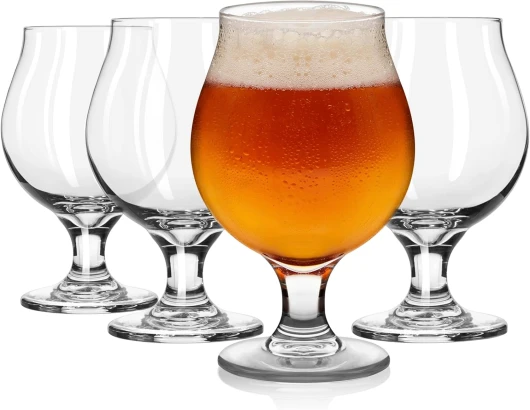
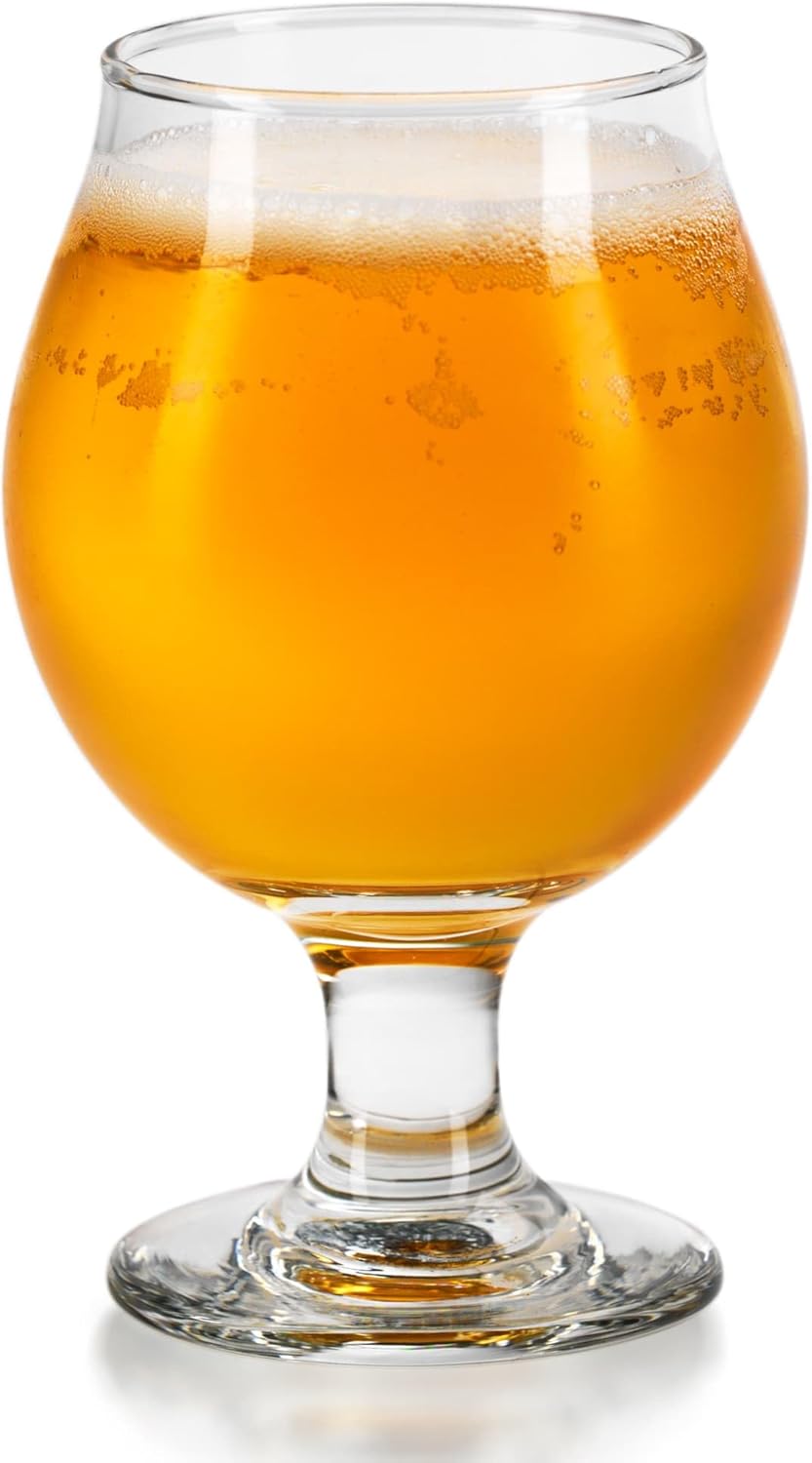
- + Dishwasher safe
- + Classic design
- + Perfect for Belgian ale
- + Set of 4

Tripel, dark strong and imperial dark : understanding the big belgian styles
How belgian “big beers” stay balanced
When people talk about strong Belgian ales, they usually mean three families ; tripel, dark strong, and imperial dark. They share high alcohol and rich malt character, yet each feels distinct in the glass.
Tripels are the bright, golden side of strength. They look almost delicate, but the first sip brings peppery spice, soft fruit notes (think pear and banana), and a dry, champagne-like finish. The best examples feel airy rather than heavy, which is why they often surprise drinkers who expect a boozy punch.
Belgian dark strong ales shift the mood. Here you get deep caramel, raisin, fig, and sometimes a hint of chocolate. The color runs from mahogany to near-black, but the body stays surprisingly nimble. A well-made dark strong hides its alcohol behind layers of dried fruit and warming spice.
Imperial dark ales push everything further. More roast, more body, more intensity. Yet Belgian brewers still chase balance ; the goal is a slow-sipping beer where malt sweetness, dark fruit, and gentle bitterness all have their say. If you are used to modern hop-forward styles, it is a different kind of power than the one described in this guide to why hoppy beer keeps stealing the spotlight.
What unites these big Belgian styles is fermentation character. Expressive yeasts create spice and fruit that lift the malt, while careful carbonation keeps the finish lively. When you later explore iconic breweries and build your own tasting rituals, you will notice how each house yeast and cellar practice leaves a clear fingerprint on these powerful yet refined beers.
Breweries and bottles that made belgium famous
Names that turned a small country into a beer giant
When people talk about Belgian beer, a handful of breweries and bottles always come up first. They are the labels that turned a niche brewing culture into a global reference point, and they link directly to the traditions and flavor profiles you have already seen with Trappist and strong ales.
On the Trappist side, Westvleteren may be the quiet legend, but Westmalle, Chimay, Orval and Rochefort are the workhorses of Belgian fame. Westmalle’s tripel set the benchmark for the style ; Chimay’s red, white and blue labels made monastic beer feel approachable ; Orval’s dry, Brett-kissed character showed that complexity could be refreshing rather than heavy.
Then you have the abbey and independent breweries that pushed things further. St. Bernardus built a cult following with rich, dark ales that echo Trappist depth while remaining widely available. Duvel turned the strong golden ale into a global icon, its deceptively light body hiding serious strength, a perfect bridge to the big styles you have learned to recognize.
Classic Belgian blondes such as Leffe and Affligem introduced many drinkers to the idea that “Belgian” means fruity yeast, gentle spice and a soft, rounded finish. Meanwhile, family breweries like Rodenbach and Boon kept the sour and mixed-fermentation traditions alive, paving the way for the tart, complex beers that now anchor many modern tasting rituals.
What unites these breweries is not just history, but a shared refusal to chase trends too quickly. They refine, rather than reinvent, and that is why their bottles still feel like essential reference points whenever you pour a Belgian beer and ask yourself what makes it so unmistakably itself.
From sour belgian beers to your own tasting ritual
Getting comfortable with sour and wild belgian beers
Sour belgian beers can feel intimidating at first. They are tart, funky, sometimes vinous, and often closer to natural wine or cider than to a classic lager. Start with a mindset shift ; you are not chasing bitterness or big malt sweetness here, but acidity, complexity, and subtle oak character.
Begin with approachable styles. A fruity lambic or a well-balanced oud bruin offers gentle acidity with layers of dark fruit, caramel, and light tannins. Once you feel at ease, move toward traditional gueuze and unblended lambic, where the wild yeast character becomes more pronounced.
Building a simple belgian tasting ritual at home
You do not need a cellar full of rare bottles to enjoy belgian beer properly. A thoughtful, repeatable ritual will already elevate your experience :
- Choose a small line-up ; three to four beers is enough. Mix one classic trappist, one strong golden or dark ale, and one sour or wild beer.
- Use the right glassware ; a tulip or goblet concentrates aromas and gives the foam room to develop.
- Serve a bit warmer ; around cellar temperature lets the yeast character and malt depth open up.
- Take structured notes ; appearance, aroma, taste, mouthfeel, and overall impression. Over time, you will see patterns in what you enjoy.
Pairing belgian beers with food and friends
Belgian beers shine when shared. Strong dark ales echo roasted meats and aged cheeses, while tripels lift seafood and creamy dishes. Sours cut through rich charcuterie or fried snacks, refreshing your palate between bites.
Rotate themes from session to session ; one evening focused on trappist legends, another on big golden and dark styles, another on sours. In a few relaxed tastings, you will have your own belgian beer ritual that feels both personal and timeless.