
Summary
Editor's rating
Taste: How Close Is It to a Real Hazy IPA?
Price and Value for Money
Looks, Can Design and How It Feels to Use
Simple Ingredient List, No Weird Stuff
Everyday Use: When and How It Actually Works
What You Actually Get in the Box
Pros
- Tastes like a decent, juicy hazy IPA for a 0.5% beer, with real hop character
- Clean ingredients (no flavourings, no added sugar), vegan and only 59 calories per can
- Good body and mouthfeel compared to many thin alcohol-free beers
Cons
- Less bitterness and depth than a full-strength IPA, might feel too soft for hop fans
- 24-can case is a big commitment if you haven’t tried it before

Specifications
View full product page →| Brand | LUCKY SAINT |
A Hazy IPA You Can Drink on a Tuesday Night
I picked up this case of LUCKY SAINT Alcohol Free Hazy IPA because I’ve been cutting down on booze but still like having something that feels like a proper beer in the evening. I already knew their lager, which is pretty solid, so I was curious to see if they could pull off an IPA at 0.5%. I went for the 24‑can case to see if it could realistically replace my usual IPAs during the week, not just be a one‑off novelty.
Over about two weeks, I drank it in different situations: with dinner, after work, and a couple of cans while watching a game. I also shared a few with friends who drink a lot of regular craft beer, just to get some other opinions. We weren’t doing any fancy tasting, just drinking it like normal people do: straight from the fridge, mostly from the can, sometimes in a glass.
My main expectation was simple: I wanted it to taste like a decent hazy IPA and not like sweet fizzy water with fake hops. I also liked that it’s vegan, sugar free and fairly low in calories, but honestly, if the taste was bad, those points wouldn’t save it. I’m not going to force myself to drink something just because it’s healthier.
Overall, it’s a pretty solid alcohol-free beer. It’s not going to fool you into thinking it’s a 6% craft IPA from a taproom, but it does a good job of scratching that hoppy, juicy beer itch without the alcohol hit. There are a couple of small downsides, especially if you’re used to strong, bitter IPAs, but for everyday drinking and for drivers, it gets the job done.
Taste: How Close Is It to a Real Hazy IPA?
Let’s be direct: if you’re expecting this to taste exactly like a 6–7% craft hazy IPA, it doesn’t. You can tell it’s lighter and the bitterness is softer. But for a 0.5% beer, the taste is honestly pretty decent. Straight from the fridge, the first thing you notice is the smell: a mix of tropical fruit (mango, maybe passionfruit), some stone fruit, and a bit of citrus. Nothing too strong, but it smells nice and not artificial.
On the first sip, you get a juicy, fruity taste with a mild bitterness. The hops (Citra, Mosaic, Simcoe) bring some tropical fruit and a bit of pine. It’s not very bitter, more on the easy-drinking side. If you’re into very bitter West Coast IPAs, you might find it a bit soft. But for casual drinking, it works well. It doesn’t taste watery like some alcohol-free beers, and it doesn’t have that weird sweet aftertaste that some 0.0 brands have.
The mouthfeel is better than average for an alcohol-free drink. The oats and wheat give it a bit of body and smoothness, so it doesn’t feel like flavoured sparkling water. After a few sips, you still feel like you’re drinking a proper beer, not just something pretending. I had it with food (Thai curry and a noodle salad), and it held up fine without being overpowered or turning bland.
On the downside, if you drink a lot of strong IPAs, you’ll probably notice that the depth and punch are lower. The finish is relatively short, and the bitterness doesn’t really linger. For me, that’s acceptable for a weekday, but if I want that big IPA hit, I’d still go for a regular beer on the weekend. In summary, the taste is solid for an alcohol-free IPA: fruity, refreshing, easy to drink, just not as intense as a full-strength craft IPA.
Price and Value for Money
On the price side, LUCKY SAINT sits above basic supermarket alcohol-free beers, but below many craft beers. You’re paying more than for the cheapest 0.0 lagers, but you’re also getting more in terms of taste and ingredients. For a 24‑can case, it’s not dirt cheap, but if you break it down per can, it’s still reasonable for something you’ll probably drink several times a week.
For me, the value comes from what it replaces. If you usually drink normal IPAs at home, swapping a few of those per week with this saves you not just alcohol, but usually money and calories too. Regular craft IPAs can be quite pricey per can. Here, you’re paying a fair price for a product that actually feels like beer, not like a soft drink pretending to be one. The fact it’s vegan, sugar free and low calorie also adds value if those things matter to you.
Compared to other alcohol-free options I’ve tried, it’s better than most generic supermarket 0.0 beers in terms of taste and mouthfeel. It’s closer to the better alcohol-free craft beers I’ve had. So if you’re just looking for the absolute cheapest way to drink something with bubbles, this isn’t it. But if you want something that feels like a proper drink and not a compromise, it’s good value for money.
The only real downside is that the 24‑can case is a bit of a commitment if you’ve never tried it before. If you end up not liking it, you’re stuck with a lot of cans. Ideally, you’d test a smaller pack first if you can find one locally. But assuming you like hazy IPAs and are open to alcohol-free versions, I’d say the price is fair for what you get.
Looks, Can Design and How It Feels to Use
Design-wise, LUCKY SAINT keeps the same style as their lager. The can is pretty clean, with a modern look and clear text. It doesn’t scream “cheap supermarket beer”, which I appreciate. If you line it up next to normal craft beers in the fridge, it doesn’t look out of place. The main info is easy to spot: Hazy IPA, 0.5% ABV, 330 ml. No weird cluttered graphics or over-the-top artwork.
From a practical point of view, the 330 ml size is a good middle ground. It feels like a normal beer, not a tiny can, and not a huge pint that gets warm halfway through. The can opens easily, no issues with dodgy tabs. I had zero leaks or half-open tops over the case. The shape is standard, fits in the hand and in the door of the fridge just like any other soft drink can. Nothing to complain about there.
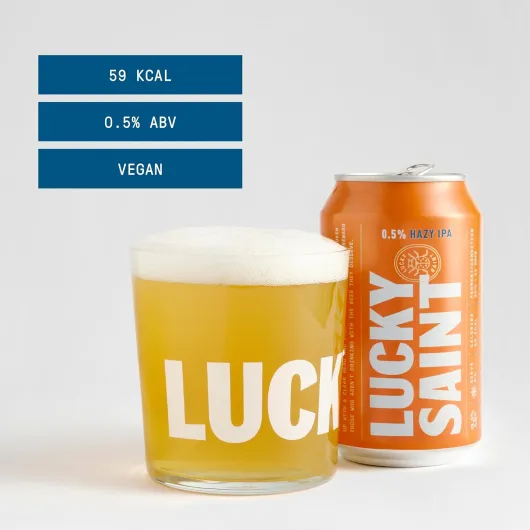
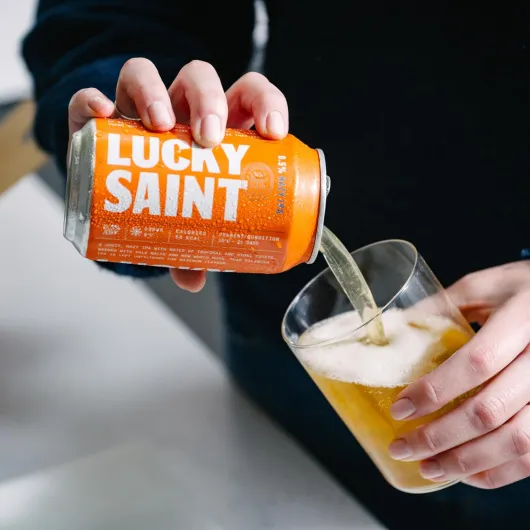
When you pour it into a glass, it actually looks like a proper hazy IPA: cloudy, pale golden, with a bit of foam on top. The head doesn’t last forever, but that’s quite common with low or no-alcohol beers. It still looks like beer, not juice or soda. For people who care about the visual side, it’s decent. I had a couple of friends over, poured it into IPA glasses, and nobody made any jokes about it looking weird.
The only small downside I’d mention is that the design doesn’t clearly highlight that it’s sugar free and vegan on the front. That info is there, but you have to look around. If those points matter to you, you’ll find them, but it could be more obvious. Overall though, the design is clean, practical and adult-looking. It doesn’t try too hard, but it works well in daily use.
Simple Ingredient List, No Weird Stuff
One thing I always check with alcohol-free beers is the ingredient list, because some brands go heavy on sweeteners or flavourings to cover up the lack of alcohol. Here, LUCKY SAINT keeps it pretty straightforward: water, malted barley, malted wheat, oats, hops, yeast. That’s it. No artificial flavourings, no added sugar, no random chemicals you can’t pronounce. For me, that’s a big plus.
The fact that it’s sugar free and 59 calories per can is also good if you’re trying not to drink your daily calories. A regular IPA can easily hit 150–200 calories per 330 ml, sometimes more. Here you’re getting something that still feels like a beer, but you can have two cans and still not hit the calorie count of one normal IPA. Over a week, that does make a difference if you drink regularly.
The use of malted wheat and oats is noticeable in the texture and look. It gives the beer more body than many alcohol-free lagers that can feel very thin. It also explains the hazy appearance. They’re using classic hops like Citra, Mosaic and Simcoe, which are pretty standard in modern IPAs. You do get that mix of tropical and citrus notes they mention, without it tasting fake or like juice. It still tastes like beer, not like a soft drink.
If you have gluten issues, this is not a gluten-free product, so keep that in mind. It’s suitable for vegans, which is good if you’re trying to keep everything plant-based. Overall, the ingredients list is clean and honest, and in practice you can taste that they didn’t rely on sweeteners or flavourings to fake the IPA style. For me, that’s one of the strong points of this beer.
Everyday Use: When and How It Actually Works
When I say “performance” for a beer like this, I mainly mean: does it actually replace a normal beer in real life situations? Over two weeks, I used it in a few typical moments: after work instead of opening a regular IPA, with dinner, and during a football match where I’d usually drink 2–3 normal beers. In all those cases, it did the job. I got the feeling of having a beer, the taste was decent, and I could still drive or work later without any issue.
One big point is that at 0.5% ABV, you don’t get any real buzz. That’s the goal, obviously, but it’s worth stating: this is for when you want the ritual and taste, not the effect. For me, that’s perfect on weeknights. I could drink two cans while cooking and eating and still feel completely fresh afterwards. No heavy head, no drowsy feeling, and I slept normally.
In terms of how it pairs with food, it goes well with spicy or aromatic dishes like Thai curries or Vietnamese salads, as they suggest. I tried it with a green curry and a stir-fry, and the light fruity bitterness worked nicely. It also works fine with basic stuff like pizza or burgers. It’s not super intense, so it doesn’t clash with the food. It’s more of a background drink that supports the meal rather than taking over.
The only downside in performance is if you’re used to that strong IPA hit after a long day. This doesn’t give you that same feeling. It’s more of a steady, light option you can drink several cans of without feeling rough. So I’d say it’s great for drivers, people cutting down, or anyone who wants a beer-like drink without consequences, but don’t expect it to replace your favourite double IPA on a Friday night.
What You Actually Get in the Box
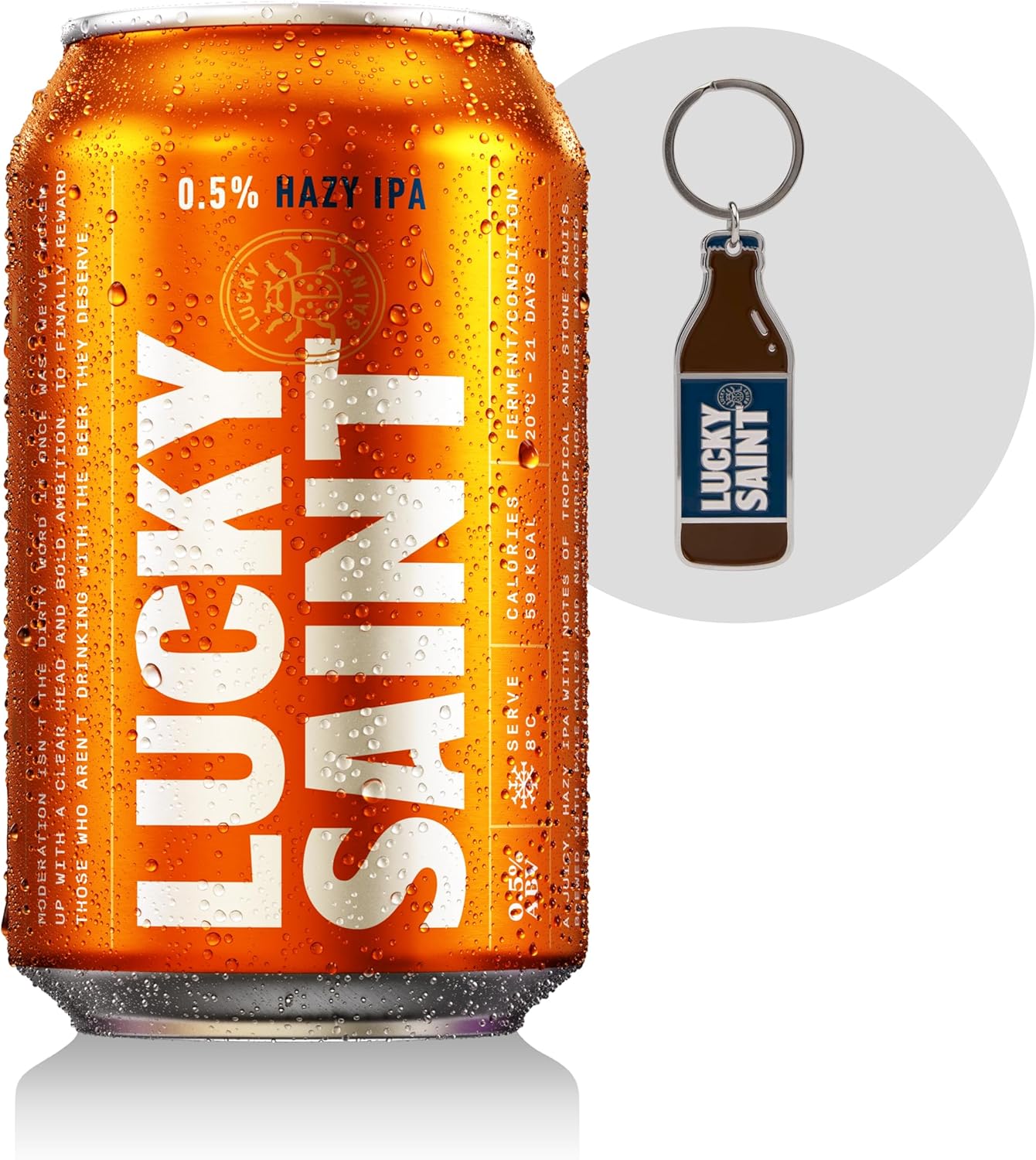
The case I got was the 24 x 330 ml cans version that comes with a little LUCKY SAINT keyring. The box itself is fairly standard: cardboard case, branding is clear, and everything arrived in good shape with no dented cans. Nothing fancy, but it’s practical. You open the top and you basically have a mini fridge pack you can leave in the pantry or slide into the bottom of the fridge.
Inside, the cans are all the same design you see online: modern, clean look, with “Hazy IPA” clearly written on the front. I like that the 0.5% ABV and the alcohol-free aspect are obvious without screaming “mock beer” all over the can. If you pour it into a glass, nobody’s going to know you’re drinking alcohol-free unless they look closely. That’s nice if you don’t want to make a big deal about not drinking.
The keyring is… fine. It’s a small metal piece with the brand on it. It doesn’t change your life, but I stuck it on my keys and it feels decent, not super cheap plastic. Honestly, it’s more of a gimmick than a real selling point, but if you like little branded stuff, it’s a small bonus. I wouldn’t pay extra just to have it though.
In practice, the 24‑can format is good if you’re planning to swap most of your weekday beers with this. If you’re just testing, 24 might be a bit much and you might want a smaller pack first. But for me, it worked: I always had cold cans ready, and it made it easy to choose this over regular beer without thinking too much. Overall, the presentation is simple and functional, nothing special but effective.
Pros
- Tastes like a decent, juicy hazy IPA for a 0.5% beer, with real hop character
- Clean ingredients (no flavourings, no added sugar), vegan and only 59 calories per can
- Good body and mouthfeel compared to many thin alcohol-free beers
Cons
- Less bitterness and depth than a full-strength IPA, might feel too soft for hop fans
- 24-can case is a big commitment if you haven’t tried it before
Conclusion
Editor's rating
Overall, the LUCKY SAINT Hazy IPA is a solid alcohol-free option if you like juicy, modern-style beers and want to cut down on alcohol without switching to bland soda. The taste is fruity, mildly bitter and easy to drink, with a better body than many 0.0 beers thanks to the wheat and oats. It looks and smells like a real hazy IPA, and the clean ingredient list (no flavourings, no sugar) is a real plus.
It’s not perfect: if you’re a hardcore IPA fan who lives on strong, bitter brews, you’ll notice it’s lighter and less punchy. The finish is shorter and the bitterness is softer. But for weeknights, driving, or just staying clear-headed while still having something that feels like a proper beer, it gets the job done. The 24‑can case makes sense if you plan to use it as a regular go-to drink, and the price is reasonable given the quality.
I’d recommend it to people who: enjoy hazy IPAs, want to reduce alcohol but keep the beer habit, care about vegan/sugar-free options, and are okay with a slightly milder taste. If you just want the cheapest alcohol-free lager or you only like very strong, bitter IPAs, you might find this a bit too soft and a bit too pricey. For everyone else, it’s a pretty reliable everyday alcohol-free beer that fits well into a healthier routine.