
Summary
Editor's rating
Taste: close to real wheat beer, with some limitations
Value for money: good, but depends on the price you pay
Can design and drinking experience: glass vs straight from the can
Packaging, delivery, and day-to-day practicality
Ingredients and “healthy” angle: what’s actually inside
What you actually get in this 24x50cl pack
Effectiveness as an alcohol-free and post-sport drink
Pros
- Tastes close to a real wheat beer when poured into a glass, with decent body for an alcohol-free drink
- Short, clean ingredient list with no artificial flavourings and added B12/folic acid
- Very practical for cutting down on alcohol while keeping the beer habit and ritual
Cons
- Canned version is less full-bodied than the bottled one and tastes flatter straight from the can
- Price fluctuates a lot online, sometimes making it poor value compared to bottles or other shops
- You have to like wheat beer; the specific taste profile won’t suit everyone

Specifications
View full product page →| Brand | Erdinger |
Alcohol-free wheat beer that actually feels like beer
I’ve gone through a full 24-pack of Erdinger Alkoholfrei cans over the last few weeks, using it mainly on weeknights and after workouts. I like beer but I’m trying to cut back on alcohol, so I’m always hunting for drinks that still feel like a proper beer, not a sweet soda with a beer label. Erdinger is one of the names that comes up a lot in alcohol-free wheat beers, so I wanted to see if buying a whole case of cans actually made sense.
First thing: this really does taste like a wheat beer, not like a random fizzy drink. It has that typical banana / clove smell and a decent body, especially for something that’s basically 0.5% ABV. If you’re used to IPAs or lagers, it will feel different, but if you already like German Weißbier, you’ll recognise the style right away. It’s not exactly the same as the alcoholic Erdinger, but it’s close enough that after a long day, it scratches the itch.
In practice I used it in three main situations: after running or cycling (because they push the whole “isotonic” thing), as a weekday dinner drink instead of a real beer, and as a “spacer” between alcoholic beers on the weekend. It worked pretty well for all three. You still get the beer ritual — crack the can, pour into a glass, foam on top — without waking up the next day feeling rough or guilty for opening another bottle.
It’s not perfect though. The taste is slightly flatter than the bottled version, and drunk straight from the can it’s honestly a bit disappointing. Also, the price jumps a lot online, so depending on when you buy, it’s either decent value or a bit steep for a soft drink. Overall, I’d say it’s a pretty solid everyday alcohol-free option, especially if you like wheat beer, but it’s not mind-blowing and there are a few things to know before you commit to 24 cans.
Taste: close to real wheat beer, with some limitations
Taste-wise, this is clearly a wheat beer: cloudy, slightly fruity, with that typical banana and clove vibe you get from German Weißbier. Poured into a glass, the smell is actually pretty nice — you get a proper beer aroma instead of that sweet, malty smell that some alcohol-free lagers have. The first sip is refreshing, with a slight sweetness and a gentle bitterness at the end. It’s not harsh, and it doesn’t leave a weird chemical aftertaste, which is a problem I’ve had with some other alcohol-free beers.
That said, it’s not as full-bodied as the alcoholic Erdinger or even the alcohol-free version in bottles. The cans feel a bit sharper and less creamy. The head is there, but it doesn’t last as long, and the mouthfeel is a bit thinner. You still get enough body that it feels like you’re drinking a beer, but if you’re used to the regular Erdinger in bottles, you’ll notice the difference. For me, it was still enjoyable, just slightly less satisfying than the bottled version.
Drunk straight from the can, the taste drops a level. The aromas get muted, and you mostly feel the carbonation and a generic wheat note. After trying that a couple of times, I pretty much always poured it into a glass. That’s where it actually becomes a decent alcohol-free wheat beer. Compared to other alcohol-free options I’ve tried (Franziskaner AF, Hoegaarden 0.0, and a few lagers), I’d put this near the top. Franziskaner AF is close but a bit less balanced, and Hoegaarden 0.0 felt too sugary for my taste.
In terms of when I enjoyed it most, it worked really well with food — especially lighter meals like salads, chicken, or pasta. It also did the job as a “spacer” between two alcoholic beers; you still feel like you’re drinking beer, but without adding more alcohol. Overall, the taste is pretty solid for an alcohol-free wheat beer, as long as you pour it properly. It’s not as rich as the real thing, but it’s good enough that I didn’t feel like I was compromising too much on enjoyment during the week.
Value for money: good, but depends on the price you pay
Value-wise, this sits in an odd spot. On one hand, you’re paying beer money for something that’s basically a soft drink in terms of alcohol content. On the other hand, it does taste like proper beer and uses decent ingredients, and alcohol-free brewing isn’t magically cheaper to produce. When the 24-pack is priced under about £30–£32, I think it’s good value for regular drinkers: you get 24 large cans that can easily last you a few weeks if you drink one most evenings.
Where it starts to feel less attractive is when the price jumps up near or above £40, which does happen on Amazon. At that level, you’re paying close to what you’d pay for some decent alcoholic beers, and the gap versus buying the bottled version elsewhere shrinks. I’ve seen the Erdinger Alkoholfrei bottles in some supermarkets and other online shops for not much more per litre, sometimes with better or more stable pricing. If you don’t care whether it’s cans or bottles, it’s worth comparing before you order.
Compared to other alcohol-free beers I’ve tried, Erdinger Alkoholfrei is on the pricier side but the quality is also higher than a lot of the cheap supermarket 0.0 lagers. Those often taste watery or overly sweet, and I usually end up not finishing the pack. With Erdinger, I actually finished the whole 24-pack and was happy to drink it regularly, which says something. Still, if you’re just dabbling in alcohol-free beer or you’re price-sensitive, I’d maybe start with a smaller quantity from a local shop before committing to a full case online.
Overall, I’d say the value is decent but not outstanding. It makes sense if you already know you like this specific beer and you want the convenience of having a lot of it at home. If you hit it at a good price, it feels fair. If you catch it at the top of its price range, you might be better off shopping around or going for the bottled version instead.
Can design and drinking experience: glass vs straight from the can
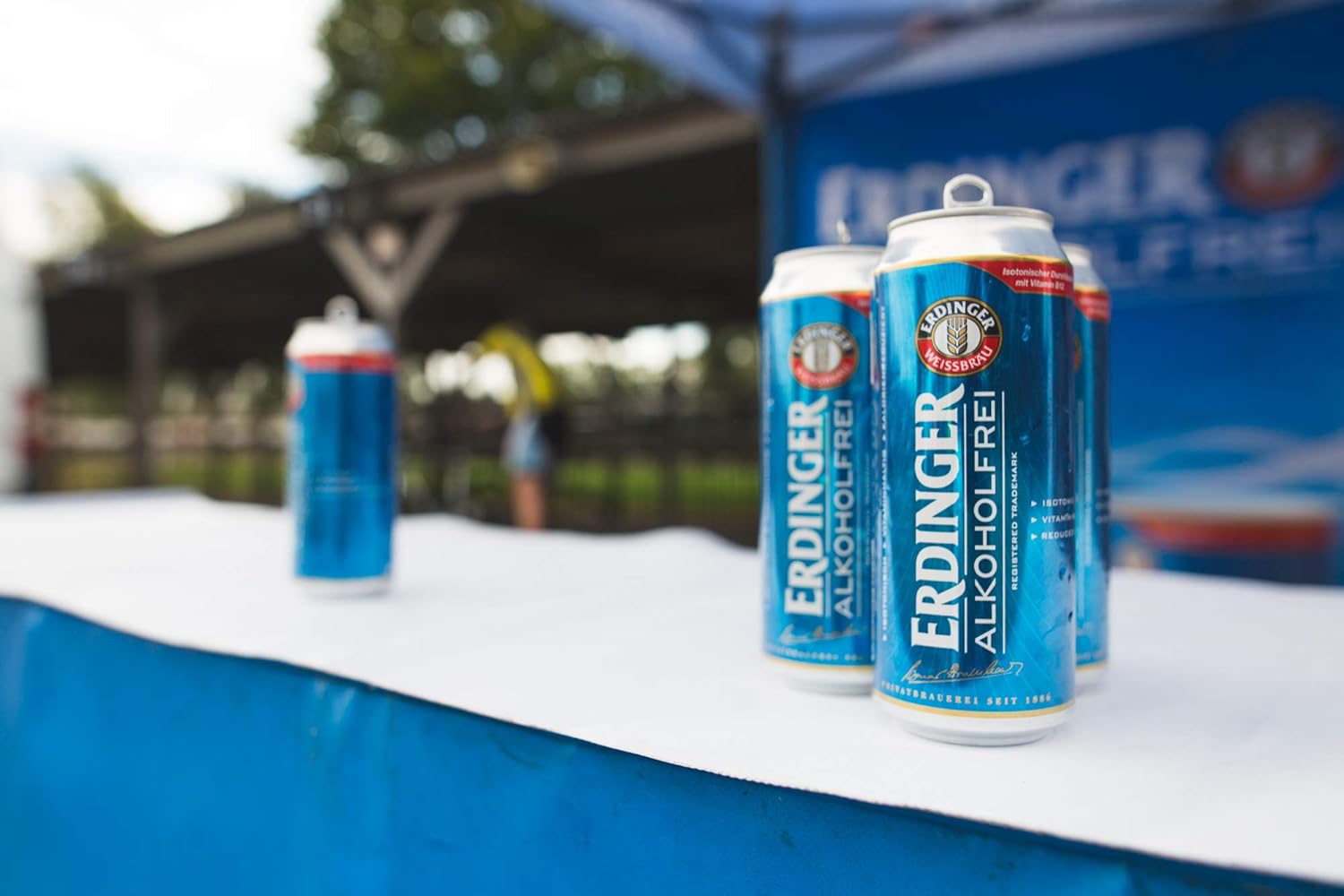
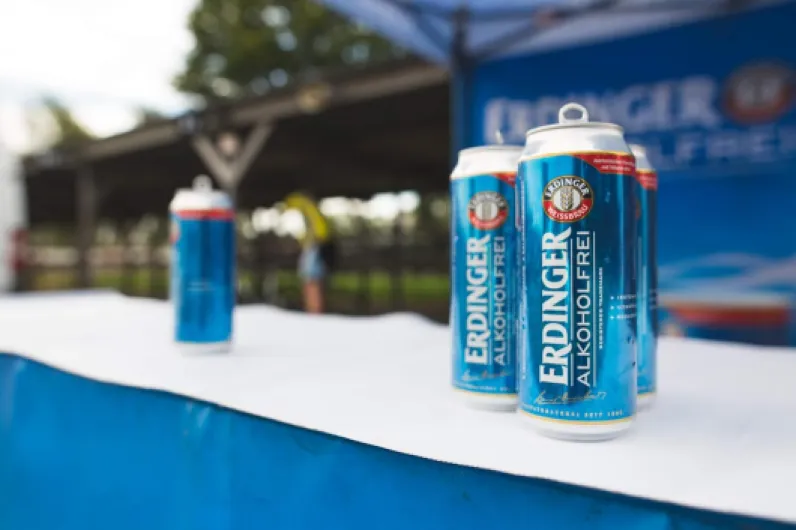
The can design is pretty standard for a German wheat beer: blue and white, big Erdinger logo, and a clear “Alkoholfrei” banner so you don’t mix it up with the regular version. From a distance, it looks like any other classic beer can, which I actually like. When you’re at a barbecue or hanging out with friends, it doesn’t scream “I’m on the soft drinks”, it just looks like you’re having a normal beer. If you’re trying to cut back on alcohol without making a big thing of it socially, that’s a small but useful detail.
From a practical point of view, the 50 cl size is nice. It’s basically a pint, so one can is enough to sit through a full meal or a TV episode without needing to open a second one. The pull tab works fine, no issues with sharp edges or half-opening. The can is tall but still fits in a standard fridge door shelf and in most cup holders. I had no leaking, no weird metallic smell from the rim, and the print on the can doesn’t scratch off easily, even when the cans knock against each other in the box.
Where design does affect the experience is in how you drink it. Straight from the can, the beer feels a bit flat and less aromatic. The wheat beer character doesn’t really come through and it just tastes like a vaguely fruity, slightly sweet fizzy drink. Once you pour it into a glass, it’s a different story: you get a proper head, the colour looks right (cloudy golden), and the smell becomes much stronger. It’s the same liquid, but the experience in a glass is way closer to a real wheat beer. So in practice, this is a drink that really benefits from having a proper glass, ideally a tall one.
So, design-wise, I’d say the cans are functional and discreet. They do what they need to do, they survive delivery, and they don’t make you feel like you’re drinking a kid’s soda. But if you’re someone who always drinks from the can and never bothers with a glass, you’ll probably be underwhelmed. The product itself is clearly made with the glass-poured experience in mind, and the can is just the container, not the final way it’s meant to be enjoyed.
Packaging, delivery, and day-to-day practicality
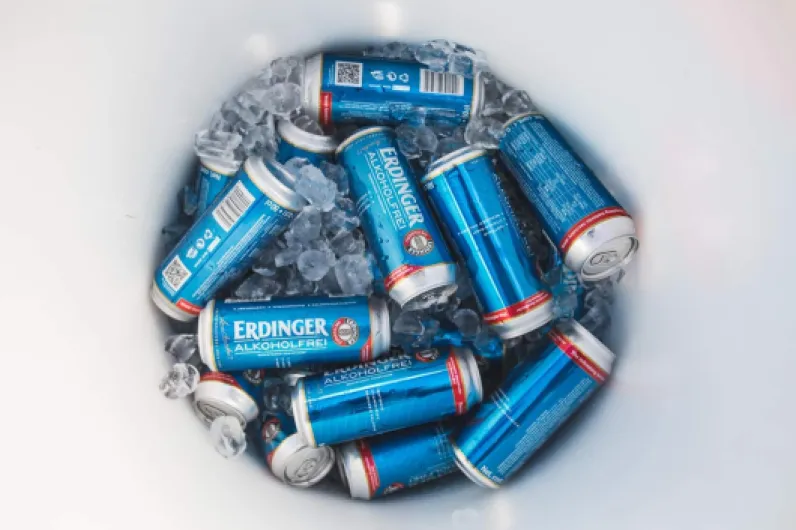
The packaging is very basic but effective. My 24-pack arrived in a sturdy cardboard box, with the cans arranged snugly so they didn’t rattle around. No fancy branding on the outer box, just a label. Inside, all 24 cans were in good condition — no crushed corners, no leaks, and only one had a minor dent that didn’t affect opening or taste. For something that weighs over 12 kg, that’s all I really expect: it arrives, nothing is broken, done.
Storage-wise, 24 tall cans do take up a fair bit of fridge space. I ended up stacking them in two rows on a shelf instead of trying to use the door racks. If you’ve got a small fridge or live with other people, this is something to think about. The upside is that cans stack easily, and you don’t have to worry about glass bottles clinking or breaking. Empty cans are also simpler to crush and recycle, so if you get through them quickly, you won’t have a mountain of glass piling up.
One annoyance isn’t the packaging itself, but the price fluctuations online. Sometimes the 24-pack is around the low £30s, other times it jumps closer to £40. At the lower end, I think it’s fair value for what you get. At the higher end, it starts to feel a bit steep for an alcohol-free drink, especially when you can sometimes find the bottled version on other sites for a similar price. So the pack is convenient, but you have to time your purchase a bit if you care about value.
Day to day, grabbing a can is more convenient than dealing with bottles. You don’t need a bottle opener, you can take a can on a walk or to a picnic without worrying about broken glass, and it chills pretty quickly in the fridge. Overall, the packaging is practical and no-nonsense. It’s clearly set up for people who drink this regularly and want a bulk stock at home, not for someone who’s just casually trying one or two for the first time.
Ingredients and “healthy” angle: what’s actually inside
The ingredient list is pretty short, which I like: water, wheat malt, barley malt, hops, yeast, and carbon dioxide. So it’s basically the same base as a classic German wheat beer, just brewed to be alcohol-free and marketed as isotonic. It follows the Bavarian Purity Law idea, meaning no added flavourings or weird chemicals. If you’re trying to avoid overly processed drinks with a long list of additives, this is fairly clean. It still counts as a soft drink in terms of alcohol, but the recipe is closer to normal beer than to a soda.
On top of that, Erdinger pushes the vitamins: folic acid and vitamin B12. According to the brand, these help reduce fatigue and support the immune system, and B12 helps with energy metabolism. I’m not going to pretend I felt a huge health boost from drinking it, but as a post-workout drink, it does feel more satisfying than just water or a sugary sports drink. It’s also low in calories compared to regular beer, so if you’re keeping an eye on that, it’s a bit easier to justify having one in the evening.
Important point: the allergen info lists wheat and barley (obviously), but I also saw “peanuts” mentioned in the listing, which is a bit odd. I didn’t see peanuts on the actual can ingredients, so I suspect that’s either a mistake in the Amazon data or some generic allergen warning from the seller. Still, if you have a serious peanut allergy, I’d double-check the label when it arrives or check with the manufacturer. For gluten, this is clearly not gluten-free; it’s full-on wheat and barley malt, so celiacs should avoid it.
Overall, the ingredients are straightforward and beer-like, which is what I was looking for. It’s not a miracle health drink, but compared to sugary sodas or random “energy” drinks, it feels like a cleaner option. Just don’t expect the vitamins to replace a balanced diet, and be aware of the wheat and barley if you’re sensitive. For anyone who just wants an alcohol-free beer that isn’t full of artificial stuff, this ticks the box.
What you actually get in this 24x50cl pack
The pack is simple: 24 cans of 500 ml Erdinger Alkoholfrei, so you’re basically getting the equivalent of a crate of large beers. The total weight is around 12.5 kg, so it’s not light, but if you’re used to carrying a case of beer, it feels normal. Mine arrived in a plain cardboard box with the cans arranged in four rows of six. Nothing fancy, but everything was intact, no dents, no leaks. Amazon notes that the packaging may be different from the picture because they sometimes repackage to avoid damage, and that matched my experience — generic outer box, branded cans inside.
Each can is clearly marked as alcohol-free (0.5% ABV) and you can see the main selling points right on the label: isotonic, low-calorie, with folic acid and vitamin B12. If you care about the sport/health angle, it’s handy to have that info front and centre. There’s also the usual stuff: ingredients, nutritional values, recycling information. The design is blue and white like the bottle version, so if you’ve seen it in supermarkets, it looks familiar and easy to recognise in the fridge.
In terms of quantity, 24 x 50 cl is quite a lot if you’re just casually testing, but it makes sense if you want something to replace regular beer over a month or two. I was drinking one can most evenings and sometimes two at the weekend, and the case lasted me just under three weeks. If you only drink occasionally, you might find this overkill, but the shelf life is long enough that it’s not really a problem. Mine had several months before the best-before date, so there was no rush to finish them.
Overall, the presentation is practical and straightforward. No glass bottles to recycle, no risk of broken glass in transit, and the product info is clear. It feels like a bulk buy for people who already know they like the drink, not a discovery pack. If you’re still unsure whether you like wheat beer or Erdinger specifically, I’d probably try a few bottles or a smaller pack first before committing to the full 24 cans.
Effectiveness as an alcohol-free and post-sport drink
For me, the main question was simple: does this actually help me cut down on alcohol without feeling like I’m missing out? After a few weeks, I’d say yes, it does the job. Having these cans cold in the fridge made it really easy to grab one instead of a regular beer on weeknights. The ritual is the same — open, pour, sit down — and the taste is close enough to a real wheat beer that I didn’t feel frustrated. I went from having 4–5 alcoholic beers during the week to 1–2, just by swapping in Erdinger Alkoholfrei most evenings.
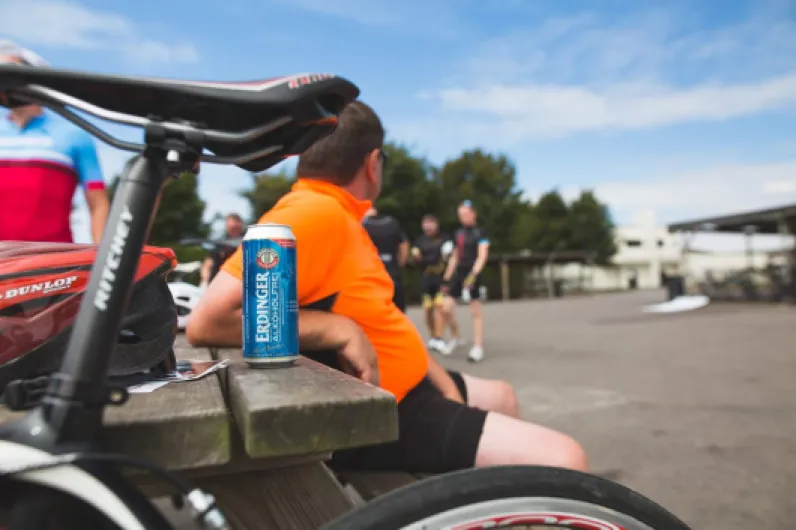
On the sports side, I tried it a few times after runs and bike rides. It’s marketed as isotonic and low in calories, with vitamins, and to be honest, it works fine as a post-workout drink. It’s refreshing, slightly sweet, and doesn’t sit heavy in the stomach. I wouldn’t use it as my only hydration source after a hard session — I still drink water — but as a “reward” drink after a shower, it hits the spot. Compared to standard sports drinks, it feels less sugary and more satisfying because the beer taste tricks your brain a bit.
One thing I noticed is that because it’s 0.5% ABV, there’s no real buzz at all, even after two cans. That’s the whole point, but it’s worth mentioning: if you’re secretly hoping for a tiny bit of effect, you’ll be disappointed. For me, that was actually a positive: I could drink it late in the evening and still sleep fine, and I didn’t wake up groggy. It also worked well when I needed to drive later, because I wasn’t worried about being over the limit.
So in terms of effectiveness as a beer replacement and post-sport drink, it’s pretty good. It won’t magically make you healthier, but if your goal is to keep the beer habit without the alcohol, this is a practical tool. The only catch is that you need to like wheat beer; if you’re more into crisp lagers or IPAs, this might not scratch the same itch and you might need to look at other alcohol-free options.
Pros
- Tastes close to a real wheat beer when poured into a glass, with decent body for an alcohol-free drink
- Short, clean ingredient list with no artificial flavourings and added B12/folic acid
- Very practical for cutting down on alcohol while keeping the beer habit and ritual
Cons
- Canned version is less full-bodied than the bottled one and tastes flatter straight from the can
- Price fluctuates a lot online, sometimes making it poor value compared to bottles or other shops
- You have to like wheat beer; the specific taste profile won’t suit everyone
Conclusion
Editor's rating
After going through a full 24-pack of Erdinger Alkoholfrei cans, my feeling is pretty clear: it’s a solid alcohol-free wheat beer that does its job well, as long as you pour it into a glass and you already like this style of beer. The taste is close enough to a real Erdinger Weißbier that you keep the beer ritual and feeling, just without the alcohol hit. For weeknights, driving days, or post-workout drinks, it fits in nicely and makes it much easier to cut down on regular beer.
It’s not perfect. The canned version is a bit less full-bodied than the bottled one, and straight from the can it’s honestly underwhelming. You also have to watch the price online, because it jumps around a lot and can go from decent value to slightly overpriced quite quickly. And of course, if you’re not into wheat beer in general, this won’t convert you; it still has that banana/clove profile that some people just don’t enjoy.
If you’re a wheat beer fan who wants a reliable alcohol-free option at home, and you’re okay with buying in bulk, this 24x50cl pack makes sense — especially when the price sits around the lower end of its usual range. If you’re just curious, very price-sensitive, or prefer crisp lagers or hoppy IPAs, I’d say try a couple of bottles first or look at other alcohol-free styles before committing to a whole case.