
Summary
Editor's rating
Taste: how close is it to pub Guinness?
Value for money vs pubs and other stouts
Can design and pouring experience
Multipack and shipping: nothing fancy, just functional
Consistency, shelf life and how it holds up
What you actually get in this 4-pack
Does it scratch the Guinness itch at home?
Pros
- Taste and texture are close to a pub Guinness when properly chilled and poured into a glass
- Nitrogen widget gives a smooth, creamy head and low carbonation that’s easy to drink
- Good balance of price, alcohol level (4.1%), and overall drinking experience for home use
Cons
- Still not quite as creamy or fresh-tasting as a well-poured draught pint in a pub
- Slight canned/metallic hint on the first sip if not very cold or if you’re picky
- Not very exciting if you prefer strong or more complex craft stouts

Specifications
View full product page →| Brand | GUINNESS THE 1759 |
Bringing the pub Guinness home
I’ve drunk Guinness on and off for years, mostly on tap in pubs, and only recently started buying the cans again to have at home. This 4-pack of 440 ml Guinness Draught is pretty much the standard “at home” option, so I treated it like I would a normal weekend shop: stuck it in the fridge, poured it into a regular pint glass, and compared it in my head to what I get at the bar. I wasn’t expecting miracles, just something close enough that I wouldn’t feel like I was drinking a cheap knock-off.
Over a couple of weeks I went through a few packs, usually one can in the evening with food, sometimes two if friends were over. That gave me enough time to notice the small things: how it pours, how the head holds up, whether the taste gets boring after a few nights, and if there’s any weird aftertaste you only notice when you’re not half distracted in a noisy pub. I also compared it to some other stouts I had lying around, including a couple of supermarket own-brand ones.
My overall feeling: this is pretty solid for a canned stout, especially if you already like Guinness from the tap. It’s not exactly the same, and you can tell if you drink it regularly in pubs, but it’s close enough that after a few sips you stop thinking about the difference and just drink it. If you’re expecting some craft beer experiment with wild flavours, this isn’t that. It’s the usual Guinness taste, just in a can, with all the pros and cons that come with that.
In short, it’s a reliable “fridge beer”. There are better stouts out there if you want something more complex or stronger, and there are cheaper basic dark beers if you just want alcohol. But for that familiar Guinness experience, without leaving the sofa, this pack gets the job done pretty well.
Taste: how close is it to pub Guinness?
Let’s be direct: it tastes like Guinness, just not quite as fresh or rounded as a good pint from a well-kept tap. If you already like Guinness, you’ll feel at home straight away. The first sip is that familiar roasted malt flavour, a bit of bitterness, some slight coffee and cocoa vibes, and a smooth finish. It’s pretty light for a stout, both in body and alcohol, so you don’t feel like you’re drinking a heavy dessert beer. For me, it’s the kind of drink you can have a couple of without feeling wrecked.
Compared to pub Guinness, the main difference I noticed is the mouthfeel and aftertaste. On tap, it tends to feel a touch creamier and the flavours blend a bit better. From the can, it’s still smooth, but there’s sometimes a very faint metallic or canned note on the first sip, especially if the glass isn’t perfectly clean or the beer isn’t quite cold enough. It doesn’t ruin the drink, and after a few gulps you stop noticing it, but if you’re very fussy you’ll spot it. The bitterness is also slightly more noticeable from the can, at least to my taste.
I tried it with different foods: burgers, stew, cheese, and also on its own. It holds up well with food because it’s not too strong and doesn’t dominate everything. With a rich meal, it actually feels lighter than some lagers because there’s less gassy carbonation. On its own, it’s a decent evening drink, but if you’re used to stronger craft stouts (7–10% with big flavours), this will feel quite tame and maybe even a bit plain. That’s not a criticism, just how it’s positioned: easy-drinking, familiar stout, not a tasting-session beer.
Overall, the taste is solid and very consistent can to can. No weird batches, no random off flavours so far. It won’t blow your mind, but if what you want is “pub Guinness, but at home, and close enough”, this does the job. If you’re new to dark beer and nervous it’ll be like tar, don’t worry – it’s actually pretty mild and approachable once you get past the dark colour.

Value for money vs pubs and other stouts
On value, you have to compare this on two levels: versus a pint in the pub and versus other beers in the supermarket. Compared to pub prices, it’s obviously cheaper per “pint”, especially these days. One 440 ml can is basically a pint, and if you do the maths, you’re paying noticeably less than what you’d pay at the bar for something that’s maybe 80–90% as good in terms of experience. If you like Guinness but don’t want to spend a fortune going out, keeping a 4-pack in the fridge makes sense.
Against other stouts on the shelf, it sits in the middle: not the cheapest, not the most expensive. You can get own-brand supermarket stouts for less, but most of the ones I’ve tried feel thinner, more gassy, and less satisfying. You can also go up in price into craft stouts that cost a lot more per can but give you stronger alcohol and more intense flavours. In that context, this Guinness pack is decent value if you want something reliable and familiar, not an experiment.
Another thing to consider is the alcohol content. At 4.1%, you’re not paying for a strong beer that knocks you out in one go. You’re paying for the brand, the nitro experience, and the recognisable taste. If you’re just chasing the highest alcohol per pound, this isn’t the smartest buy; a cheap strong lager or a high-ABV stout would beat it. But if you want a drink you can enjoy slowly without getting smashed, it’s actually good value because you’ll probably stop at one or two and still feel fine.
Overall, I’d say the price-to-enjoyment ratio is fair. Not a bargain bin steal, but not overpriced either, especially when you factor in the consistency and the fact that it really does come close to the draught version. If you’re a Guinness fan, the value is there. If you’re not particularly attached to the brand, you might find cheaper dark beers that are “good enough” for you.
Can design and pouring experience
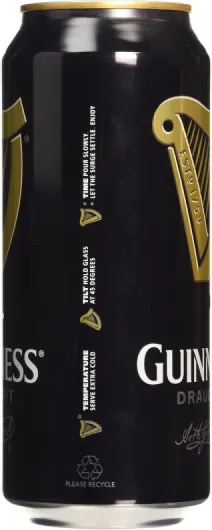
Design-wise, Guinness isn’t trying to surprise anyone here. The black can with the gold harp and white logo is exactly what you expect. It looks clean and recognisable in the fridge. There’s nothing clever like resealable tops or weird shapes; it’s a standard can that fits in any fridge door or shelf. That’s fine by me – I care more about how it pours than how it looks on Instagram.
The important part is inside: the nitrogen widget. When you open the can, you get that sharp, slightly aggressive hiss and you can hear the widget doing its thing. When you pour it properly – glass at a slight angle, steady pour – you get the classic Guinness cascade: dark liquid with that creamy foam building on top. It settles pretty quickly, usually within a minute or so, which is faster than a lot of pub pours that the staff drag out. Visually, it’s close enough to pub Guinness that if you poured it for someone without telling them, they probably wouldn’t complain.
One thing I noticed across multiple cans: the head is slightly less dense than a fresh tap pour, especially if the can isn’t ice cold. If you’re picky, you’ll see the difference. The foam is still creamy, but it doesn’t cling to the glass in quite the same way, and it can thin out a bit quicker. That said, it still beats most non-nitro canned stouts by a mile. The widget does its job, and you don’t get that harsh carbonation you find in some cheaper dark beers.
In practice, the design works well for what it’s meant to do: give you a draught-style stout from a can with minimum fuss. No leaking, no weird pull tabs, no gimmicks. Open, pour, wait a minute, drink. As long as you remember to chill it properly and use a glass (drinking this straight from the can is a waste), the overall experience is pretty close to a pub pint visually, even if the taste and texture are not 100% identical.
Multipack and shipping: nothing fancy, just functional
The 4-pack I got came in simple outer packaging, similar to what you’d expect from a supermarket multi-buy. Nothing premium, but it did the job: the cans were snug, no rattling, and more importantly, no dents. For something with a nitrogen widget, that matters. A badly damaged can can sometimes pour oddly or lose some of its smoothness, so I was glad everything arrived in one piece.
If you’re ordering online, you also have to think about how the seller packs it. Mine came in an Amazon box with extra padding around the 4-pack. It looked a bit overkill for just beer, but I’d rather that than crushed cans. The outer branding is very standard Guinness: black, white, gold, harp logo, and the usual info. It’s not the kind of packaging you keep or show off; you just tear it open and stick the cans in the fridge. For a basic grocery item, that’s fine.
One small plus: the size of the pack is quite handy if you don’t have a huge fridge. Four 440 ml cans line up neatly on a shelf or in the door without taking over everything. If you’re buying this as a small gift (for example, the neighbour turning 70 like in one of the reviews), it actually works well – it looks like a complete little set without being over the top. Just don’t expect gift-box-level presentation; this is more “practical grocery item” than “fancy beer hamper”.
In short, the packaging is functional and straightforward. It protects the cans, it’s easy to store, and it doesn’t create a stupid amount of waste. Nothing to get excited about, but nothing to complain about either, which is pretty much all I ask from beer packaging.
Consistency, shelf life and how it holds up
With something like this, “durability” is more about shelf life and consistency than physical toughness. The cans themselves are sturdy enough; in my deliveries they arrived without dents, and they survived being moved around the fridge and a trip in a bag to a friend’s place. I wouldn’t kick them around, but for normal handling they’re fine. The widget inside doesn’t rattle loose or anything weird like that – you only really notice it when you open the can.
On the shelf life side, Guinness cans usually come with a decent best-before date. The packs I got had several months left, so you don’t have to rush through them in a week. I left one can at the back of the fridge for a few weeks on purpose and drank it later than the others. It tasted the same as the fresher ones, no loss of foam or flavour that I could notice. As long as you keep them cool and don’t store them somewhere boiling hot, they seem to hold up well.
One thing to watch is temperature and handling. If the can isn’t properly chilled, the pour is less impressive and the head can be thinner. I tried one that was only slightly cool, not cold, and the difference was noticeable. Also, if a can gets shaken around a lot and you open it too quickly, you can get a slightly messier pour. It didn’t explode on me, but it foamed a bit more than usual. So just treat it like any other beer: let it settle and cool properly.
Overall, in terms of reliability over time, I’ve had no issues: no flat cans, no duds, no weird off tastes. For a mass-produced beer, that consistency is actually one of its strengths. You know what you’re going to get, whether it’s the first can from the pack or the last one you forgot about for a while at the back of the fridge.
What you actually get in this 4-pack
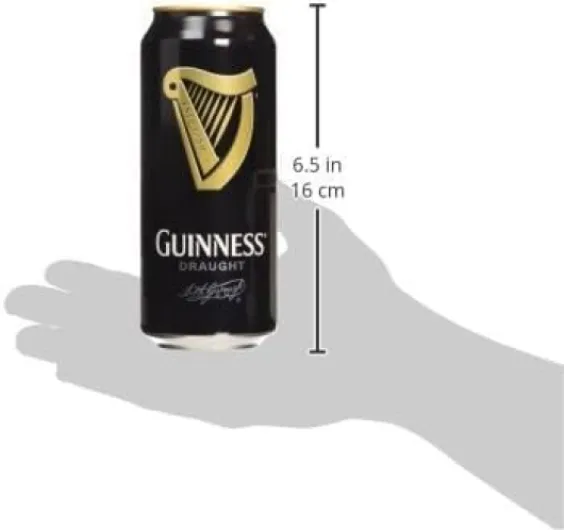
The product is very straightforward: 4 cans of 440 ml Guinness Draught, standard UK size, 4.1% alcohol. Nothing fancy in terms of bundle or extras, just the usual supermarket-style multipack. It arrived well packed, no dents on my end, which matters more than you think with nitro cans, because a badly bashed can can sometimes mess with the pour. Each can has the usual black Guinness branding with the harp, so you know exactly what you’re grabbing from the fridge without thinking.
On the practical side, one can poured into a normal pint glass gives you just about a full pint with a nice head, which is what most people expect. The nitrogen widget is inside each can, so when you crack it open you get that loud hiss and the swirling effect when you pour. It’s not just for show; that’s what gives it the creamy head instead of normal fizzy bubbles. For a home drink, it does feel a bit more like a proper draught pint rather than a flat can of beer.
In terms of information, the basics are on the can: alcohol percentage (4.1%), vegetarian-friendly, ingredients, and the usual warnings. No long story or nonsense on the label, which I appreciate. You don’t really buy Guinness for the packaging text; you buy it because you know what it tastes like. The description on the product page talks about hints of coffee and chocolate and all that. In real life, you do get some of that, but nothing as dramatic as they make it sound. It’s still a fairly simple stout.
If you’re used to grabbing Guinness from the supermarket, this 4-pack is just the standard format. It’s a decent size if you want to test it or keep a few in the fridge without filling half a shelf. If you already know you drink a lot of it, bigger packs usually work out cheaper per can, but for casual drinkers or as a small gift, this 4 x 440 ml setup makes sense.
Does it scratch the Guinness itch at home?
By “effectiveness” here, I basically mean: does this can version actually replace a pub pint when you just want that Guinness craving sorted without going out? For me, yes, up to about 80–90%. On a quiet evening, pouring one of these into a cold glass gets me close enough to the pub experience that I don’t feel short-changed. The nitro head, the familiar taste, and the low-ish alcohol make it a decent “end of the day” drink that doesn’t knock you out.
Over a couple of weeks I used it in different situations: one with dinner, one watching a match, a couple with friends as a starter before we went out. In all those cases, it behaved like a reliable, predictable drink. No one complained, and a couple of people actually said they were surprised how similar it felt to a tap pint. The only time it felt a bit lacking was when I had it straight after coming back from a pub where the Guinness was on top form – then the difference in creaminess and freshness is more obvious.
In terms of alcohol effect, at 4.1% it’s on the lighter side. After two cans I felt relaxed but not woozy, which is pretty much what I want for a weekday evening. If you’re used to stronger beers, you might feel it’s a bit “soft”, but that can be a plus if you don’t want to overdo it. It’s also less bloating than some lagers, thanks to the nitrogen and lower carbonation, so you don’t end up feeling like a balloon after a couple.
So, in practice, it does what it’s supposed to: it gives you that Guinness fix without leaving home. It’s not perfect – the pub version is still better when it’s poured right – but for the price and convenience, it’s an effective stand-in. If you expect it to be exactly the same as a fresh keg pour, you’ll be a bit disappointed. If you just want something close enough and consistent, it works well.
Pros
- Taste and texture are close to a pub Guinness when properly chilled and poured into a glass
- Nitrogen widget gives a smooth, creamy head and low carbonation that’s easy to drink
- Good balance of price, alcohol level (4.1%), and overall drinking experience for home use
Cons
- Still not quite as creamy or fresh-tasting as a well-poured draught pint in a pub
- Slight canned/metallic hint on the first sip if not very cold or if you’re picky
- Not very exciting if you prefer strong or more complex craft stouts
Conclusion
Editor's rating
As a regular drinker rather than a beer snob, I’d sum this up like this: it’s Guinness, at home, and it mostly feels like Guinness. The nitro cans give you a proper creamy head, the taste is very close to what you get in a decent pub, and the 4.1% strength makes it easy to drink without wiping you out. It’s not identical to a perfectly poured tap pint – the mouthfeel is a bit lighter and sometimes you catch a tiny hint of “canned” on the first sip – but after a few gulps you stop thinking about it and just enjoy the drink.
This 4 x 440 ml pack is ideal if you want a few pints in the fridge for evenings, football games, or a casual get-together. The packaging is simple but does the job, the cans are reliable, and the beer itself is consistent. If you already like Guinness, you’ll be happy enough with this. If you’re new to stout and a bit nervous, it’s a friendly starting point: dark in colour but not heavy or harsh. On the other hand, if you’re into strong, complex craft stouts, this will probably feel mild and a bit basic.
So, who is it for? People who enjoy Guinness on tap and want a convenient home version, anyone looking for a smooth, not-too-strong dark beer, and those who want something reliable to keep in the fridge. Who should skip it? Folks chasing big, intense flavours, or anyone who doesn’t really care about the Guinness taste and just wants the cheapest alcohol per can. For everyone else, it’s a pretty solid, no-nonsense choice that does what you expect.