
Summary
Editor's rating
Taste and mouthfeel: smooth, roasted, and very drinkable
Is the 15-can pack good value for money?
Classic Guinness look and the famous widget
Box and cans: solid, but not exactly eco-friendly
What’s inside and how it feels on the body
Pouring, head, and how it drinks over an evening
What you actually get in this 15-can pack
Pros
- Smooth, creamy texture with a reliable nitro head that’s close to pub Guinness
- Balanced roasted taste that’s easy to drink over multiple cans
- Good value per can in the 15-pack format for regular Guinness drinkers
Cons
- Less intense and slightly flatter than a well-poured pint on tap
- Bulky pack and nothing special in terms of presentation if you want a gift

Specifications
View full product page →| Brand | GUINNESS THE 1759 |
The classic black stuff in a box
I’ve drunk Guinness on and off for years, mostly on tap at the pub, but this time I went for the 15 x 440ml can pack to see if it’s actually worth buying in bulk at home. I drank it over a couple of weeks, across a few football matches, weeknight dinners, and one small house gathering. So this isn’t a quick “had one can, loved it” review – it’s based on going through almost the whole box in normal life.
The main thing I wanted to check was simple: does this canned Guinness with the widget really come close to a decent pint at the pub, or is it just a flat, sad version you tolerate because it’s cheaper? I also paid attention to how consistent it was from can to can, how easy it was to pour, and whether the 4.1% strength actually makes it a good “session” beer or if it feels a bit weak.
Across those 2–3 weeks, I used it in different situations: one can straight from the fridge after work, two or three cans during a match, and a few poured for guests who already like dark beers. I also compared it to a couple of other canned stouts I had lying around, just to see if it still holds up or if it’s mainly running on its reputation these days.
Bottom line: it’s not perfect, but it’s still a pretty solid everyday stout if you like that classic roasted taste and creamy head. If you’re expecting it to fully match a freshly poured pint in a good Irish pub, you’ll notice the difference. But for something that lives in your fridge and is ready whenever you want, it gets the job done quite well.
Taste and mouthfeel: smooth, roasted, and very drinkable
Let’s get to the main point: how it tastes. Poured into a glass, the beer is very dark, almost black, with that creamy off-white head Guinness is known for. The smell is fairly mild: a bit of roasted barley, a touch of coffee, and a slight sweetness. Nothing jumps out aggressively, but it smells nice and familiar if you’ve had Guinness before. It’s not one of those beers where the aroma fills the whole room, it’s more low-key.
On the first sip, you get a smooth, creamy texture thanks to the nitrogen. That’s honestly the thing that makes Guinness Draught stand out from a lot of other stouts in cans. The taste is a mix of light sweetness from the malt and a gentle bitterness from the hops, with that roasted barley note in the background. Think mild coffee and a bit of dark chocolate, but not intense. It’s quite balanced and easy to drink. If you like huge, punchy flavours, this might feel a bit tame. For me, it’s more of a “can drink two or three without getting tired of it” kind of beer.
Compared to a good pint of Guinness on tap, I’d say this is about 80–85% of the experience. The head is slightly less thick and doesn’t last as long, and the flavour feels a tiny bit flatter, but it’s still pretty close, especially if you pour it correctly and drink it reasonably fresh and cold. Versus other supermarket stouts I’ve tried, this one is smoother and less harsh. Some cheaper stouts can taste metallic or too bitter – this doesn’t. It’s not super complex, but it’s consistent and pleasant.
In short, I’d describe the taste as roasty, mildly sweet, and very smooth, with a light bitterness that doesn’t linger too long. Nothing mind-blowing, but very easy to enjoy, especially if you’re watching a match or having it with food. If you already like Guinness in pubs, you’ll feel at home. If you’re used to very hoppy IPAs or strong craft stouts, this will feel gentle, maybe even a bit “soft,” but that’s kind of the point.
Is the 15-can pack good value for money?
Value-wise, this 15 x 440ml pack usually comes in at a pretty solid price per litre compared to buying single cans or smaller packs. The exact price moves around, but when I got it, it worked out cheaper than buying four-packs from the supermarket. For something that’s basically the standard stout in a lot of pubs, that’s decent value. You’re getting a reliable, well-known beer, not some random budget brand that tastes rough.
Where it really makes sense is if you actually drink Guinness regularly. If you only have a stout once a month, a 15-pack might be overkill and just take up fridge space. But if you like a can after work a few times a week or you often watch football with friends, this format is handy. You don’t have to keep reordering, and you’re not constantly running out mid-match. For me, spreading it over about 2–3 weeks felt about right; it stayed fresh and didn’t feel like a chore to finish.
Compared to other stouts in cans, there are cheaper options, but you usually feel the difference in taste and texture. The really cheap ones often lack the creamy feel and can taste either watery or a bit metallic. With Guinness, you’re partly paying for the brand, sure, but also for the nitro widget and the consistency. On the flip side, if you’re into craft stouts, you can find stronger and more complex beers, but usually in 330ml cans at a higher price per litre. So this sits in the middle: not fancy, but not bargain-basement either.
Overall, I’d say the value is good but not mind-blowing. If you like Guinness and you actually drink it often, this pack makes sense and saves you a bit compared to smaller quantities. If you’re just curious or you prefer variety, you might be better off buying a smaller pack first or mixing different beers instead of committing to 15 of the same thing.
Classic Guinness look and the famous widget
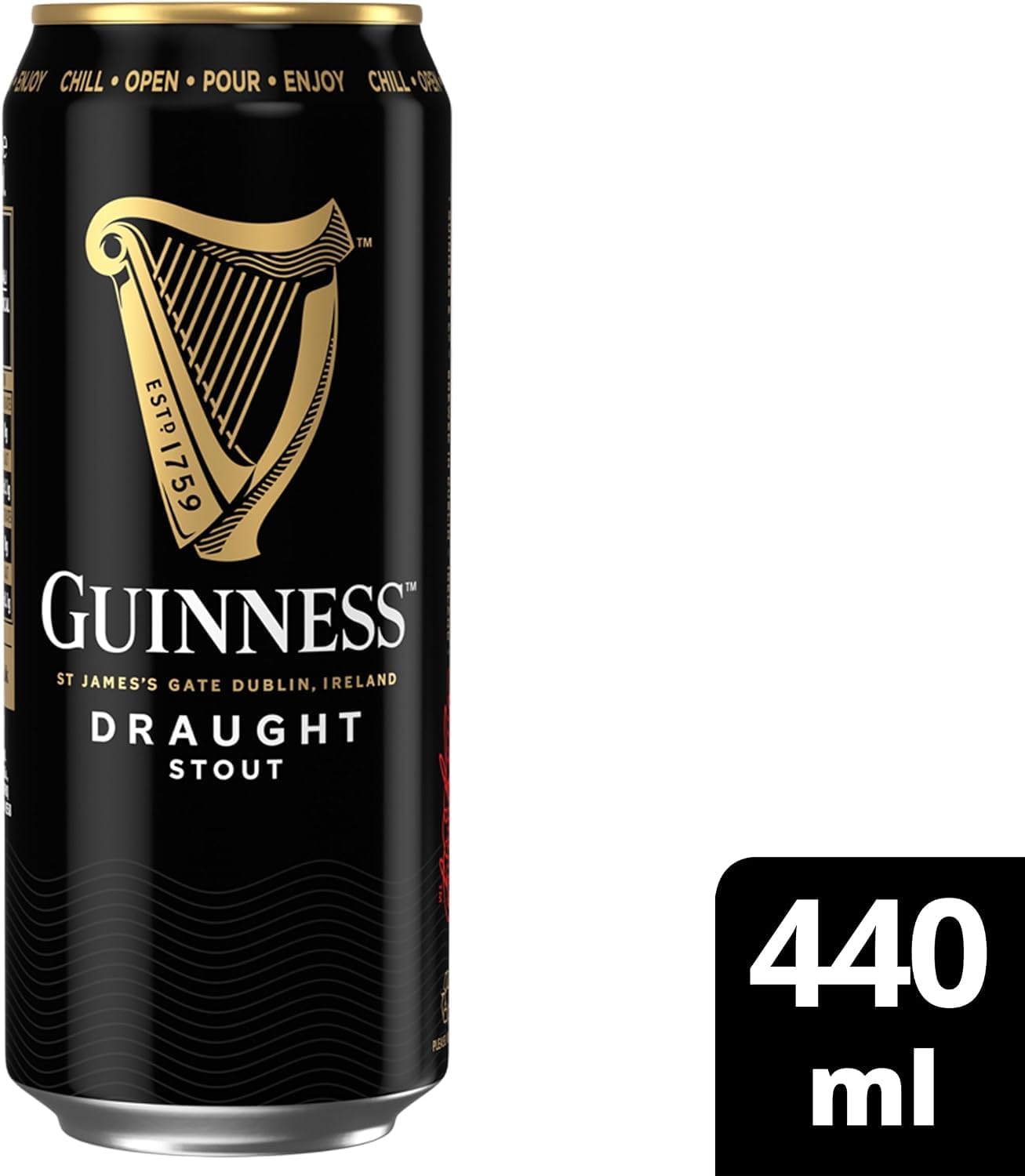
Design-wise, Guinness hasn’t changed much, and that’s probably on purpose. The can is black with the gold harp and white Guinness branding, plus the Premier League logo. It looks like what you expect from Guinness: serious, no nonsense, a bit old-school. On the shelf next to flashy craft beers, it looks plain, but in a good way – you know exactly what it is from a distance. I don’t care much about can artwork, but I appreciate that this one is easy to recognise and read.
The more interesting part of the design is inside: the nitrogen widget. You hear it rattle when you shake the can gently (don’t do that right before opening, obviously). In practice, that little ball is what gives you the creamy head and that “surge and settle” when you pour it. Compared to normal canned beer without nitro, it really does make a difference. The pour looks nicer, the foam is thicker, and the texture is closer to what you get on tap.
In daily use, the design is quite practical. The 440ml size is a nice middle ground: bigger than a standard 330ml bottle, but not a huge 500ml can that gets warm halfway through. One can feels like a proper drink. The pull-tab is standard and opens cleanly – I didn’t have any issues with sharp edges or half-torn lids. The can also fits easily into normal fridge door shelves and cup holders.
So overall, the design is simple but functional: classic branding, clear info, and the widget actually does something useful rather than being a gimmick. If you like fancy graphics, this will feel boring. If you just want a can that pours well and looks like Guinness, it does exactly that.

Box and cans: solid, but not exactly eco-friendly
The packaging is a standard cardboard case holding 15 cans. Mine arrived from delivery with no dents, no leaks, no drama. The box is thick enough to survive a rough courier, and the cans were packed tight so they didn’t rattle around. So from a practical standpoint, it protects the product well, and that’s what matters most. I’ve had other beer multipacks arrive with at least one dented can; this one was clean.
On the downside, it’s not the most space-efficient thing once you open it. The box is a bit bulky in a small kitchen. I ended up taking the cans out and lining them in the fridge, then folding the box for recycling. That’s not a big deal, but if you’re tight on storage, don’t expect some clever, compact design. It’s just a rectangular box that does the job. Also, there’s no handle or anything, so carrying it any distance is a two-hand job.
From a waste point of view, you’ve got the cardboard box plus 15 aluminium cans with widgets inside. The good thing is the cans are recyclable, and the cardboard is too. The widget stays inside the can after you drink it, and you just throw the whole thing into metal recycling. It’s not worse than other beer cans, but if you’re trying to cut down on packaging in general, this is still quite a bit of material for 15 drinks.
Overall, I’d say the packaging is practical and sturdy, but nothing clever or particularly compact. It protects the Guinness, it stacks fine, and it goes in the recycling bin after. No real complaints, but also nothing that makes you think, “wow, they really thought this through.” It’s basic, but it works.
What’s inside and how it feels on the body
The ingredients list is pretty standard for a stout: barley (including the famous roasted barley), hops, water, and whatever else they use in the usual Guinness recipe. It also clearly states it contains barley, so if you’re sensitive to gluten or grains, this is not for you. There’s no big list of random additives on the can, which I appreciate. It’s a classic industrial beer, but it doesn’t feel overloaded with weird stuff.
From a “how it feels” point of view, Guinness Draught is known for being relatively light in alcohol (4.1%) and not too heavy on the stomach compared to some richer stouts. That matched my experience. I could drink two or three cans with food and not feel like I’d eaten a full loaf of bread. It’s still a dark beer, so it’s more filling than a light lager, but it’s not a thick dessert stout either. The nitrogen also helps it feel smoother and less gassy than regular carbonated beers.
I didn’t notice any strange after-effects beyond what you’d expect from drinking beer: a bit of tiredness if I had a few late in the evening, but no nasty headache or bloating. Obviously that depends on your own tolerance, but compared to some heavily carbonated lagers or super sugary drinks, this felt relatively gentle. It’s also listed as suitable for vegetarians, which is good to know if that matters to you.
Overall, the ingredients are simple and classic for a stout, and the way it sits in the body matches that: fairly light for a dark beer, smooth, and not overly gassy. If you’re looking for organic, low-carb, or gluten-free, this isn’t it. But if you just want a straightforward stout with a long history behind it, it fits that profile well.

Pouring, head, and how it drinks over an evening
In practice, the performance of this Guinness in a can comes down to three things: how it pours, how the head holds up, and how it feels over a few cans in a row. Following their instructions – chilled, then poured at about 45 degrees into a glass – I consistently got that classic cascading effect and a nice creamy head. The widget clearly does its job. It takes a minute or so to fully settle, but once it does, you get a dense foam that looks good and feels smooth when you drink through it.
The head retention is decent. It’s not as long-lasting as a well-poured pint in a pub, but it doesn’t vanish instantly either. After about 10–15 minutes, you still have a thin layer of foam. I tested this a few times while watching football: sip slowly, get distracted by the match, come back, and the beer is still fine, not completely flat. The carbonation is low and creamy rather than fizzy, which I like. It makes it easy to drink without feeling bloated.
At 4.1% ABV, it’s clearly designed as a session beer. Over one evening, I had three cans while watching a match and still felt okay – a bit relaxed, but not wrecked, and no heavy head the next morning. If you’re used to stronger craft beers at 6–7%, this will feel lighter, but that’s exactly why it works well when you want more than one. The trade-off is that it’s not very intense; you drink it more for the overall experience than for a big kick of flavour or alcohol.
Across the entire 15-pack, the performance was very consistent. No weird cans, no flat pours, no off flavours. Every can behaved roughly the same, which is honestly what you want from something like this. It’s reliable: you chill, you pour, you get a smooth stout that tastes the same every time. Not exciting, but very steady.
What you actually get in this 15-can pack
This pack is straightforward: 15 cans of 440ml Guinness Draught Stout, 4.1% ABV, all stacked in a cardboard box. No fancy extras, no glass, no booklet, just beer. In practice, that’s fine – you’re paying for quantity and convenience, not a gift set. The box I got weighed around 7kg, which lines up with the specs, and it was easy enough to lug from the door to the kitchen without feeling like I was moving bricks.
The cans themselves are the classic black Guinness design with the harp logo, plus the Premier League branding. Visually, it looks like what you expect from Guinness: black, gold, and white, clean and simple. On the shelf in the fridge, they’re easy to spot. All the basic info is there: strength (4.1%), volume (440ml), ingredients mentioning barley, and the usual warnings. Nothing fancy, but it’s clear and practical.
In terms of what this format is actually good for, I’d say it’s ideal for people who drink it regularly: watching football at home, having a couple after work, or stocking up for a BBQ or small party. You get enough cans to last a while, but the box isn’t so huge that it takes over your entire kitchen. For me, 15 cans lasted about two and a half weeks, drinking 3–4 nights a week, usually one or two at a time.
Overall, the presentation is basic but effective: simple box, classic cans, nothing to admire but nothing to complain about either. If you want something fancy to offer as a gift, this is a bit plain on its own, but as a practical “keep the fridge stocked” pack, it’s spot on.
Pros
- Smooth, creamy texture with a reliable nitro head that’s close to pub Guinness
- Balanced roasted taste that’s easy to drink over multiple cans
- Good value per can in the 15-pack format for regular Guinness drinkers
Cons
- Less intense and slightly flatter than a well-poured pint on tap
- Bulky pack and nothing special in terms of presentation if you want a gift
Conclusion
Editor's rating
After going through almost the whole 15-can pack, my opinion is pretty clear: this is a reliable, easy-drinking stout that does a good job of bringing the pub Guinness experience into your fridge, even if it doesn’t fully match a perfect draught pint. The nitrogen widget works, the head is creamy, the taste is roasty and smooth, and the 4.1% strength makes it very drinkable over an evening. It’s not the most intense or complex beer out there, but it’s steady, familiar, and consistent from can to can.
It’s a good fit if you already like Guinness, enjoy dark beers that aren’t too heavy, and want something you can stock up on for match days, casual evenings, or small gatherings. The 15-pack format offers decent value for regular drinkers and saves you from constantly re-buying smaller packs. On the other hand, if you’re into big, strong craft stouts or highly hoppy beers, this will probably feel a bit mild. And if you only drink beer occasionally, 15 cans of the same thing might be more than you need.
So overall, I’d rate it as a solid, dependable choice: not exciting, but very drinkable and good for the price. It’s the kind of beer you can keep in the fridge and know exactly what you’re getting every time you open a can.