Summary
Analysis score
Average of the criteria rated below
Pour quality and perceived taste from user feedback
Is the Fizzics DraftPour worth paying for?
Size, look and practicality on the counter
Power options: USB and batteries in the mix
Build and materials: durable enough for frequent pours?
Long-term use and robustness signals
Speed, compatibility and day-to-day practicality
What the Fizzics DraftPour actually is
How well it delivers the draught-style promise
Pros
- Delivers a noticeably more draught-like pour for stouts and similar beers according to many reviews
- Compatible with a wide range of container sizes, including 500 ml and 750 ml bottles
- USB power and included wall plug make it practical as a permanent countertop appliance
Cons
- Some buyers feel the build quality and materials are cheap for the price
- Can over-foam with highly carbonated lagers, making results style-dependent

Specifications
View full product page →| Brand | FIZZICS |
Countertop draught effect without a keg?
The Fizzics FZ403 DraftPour is a countertop beer dispenser designed to give canned and bottled beer something closer to a draught-style pour. It sits in a niche between simple beer gadgets and full-blown home kegerators: no kegs, no CO₂ cartridges, just a device that pours and then applies its so‑called Micro-Foam technology. With an average 4.4/5 rating from more than 2,000 Amazon reviews, it clearly has an audience, especially among stout and Guinness fans.
On paper, the promise is straightforward: you drop in a can or bottle (up to 500 ml or 750 ml), pull a tap-style handle, and the machine uses the beer’s own carbonation to create a tighter, creamier-looking head. The brand highlights improved aroma, flavor and mouthfeel, but those are marketing claims; what matters more is what buyers say and what the specs suggest it can realistically do.
The unit weighs about 2.13 kg and is fairly large at roughly 59 x 25 x 44 cm, so this is more of a semi-permanent fixture on a counter than a tiny party toy. It runs on 110 V with USB power included, which makes it easier to integrate in a kitchen or bar setup than older battery-only models. At the same time, some comments still mention batteries, so there are clearly multiple ways to power it depending on region or version.
In this analysis, the focus is on how the FZ403 is positioned: what the spec sheet actually promises, how buyers describe the pour quality, where it shines (especially for stouts), and where expectations should be kept in check. It’s not a magic tap that turns every cheap lager into pub-quality draught, but for certain beer styles and certain drinkers, it might be a fun and genuinely useful bit of kit.
Pour quality and perceived taste from user feedback
Since this is a beer dispenser, what matters most is what happens in the glass. The Fizzics DraftPour promises to convert a beer’s natural carbonation into a tighter Micro-Foam, which should change the head, aroma and mouthfeel. Buyers’ comments give this feature quite a bit of credit, especially for stouts. One verified purchaser flatly calls it a “game changer for stouts” and says it pours a really decent pint. Another mentions using it mainly for cans of Guinness and notes that in a blind comparison, it is possible to see and taste the difference.
Several reviews highlight that the head clings to the glass down the whole drink and that the mouthfeel is closer to draught than a standard can pour. One buyer who bought it as a Father’s Day gift says the result with Guinness is almost as good as true draught, which is strong praise for a device that uses no nitrogen cartridges. Another customer mentions replacing a Guinness nitrosurge system with this DraftPour and being very satisfied with the pint quality. These comments suggest that for relatively flat, stout-style beers, the Micro-Foam approach works very well in practice for many users.
The story is more mixed with other beer styles. The same Father’s Day review notes that it works best on flatter beers and tends to get “overexcited” with more carbonated drinks. They specifically warn that putting in a can of lager can lead to a foam explosion. That lines up with the basic physics: a device that agitates carbonation will always be touchy with highly fizzy beers. So while the brand claims compatibility with lagers and IPAs, user feedback indicates that the experience can be messy and may require more careful technique, or might simply not be worth the hassle for some people.
In my opinion, if your main goal is to improve the pour and perceived taste of stouts and similar beers, the user feedback is very positive. For IPAs and lagers, it seems more situational: possible, but with a higher risk of over-foaming. The DraftPour does not magically upgrade cheap beer into top-tier draught, but many buyers feel it gives certain styles a nicer head and smoother mouthfeel than pouring straight from the can or bottle.
Is the Fizzics DraftPour worth paying for?
Value for money with the Fizzics FZ403 DraftPour depends heavily on how much you care about stout-style beers and the draught-like ritual. The average rating of 4.4/5 and over 2,000 customer reviews suggests that most buyers feel they got their money’s worth, especially those who focus on Guinness and similar drinks. Several people explicitly say it pours a great pint and that it’s a popular gift choice (for example, for Father’s Day), which indicates good perceived value in households where beer is a regular pleasure.
On the other side, there is that blunt comment about a cheap feel for the price. This is an important counterpoint: the internal tech is not obvious to the eye, so if you expect a lot of metal and heft, the plastic surfaces and overall feel might not match your expectations. In those cases, even if the pour quality is good, the perceived value can drop because the physical product does not feel as premium as the price tag might suggest.
The versatility also plays into the value equation. On paper it handles many sizes and styles, but reviews make it clear that it shines with flatter beers and can be finicky with more carbonated lagers. If your fridge is mostly full of stout and certain ales, you are more likely to use the DraftPour often and get good value out of it. If you mainly drink cheap lager, you may find yourself using it less often due to foam issues, which reduces its practical value.
In my opinion, the FZ403 DraftPour offers good but not unbeatable value. It is a niche product that seems to satisfy its target audience—stout and draught fans who enjoy the ritual and improved mouthfeel—while leaving some others lukewarm on build quality and usefulness across all beer types. If you or the person you are buying for drinks a lot of Guinness or similar beers and enjoys gadgets, it makes sense. If beer is only an occasional thing, or mostly fizzy lager, the money might be better spent on higher-quality beer or a simpler setup.

Size, look and practicality on the counter
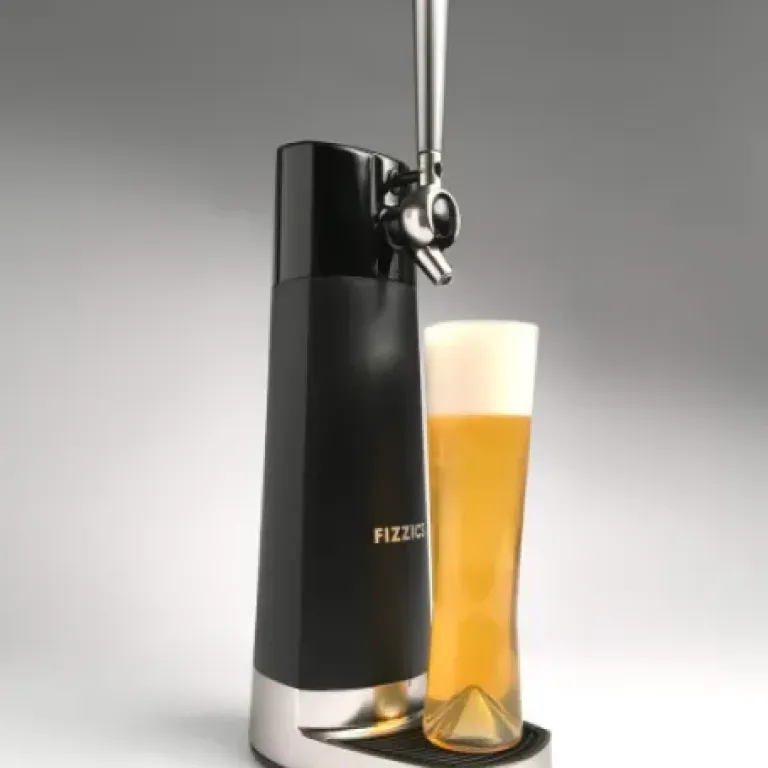
The Fizzics DraftPour FZ403 in the Carbon colour option goes for a matte, modern look rather than a shiny chrome tap. The manufacturer highlights a durable matte finish, and several buyers describe it as looking good or neat on the kitchen counter. With dimensions of about 58.93 x 25.4 x 44.45 cm, it is not a small gadget you hide in a drawer; it’s closer to a compact appliance. That size is what allows it to accept larger bottles up to 750 ml, which is one of its practical points compared to smaller dispensers.
Weighing around 2.13 kg, it should feel reasonably stable on a flat surface, at least on paper. The tap-style handle gives it that bar look and seems to be intuitive to operate for most users. Comments mention that it is easy to use and that the pour technique can be picked up quickly via online videos. That implies the learning curve is more about how you angle the glass and when you trigger the Micro-Foam phase than about complex controls on the device itself.
Not all feedback is glowing though. One verified buyer explicitly calls out a cheap feel for the price, even while acknowledging that the idea is good. That suggests that while the design is visually pleasing to many, the plastics or assembly might not feel as premium as the cost would lead some buyers to expect. This point matters if you are sensitive to tactile quality and expect something that feels like commercial bar hardware.
From a purely practical standpoint, the design seems focused on home use: it connects via USB to a wall plug, looks tidy enough for a kitchen or home bar, and doesn’t require visible CO₂ cartridges or hoses. In my view, the design is functional and visually decent for a consumer product, but if you are imagining heavy metal construction and pub-grade components, the feedback about a somewhat cheap feel is a useful reality check.
Power options: USB and batteries in the mix
The Fizzics FZ403 DraftPour lists USB power and a wall plug among its features, which is a clear step up from older battery-only beer gadgets. That means you can set it up permanently on a counter, plug it into a regular outlet, and not worry about swapping batteries all the time. For anyone who uses it regularly in a home bar or kitchen, this is probably the most sensible configuration, and it aligns with the idea that this is more of a countertop appliance than a portable toy.
Interestingly, at least one Amazon review still mentions batteries, saying they are easy to insert and have lasted well so far. That suggests there are versions or configurations that also accept battery power, or that some regions still get a battery-focused variant. Either way, the combination of USB and possible battery use gives flexibility: you can keep it plugged in at home, but still move it to a garden table or a friend’s place if needed, provided you have the right power setup.
The listed voltage is 110 V, which is standard in some markets but not others. In regions with 220–240 V mains, buyers usually receive an appropriate adapter or a different SKU, but it is important to check this detail before buying to avoid compatibility issues. The inclusion of a USB cable and wall plug in the box is a plus, as it saves you from having to hunt for a suitable charger with enough output.
In my opinion, the power setup is practical for most home users: plug it in and forget about it. For people who were used to the original Fizzics devices that chewed through batteries, this newer model should be less of a headache. Just be aware that if you intend to rely on batteries alone for portability, you will want to check user discussions for real-world expectations on how long they last between changes, as the official spec sheet does not spell out runtime in hours or number of pours.
Build and materials: durable enough for frequent pours?
On the materials side, the brand mentions the use of corrosion-resistant zinc and a durable matte finish. That’s a reassuring claim for a device that will constantly be in contact with small beer splashes and moisture. Corrosion-resistant metal parts should, in theory, handle that environment better than bare, low-grade metals. The outer finish is described as easy to keep clean, which matters if you plan to leave it on display in a kitchen or bar area.
However, the Amazon comments give a more nuanced picture. While many buyers are positive about the sturdiness and say the device is sturdy and looks good, at least one review clearly notes that the product feels cheap for the money. That doesn’t mean it falls apart, but it suggests that some of the visible or tactile components are plastic-heavy and don’t match the expectations some users have at this price point. So there is a contrast between the marketing emphasis on zinc and durability and the practical perception of some customers.
There is no long list of breakdowns or catastrophic failures in the highlighted comments, which is a good sign. The product has been available since 2018 and still holds a 4.4/5 average rating across more than 2,000 reviews, which usually indicates that any major design flaws would have surfaced loudly by now. Still, for people who are very picky about build quality, the isolated complaint about cheap feel is worth keeping in mind.
In my opinion, the materials are likely adequate for home use and casual entertaining. The corrosion-resistant mention is a plus on paper, and the finish should keep it looking presentable if you wipe it down reasonably often. Just don’t expect heavy, all-metal bar gear. If you value visual appearance and ease of cleaning more than industrial-grade heft, the materials seem to meet that brief, but the price-to-perceived-quality ratio may feel a bit off for some buyers.

Long-term use and robustness signals
Durability is always tricky to judge without lab measurements, but a few indicators are available. First, the Fizzics DraftPour FZ403 has been on sale since August 2018 and still maintains a 4.4/5 rating from over 2,000 reviews. If there were widespread failures, leaking, or breakdowns, those issues usually dominate the comment section over such a long timeframe. Instead, most highlighted feedback focuses more on pour quality and feel than on things breaking, which is a positive sign.
The brand’s emphasis on corrosion-resistant zinc and a durable matte finish also points towards a design meant to survive regular exposure to liquid and cleaning. Beer dispensers tend to get sticky and wet; if the materials were very fragile, that would show up quickly in angry reviews. So far, the representative comments do not describe recurring cracks, broken taps, or electronic failures. There is, however, a remark from one buyer that the unit feels cheap for the money, which speaks more to perceived quality than to actual durability.
Ease of cleaning is another indirect factor for longevity. Several buyers say the device is easy to clean, which means owners are more likely to keep it in good condition. A device that is hard to clean often ends up sticky, clogged and eventually failing. The fact that this one is described as a cinch to keep clean suggests it should handle regular home use without too much trouble, as long as basic maintenance is done.
In my opinion, the FZ403 looks reasonably solid for a plastic-heavy consumer appliance but probably not indestructible. If you treat it like a kitchen gadget and not like industrial bar equipment, it should hold up fine for regular stout sessions and small gatherings. People who are rough on their gear or expect heavy metal construction may be underwhelmed, but there are no clear red flags in the available feedback that point to systematic durability problems.
Speed, compatibility and day-to-day practicality
Performance for this kind of product comes down to how quickly and reliably it pours, what sizes and styles it can handle, and how much hassle it adds to a casual drinking session. The manufacturer claims the FZ403 DraftPour offers a 25% faster pour than previous Fizzics models. There are no hard numbers to verify that, but it does suggest an internal design focused on reducing waiting time. With guests around, shaving a few seconds per pour can matter when you are serving multiple drinks in a row.
Compatibility is one of the strong points on paper. The housing is large enough to take all standard cans and bottles, including 500 ml and 750 ml formats. That means it should cover everything from a small craft can to a larger Belgian-style bottle, which is convenient if you like variety. Published reviews confirm that people are using it with standard stout cans and various ales without mechanical issues fitting them inside.
Another performance aspect is how it behaves with different carbonation levels. As already mentioned, users are very positive about stouts and some IPAs but warn that very fizzy lagers can foam excessively. That means the raw pouring performance is context-dependent: for some beers, it’s smooth and satisfying; for others, you may need to adjust your technique or decide it’s not worth using the machine. One buyer even jokes that if you want a foam explosion, put lager inside, which sums up the limitation quite clearly.
On the practical side, several comments say it is easy to use and easy to clean. The simple tap lever and straightforward internals likely contribute to that. There is no complex interface or app; you just insert the container, close, and pour. In my opinion, the everyday performance is well suited to someone who regularly drinks stouts or similar beers and wants a quick, reliable way to make them feel a bit more special. For a household that mainly drinks highly carbonated lagers, the benefits might not justify the occasional mess or the need for extra care while pouring.
What the Fizzics DraftPour actually is
The Fizzics FZ403 DraftPour is essentially a single-bottle/can countertop dispenser that aims to mimic a bar tap. There is no internal keg, no CO₂ cartridge, and no chilling system. Instead, it relies on the pressure created when you pull the tap and a system that agitates the beer’s natural carbonation to create what the brand calls Micro-Foam. The manufacturer claims this creates uniform, small bubbles that change the head and mouthfeel compared to pouring straight from the can.
According to the published product details, this model is compatible with virtually all standard formats: regular cans, bottles, and even larger 500 ml and 750 ml bottles. That puts it ahead of some compact gadgets that only take 330 ml cans. The brand also insists that it works with a wide range of styles: lagers, IPAs, stouts, sour beers and more. In the Amazon comments, several buyers specifically mention using it with Guinness and other stouts, and a few talk about IPAs and more carbonated styles.
The FZ403 is described as the “newest model” in the DraftPour lineup, with a couple of upgrades compared to earlier versions: USB power instead of only batteries, a larger housing to fit more container sizes, and up to 25% faster pour speed. Those are theoretical numbers, but at least they show the direction: this is meant to be less fiddly and more practical for regular use than the original Fizzics units that some beer fans might remember.
In my opinion, the positioning is clear: this is not pretending to be a professional bar tap, it’s a consumer gadget trying to give a more draught-like experience at home without the hassle of a full keg system. If you expect pub-level equipment, you will probably find it limited. If you want something to sit next to a mini-fridge and make pouring cans of stout more fun and a bit closer to what you get in a bar, the concept makes sense on paper.

How well it delivers the draught-style promise
Effectiveness here is about how consistently the Fizzics FZ403 DraftPour delivers a draught-like experience without creating more trouble than it’s worth. The overall Amazon rating of 4.4/5 across roughly 2,000+ reviews is a solid indicator that most buyers feel it does its job. Multiple comments say it is easy to use, easy to clean, and that it pours a good pint, especially with stout beers. The fact that someone replaced a dedicated Guinness nitrosurge device with this unit and calls it amazing for Guinness is a strong point in its favour for that use case.
One important detail from a positive review is the mention of a pour technique available online. That implies that while the device is simple, getting the best result requires learning when to pour normally and when to engage the Micro-Foam phase, as well as how to angle the glass. For users willing to adopt that technique, the reported results are very good: better head retention, smoother mouthfeel, and a look closer to a bar pour. For people who just want to stick a can inside and yank the handle without any learning, the experience may be less consistent.
The main limitation mentioned is with more highly carbonated beers like some lagers and fizzy IPAs. One reviewer describes the device as working best on flatter beers and warns that lager can cause excessive foam. This doesn’t mean the machine fails; it just means that its effectiveness is style-dependent. The technology is essentially amplifying existing carbonation, so if there is too much CO₂ to begin with, the margin before you get a foam bomb is small.
In my view, the DraftPour is effective for what it clearly excels at: giving stout-style beers a more draught-like pour at home. It also adds a bit of theatre and ritual for beer fans, which many buyers seem to appreciate. It is less universally effective for every beer type, and anyone expecting perfect control with very fizzy lagers might be disappointed. But if you mostly drink stouts and some moderate-carbonation ales, the effectiveness looks solid.
Pros
- Delivers a noticeably more draught-like pour for stouts and similar beers according to many reviews
- Compatible with a wide range of container sizes, including 500 ml and 750 ml bottles
- USB power and included wall plug make it practical as a permanent countertop appliance
Cons
- Some buyers feel the build quality and materials are cheap for the price
- Can over-foam with highly carbonated lagers, making results style-dependent
Conclusion
Analysis score
The Fizzics FZ403 DraftPour is a targeted gadget: it is built for people who genuinely care about how their stout or similar beer pours at home. The combination of Micro-Foam technology, broad compatibility with bottles and cans up to 750 ml, and a simple tap-style operation has convinced a large majority of buyers, as seen in its 4.4/5 rating across thousands of reviews. Comments repeatedly highlight a smoother, more draught-like pint for Guinness and other stouts, with better head retention and improved mouthfeel compared to pouring straight from the can.
It does have limits. The build feels a bit cheap to some users for the price, and its behaviour with very carbonated lagers can be messy, with over-foaming if you are not careful. It is also a fairly large countertop appliance, not a pocket-sized toy, so you need both space and the habit of drinking the kinds of beers it handles best to justify it. There is no built-in chilling or CO₂ system; it works with the beer you put in, nothing more.
In my opinion, this DraftPour makes sense for stout lovers, home bar setups, and as a gift for someone who regularly drinks Guinness and enjoys beer gadgets. Those users are the ones most likely to see real benefit and use it often. People who mostly drink fizzy lagers, expect heavy metal bar hardware, or only have a beer once in a while may find the cost and counter space harder to justify. As a focused tool for draught-style pours from cans and bottles, it does the job well, but it is not a universal solution for every beer and every drinker.